Pengene tilbake-garanti · 100 dager Gratis levering over hele verden
449587kunstverk 30613kunstnere 4660museer 32språk
Valuta
    Språk
      Atelier · Etablert 2015 · Paris, Frankrike
      AllPaintingsStore
      allpaintingsstore.com
      Catalogue entry

      St Catherine

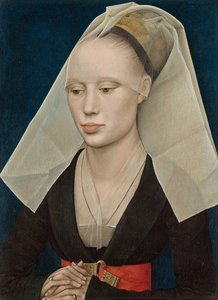
      1445. Oil On Panel, 21.0 x 18.0 cm. Calouste Gulbenkian-museet.

      Fig. 1. Rogier van der Weyden, St Catherine, 1445. Shown as the reproduction you are specifying: , .

      § 1Catalogue data

      § 2Abstract

      Beskrivelse av objektet

      Om kunstneren

      Rogier van der Weyden (1400-1464): En mester i følelsesladde religiøse malerier, med rik fargebruk og nøyaktig detaljering. Oppdag 'Lamentasjon' & mer!

      § 3Commentary

      A Portrait of Faith and Majesty: Rogier van der Weyden’s “St Catherine”

      Rogier van der Weyden's "St Catherine," painted in 1445, is more than simply a depiction of a woman; it’s a profound meditation on faith, nobility, and the enduring power of human emotion. Measuring a modest 21 x 18 centimeters, this oil-on-panel masterpiece housed within the Museu Calouste Gulbenkian in Lisbon, Portugal, belies its small scale with an astonishing depth of psychological complexity and technical mastery. Van der Weyden, born around 1400 in Tournai, Belgium, a city renowned for its goldsmithing tradition – a background that profoundly shaped his artistic approach – crafted a work that immediately establishes him as a leading figure within the burgeoning world of Early Netherlandish painting. The image presents a woman, identified as St. Catherine, radiating an aura of serene authority and quiet contemplation. Her gaze, direct and unwavering, draws the viewer into her inner world, inviting us to share in her solemnity.

      The Renaissance Ideal: Form and Feeling

      Van der Weyden’s style during this period is characterized by a remarkable ability to fuse meticulous realism with an intensely expressive emotional core. “St Catherine” exemplifies this perfectly. The rendering of the woman's face, particularly her eyes, is breathtakingly lifelike – capturing not just physical features but also subtle nuances of thought and feeling. Note the delicate modeling of the skin, achieved through layers of translucent glazes, a technique perfected by Van der Weyden and his followers. The rich crimson of her gown, the intricate folds of her veil, and the gleaming gold of her crown are all rendered with an almost obsessive attention to detail, reflecting the goldsmith’s influence on his artistic training. This isn't merely a portrait; it’s a carefully constructed illusion, designed to evoke a sense of reverence and admiration.

      Symbolism and Spiritual Significance

      The identification of the subject as St. Catherine adds layers of symbolic meaning to the painting. St. Catherine was revered for her unwavering faith and her martyrdom, often depicted as a woman who endured great suffering for her devotion. The crown she wears signifies her elevated status – not just within the Christian hierarchy but also as a symbol of spiritual authority. Her posture, upright and dignified, reinforces this sense of nobility and strength. The setting is deliberately ambiguous, lacking specific topographical details, which was common in Northern Renaissance portraiture. This deliberate vagueness allows the viewer to project their own interpretations onto the image, fostering a personal connection with the subject. The overall effect is one of timelessness – St. Catherine transcends her historical context and becomes an archetype of faith and resilience.

      Technique and Legacy

      Van der Weyden’s mastery of oil paint allowed him to achieve unprecedented levels of luminosity and depth in his work. He employed a layering technique known as *sfumato*, subtly blurring the edges of forms and creating a soft, atmospheric effect. This is particularly evident in the rendering of her hair – it appears almost luminous, catching the light with an ethereal quality. “St Catherine” represents a pivotal moment in Van der Weyden’s career, solidifying his reputation as one of the most accomplished painters of his generation. His influence can be seen in the work of subsequent artists, including Jan van Eyck and Hans Memling. Today, reproductions of this captivating portrait offer an accessible way to experience the profound beauty and emotional resonance of Van der Weyden’s genius – a testament to the enduring power of art to capture the human spirit.

      Bringing “St Catherine” Home

      AllPaintingsStore offers meticulously crafted hand-painted reproductions of Rogier van der Weyden's "St Catherine," allowing you to bring this iconic masterpiece into your home or office. Our skilled artisans replicate Van der Weyden’s intricate details and luminous colors with the utmost care, ensuring that your reproduction captures the essence of the original painting. Whether you are an art collector, a design enthusiast, or simply someone who appreciates exceptional beauty, a AllPaintingsStore reproduction of “St Catherine” is a stunning addition to any space – a window into the heart of Renaissance artistry and a celebration of enduring faith and human dignity.

      Spørsmål og svar

      Hva er anbefalt bruk av et trykk av "St Catherine"?

      Anbefalt bruk av et trykk av "St Catherine" er Statement.

      Hva er målene på det originale verket "St Catherine" av Rogier van der Weyden?

      De registrerte målene for "St Catherine" av Rogier van der Weyden er 21 x 18 cm. Reproduksjoner kan bestilles i andre størrelser med de samme proporsjonene.

      Hvilket medium er "St Catherine" av Rogier van der Weyden utført i?

      "St Catherine" av Rogier van der Weyden er utført i Oil On Panel. Reproduksjonene har som mål å gjengi utseendet til denne teknikken.
      § 4The artist

      Rogier van der Weyden

      Rogier van der Weyden

      1400 - 1464, Belgia

      Quick facts about Rogier van der Weyden

      • Artistic Movement Or Style: Flemish primitivister
      • Artists Or Movements Influenced By This Artist: ['Italia renessanse']
      • Artists Who Influenced This Artist:
        • Robert Campin
        • Jan van Eyck
      • Date Of Birth: c. 1400
      • Date Of Death: 1464
      • Full Name: Rogier van der Weyden
      • Nationality: Belgier
      • Notable Artworks:
        • Nedtagelsen fra korset
        • Lamentation
        • Annunciatio
      • Place Of Birth: Tournai, Belgia

      Om kunstneren

      A Master of Emotion: The Life and Legacy of Rogier van der Weyden

      Rogier van der Weyden, born around 1400 in the bustling city of Tournai, nestled within what is now Belgium, emerged as a pivotal figure in the blossoming world of Early Netherlandish painting. While details surrounding his early life remain somewhat elusive, it’s believed he initially honed his skills not with brush and pigment alone, but as a goldsmith – a craft that instilled within him an unwavering dedication to meticulous detail and a refined sensibility for craftsmanship; qualities that would become hallmarks of his artistic style. The precision demanded by working with precious metals undoubtedly translated into the exquisite rendering of textures, fabrics, and expressions that define his masterpieces. He wasn’t merely depicting reality; he was recreating it with painstaking accuracy, imbued with an almost reverent attention to detail.

      From Tournai to Brussels: A Rising Star

      By 1427, van der Weyden had ascended to the rank of master within the Guild of Saint Luke in Tournai – a significant turning point, solidifying his position as a professional artist and opening doors to important commissions. His ascent continued when he entered the service of Philip the Good, Duke of Burgundy, in 1435 – a patronage that would profoundly shape his career for the remainder of his life. Serving as court painter afforded him not only financial security but also access to an elite circle of influence and exposure to some of the most discerning eyes of the era. It was during this period that van der Weyden’s artistic vision truly began to mature, moving away from the somewhat rigid conventions of earlier Netherlandish painters towards a more emotionally resonant and naturalistic approach. He wasn't simply painting religious scenes; he was striving to evoke genuine feeling in the viewer, to create an experience that transcended mere observation.

      The Language of Feeling: Style and Technique

      Rogier van der Weyden’s artistic signature is immediately recognizable through several defining characteristics. His palette was remarkably rich and diverse, a vibrant tapestry of colors carefully chosen to avoid repetition and create depth and complexity within his compositions. He possessed an extraordinary ability to convey profound emotion – *pathos* – particularly in depictions of religious subjects like the Lamentation, where grief and sorrow are palpable. This emotional intensity wasn’t achieved through dramatic gestures or exaggerated expressions; rather, it was subtly woven into the very fabric of the painting, conveyed through delicate nuances of facial expression, body language, and composition. His figures, while adhering to the conventions of the time, demonstrate a growing interest in realistic representation – not just in anatomy and drapery, but also in capturing the psychological states of his subjects. They possess a dignified, almost sculptural quality, particularly evident in his grand triptychs, lending them an air of solemnity and reverence. He masterfully employed oil paint, building up layers of translucent glazes to achieve luminous effects and create a sense of depth and realism that was revolutionary for its time.

      Notable Works and Enduring Masterpieces

      Throughout his prolific career, van der Weyden produced numerous works that stand as testaments to his artistic prowess. *St Luke Drawing a Portrait of the Madonna*, housed in the Museum of Fine Arts, Boston, showcases his mastery of oil on panel and meticulous observation. The *Lamentation*, residing in the Musée des Beaux-Arts Tournai, Belgium, is perhaps his most celebrated work – a powerfully emotive depiction of Christ’s mourning, renowned for its dramatic use of *chiaroscuro* and its ability to evoke profound sorrow in the viewer. Multiple versions of *The Deposition* exist, each demonstrating his skill in conveying grief and drama with breathtaking sensitivity. The *Annunciation*, a masterpiece of refined style and attention to detail, exemplifies his ability to imbue even the most traditional subjects with a sense of freshness and vitality. And finally, the intricate and richly detailed *Bladelin Triptych* stands as a monumental achievement – a complex altarpiece that showcases the full range of van der Weyden’s artistic abilities. These works, and many others, continue to captivate audiences today, solidifying his position as one of the most important painters of the 15th century.

      Rogier van der Weyden's Legacy

      Van der Weyden’s influence extended far beyond the borders of his native Flanders. His works were highly sought after throughout Europe, particularly in Italy and Spain, where they introduced a new level of emotional depth and naturalism to local artistic traditions. Although his fame experienced a period of relative decline in the 17th century, a rediscovery during the 19th century cemented his place as one of the most important painters of the 15th century. He stands alongside Jan van Eyck and Robert Campin as one of the “three great” Early Flemish masters, each contributing uniquely to the development of Northern Renaissance art. His innovative techniques and emotionally charged compositions paved the way for future generations of artists, inspiring countless imitators and influencing the course of Western painting for centuries to come. He helped establish oil painting as the dominant medium and elevated the status of the artist within society, transforming them from skilled craftsmen into revered creators. Rogier van der Weyden’s legacy continues to resonate today, a testament to his enduring genius and his profound understanding of the human condition.

      § 5Comparanda

      § 6Questions

      Kort om verket

      • Location: Museu Calouste Gulbenkian, Lisbon
      • Year: 1445
      • Dimensions: 21 x 18 cm
      • Influences: Renaissance
      • Title: St Catherine

      Kunnequiz om kunst

      Det er kun ett riktig svar på hvert spørsmål.

      Spørsmål 1:
      What is the approximate date of Rogier van der Weyden’s painting, ‘St Catherine’?
      Spørsmål 2:
      The painting 'St Catherine' depicts a figure resembling which of the following roles?
      Spørsmål 3:
      Rogier van der Weyden’s early career was primarily as a:
      Spørsmål 4:
      Where is ‘St Catherine’ currently displayed?
      Spørsmål 5:
      What artistic technique is most prominently displayed in Rogier van der Weyden’s work, evident in ‘St Catherine’?

      § 7Cite this entry

      AllPaintingsStore.com, “Rogier van der Weyden, St Catherine (1445)”, https://allpaintingsstore.com/no/art/rogier-van-der-weyden-st-catherine-8Y3M2S-en/ArtistReproduction/ (accessed 2 October 2026).

      § 8The reproduction

      Håndlaget oljereproduksjon

      Håndmalt olje på lerret i din valgte størrelse og ramme, laget på bestilling av våre kunstnere. ( Bytt til trykk Bytt til digitalt bilde)

      It is specified on the order sheet in the margin; the present state of that sheet reads as follows.

      St Catherine

      Trykkmetode

      Størrelse på reproduksjon

      -

      Utvalgte mesterkunstnere

      Mer detaljrikdom, finesse og ekstra produksjonstid

      -

      Innramming av reproduksjon

      -

      -

      For kunstverk eller reproduksjoner som er større enn 105 cm (ca. 41 tommer) på noen side, vil rammen bli sendt som et sett som må monteres. Denne metoden sikrer trygg levering og forhindrer skader under transport.

      Krever profesjonell montering – dette er ikke et DIY-produkt.
      Settet må monteres og lerretet strammes av en erfaren profesjonell rammelegger, ved bruk av trelim (følger ikke med), en lerretstang og klemmer for å holde rammelisten vinkelrett mens limet tørker. Feilaktig montering eller ujevn stramming av lerretet kan påføre kunstverket permanente skader og er ikke dekket av vår garanti.

      • Alle massive trelister er inkludert, presist tilpasset i størrelse.

      • Monteres med de medfølgende skruene, samt trelim til hjørnene, som ikke er inkludert og må anskaffes av din rammehandler.

      • Profesjonelt verktøy er nødvendig og er ikke inkludert: en lerretstang (strammer) og klemmer for å holde rammene vinkelrette mens limet tørker.

      Viktig:
      Hjørnene krever trelim, listene må holdes på plass med tvinger til limet er helt tørt, og stramming av lerretet på den ferdige rammen krever en lerretstang. Ingen av disse produktene er inkludert i settet. Vennligst sørg for tilgang til en erfaren profesjonell rammehandler før du bestiller denne størrelsen.

      Navneskilt

      -

      -

      Beskyttende ferniss

      Blank lakk (forsterker farger, beskytter mot lys og fuktighet)

      -

      Tilpass mitt kunstverk

      Eksempler på hva som kan endres: Erstatt ansikt med bilde av kunden; Legg til kjæledyr (f.eks. bytt ut katt med hund); Inkluder en skjult melding i bakgrunnen; Endre bakgrunnslandskap eller elementer.

      -

      Ekspresslevering

      Verdensomspennende levering () på 3–4 uker i stedet for standard 5 uker. (30 October). Ingen kompromisser med kvaliteten.

      -

      Ekspresslevering

      Verdensomspennende levering til innen 5 uker. (6 November).

      Inkludert frakt

      Totalpris for valgte alternativer

      Nkr 2485

      Included with every order

      • Gratis ekspressfrakt over hele verden
      • Lerretsduk av lin av høy kvalitet
      • Full transportforsikring
      • Garanti for refusjon av toll og importavgifter
      • Garantert fargegjengivelse
      • 100 dagers returrett ved fabrikasjonsfeil
      • 100% pengene tilbake-garanti
      • Rabatt ved flere kjøp
      Order sheet