Pengene tilbake-garanti · 100 dager Gratis levering over hele verden
449564kunstverk 30613kunstnere 4660museer 32språk
Katalogoppføring

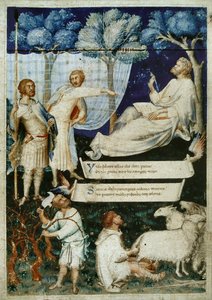
Window

1312. Acrylic On Canvas.

Fig. 1. Simone Martini, Window, 1312. Vist som den reproduksjonen du har spesifisert: , .

§ 1Katalogdata

§ 2Abstrakt

Beskrivelse av objektet

Simone Martini’s ‘Window,’ created in 1312, exemplifies the elegance of Early Gothic style. This fresco showcases vibrant colors and detailed depictions of people and animals within a stunning stained glass composition. Located at Pinacoteca Nazionale Siena, it's a captivating glimpse into medieval artistry. Discover museum-quality reproductions on AllPaintingsStore.

Om kunstneren

Oppdag Simone Martini, Sienas elegante mester! Hans Internasjonale Gotiske malerier – som 'Maestà' – blander religiøse temaer med hofflyst og utsøkt detalj. #SimoneMartini #Kunsthistorie

§ 3Kommentarer

Simone Martini’s Window: A Fragment of Siena’s Gothic Soul

The painting “Window” by Simone Martini—a masterpiece executed in 1312—isn't merely an image; it’s a portal into the artistic fervor and spiritual contemplation of Siena during its zenith as a medieval principality. More than just depicting a simple architectural element, Martini transforms this commonplace feature into a vehicle for profound symbolism and masterful execution, embodying the very essence of International Gothic style. Its unassuming appearance belies the intricate artistry that defines it.
  • Subject Matter: The composition centers around a stained glass window—a motif prevalent in Sienese churches at the time—illuminated by diffused light. Within its frame are meticulously rendered figures, including human forms and avian creatures – doves symbolizing peace and divine grace – creating a harmonious blend of earthly and celestial realms.
  • Style: Martini’s work exemplifies International Gothic style, characterized by delicate lines, luminous colors, and an emphasis on elegance and refinement. Unlike the harsher realism championed by Giotto di Bondone, Martini prioritizes beauty and expressive detail, prioritizing visual impact over strict anatomical accuracy. This stylistic choice reflects Siena's cultural aspirations during a period marked by papal patronage and artistic innovation.
  • Technique: Martini employed tempera paint on panel—a technique favored for its vibrancy and durability—allowing him to achieve astonishing levels of color saturation and textural nuance. The artist’s meticulous layering of glaze, combined with painstaking attention to detail in rendering drapery folds and facial expressions, speaks volumes about his dedication to craftmanship.

Historical Context: Siena Under Papal Influence

Siena flourished as a center of papal diplomacy and artistic production during the early 14th century. The papacy actively encouraged artistic endeavors, fostering a competitive environment where artists like Martini sought to elevate their reputations through ambitious commissions—particularly those honoring religious saints. This patronage fueled stylistic experimentation and ensured that Siena’s art would resonate across Europe. Martini's "Window" stands as testament to this era of cultural dynamism and papal ambition.

Symbolism: Light, Faith, and Divine Harmony

The window itself serves as a potent symbol—representing divine illumination and the gateway to spiritual understanding. The doves adorning the composition reinforce this theme, symbolizing purity, peace, and the Holy Spirit’s presence. Martini skillfully integrates these visual cues into a carefully balanced composition that reflects Siena's devout Catholic faith. The artist’s deliberate use of color—particularly blues and golds—further enhances the painting’s spiritual aura, conveying grandeur and transcendence.

Emotional Impact: A Moment Frozen in Time

“Window” transcends mere representation; it evokes a feeling of serene contemplation and wonder. Martini's masterful rendering captures not only the visual beauty of the stained glass but also its emotional resonance—a reflection of Siena’s artistic spirit and its unwavering belief in divine grace. Viewing this artwork is akin to stepping back into a moment frozen in time, allowing oneself to be transported by the artistry and symbolism of a bygone era. It remains an enduring emblem of Gothic elegance and a captivating glimpse into the soul of medieval Siena.

Spørsmål og svar

Er fargene i "Window" av Simone Martini mettede eller dempede?

"Window" av Simone Martini er gjengitt med en Muted metning.

Hvilken kunstretning tilhører "Window" av Simone Martini?

"Window" er et verk innenfor International Gothic Style. Retningen angir den kunstneriske tradisjonen verket er en del av.

Hvilke farger preger "Window"?

Fargene i "Window" utgjør en Earthy palett. Denne klassifiseringen beskriver de dominerende fargefamiliene.
§ 4Kunstneren

Simone Martini

Simone Martini

1284 - 1344, Italia

Kort om Simone Martini

  • Artistic Movement Or Style: Internasjonalt gotikk
  • Artists Or Movements Influenced By This Artist: ['Internasjonalt gotikk']
  • Artists Who Influenced This Artist:
    • Duccio di Buoninsegna
    • Giotto
  • Date Of Birth: c. 1284
  • Date Of Death: 1344
  • Full Name: Simone Martini
  • Nationality: Italiensk
  • Notable Artworks:
    • Maestà
    • St. Louis
    • Annunciatio
  • Place Of Birth: Siena, Italia

Om kunstneren

A Sienese Master of Elegance and Grace

Simone Martini, born around 1284 in the heart of Siena, Italy, stands as a pivotal figure in the transition from medieval to Renaissance art. He wasn’t merely a painter; he was an architect of elegance, a master of line and color who infused his works with a courtly refinement that distinguished him from contemporaries like Giotto. While historical accounts vary regarding his early training—some suggest apprenticeship under Duccio di Buoninsegna, the leading Sienese artist of the time, while others point to Florence and the influence of Giotto—Martini undeniably forged a unique artistic path. His brother-in-law, Lippo Memmi, was also an artist with whom he frequently collaborated, further enriching the vibrant artistic landscape of Siena. The city itself played a crucial role in shaping Martini’s aesthetic; Siena, a thriving center of commerce and culture, fostered an environment where art flourished, blending religious devotion with worldly sophistication.

The Flourishing of International Gothic

Martini's style is immediately recognizable for its departure from the more monumental forms favored in Florence. He embraced a delicate sensibility, characterized by flowing lines, soft decorative details, and an overall sense of grace. This aesthetic wasn’t born in isolation; it was profoundly influenced by external forces. The Via Francigena, a major pilgrimage route traversing Europe, brought with it artistic currents from France—particularly the refined elegance of French manuscript illumination and ivory carving. These influences are readily apparent in Martini's work, manifesting as intricate patterns, elongated figures, and a heightened attention to surface ornamentation. He didn’t simply copy these styles; he synthesized them with existing Sienese traditions, creating something entirely new. His paintings weren’t merely representations of religious scenes but rather elegant narratives imbued with emotional depth and visual poetry.

From Siena to Avignon: A Courtly Appointment

Martini's reputation extended beyond the borders of Italy, leading to a significant turning point in his career. In 1336, he accepted a commission from Pope Benedict XII to create frescoes for the Papal Palace in Avignon, France—a move that placed him at the heart of European power and patronage. This appointment wasn’t merely about artistic skill; it was a testament to Martini's ability to cater to the tastes of a sophisticated courtly audience. While in Avignon, he entered into a remarkable intellectual circle, befriending Francesco Petrarca—better known as Petrarch, the renowned humanist poet. The connection with Petrarch is particularly poignant, as Vasari and other sources suggest that Martini painted a portrait of Laura de Noves, Petrarch’s lifelong muse. Though the portrait itself is lost to time, its very existence speaks volumes about Martini's status as a celebrated artist capable of capturing not only physical likeness but also the essence of beauty and inspiration. The Annunciation with St. Margaret and St. Ansanus, created during his time in Florence before moving to Avignon, is a testament to this period, showcasing delicate beauty and refined aesthetic.

Key Works and Techniques

Martini’s artistic output spanned a wide range of subjects and formats, reflecting the diverse demands of his patrons and his own creative explorations. His *Maestà*, painted in 1315 for the Sienese city hall, remains one of his most celebrated works—a monumental altarpiece that exemplifies the International Gothic style’s emphasis on elegance, color, and intricate detail. The work showcases a complex narrative, blending religious symbolism with courtly splendor. Other notable paintings include *Saint Louis Crowning Robert*, a vibrant depiction of a historical event commissioned for Naples, and a series of panels illustrating the life of Saint Martin, demonstrating his mastery of both narrative and decorative elements. Martini’s use of color was particularly noteworthy—he favored rich, luminous hues that created a sense of depth and atmosphere. His meticulous attention to detail, evident in the rendering of fabrics, jewelry, and architectural settings, further enhanced the visual impact of his paintings.

Legacy and Enduring Influence

Simone Martini’s impact on the development of European art cannot be overstated. He played a crucial role in disseminating the International Gothic style—a movement characterized by its elegance, refinement, and emphasis on decorative detail—across the continent. His influence extended to generations of artists who followed, shaping the course of late medieval and early Renaissance painting. Martini’s work wasn’t simply about technical skill; it was about creating a visual language that resonated with the sensibilities of his time—a language of beauty, grace, and spiritual devotion. Even today, his paintings continue to captivate viewers with their exquisite detail, harmonious compositions, and enduring sense of elegance. His frescoes in San Francesco d’Assisi demonstrate his mastery of large-scale decorative painting, while works like the Saint Catherine of Alexandria Polyptych showcase his unparalleled command of color and form. Simone Martini died in Avignon in 1344, leaving behind a legacy that continues to inspire awe and admiration centuries later—a testament to the enduring power of art to transcend time and touch the human spirit.

§ 5Relaterte verk

§ 6Spørsmål

Kort om verket

  • Location: Pinacoteca Nazionale, Siena
  • Title: Window
  • Medium: Fresco
  • Artist: Simone Martini
  • Notable elements or techniques: Detailed depiction of figures and birds

Kunnequiz om kunst

Det er kun ett riktig svar på hvert spørsmål.

Spørsmål 1:
What artistic style is Simone Martini’s ‘Window’ primarily associated with?
Spørsmål 2:
The image depicts a stained glass window featuring figures including people and animals. What is the significance of these depictions within the context of medieval art?
Spørsmål 3:
Simone Martini collaborated extensively with Lippo Memmi. What was their role in the artistic landscape of Siena?
Spørsmål 4:
According to Giorgio Vasari, Simone Martini's artistic training involved studying under which influential artist?
Spørsmål 5:
The window’s intricate design and vibrant colors exemplify a characteristic feature of the International Gothic style. What distinguishes this style from earlier medieval artistic traditions?

§ 7Sitér dette oppslaget

AllPaintingsStore.com, “Simone Martini, Window (1312)”, https://allpaintingsstore.com/no/art/simone-martini-window-8Y3HTV-en/ (hentet 11 October 2026).

§ 8Reproduksjonen

Håndlaget oljereproduksjon

Håndmalt olje på lerret i din valgte størrelse og ramme, laget på bestilling av våre kunstnere. ( Bytt til trykk Bytt til digitalt bilde)

Det er spesifisert i margen på ordreskjemaet; den nåværende statusen for dette skjemaet lyder som følger.

Window

Trykkmetode

Størrelse på reproduksjon

-

Utvalgte mesterkunstnere

Mer detaljrikdom, finesse og ekstra produksjonstid

-

Innramming av reproduksjon

-

-

For kunstverk eller reproduksjoner som er større enn 105 cm (ca. 41 tommer) på noen side, vil rammen bli sendt som et sett som må monteres. Denne metoden sikrer trygg levering og forhindrer skader under transport.

Krever profesjonell montering – dette er ikke et DIY-produkt.
Settet må monteres og lerretet strammes av en erfaren profesjonell rammelegger, ved bruk av trelim (følger ikke med), en lerretstang og klemmer for å holde rammelisten vinkelrett mens limet tørker. Feilaktig montering eller ujevn stramming av lerretet kan påføre kunstverket permanente skader og er ikke dekket av vår garanti.

  • Alle massive trelister er inkludert, presist tilpasset i størrelse.

  • Monteres med de medfølgende skruene, samt trelim til hjørnene, som ikke er inkludert og må anskaffes av din rammehandler.

  • Profesjonelt verktøy er nødvendig og er ikke inkludert: en lerretstang (strammer) og klemmer for å holde rammene vinkelrette mens limet tørker.

Viktig:
Hjørnene krever trelim, listene må holdes på plass med tvinger til limet er helt tørt, og stramming av lerretet på den ferdige rammen krever en lerretstang. Ingen av disse produktene er inkludert i settet. Vennligst sørg for tilgang til en erfaren profesjonell rammehandler før du bestiller denne størrelsen.

Navneskilt

-

-

Beskyttende ferniss

Blank lakk (forsterker farger, beskytter mot lys og fuktighet)

-

Tilpass mitt kunstverk

Eksempler på hva som kan endres: Erstatt ansikt med bilde av kunden; Legg til kjæledyr (f.eks. bytt ut katt med hund); Inkluder en skjult melding i bakgrunnen; Endre bakgrunnslandskap eller elementer.

-

Ekspresslevering

Verdensomspennende levering () på 3–4 uker i stedet for standard 5 uker. (8 November). Ingen kompromisser med kvaliteten.

-

Ekspresslevering

Verdensomspennende levering til innen 5 uker. (15 November).

Inkludert frakt

Totalpris for valgte alternativer

Nkr 2467

Inkludert med hver bestilling

  • Gratis ekspressfrakt over hele verden
  • Lerretsduk av lin av høy kvalitet
  • Full transportforsikring
  • Garanti for refusjon av toll og importavgifter
  • Garantert fargegjengivelse
  • 100 dagers returrett ved fabrikasjonsfeil
  • 100% pengene tilbake-garanti
  • Rabatt ved flere kjøp
Bestillingsskjema