Pengene tilbake-garanti · 100 dager Gratis levering over hele verden
449564kunstverk 30613kunstnere 4660museer 32språk
Katalogoppføring

Antarctica

1964. Oil On Canvas. Tate Modern.

Fig. 1. Sir Sidney Robert Nolan, Antarctica, 1964. Vist som den reproduksjonen du har spesifisert: , .

§ 1Katalogdata

§ 2Abstrakt

Beskrivelse av objektet

'Antarctica', by Sir Sidney Robert Nolan (1964), is a monumental oil painting on hardboard that embodies Nolan’s signature style – bold abstraction and emotive exploration of Australian identity. Its turbulent sky, dark sea, and jagged mountain range convey the raw grandeur of Antarctica.

Om kunstneren

"meta_description": "Sir Sidney Nolan (1917-1992) var en sentral norsk kunstner kjent for sine ikoniske Ned Kelly-malerier og fargerike landskapsbilder som utforsker Australias historie og identitet. Oppdag hans unike visjon!"

§ 3Kommentarer

A Frozen Silhouette

The mountains rise as jagged shadows against a bruised sky. In 1964, thick layers of oil paint were pressed onto the canvas, creating a surface of heavy ridges and valleys. This impasto technique captures the raw movement of a polar storm. Deep indigo and pale cerulean collide in the sea below, where dark, choppy waves reflect the weight of the peaks above. A single diagonal thrust of white and grey guides the eye through the turbulence.

The light is diffused and overcast. There is no sun to warm the scene, only the cold brilliance of ice and the somber weight of clouds. Subtle traces of gold and ochre appear like fleeting sparks in the frost. These small touches of warmth struggle against a pervasive chill.

The Weight of Solitude

The landscape offers no easy perspective. The space feels flattened, pushing the distant horizon toward the viewer to amplify a sense of vastness. This lack of depth mirrors the isolation of the Antarctic wilderness. The organic, irregular shapes of the mountains and swirling water suggest a world indifferent to human presence. It is a place of profound stillness and sudden movement.

The painting functions as an allegory for internal landscapes. The desolate terrain speaks to the experience of navigating uncertainty and facing the immense scale of nature. Within the heavy brushstrokes, there is a palpable sense of awe and existential awareness. The cold remains.

Spørsmål og svar

Hvilket motiv og hvilken atmosfære forener "Antarctica" av Sir Sidney Robert Nolan?

"Antarctica" viser landscape, polar region, stormy sky, mountain range, texture, impasto, australian art, og den formidlede stemningen er Dramatic.

Hvilken stemning ville "Antarctica" tilføre et rom?

Den Dramatic atmosfæren i "Antarctica" av Sir Sidney Robert Nolan passer perfekt til det anbefalte rommet: et Living Room.

Hva har "Antarctica" til felles med resten av Sir Sidney Robert Nolan sin produksjon?

I Sir Sidney Robert Nolan sitt kunstnerskap befinner "Antarctica" seg innenfor Australian Expressionism-stilen, sammen med temaene mythology, landscape vision, cézanne spatiality, australian identity, bold brushstrokes.
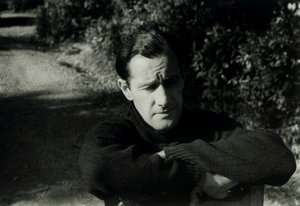
§ 4Kunstneren

Sir Sidney Robert Nolan

Sir Sidney Robert Nolan

1917 - 1992, Australia

Kort om Sir Sidney Robert Nolan

  • Artistic Movement Or Style: Modernist
  • Artists Who Influenced This Artist:
    • Rimbaud
    • Cézanne
    • Kandinsky
    • Klee
  • Date Of Birth: 22 april 1917
  • Date Of Death: 28 november 1992
  • Full Name: Sir Sidney Robert Nolan
  • Nationality: Australsk
  • Notable Artworks:
    • Ned Kelly series
    • Carriers of Horses
    • AFL Series
  • Place Of Birth: Melbourne, Australia

Om kunstneren

A Life Painted in Myth and Landscape

Sir Sidney Robert Nolan, born in Melbourne in 1917, stands as a monumental figure in 20th-century Australian art. His journey was not one of conventional artistic training but rather an explosive emergence from the working-class streets of St Kilda into a world of vibrant imagination and relentless experimentation. Nolan wasn’t simply a painter; he was a visual storyteller, a mythmaker who wrestled with Australia's history, its landscapes, and its very identity. From his early days as a runner for an illegal betting ring to his eventual acclaim on the international stage, Nolan’s life was marked by a restless energy and a refusal to be confined by artistic norms. He absorbed influences from diverse sources – the poetry of Rimbaud, the spatial innovations of Cézanne, the raw emotion of Danila Vassilieff – yet forged a style uniquely his own, one that resonated with a distinctly Australian sensibility. His early exposure to the harsh realities of Melbourne life and the allure of its underbelly would profoundly shape his artistic vision, imbuing his work with a sense of both defiance and vulnerability.

The Shaping of an Iconoclast

Nolan’s formative years were steeped in intellectual ferment. The Heide Circle, centered around patrons John and Sunday Reed, proved pivotal. This haven for artists and writers fostered a spirit of radical experimentation and provided Nolan with crucial support during his developing phase. It was at Heide that he encountered kindred spirits – Albert Tucker, Joy Hester, Arthur Boyd – all grappling with the challenge of creating a distinctly Australian modernism. The influence of modernist literature, particularly the Symbolist poets, cannot be overstated. Rimbaud’s call for a “systematic derangement of the senses” became a guiding principle for Nolan, liberating him from representational constraints and encouraging him to explore the emotional power of color, form, and symbolism. His early works demonstrate this influence, often featuring fragmented figures and dreamlike landscapes that hint at deeper psychological truths. He wasn’t interested in merely depicting reality; he sought to capture its essence, its underlying emotions, and its hidden narratives. This period also saw Nolan experimenting with various media, from stage design for the Ballet Russes to commercial art, each experience contributing to his growing technical prowess and artistic vocabulary.

Early Life and Influences

Sidney Nolan was born in Carlton, Melbourne, at that time an inner working-class suburb of Melbourne, on 22 April 1917. He was the eldest of four children. His parents, Sidney (a tram driver) and Dora, were both fifth generation Australians of Irish descent. Nolan later moved with his family to the bayside suburb of St Kilda. He attended Brighton Road State School and then Brighton Technical School and left school aged 14. He enrolled at the Prahran Technical College (now part of Swinburne University of Technology), Department of Design and Crafts, in a course which he had already begun part-time by correspondence. In 1933, at the age of 16, he began working for Fayrefield Hats, Abbotsford, producing advertising and display stands with spray paints and dyes for six years. This early experience instilled in him a meticulous attention to detail and an understanding of visual communication—skills that would prove invaluable throughout his artistic career. He was particularly drawn to the ideas expressed by Klee, whose approach deliberately undermined accepted boundaries of art through experimentation and a range of techniques, media and juxtaposition of subject matter. Nolan’s fascination with Surrealism stemmed from Rimbaud's poetic vision of a world unbound by logic and reason—a perspective that profoundly shaped his artistic sensibility.

The Heide Circle and Artistic Collaboration

Nolan’s association with the Heide Circle was transformative. Surrounded by fellow artists who shared his ambition to forge a uniquely Australian modernism, he engaged in stimulating dialogues and collaborative projects that fueled his creative development. The Circle's ethos—characterized by openness to experimentation and a rejection of academic conventions—provided Nolan with an environment where he could freely explore new ideas and techniques. He worked closely with Albert Tucker, Joy Hester, Arthur Boyd, and John Perceval, fostering a dynamic exchange of perspectives and inspiring each other’s artistic endeavors. These collaborations resulted in groundbreaking artworks that captured the spirit of their time and cemented Nolan's reputation as one of Australia’s foremost modernist painters.

The Iconic Ned Kelly Series

Nolan’s magnum opus—the Ned Kelly series—represents a pinnacle of Australian art history. Beginning in 1946, he embarked on an ambitious project to depict the legend of Ned Kelly, the charismatic outlaw who defied Victorian law and became a symbol of defiance against authority. Nolan approached this subject matter with unparalleled psychological depth and artistic innovation, transforming Kelly’s armor into a monumental visual device—a stylized representation of his impenetrable spirit and unwavering conviction. The series consists of 26 paintings that explore various facets of Kelly's life and legend, employing a distinctive technique characterized by flattened planes of color and simplified forms. Nolan deliberately eschewed traditional realism, prioritizing emotional impact over accurate depiction—a stylistic choice that resonated deeply with audiences and established Kelly as an enduring emblem of Australian identity. The Ned Kelly series remains one of the most celebrated artworks of the 20th century, continuing to inspire artists and scholars alike. ## Legacy and Enduring Influence Sir Sidney Nolan’s legacy extends far beyond his artistic output. He championed a radical vision of art—one that prioritized emotion, imagination, and experimentation—challenging established conventions and paving the way for future generations of Australian artists. His unwavering commitment to exploring Australian mythology and landscape solidified his place as a national icon. His influence can be seen in the work of countless contemporary artists who continue to draw inspiration from his innovative techniques and his profound understanding of the human condition. Nolan’s paintings are held in major museums and collections around the world, ensuring that his artistic vision—and its enduring power—will continue to captivate audiences for years to come.

§ 5Relaterte verk

§ 6Spørsmål

Kort om verket

  • Influences:
    • Rimbaud
    • Cézanne
  • Medium: Oil on hardboard
  • Year: 1964
  • Subject or theme: Landscape; Polar region
  • Title: Antarctica

Kunnequiz om kunst

Det er kun ett riktig svar på hvert spørsmål.

Spørsmål 1:
What technique did Sir Sidney Nolan use to apply thick layers of oil paint onto the canvas?
Spørsmål 2:
Which color palette dominates the artwork 'Antarctica'?
Spørsmål 3:
What is the central focus of the composition in 'Antarctica'?
Spørsmål 4:
In which year was the artwork 'Antarctica' completed?
Spørsmål 5:
What type of brushstrokes are used to convey movement in the painting?

§ 7Sitér dette oppslaget

AllPaintingsStore.com, “Sir Sidney Robert Nolan, Antarctica (1964)”, https://allpaintingsstore.com/no/art/sir-sidney-robert-nolan-antarctica-D2RAAC-en/ArtistReproduction/ (hentet 10 October 2026).

§ 8Reproduksjonen

Håndlaget oljereproduksjon

Håndmalt olje på lerret i din valgte størrelse og ramme, laget på bestilling av våre kunstnere. ( Bytt til trykk Bytt til digitalt bilde)

Det er spesifisert i margen på ordreskjemaet; den nåværende statusen for dette skjemaet lyder som følger.

Antarctica

Trykkmetode

Størrelse på reproduksjon

-

Utvalgte mesterkunstnere

Mer detaljrikdom, finesse og ekstra produksjonstid

-

Innramming av reproduksjon

-

-

For kunstverk eller reproduksjoner som er større enn 105 cm (ca. 41 tommer) på noen side, vil rammen bli sendt som et sett som må monteres. Denne metoden sikrer trygg levering og forhindrer skader under transport.

Krever profesjonell montering – dette er ikke et DIY-produkt.
Settet må monteres og lerretet strammes av en erfaren profesjonell rammelegger, ved bruk av trelim (følger ikke med), en lerretstang og klemmer for å holde rammelisten vinkelrett mens limet tørker. Feilaktig montering eller ujevn stramming av lerretet kan påføre kunstverket permanente skader og er ikke dekket av vår garanti.

  • Alle massive trelister er inkludert, presist tilpasset i størrelse.

  • Monteres med de medfølgende skruene, samt trelim til hjørnene, som ikke er inkludert og må anskaffes av din rammehandler.

  • Profesjonelt verktøy er nødvendig og er ikke inkludert: en lerretstang (strammer) og klemmer for å holde rammene vinkelrette mens limet tørker.

Viktig:
Hjørnene krever trelim, listene må holdes på plass med tvinger til limet er helt tørt, og stramming av lerretet på den ferdige rammen krever en lerretstang. Ingen av disse produktene er inkludert i settet. Vennligst sørg for tilgang til en erfaren profesjonell rammehandler før du bestiller denne størrelsen.

Navneskilt

-

-

Beskyttende ferniss

Blank lakk (forsterker farger, beskytter mot lys og fuktighet)

-

Tilpass mitt kunstverk

Eksempler på hva som kan endres: Erstatt ansikt med bilde av kunden; Legg til kjæledyr (f.eks. bytt ut katt med hund); Inkluder en skjult melding i bakgrunnen; Endre bakgrunnslandskap eller elementer.

-

Ekspresslevering

Verdensomspennende levering () på 3–4 uker i stedet for standard 5 uker. (7 November). Ingen kompromisser med kvaliteten.

-

Ekspresslevering

Verdensomspennende levering til innen 5 uker. (14 November).

Inkludert frakt

Totalpris for valgte alternativer

Nkr 2467

Inkludert med hver bestilling

  • Gratis ekspressfrakt over hele verden
  • Lerretsduk av lin av høy kvalitet
  • Full transportforsikring
  • Garanti for refusjon av toll og importavgifter
  • Garantert fargegjengivelse
  • 100 dagers returrett ved fabrikasjonsfeil
  • 100% pengene tilbake-garanti
  • Rabatt ved flere kjøp
Bestillingsskjema