


 Forhåndsvisning
 Send
Send Del med andre
 Vis detaljer

 Last ned bildet
 Liknende objekter
 Røntgenundersøkelse
 Lysbildefremvisning
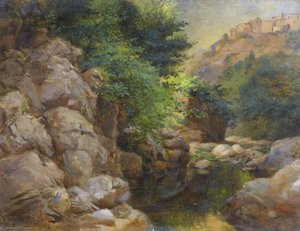
Threshing
 Impressionism
 50.0 x 76.0 cm
 Royal Scottish Academy of Art - Architecture
 Vis hele teksten
Håndlaget oljereproduksjon
Håndmalt olje på lerret i din valgte størrelse og ramme, laget på bestilling av våre kunstnere. ( Kjøp trykk Kjøp bilde)




































Velg mellom våre forhåndsdefinerte størrelser som bevarer kunstverkets opprinnelige proporsjoner.

Du kan angi egne mål for å tilpasse en spesifikk ramme eller plass. Dersom den valgte størrelsen ikke samsvarer med originalbildets proporsjoner, vil vi enten beskjære kunstverket eller utvide maleriet med ytterligere håndmalte elementer. En digital mockup vil bli sendt til din godkjenning før produksjonen starter.
Vennligst merk at forhåndsvisningen på skjermen ikke gjenspeiler den faktiske beskjæringen eller utvidelsen. Kun mockuppen vil vise den endelige komposisjonen nøyaktig.
Selv om tilpassede størrelser er tilgjengelige, anbefaler vi å velge et mål fra den forhåndsdefinerte listen for å bevare de originale proporsjonene.
Etter bestilling vil AllPaintingsStore.com-teamet sende e-post til kunden for instruksjoner og sende et utkast (mockup) som forhåndsvisning.
Verdensomspennende levering () på 3–4 uker i stedet for standard 5 uker. (13 August). Ingen kompromisser med kvaliteten.

Gratis ekspressfrakt over hele verden

Lerretsduk av høykvalitets lin

Full forsikring under transport

Garanti for refusjon av toll og importavgifter

Garantert korrekt fargegjengivelse

60 dagers returrett (kun ved feil)

100% pengene tilbake-garanti

Rabatt ved flere kjøp
 Glassalternativet er kun tilgjengelig i størrelser under 110 cm

Threshing
Teknikk for reproduksjon
Størrelse på reproduksjon
-


Endelig pris
$ 258
Lignende kunstverk




Om kunstneren
Thomas Austen Brown: A Visionary of Victorian Hospitals
Thomas Austen Brown (1859-1924) remains a quietly significant figure in 19th-century British art, often overshadowed by the grand narratives of the Hudson River School and the Pre-Raphaelites. Yet, within his distinctive oeuvre lies a profound exploration of human experience, particularly as witnessed through the lens of Victorian hospitals and charitable institutions. Born in London, Brown’s artistic journey was shaped by a deep empathy for the marginalized and vulnerable, a sensibility that profoundly informed his unique style and subject matter.
Early influences are somewhat elusive, though it's believed he initially studied under John Atkinson Grimshaw, a prominent figure in the Northern School of Painting. However, Brown quickly developed an independent voice, characterized by a loose, expressive brushwork and a remarkable ability to imbue his subjects with a palpable sense of humanity. His early works often depicted scenes from rural life – farmers, shepherds, and laborers – rendered with a gentle realism that hinted at the social commentary to come. Crucially, he began to frequent hospitals and asylums in London, documenting the lives of patients and staff, initially sketching for personal observation but soon recognizing the potential for artistic expression.
The Hospital Series: A Chronicle of Suffering and Compassion
Brown’s most celebrated work revolves around a series of paintings depicting hospital life. These weren't idealized portrayals of medical care; instead, they offered unflinching glimpses into the realities of illness, poverty, and institutional existence. He meticulously observed the routines of nurses, the expressions of patients – often those afflicted with debilitating diseases or mental illnesses – and the quiet dignity amidst hardship. His subjects were rarely posed; he captured them in their natural states, conveying a sense of immediacy and authenticity that was remarkably rare for artists of his time.
Works like “Feeding the Pigeons” (1895) exemplify this approach. The painting depicts a nurse tending to patients outside a hospital window, with pigeons pecking at crumbs scattered on the pavement below. It’s not merely a scene of charity; it's an exploration of isolation, vulnerability, and the fleeting moments of connection between caregiver and patient. Similarly, “The Bait Gatherers” (1895) portrays a family struggling to earn a meager living, highlighting the social conditions that often contributed to illness and suffering. These paintings weren’t intended as moralistic statements but rather as empathetic investigations into the human condition.
Brown's technical approach was deliberately loose and impressionistic. He favored broad brushstrokes and vibrant colors, eschewing meticulous detail in favor of capturing the overall mood and atmosphere of his subjects. This technique served to heighten the emotional impact of his work, conveying a sense of immediacy and vulnerability that resonated deeply with viewers.
Influences and Artistic Connections
While Brown’s style is undeniably unique, he was undoubtedly influenced by several key artistic movements and figures. The works of Jean-François Millet, particularly his depictions of peasant life, are evident in Brown's attention to detail and his focus on the struggles of ordinary people. The atmospheric effects of J.M.W. Turner also played a role, as Brown sought to capture the fleeting light and shadow that defined the hospital environment. Notably, he maintained correspondence with Asher Brown Durand, a leading figure in the Hudson River School, exchanging ideas about landscape painting and artistic practice.
Furthermore, his work shares thematic resonances with the social realism of artists like Gustave Courbet, who similarly sought to depict the lives of the working class without romanticizing or idealizing their experiences. The Musée Thomas-Henry in Évreux, France, houses a significant collection of Brown’s paintings, offering visitors a rare opportunity to experience his distinctive artistic vision firsthand.
Legacy and Historical Significance
Thomas Austen Brown's contribution to British art is often overlooked, yet his work remains profoundly moving and historically significant. He was one of the first artists to systematically document hospital life, providing valuable insights into the social conditions of Victorian England and the experiences of its most vulnerable citizens. His paintings are not merely aesthetically pleasing; they are powerful testaments to human compassion and a reminder of the importance of empathy in art.
Today, Brown’s work is increasingly recognized for its psychological depth and its ability to evoke a sense of shared humanity. His legacy extends beyond the realm of fine art, as his paintings continue to be studied by social historians and medical researchers seeking to understand the history of healthcare and the lives of those who received care within Victorian institutions.

thomas austen brown
1859 - 1924
Kort om kunstneren
- Artistic Movement Or Style: Hospital Art
- Artists Or Movements Influenced By This Artist: ['Victorian Art']
- Artists Who Influenced This Artist: ['Jean-François Millet']
- Date Of Birth: 1859
- Date Of Death: 1924
- Full Name: Thomas Austen Brown
- Nationality: British
- Notable Artworks:
- Feeding the Pigeons
- The Bait Gatherers
- Place Of Birth: London, England
Relaterte artikler

Landskapets Mesterverk: Topp 10 Kunstverk som Definerer Sjangeren | AllPaintingsStore.no
Utforsk de 10 mest ikoniske landskapsmaleriene gjennom tidene! Fra Monet til Friedrich – oppdag historien bak mesterverkene, kunstnernes teknikker og inspirasjonen. Finn reproduksjoner av høy kvalitet for ditt hjem på AllPaintingsStore.no. Utforsk samlingen online!

Impresjonistiske landskap: 10 mesterverk som definerte en kunstbevegelse | AllPaintingsStore.no
Opplev impresjonismens magi! Utforsk 10 ikoniske landskapsmalerier av Monet, Renoir og Degas. Lær historien bak mesterverkene & finn din perfekte kunsttrykk på AllPaintingsStore.com.

Golden Fields & Sun-Drenched Meadows: Capturing the Soul of Impressionist Landscapes
Immerse yourself in the luminous world of Impressionist landscapes. Discover how masters like Monet and Gauguin captured ephemeral light through plein air painting, and learn to bring the soul of sun-drenched meadows into your home with exquisite, hand-painted oil reproductions.
Impressionismens landskapskunst: Topp 10 mesterverk som definerte en epoke | AllPaintingsStore.no
Opplev impressionismens magi! Utforsk 10 ikoniske landskapsmalerier av Monet, Renoir og Van Gogh. Lær om kunsthistorien bak mesterverkene & finn din perfekte veggkunst på AllPaintingsStore.com – museumskvalitet for ditt hjem.

John Constable: Topp 25 Maler – Engelsk Landskapskunst i Ditt Hjem
Opplev John Constables 25 mest ikoniske malerier! Fordyp deg i engelsk romantikk, landskapskunst og atmosfæriske scener. Finn museumskvalitets reproduksjoner & interiørinspirasjon på AllPaintingsStore.com. Utforsk samlingen online!



