


 Forhåndsvisning
 Send
Send Del med andre
 Vis detaljer

 Last ned bildet
 Liknende objekter
 Røntgenundersøkelse
 Lysbildefremvisning
Pentecost


 Vis hele teksten
Håndlaget oljereproduksjon
Håndmalt olje på lerret i din valgte størrelse og ramme, laget på bestilling av våre kunstnere. ( Kjøp trykk Kjøp bilde)




P118B $10

P118H $10

P118W $10

P438Z $10

P508JH $12

P508YH $12

P805H $10

P805Z $10

P919BZ $10

P919G $10

P919XJ $10

P959ZH $10

P968JZ $12

W106C $8

W218G $10

W218JH $8

W218Y $10

W307PJ $10

W316G $10

W316PJ $8

W316Y $10

W398PJ $8

W4111J $10

W500HY $15

W500JH $15

W692G $12

W849H $8

W940BG $15

W953PJ $8




Velg mellom våre forhåndsdefinerte størrelser som bevarer kunstverkets opprinnelige proporsjoner.

Du kan angi egne mål for å tilpasse en spesifikk ramme eller plass. Dersom den valgte størrelsen ikke samsvarer med originalbildets proporsjoner, vil vi enten beskjære kunstverket eller utvide maleriet med ytterligere håndmalte elementer. En digital mockup vil bli sendt til din godkjenning før produksjonen starter.
Vennligst merk at forhåndsvisningen på skjermen ikke gjenspeiler den faktiske beskjæringen eller utvidelsen. Kun mockuppen vil vise den endelige komposisjonen nøyaktig.
Selv om tilpassede størrelser er tilgjengelige, anbefaler vi å velge et mål fra den forhåndsdefinerte listen for å bevare de originale proporsjonene.
Etter bestilling vil AllPaintingsStore.com-teamet sende e-post til kunden for instruksjoner og sende et utkast (mockup) som forhåndsvisning.
Verdensomspennende levering () på 3–4 uker i stedet for standard 5 uker. (23 August). Ingen kompromisser med kvaliteten.

Gratis ekspressfrakt over hele verden

Lerretsduk av høykvalitets lin

Full forsikring under transport

Garanti for refusjon av toll og importavgifter

Garantert korrekt fargegjengivelse

60 dagers returrett (kun ved feil)

100% pengene tilbake-garanti

Rabatt ved flere kjøp
 Glassalternativet er kun tilgjengelig i størrelser under 110 cm

Pentecost
Teknikk for reproduksjon
Størrelse på reproduksjon
-


Endelig pris
$ 258
Beskrivelse av kunstverket
A Symphony of Light and Faith: Exploring Titian’s Pentecost
Tiziano Vecellio, universally recognized as Titian, wasn't merely an artist; he was a transformative force within the Venetian Renaissance—a painter who elevated color to its highest expression and fundamentally reshaped the very language of oil painting. Born around 1490 in Pieve di Cadore, nestled amidst the breathtaking alpine scenery of Veneto, his life’s trajectory embodies unwavering artistic ambition and an unparalleled mastery of technique. While biographical details remain somewhat elusive, records indicate he was one of several children born to Gregorio Vecellio, a military officer, and Lucia—a familial circumstance that foreshadowed a destiny destined for extraordinary achievement. Recognizing their sons' innate talent, the Vecellio family strategically secured apprenticeships with accomplished artists in Venice—a decision that would propel young Titian and Francesco onto an artistic path of unparalleled significance. Venice during this pivotal period was a crucible of cultural dynamism, fueled by burgeoning trade routes and brimming with intellectual curiosity. This environment proved fertile ground for Titian’s artistic development, allowing him to hone his skills amidst the vibrant tapestry of Venetian art life. His early training encompassed fresco painting—a technique demanding meticulous precision and blending pigments directly onto wet plaster—providing him with invaluable experience in capturing texture and luminosity. However, it was his embrace of oil paint that truly cemented his legacy as a revolutionary innovator. Unlike tempera, which relied on brittle pigments and limited color palettes, oil offered artists unprecedented flexibility and depth of tonal range, enabling them to achieve effects previously unattainable.Composition and Technique: Mastering the Illusion of Depth
Titian’s “The Descent of the Holy Ghost,” completed in 1545, exemplifies his mastery of compositional principles and technical prowess. The painting depicts a scene from Christian scripture—the Pentecost—where the Holy Spirit descends upon the Apostles as fiery tongues of light illuminate the chapel interior. Titian skillfully employs pyramidal composition, anchoring the central figure – a woman draped in sumptuous robes – at its apex, drawing the viewer’s gaze upwards towards the radiant divine illumination. This upward thrust reinforces the spiritual grandeur of the event and underscores its importance within Christian iconography. Furthermore, Titian’s meticulous attention to detail is evident throughout the canvas. He painstakingly renders drapery folds with subtle gradations of color and texture, creating a convincing illusion of three-dimensionality that transcends mere representation. The artist's masterful use of chiaroscuro—the dramatic interplay between light and shadow—amplifies the emotional impact of the scene, highlighting the woman’s serene countenance and emphasizing the solemn reverence of the apostles.Symbolism: Light, Faith, and Divine Revelation
Beyond its technical brilliance, “The Descent of the Holy Ghost” resonates deeply with symbolic meaning. The radiant light emanating from above symbolizes divine grace and illumination—representing God's intervention in human affairs and illuminating the Apostles’ faith. The woman at the center embodies purity and piety, serving as a conduit for divine blessing. Her posture suggests prayerful contemplation, inviting viewers to contemplate the transformative power of spiritual devotion. The architectural setting—a chapel adorned with intricate coffered ceilings—further reinforces the sacred atmosphere, grounding the scene in Christian tradition and elevating it to a realm of transcendent beauty. The halos surrounding the Apostles’ heads signify their holiness and proclaim their status as messengers of God—affirming the central narrative of Pentecost as an event of profound theological significance.Emotional Impact: Capturing Sacred Reverence
Titian's ability to convey emotion is palpable in “The Descent of the Holy Ghost.” The painting captures a moment of sublime awe and reverence—a feeling conveyed through subtle gestures, facial expressions, and the luminous quality of the light itself. It’s not merely a depiction of an event; it’s an experience rendered visually—an invitation to contemplate the mysteries of faith and divine revelation. The warmth of the color palette contributes to the painting's emotional resonance, fostering a sense of tranquility and spiritual contemplation. Viewing this masterpiece evokes feelings of reverence and wonder—a testament to Titian’s unparalleled skill in translating theological concepts into visual splendor.A Legacy Enduring Through Reproduction
Today, reproductions of “The Descent of the Holy Ghost” continue to inspire artists and collectors alike. AllPaintingsStore.com offers exceptionally detailed prints that faithfully capture the painting's luminosity and textural richness—allowing admirers worldwide to experience Titian’s artistic genius firsthand. Explore more of Titian’s captivating oeuvre at AllPaintingsStore.com, where you can discover stunning reproductions of “Madonna and Child” and “Flora”—each piece embodying the artist’s unwavering commitment to capturing beauty and conveying profound spiritual emotion.Lignende kunstverk


Om kunstneren
The Venetian Titan: A Life in Color and Canvas
Tiziano Vecellio, kjent verden over som Titian, står som en monumental figur i den italienske Renessansen – kanskje dens mest kjente kolorist og en mester som omdefinerte mulighetene for oljemaleri. Han ble født rundt 1490 i Pieve di Cadore, gjemt mellom de dramatiske landskapene i de venetianske Alpene, og hans reise fra ydmyke begynnelser til internasjonal anerkjennelse er et vitnesbyrd om enestående talent og en urokkelig dedikasjon til kunstnerisk innovasjon. Detaljene rundt Titian’s tidlige liv forblir delvis skjulte i mystikk, men vi vet at han var en av flere barn født til Gregorio Vecellio, en militærmann, og Lucia. Familien innså deres sønners potensial og arrangerte for at både Tiziano og hans bror Francesco skulle lære hos en kunstner i Venezia – et valg som uunngåelig endret kunsthistorien. Venezia ved begynnelsen av 1500-tallet var et pulserende knutepunkt for handel, kultur og kunstnerisk fermentering. Titian’s første opplæring fant sted i verkstedet til Sebastiano Zuccato, en mosaikkartist, etterfulgt av korte perioder under veiledning av Gentile Bellini og, viktigst av alt, hans bror Giovanni. Det var imidlertid hans forbindelse med Giorgione – en annen venetiansk maler hvis arbeid besaatte en eterisk poetisk kvalitet – som viste seg å være mest formative. De to kunstnerne samarbeidet om flere prosjekter, inkludert de ytre freskoppene for Fondaco dei Tedeschi, en travel handelsplass for tyskere. Selv i disse tidlige verkene var Titian’s eksepsjonelle ferdigheter åpenbare, og han fikk anerkjennelse blant sine samtidige og varslet om den kommende glansen som snart ville blomstre.A Master's Evolving Style
Titian’s kunstneriske utvikling kan karakteriseres ved en bemerkelsesverdig allsidighet og en kontinuerlig utforsking av malerteknikker. Hans tidlige verk, sterkt påvirket av Giorgione, viser en delikat lyrisme og en mesterlig bruk av farger for å skape atmosfæriske effekter. Malerier som *A Man with a Quilted Sleeve* (ca. 1509) demonstrerer hans fremvoksende talent for portrettkunst, og fanger ikke bare motivets fysiske likhet, men også deres indre karakter. Etter hvert som han modnet seg, begynte Titian å avvike fra Giorgione’s subtile nyanser og omfavne en mer dristig og dramatisk tilnærming til farge. *The Visitation of Mary and Elizabeth* (nå i Accademia, Venezia) illustrerer denne overgangen, og viser hans økende selvtillit i å håndtere komplekse komposisjoner og livlige farger. Han eksperimenterte med forskjellige penselstrøk – fra glatte, blandede overflater til løse, uttrykksfulle markeringer – og utviklet en unik teknikk for å lagre farger for å skape lystfulle effekter. Hans portretter ble kjent for sin psykologiske dybde og realistisk fremstilling av teksturer og stoffer. Samtidig utmerket han seg i mytologiske og religiøse motiver, og innpreget dem med sensualitet og dramatisk intensitet som fengslet publikum. Et eksempel er *Venus of Urbino*, et mesterverk som omdefinerte fremstillingen av den nakne kvinnen og etablerte Titian som en ledende figur i venetiansk maleri.Patronage, Prestige and Lasting Influence
Titian’s talent tiltrakk seg oppmerksomheten til mektige mecenater over hele Europa. Han tjente som hoffmaler for keiser Karl V, kong Filip II av Spania og pave Paul III, blant andre. Denne mecenatgirigheten ga ham ikke bare økonomisk sikkerhet, men tillot ham også å skape monumentale verk som viste hans kunstneriske dyktighet på et storslått nivå. Hans evne til å tilpasse sin stil til smakene til forskjellige palasser samtidig som han opprettholdt sin egen distinkte stemme er et vitnesbyrd om hans eksepsjonelle ferdigheter og diplomatiske finesse. Titian døde i Venezia i 1576, og etterlot seg en ekstraordinær mengde verk som fortsatt inspirerer beundring og ærbødighet. Hans malerier finnes på museer rundt om i verden, inkludert Galleria Palatina i Firenze, Prado-museet i Madrid og National Gallery i London. Å oppleve en Titian er å møte en mesterkunstner på sitt mest kraftfulle – en maler som besaatte en uovertruffen evne til å fange skjønnheten, dramaet og kompleksiteten i den menneskelige tilstand.Exploring Further
- Museums & Collections: Discover Titian’s works at the Scuola del Santo in Padua and San Salvador in Venice, both showcasing his breathtaking frescoes.
- Related Artists: Explore the influence of Giorgione on Titian's early style and the later impact of Titian on artists like Rubens and Delacroix.
- Historical Context: Immerse yourself in the world of the Italian Renaissance and Venetian painting to fully appreciate Titian’s artistic achievements.
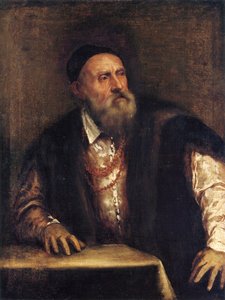
Titian
1490 - 1576 , Italia
Kort om kunstneren
- Artistic Movement Or Style: Venetiansk maleri
- Artists Or Movements Influenced By This Artist: ['Senere italienske kunstnere']
- Artists Who Influenced This Artist:
- Giovanni Bellini
- Giorgione
- Date Of Birth: c. 1490
- Date Of Death: 1576
- Full Name: Tiziano Vecellio
- Nationality: Italiensk
- Notable Artworks:
- Mann med quiltet erme
- Venus av Urbino
- Place Of Birth: Pieve di Cadore, Italia
Relaterte artikler

Sacred Narratives Embodied: A Comprehensive Exploration of Religious Iconography in Art History
Explore the rich history of religious iconography in art! Discover symbolism, movements & masterpieces from Byzantine to Renaissance periods. Expert insights for collectors and enthusiasts at AllPaintingsStore.

The Enduring Legacy of Oil on Canvas: Technique, History & Aesthetic Impact
Explore the rich history & techniques of oil painting – from Renaissance masters to Impressionism. Discover pigments, layering methods, and why this timeless medium endures. Expert insights for artists & art enthusiasts.

Oil on Canvas: A Historical & Technical Exploration of a Timeless Artistic Medium
Explore the rich history & enduring techniques of oil painting on canvas. Discover the science behind its longevity, conservation practices, and contemporary relevance. Expert insights for art enthusiasts.

The Enduring Power of Painting: A Historical & Contemporary Exploration of Form and Emotion
Explore the rich history & enduring techniques of oil painting with AllPaintingsStore. Discover masterpieces, learn about art collecting, and find authentic handmade reproductions crafted by skilled artists.

Titian: Innovation, Technique & the Venetian Renaissance Portrait Tradition
Explore the revolutionary techniques & enduring legacy of Titian, the master of Venetian Renaissance portraiture. Discover insights for collectors & appreciate his impact on art history.


