


 Forhåndsvisning
 Send
Send Del
Del
 Vis detaljer
 Utskriftsvennlig guide

 Last ned bilde
 Liknende objekter
 Røntgenundersøkelse
 Lysbildefremvisning
 Q&A
Q&A Statistikk
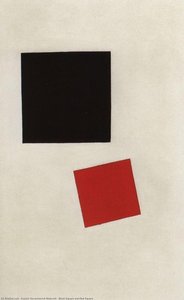
Drawing

- 150.0 x 180.0 cm


 Vis hele teksten
Kunstverket som vises på denne siden er beskyttet av opphavsretten, noe som betyr at vi ikke har juridisk tillatelse til å lage eller selge identiske reproduksjoner. Denne beskyttelsen håndheves i henhold til internasjonale avtaler som for eksempel Bernerkonvensjonen og av nasjonale lover, inkludert de som er fastsatt i Amerikansk lov om opphavsrett – Tittel 17.
Denne metoden er i fullt samsvar med opphavsrettslige regler, da den ikke innebærer kopiering eller duplisering av det beskyttede kunstverket. I stedet er det snakk om en kreativ nytolkning – et nytt maleri som er inspirert av originalen, men ikke identisk med den.
Giclée / Kunsttrykk
Giclée- eller lerretsprint av museumskvalitet med rask produksjon og fleksible valgmuligheter for etterbehandling. ( Kjøp håndmalt maleri Bytt til digitalt bilde)




































Velg mellom våre forhåndsdefinerte størrelser som bevarer kunstverkets opprinnelige proporsjoner.

Skriv inn ønsket bredde og høyde for å tilpasse trykket til din ramme eller vegg. Et trykk kan kun beskjæres, aldri skaleres opp utover motivets opprinnelige størrelse, noe som betyr at et format med andre proporsjoner vil føre til tap av deler av bildet. Vi sender deg en digital mockup for godkjenning før vi starter trykkeprosessen. Bildet som vises på denne siden viser ikke den faktiske beskjæringen — det er kun mockuppen som viser dette.
Verdensomspennende levering () på 2 uker i stedet for standard 4/5 uker. (31 October)

Gratis ekspressfrakt over hele verden

Lerretsduk av lin av høy kvalitet

Full transportforsikring

Garanti for refusjon av toll og importavgifter

Garantert fargegjengivelse

100 dagers returrett ved fabrikasjonsfeil

100% pengene tilbake-garanti

Rabatt ved flere kjøp
 Glassalternativet er kun tilgjengelig i størrelser under 110 cm

Drawing
Giclée / Kunsttrykk
Størrelse på reproduksjon
-


Totalpris for valgte alternativer
Nkr 616
Lignende kunstverk




Om kunstneren
A Visionary of the Post-Entropic: The Artistic Journey of Václav Stratil
In the landscape of contemporary Czech art, few figures command as much respect and intrigue as Václav Stratil. Born in 1950 in Olomouc, a city steeped in history, Stratil emerged not merely as a creator of objects, but as a profound investigator of the human condition. His life and work have been shaped by the turbulent transitions of his homeland—from the restrictive atmosphere of the socialist era to the chaotic liberation of the post-1989 period. This historical friction is palpable in his art, which often seeks to find meaning within disorder, a concept he himself describes through the post-entropic principle. To encounter a Stratil work is to enter a space where the boundaries between ritual and rebellion, between the ascetic and the hedonistic, begin to dissolve.
Stratil’s early years were marked by a profound engagement with both the intellectual and the visceral. While his formal studies at the Faculty of Arts, Palacky University Olomouc, provided him with pedagogical foundations, his true education occurred in the shadows of resistance. During the 1980s, a period of intense political surveillance, Stratil lived a life of quiet defiance. He experienced the direct hand of state oppression, including interrogations and physical brutality by the Secret Police, experiences that undoubtedly deepened the psychological weight of his later explorations into vulnerability and identity. It was during this era, while working as a night guard at the National Gallery in Prague, that he began producing monumental ink drawings—works of such intense, repetitive labor that they functioned as meditative, almost liturgical, acts of endurance.
The Ritual of Line and the Power of Performance
The technical mastery of Stratil is most strikingly evident in his large-format ink drawings. These are not merely sketches but architectural feats of cross-hatching, where layers upon layers of black ink are applied with a precision that borders on the obsessive. One can imagine him in his studio, covering vast sheets of paper that spilled across the floor, applying up to twenty layers of lines with the rhythmic dedication of a monk. This process serves to obscure as much as it reveals, masking the stains and imperfections of life under a dense, geometric web of ink. In these works, the artist bridges the gap between ancient ritualistic art and modern abstraction, creating a visual language that feels both primordial and cutting-edge.
Beyond the permanence of ink, Stratil has long been a pioneer of the ephemeral. His involvement with the underground artist community “Hu-Haba” in the late 1970s signaled his commitment to performance art as a tool for social critique. Through photo-performances and self-portraiture, he has explored the absurdity of existence. His famous series of self-portraits, often captured in local photo studios, presents a face that oscillates between calm detachment and grotesque grimace. In these images, he frequently adopts the iconography of early Christian saints or monks, utilizing attributes like eggs or spoons to create a metaphysical comic. This playful yet profound use of symbolism allows him to navigate the tension between the sacred and the profane, making him a true heir to the spirit of Dada and Punk.
Legacy and the Search for Universal Truths
As his career progressed into the decades following the fall of socialism, Stratil’s work expanded to include painting and complex installations, yet his core inquiry remained unchanged. He has remained a "local artist" in the most profound sense—deeply rooted in the Czech experience while addressing universal anxieties regarding the collapse of value systems in a postmodern world. His tenure as an educator at the Faculty of Arts, VUT Brno, allowed him to pass this spirit of experimentation to new generations, fostering a dialogue that spans decades of artistic evolution.
The significance of Václav Stratil lies in his refusal to settle into a single stylistic identity. His oeuvre is a collection of contradictions:
- The Sacred and the Profane: Blending religious iconography with the raw, often absurd realities of everyday life.
- Order and Chaos: Using meticulous, disciplined techniques to map out the "post-entropic" disorder of the modern universe.
- Presence and Absence: Creating self-portraits that are simultaneously intimate confessions and detached, symbolic masks.

Václav Stratil
1949 - , Czech Republic
Kort om kunstneren
- Full Name: václav stratil
- Nationality: Czech
- Date Of Birth: 1949
- Place Of Birth: Hodonín, Czech Republic
- Notable Artworks:
- At the milliner's
- václav stratil: drawing
- Artistic Movement Or Style: Abstract Painting
Relaterte artikler

Svart Kunst: Topp 10 Maler som Definerer Skyggenes Skjønnhet | AllPaintingsStore.no
Utforsk 10 ikoniske malerier dominert av svart – fra Rembrandts skygger til Munchs ekspresjonisme. Oppdag historiene bak mesterverkene og finn kunsttrykk for ditt hjem på AllPaintingsStore.no. Utforsk hele samlingen online!

Kazimir Malevich' Top 25 Kunstverk: En Suprematistisk Reise for Din Vegg
Oppdag Kazimir Malevich' 25 mest ikoniske kunstverk! Fordyp deg i Suprematismens verden, fra det banebrytende 'Svart Kvadrat' til subtile fargepaletter. Finn din perfekte maleri reproduksjon og interiørinspirasjon på AllPaintingsStore.com.

The Enduring Appeal of Geometric Patterns in Art: A Historical & Contemporary Exploration
Explore the captivating history of geometric abstraction in art, from ancient roots to contemporary masters. Expert insights for collectors & enthusiasts. Discover key artists, movements & investment potential.

De 10 mest ikoniske malerier dominert av hvitt – Kunsthistorie og interiørinspirasjon
Utforsk de 10 mest ikoniske maleriene dominert av hvitt – fra Monet til Van Gogh. Lær historien bak disse mesterverkene og finn inspirasjon for ditt hjem. Museumskvalitet kunsttrykk på AllPaintingsStore.com! Oppdag hele samlingen online.
Monochrome Visions: Exploring the Aesthetic & Historical Significance of Black & White Photography
Explore the rich history & artistic power of black and white photography. From early techniques to iconic masters like Ansel Adams, discover why monochrome continues to captivate art lovers today. Expert insights for collectors.