


 Forhåndsvisning
 Send
Send Del
Del
 Vis detaljer
 Utskriftsvennlig guide

 Last ned bilde
 Liknende objekter
 Røntgenundersøkelse
 Lysbildefremvisning
 Spørsmål og svar
 Statistikk
Landscape

- 51.0 x 65.0 cm


 Vis hele teksten
Giclée / Kunsttrykk
Giclée- eller lerretsprint av museumskvalitet med rask produksjon og fleksible valgmuligheter for etterbehandling. ( Kjøp håndmalt maleri Bytt til digitalt bilde)




































Velg mellom våre forhåndsdefinerte størrelser som bevarer kunstverkets opprinnelige proporsjoner.

Skriv inn ønsket bredde og høyde for å tilpasse trykket til din ramme eller vegg. Et trykk kan kun beskjæres, aldri skaleres opp utover motivets opprinnelige størrelse, noe som betyr at et format med andre proporsjoner vil føre til tap av deler av bildet. Vi sender deg en digital mockup for godkjenning før vi starter trykkeprosessen. Bildet som vises på denne siden viser ikke den faktiske beskjæringen — det er kun mockuppen som viser dette.
Verdensomspennende levering () på 2 uker i stedet for standard 4/5 uker. (3 November)

Gratis ekspressfrakt over hele verden

Lerretsduk av lin av høy kvalitet

Full transportforsikring

Garanti for refusjon av toll og importavgifter

Garantert fargegjengivelse

100 dagers returrett ved fabrikasjonsfeil

100% pengene tilbake-garanti

Rabatt ved flere kjøp
 Glassalternativet er kun tilgjengelig i størrelser under 110 cm

Landscape
Giclée / Kunsttrykk
Størrelse på reproduksjon
-


Totalpris for valgte alternativer
Nkr 624
Lignende kunstverk


Om kunstneren
Victor Vignon: A Quiet Master of Impressionist Landscape
Victor Alfred Paul Vignon (1847 – 1909) was a French Impressionist landscape painter and graphic artist whose serene depictions of rural scenes captivated audiences during his lifetime and continue to resonate with art historians today. Born in Paris, he possessed an early exposure to artistic appreciation thanks to his mother’s involvement as sculptor under the pseudonym “Claude Vignon,” who worked on the decoration of Hôtel de Ville de Paris in the 1850s—a project overseen by Gustave Eiffel and adorned with murals by puvis de chavannes. This formative environment instilled within him a profound connection to visual art from a young age, shaping his artistic sensibilities and guiding his lifelong pursuit of capturing the essence of nature’s beauty.- Early Training & Influences: Vignon began his artistic education with Camille Corot, whose meticulous observation of light and color profoundly impacted his technique. He further honed his skills under Adolphe Félix Cals, absorbing influences from Barbizon painters who championed plein air painting—a practice that prioritized working outdoors directly before the easel.
- Rural Landscapes & The Val-d’Oise Circle: Initially focused on the Val-d'Oise region near Paris, Vignon established a studio there and cultivated close relationships with fellow Impressionists like Camille Pissarro and Frédéric Bazille. This collaborative environment fostered experimentation and encouraged artists to push boundaries in their approach to portraying the natural world.
- Auvers-sur-Oise & Vincent van Gogh: A pivotal moment in Vignon’s artistic journey occurred when he moved to Auvers-sur-Oise, where he befriended Vincent van Gogh—a connection that proved transformative for both artists. Their shared passion for capturing the immediacy of experience and their mutual admiration fueled a creative dialogue that enriched Vignon's oeuvre.
- Style & Technique: Vignon’s distinctive style characterized by soft brushstrokes, subtle tonal gradations, and harmonious color palettes—particularly blues and greens—reflected his unwavering commitment to conveying tranquility and capturing the fleeting effects of light on landscapes. He eschewed dramatic contrasts favored by some Impressionists, opting instead for a contemplative aesthetic that prioritized atmospheric perspective and textural nuances.
- Recognition & Legacy: Despite facing criticism from Monet and other prominent figures within the Impressionist movement—who questioned his adherence to traditional compositional conventions—Vignon persevered in his artistic endeavors. His work gained recognition through exhibitions at the Salon and subsequently enjoyed acclaim during retrospectives organized by Pierre Auguste Renoir and Julie Manet-Roulart, cementing his place as a significant contributor to French Impressionism’s canon. Today, Vignon's paintings are treasured for their serene beauty and masterful execution—testaments to his enduring vision of capturing the sublime grandeur of rural landscapes.
Notable Works
- Field of Wheat with Haystacks – This iconic painting exemplifies Vignon’s signature style, showcasing a luminous wheat field bathed in golden sunlight and punctuated by haystacks rendered with delicate textural detail.
- Landscape – A tranquil depiction of trees and water—executed in 1888—demonstrates Vignon's ability to evoke profound emotion through subtle color harmonies and atmospheric perspective.
Further Exploration
- Biblioteca Museu Víctor Balaguer: Explore Catalan art & literature housed in a Neo-Egyptian temple!
- Musée Victor Hugo: Discover the home & life of the famed author of Les Misérables.
- Chiesa di SS. Vittore e Carlo: Admire stunning sculptures by Algardi, paintings by Carlone & Parodi, and a rich history within this architectural gem.

Victor Vignon
1847 - 1909
Kort om kunstneren
- Artistic Movement Or Style: Impressionism
- Artists Or Movements Influenced By This Artist: ['Vincent van Gogh']
- Artists Who Influenced This Artist:
- Camille Corot
- Adolphe Félix Cals
- Date Of Birth: 1847
- Date Of Death: 1909
- Full Name: Victor Alfred Paul Vignon
- Nationality: French
- Notable Artworks:
- Field of Wheat with Haystacks
- Landscape
- A Farm
- Place Of Birth: Paris, France
Relaterte artikler

Capturing the Soul: The Most Emotionally Moving Impressionist and Post-Impressionist Masterpieces
Discover the profound emotional depth of Impressionist and Post-Impressionist masterpieces. Explore how legends like Monet, Van Gogh, and Gauguin captured light and soul through evocative landscapes and vibrant brushwork for a timeless connection to art history.

Impresjonistiske landskap: 10 mesterverk som definerte en kunstbevegelse | AllPaintingsStore.no
Opplev impresjonismens magi! Utforsk 10 ikoniske landskapsmalerier av Monet, Renoir og Degas. Lær historien bak mesterverkene & finn din perfekte kunsttrykk på AllPaintingsStore.com.
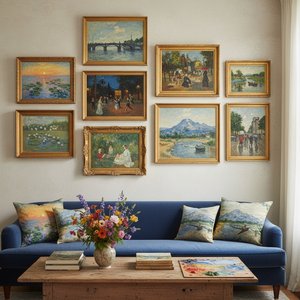
Impressionismens landskapskunst: Topp 10 mesterverk som definerte en epoke | AllPaintingsStore.no
Opplev impressionismens magi! Utforsk 10 ikoniske landskapsmalerier av Monet, Renoir og Van Gogh. Lær om kunsthistorien bak mesterverkene & finn din perfekte veggkunst på AllPaintingsStore.com – museumskvalitet for ditt hjem.

Paul Cézannes 25 Mesterverk: En Kunstnerisk Reise for Ditt Hjem
Utforsk Paul Cézannes 25 mest ikoniske malerier! Oppdag historien bak impresjonismens mesterverk, fra stilleben til landskap. Finn kunsttrykk av høy kvalitet og interiørinspirasjon på AllPaintingsStore.com.

Capturing Fleeting Light: A Comprehensive Exploration of Impressionistic Landscape Painting
Explore the captivating world of Impressionistic landscape painting! Discover techniques, key artists like Monet & Renoir, and its lasting influence on art history. A comprehensive guide for enthusiasts.