


 Se i rommet
 Del som digitalt kort
 Del
Del
 Detaljer
 Studentguide

 Last ned
 Liknende objekter
 Røntgen
 Lysbildefremvisning
 Q&A
Q&A Besøksstatistikk
Evening
 Acrylic
- WallArt
- Romantic Symbolism
 1825
1825 101.0 x 39.0 cm
 Les mer
Få en utskriftsklar fil som går langt utover forhåndsvisningen på nett. Hvert digitale bilde vi selger er hentet fra en høyoppløselig master i vår database – vanligvis mellom 5 000 og 15 000 piksler bred – slik at du kan trykke stort, beskjære tett eller gjenskape fine detaljer med full trygghet.
Ingen filer forlater studioet vårt uten å bli bearbeidet. En digital ekspert kontrollerer fargene mot det originale maleriet og korrigerer dem ved behov, for deretter å forbedre klarhet og detaljrikdom med profesjonelle retusjeringsverktøy — alltid tro mot kunstnerens penselstrøk og stil. Resultatet er et bilde som ser ut som maleriet, ikke som en skann med filter.
Du godkjenner før ferdigstilling: vår ekspert sender bildet på e-post innen 72 timer til din vurdering. Ikke fornøyd? Be om forbedringer eller korrigeringer, eller be om refusjon dersom kvaliteten ikke svarer til forventningene.
Dette er kvaliteten som forlag, designstudioer, gallerier og trykkerier stoler på.
Digitalt bilde
Last ned en høyoppløselig fil til personlig bruk, utskrift og kreative prosjekter. ( Bytt til trykkversjon Bestill håndmalt reproduksjon)
Inkludert i alle bestillinger av digitale bilder
Profesjonell digital levering, garantert
Når du velger AllPaintingsStore.com, får du ikke bare et bilde – du mottar et profesjonelt etterbehandlet digitalt kunstverk, skapt med presisjon og med en garantert tilfredshetsgaranti. Her er alt som automatisk følger med din bestilling:

Rask levering på e-post
Din høyoppløselige digitale bildefil sendes til din e-post innen 72 timer etter bestilling – klar til umiddelbar bruk.

KI-forbedret digital fil
Ditt kunstverk blir profesjonelt optimalisert ved hjelp av avanserte AI-verktøy og manuell redigering, noe som sikrer maksimal detaljrikdom, klarhet og fargegjengivelse.

Gratis livslang nybestilling
Har du ved et uhell slettet eller mistet filen din? Ingen bekymring – vi sender den på nytt når som helst, helt gratis.

Ingen importavgifter – noen gang
Nyt ditt kunstverk umiddelbart uten toll, avgifter eller leveringskostnader – digitale nedlastinger er alltid avgiftsfrie.

Garantert fargenøyaktighet
Vi sikrer at det digitale bildet gjenspeiler de originale fargene så nøyaktig som mulig ved hjelp av profesjonelle verktøy og fargehåndtering.

100 dagers tilfredshetsgaranti
Hvis du ikke er fornøyd med ditt digitale bilde, vil vi revidere det eller refundere 100% innen 100 dager – uten spørsmål.

100% Penggaranti
Ikke fornøyd? Få full refusjon innen 100 dager etter at du har mottatt din digitale fil – uten spørsmål.

Rabatt ved storkjøp
Kjøp 3 bilder, spar 10% - Kjøp 5, spar 15% - Kjøp 10+, spar 20%. Ideelt for kreative prosjekter, gallerier og byråer.
Evening – A Vision of Serenity Amidst Complexity
“Evening” by William Blake stands as a testament to the artist’s singular vision—a captivating portrayal that transcends mere representation and delves into profound spiritual contemplation. Painted in 1825, this artwork captures a moment suspended between day and night, mirroring Blake's preoccupation with cycles of creation and destruction, and embodying the Romantic ideal of sublime beauty found within nature’s quiet grandeur. The image depicts a woman adorned with wings, positioned centrally against a backdrop of hazy mountains—a composition deliberately designed to evoke feelings of peace and transcendence.- Subject Matter: Blake's depiction centers on an angelic figure, symbolizing purity and divine grace. Her posture exudes tranquility, suggesting acceptance of fate and communion with the celestial realm.
- Style & Technique: Executed in Blake’s characteristic mezzotint etching technique—a process known for its tonal gradations and ability to achieve remarkable detail—the print showcases a masterful manipulation of light and shadow. This meticulous approach contributes significantly to the artwork's ethereal atmosphere.
- Symbolism: The woman’s wings represent ascension to heaven, signifying liberation from earthly concerns and embracing divine grace. The hazy mountains symbolize obscurity and mystery—elements that invite viewers to contemplate the unseen forces shaping existence.
- Emotional Impact: Blake intended “Evening” to inspire awe and reverence for the sublime—a feeling of wonder mingled with terror—as described by Edmund Burke. It aims to transport the viewer beyond the mundane, fostering introspection and prompting contemplation on spiritual truths.
Spørsmål og svar
Hvor intens er fargebruken i "Evening" av William Blake?
"Evening" av William Blake viser en Vivid fargeintensitet.
Finnes det en lysbildefremvisning for "Evening" av William Blake?
"Evening" av William Blake kan vises som et lysbildefremvisning på verkets Lysbildefremvisning-side.
Hvilken farge skiller seg mest ut i "Evening"?
Den dominerende fargen i "Evening" av William Blake er Putty (#edddc3).
Relaterte kunstverk


Kunstnerbiografi
A Visionary’s Journey: The Life and Art of William Blake
William Blake, born in London on November 28, 1757, was a figure perpetually out of step with his time, yet destined to become one of the most celebrated artists and poets of the Romantic Age. His life unfolded against the backdrop of a rapidly changing England—a world grappling with industrialization, political upheaval, and shifting spiritual beliefs. From humble beginnings as the son of a hosier, Blake’s early years were marked by an intensely vivid imagination and a propensity for visionary experiences that would profoundly shape his artistic trajectory. Though largely self-taught in formal academics, he received drawing instruction at a young age, quickly revealing a talent that hinted at the extraordinary path ahead. His apprenticeship with engraver James Basire proved pivotal, providing him not only with technical mastery but also an understanding of printmaking techniques he would later revolutionize. These early influences—the Gothic grandeur of Westminster Abbey, the classical forms of Raphael and Michelangelo—served as foundational elements in his developing aesthetic, though Blake was never one to remain bound by convention.The Early Years: A Spark of Imagination
Blake’s formative years instilled within him a remarkable sensitivity to beauty and an unwavering belief in the power of imagination. Growing up in Soho, London, he absorbed the artistic currents of his era—particularly the ornate style of Gothic architecture—which fostered a fascination with elaborate ornamentation and storytelling. Despite lacking formal training, Blake possessed an innate aptitude for drawing, honing his skills through self-directed study and experimentation. His apprenticeship under James Basire, a respected engraver, provided invaluable experience in printmaking, equipping him with the technical tools necessary to realize his ambitious artistic visions. This early exposure to craftsmanship combined with a burgeoning inner life would become central to Blake’s distinctive creative process.Illuminated Printing: A Revolutionary Technique
Blake’s artistic innovation wasn't merely about subject matter; it resided fundamentally in *how* he created. Dissatisfied with conventional engraving methods—which he considered sterile and incapable of conveying the full richness of his imagination—he developed a unique process known as “illuminated printing.” This involved etching both text and illustrations onto copper plates, then painstakingly hand-coloring the resulting prints—a laborious but deeply personal undertaking that allowed for complete artistic control. It wasn’t simply illustration accompanying poetry; it was an integrated art form where image and verse were inextricably linked, each enhancing the meaning of the other. Blake's breakthrough came from a profound spiritual experience following his brother’s death—an event that spurred him to explore visionary techniques rooted in alchemy and symbolism. This method allowed for unparalleled textural depth and color vibrancy, elevating printmaking beyond mere reproduction into a form of artistic expression akin to painting.Major Works: Visions of Innocence and Experience
Blake's oeuvre encompasses a vast range of poetic and visual works—each imbued with symbolic significance and reflecting his unwavering commitment to exploring the complexities of human consciousness. Among his most celebrated achievements are *Songs of Innocence and of Experience* (1794), a dual collection that presents contrasting depictions of childhood—one characterized by purity and joy, the other marred by corruption and disillusionment. These poems are accompanied by exquisitely detailed engravings that amplify their emotional impact and reinforce their thematic unity. Equally remarkable is *The Marriage of Heaven & Hell* (1793)—a provocative prose poem that challenges conventional morality and celebrates energy, desire, and rebellion against restrictive doctrines. Blake’s illustrations for Dante's *Divine Comedy*, commissioned by John Flaxman, demonstrate his mastery of dramatic composition and his ability to translate complex narratives into powerful visual imagery—works that continue to captivate audiences today. Furthermore, *Jerusalem* (1804-1820), a sprawling epic poem exploring themes of prophecy, redemption, and the struggle between good and evil, stands as testament to Blake’s enduring imaginative power.Legacy: An Influence That Endures
Blake's artistic vision profoundly impacted subsequent generations of artists and writers—particularly the Pre-Raphaelites, who embraced his style and symbolism as inspiration for their own creative endeavors. His rejection of academic conventions and his insistence on subjective experience paved the way for movements like Symbolism and Modernism, which recognized him as a precursor to avant-garde artistic expression. Blake’s enduring influence can be seen in contemporary artists who grapple with themes of mythology, spirituality, and social critique—artists who strive to capture the essence of human emotion and imagination through unconventional mediums. William Blake remains an artist whose work continues to provoke contemplation and inspire awe—a beacon of visionary creativity in a world increasingly dominated by rational thought. He died August 12, 1827, leaving behind a legacy that transcends time and borders, securing his place as one of the most important figures in British Romanticism.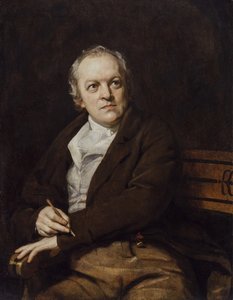
William Blake
1757 - 1827 , Storbritannia
Kort om kunstneren
- Artistic Movement Or Style: Romantikk
- Artists Who Influenced This Artist:
- Rafael
- Michelangelo
- Date Of Birth: 1757
- Date Of Death: 1827
- Full Name: William Blake
- Nationality: Britisk
- Notable Artworks:
- Lieder eines Innocents und einer Erfahrenen
- Die Hochzeit von Himmel und Erde
- Der Tiger
- Jerusalem
- Place Of Birth: London, UK

