


 Se i rommet
 Del som digitalt kort
 Del
Del
 Detaljer
 Studentguide

 Last ned
 Liknende objekter
 Røntgen
 Lysbildefremvisning
 Besøksstatistikk
Minotaur

 Les mer
Håndlaget oljereproduksjon
Håndmalt olje på lerret i din valgte størrelse og ramme, laget på bestilling av våre kunstnere. ( Bytt til trykkversjon Gå til digitalt bilde)




P118B Nkr10

P118H Nkr10

P118W Nkr10

P438Z Nkr10

P508JH Nkr12

P508YH Nkr12

P805H Nkr10

P805Z Nkr10

P919BZ Nkr10

P919G Nkr10

P919XJ Nkr10

P959ZH Nkr10

P968JZ Nkr12

W106C Nkr8

W218G Nkr10

W218JH Nkr8

W218Y Nkr10

W307PJ Nkr10

W316G Nkr10

W316PJ Nkr8

W316Y Nkr10

W398PJ Nkr8

W4111J Nkr10

W500HY Nkr15

W500JH Nkr15

W692G Nkr12

W849H Nkr8

W940BG Nkr15

W953PJ Nkr8




Velg mellom våre forhåndsdefinerte størrelser som bevarer kunstverkets opprinnelige proporsjoner.

Skriv inn bredden og høyden du trenger, slik at den passer til din ramme eller vegg. Dette er håndmalt, så for en størrelse med en annen form kan kunstneren male litt mer rundt bildet, eller beskjære det noe — du velger selv. Vi sender deg en digital mockup for godkjenning før maleriet påbegynnes. Bildet som vises på denne siden viser ikke det faktiske resultatet — kun mockuppen gjør det.
Etter bestilling vil AllPaintingsStore.com-teamet sende e-post til kunden for instruksjoner og sende et utkast (mockup) som forhåndsvisning.
Verdensomspennende levering () på 3–4 uker i stedet for standard 5 uker. (22 October). Ingen kompromisser med kvaliteten.

Gratis ekspressfrakt over hele verden

Lerretsduk av høykvalitets lin

Full transportforsikring

Garanti for refusjon av toll og importavgifter

Garantert fargeekthet

100 dagers returrett ved fabrikasjonsfeil

100% pengene tilbake-garanti

Mengderabatt
 Glassalternativet er kun tilgjengelig i størrelser under 110 cm

Minotaur
Reproduksjonsmetode
Format på reproduksjon
-


Totalpris
Nkr 2446
William Blake’s Minotaur: A Descent into Myth and Imagination
William Blake var en kunstner og poet som levde i kontrast til sin tid, men ble likevel en av de mest kjente kunstnerne og poetenes tidsepoken – en verden som kjempet med industrialisering, politisk uro og skiftende åndelige tro. Hans liv utfoldet seg mot bakteppet av et England i rask utvikling, hvor nye ideer og estetiske impulser begynte å forme samfunnet. Fra ydmyke røtter som sønn av en hosier, ble hans tidlige år preget av en ekstremt levende fantasi og en naturlig tendens til visjonære opplevelser som ville forme hans kunstneriske vei videre. Selv om han var stort sett selvlært innenfor formelle akademier, fikk han tegningstrening i ung alder og viste raskt frem et talent som antydet den ekstraordinære utviklingen foran seg. Hans læreplass hos graver James Basire var avgjørende, ikke bare fordi det ga ham teknisk mesterskap, men også en forståelse av trykkteknikker han senere revolusjonerte. Disse tidlige influensene ville senere forme hans kunstneriske stil og verdenssyn.- Tema: Bildet er dypt rotfestet i mytologi og symbolikk, spesielt referansen til Minotauren – en labyrintisk skapning fra gresk mytologi som ble fengslet av Kreta før år 1600 f.Kr., og senere gjengitt av Dionysiske tragedier og andre litterære verk. Blake utforsker temaer om konflikt mellom godt og ondskap, menneskelig natur og guddommelig orden, samt kampen mot begrensninger og kontroll.
- Stil: Verkets stil er tydelig illustrativ og detaljert, noe som gjenspeiler den romantiske kunstens fokus på følelser og subjektive opplevelser. Blake benyttet seg av teknikker som bruk av mezzotint og andre trykkteknikker for å skape en atmosfære av dramatisk lys og skygge – egenskaper som er karakteristiske for denne kunstretningen.
- Teknikk: Blake anvendte mezzotint, en teknikk hvor et grafisk materiale blir behandlet med flere lag av fett og vann for å oppnå komplekse detaljer og tonalitet. Denne teknikken tillatte ham å skape imponerende bilder med høy kontrast og dybde, noe som er spesielt fremtredende i Minotauren.
- Historisk Kontekst: Bildet ble laget på begynnelsen av 1800-tallet, en periode hvor romantikken blomstret frem og kunstnere søkte inspirasjon fra natur og mytologi for å uttrykke menneskelige følelser og ideer. Blake var en aktiv deltaker i den politiske og sosiale debatten på sin tid, og hans kunst reflekterer ofte hans engasjement for sosial rettferdighet og religiøs frihet.
- Symbolisme: Minotauren selv er et kraftig symbol på menneskelig begrensning og kamp mot det onde. Figuren som står på klippen og holder en bok representerer visdom og kunnskap, mens kvinnelige figurer kan tolkes som åndelig styrke og motstandskraft. Det hele bildet kommuniserer følelsen av angst og desperasjon, samtidig som det antyder håp om frigjøring og opplysning.
Spørsmål og svar
Hva foreslås brukt til "Minotaur" av William Blake?
Anbefalt bruk av et trykk av "Minotaur" er Fargeaksent.
Hvilken størrelse og orientering anbefales for et trykk av "Minotaur" av William Blake?
Det anbefales å trykke "Minotaur" av William Blake i størrelsen Stor med Landskap orientering.
Hvor sterke er fargene i "Minotaur"?
Fargen i "Minotaur" har en metning på Dempet og en intensitet på Monokromatisk.
Relaterte kunstverk


Kunstnerbiografi
A Visionary’s Journey: The Life and Art of William Blake
William Blake, born in London on November 28, 1757, was a figure perpetually out of step with his time, yet destined to become one of the most celebrated artists and poets of the Romantic Age. His life unfolded against the backdrop of a rapidly changing England—a world grappling with industrialization, political upheaval, and shifting spiritual beliefs. From humble beginnings as the son of a hosier, Blake’s early years were marked by an intensely vivid imagination and a propensity for visionary experiences that would profoundly shape his artistic trajectory. Though largely self-taught in formal academics, he received drawing instruction at a young age, quickly revealing a talent that hinted at the extraordinary path ahead. His apprenticeship with engraver James Basire proved pivotal, providing him not only with technical mastery but also an understanding of printmaking techniques he would later revolutionize. These early influences—the Gothic grandeur of Westminster Abbey, the classical forms of Raphael and Michelangelo—served as foundational elements in his developing aesthetic, though Blake was never one to remain bound by convention.The Early Years: A Spark of Imagination
Blake’s formative years instilled within him a remarkable sensitivity to beauty and an unwavering belief in the power of imagination. Growing up in Soho, London, he absorbed the artistic currents of his era—particularly the ornate style of Gothic architecture—which fostered a fascination with elaborate ornamentation and storytelling. Despite lacking formal training, Blake possessed an innate aptitude for drawing, honing his skills through self-directed study and experimentation. His apprenticeship under James Basire, a respected engraver, provided invaluable experience in printmaking, equipping him with the technical tools necessary to realize his ambitious artistic visions. This early exposure to craftsmanship combined with a burgeoning inner life would become central to Blake’s distinctive creative process.Illuminated Printing: A Revolutionary Technique
Blake’s artistic innovation wasn't merely about subject matter; it resided fundamentally in *how* he created. Dissatisfied with conventional engraving methods—which he considered sterile and incapable of conveying the full richness of his imagination—he developed a unique process known as “illuminated printing.” This involved etching both text and illustrations onto copper plates, then painstakingly hand-coloring the resulting prints—a laborious but deeply personal undertaking that allowed for complete artistic control. It wasn’t simply illustration accompanying poetry; it was an integrated art form where image and verse were inextricably linked, each enhancing the meaning of the other. Blake's breakthrough came from a profound spiritual experience following his brother’s death—an event that spurred him to explore visionary techniques rooted in alchemy and symbolism. This method allowed for unparalleled textural depth and color vibrancy, elevating printmaking beyond mere reproduction into a form of artistic expression akin to painting.Major Works: Visions of Innocence and Experience
Blake's oeuvre encompasses a vast range of poetic and visual works—each imbued with symbolic significance and reflecting his unwavering commitment to exploring the complexities of human consciousness. Among his most celebrated achievements are *Songs of Innocence and of Experience* (1794), a dual collection that presents contrasting depictions of childhood—one characterized by purity and joy, the other marred by corruption and disillusionment. These poems are accompanied by exquisitely detailed engravings that amplify their emotional impact and reinforce their thematic unity. Equally remarkable is *The Marriage of Heaven & Hell* (1793)—a provocative prose poem that challenges conventional morality and celebrates energy, desire, and rebellion against restrictive doctrines. Blake’s illustrations for Dante's *Divine Comedy*, commissioned by John Flaxman, demonstrate his mastery of dramatic composition and his ability to translate complex narratives into powerful visual imagery—works that continue to captivate audiences today. Furthermore, *Jerusalem* (1804-1820), a sprawling epic poem exploring themes of prophecy, redemption, and the struggle between good and evil, stands as testament to Blake’s enduring imaginative power.Legacy: An Influence That Endures
Blake's artistic vision profoundly impacted subsequent generations of artists and writers—particularly the Pre-Raphaelites, who embraced his style and symbolism as inspiration for their own creative endeavors. His rejection of academic conventions and his insistence on subjective experience paved the way for movements like Symbolism and Modernism, which recognized him as a precursor to avant-garde artistic expression. Blake’s enduring influence can be seen in contemporary artists who grapple with themes of mythology, spirituality, and social critique—artists who strive to capture the essence of human emotion and imagination through unconventional mediums. William Blake remains an artist whose work continues to provoke contemplation and inspire awe—a beacon of visionary creativity in a world increasingly dominated by rational thought. He died August 12, 1827, leaving behind a legacy that transcends time and borders, securing his place as one of the most important figures in British Romanticism.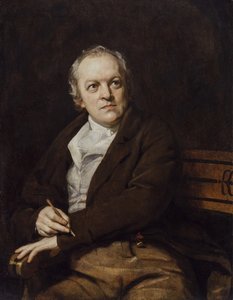
William Blake
1757 - 1827 , Storbritannia
Kort om kunstneren
- Artistic Movement Or Style: Romantikk
- Artists Who Influenced This Artist:
- Rafael
- Michelangelo
- Date Of Birth: 1757
- Date Of Death: 1827
- Full Name: William Blake
- Nationality: Britisk
- Notable Artworks:
- Lieder eines Innocents und einer Erfahrenen
- Die Hochzeit von Himmel und Erde
- Der Tiger
- Jerusalem
- Place Of Birth: London, UK
Relaterte artikler

Romantic Era Masterpieces: A Procurement Guide to Large-Scale Oil Reproductions for Hospitality Design
Streamline your hospitality design projects with premium Romantic Era oil reproductions. AllPaintingsStore.com offers scalable, handmade masterpieces, custom multi-panel layouts, and efficient bulk procurement for hotels and corporate spaces worldwide.

Timeless Mythology Masterpieces: A Strategic Procurement Guide for Professional Hospitality & Hotel Interiors
Optimize hospitality interiors with premium mythological painting reproductions. APS provides professional, high-volume art procurement for hotel designers, featuring hand-painted oils, custom multi-panel sets, and seamless global logistics. Reliable, scalable, and museum-grade.


