


 Se i rommet
 Del som digitalt kort
 Del
Del
 Detaljer
 Studentguide

 Last ned
 Liknende objekter
 Røntgen
 Lysbildefremvisning
 Besøksstatistikk
The bathing machine
 Les mer
Giclée / Kunsttrykk
Giclée- eller lerretsprint av museumskvalitet med rask produksjon og fleksible valgmuligheter for etterbehandling. ( Bestill håndmalt reproduksjon Gå til digitalt bilde)




































Velg mellom våre forhåndsdefinerte størrelser som bevarer kunstverkets opprinnelige proporsjoner.

Skriv inn bredden og høyden du trenger, slik at den passer til din ramme eller vegg. Et trykk kan kun beskjæres, aldri gjøres større enn bildet, så et format med en annen form vil miste en del av motivet. Vi sender deg en digital mockup for godkjenning før vi trykker noe som helst. Bildet som vises på denne siden viser ikke den faktiske beskjæringen — det er kun mockuppen som gjør det.
Verdensomspennende levering () på 2 uker i stedet for standard 4/5 uker. (28 October)

Gratis ekspressfrakt over hele verden

Lerretsduk av høykvalitets lin

Full transportforsikring

Garanti for refusjon av toll og importavgifter

Garantert fargeekthet

100 dagers returrett ved fabrikasjonsfeil

100% pengene tilbake-garanti

Mengderabatt
 Glassalternativet er kun tilgjengelig i størrelser under 110 cm

The bathing machine
Giclée / Kunsttrykk
Format på reproduksjon
-


Totalpris
Nkr 610
Relaterte kunstverk


Kunstnerbiografi
William Francis Freelove: A Pioneer of Zoological Illustration
William Francis Freelove (1840 – 1920) stands as a remarkable figure in the annals of British art history, primarily recognized for his meticulous and influential contributions to zoological illustration. Born in Oxford, England, Freelove’s artistic journey began with a formal education at Marlborough College before pursuing studies at Ruskin School of Drawing & Sculpture, where he honed his skills under the tutelage of John Ruskin—a formative influence that instilled within him a profound appreciation for natural beauty and detailed observation. Freelove swiftly established himself as a prolific illustrator, specializing in depictions of animals – particularly birds – for scientific publications. His work graced journals like *The Zoological Record*, *Nature*, and *Science*, cementing his reputation as one of the foremost artists documenting the animal kingdom during the Victorian era. Unlike many contemporaries who favored idealized representations, Freelove championed realism, painstakingly capturing anatomical accuracy alongside subtle nuances of plumage coloration and behavior. This commitment to scientific rigor elevated his illustrations beyond mere decoration; they served as invaluable tools for biologists studying species identification and distribution. His artistic style was characterized by a masterful blend of watercolor techniques—often incorporating grisaille (grey wash) underpainting—that achieved remarkable tonal depth and luminosity. Freelove’s meticulous attention to detail extended beyond color palettes, encompassing precise rendering of feathers, musculature, and skeletal structures. He meticulously studied specimens brought back from expeditions around the globe, painstakingly recreating their appearance with unwavering precision. This dedication to scientific accuracy was not merely a stylistic choice but reflected his deep conviction that art could illuminate understanding of the natural world. Freelove’s most celebrated achievement resides in his collaboration with Sir William Dunn School of Pathology, where he produced stunning illustrations for textbooks detailing immunological research—specifically concerning penicillin's discovery. These images powerfully conveyed complex scientific concepts through visual storytelling, demonstrating Freelove’s ability to communicate intricate information effectively and aesthetically. His work continues to inspire artists and scientists alike, serving as a testament to the enduring power of artistic observation and representation. Freelove’s legacy extends beyond his individual artworks; he championed the importance of combining art and science—a philosophy that resonated deeply with Ruskin's teachings. He firmly believed that artistic endeavor should be guided by intellectual curiosity and underpinned by careful study, resulting in representations that were both beautiful and informative. Freelove remains a pivotal figure in Victorian zoological illustration, whose unwavering commitment to realism and scientific rigor continues to shape our understanding of art’s role in advancing knowledge.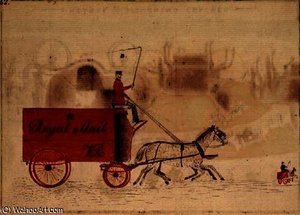
William Francis Freelove
1840 - 1920 , United Kingdom
Kort om kunstneren
- Full Name: William Francis Freelove
- Nationality: British
- Date Of Birth: 1840
- Date Of Death: 1920
- Place Of Birth: United Kingdom
- Notable Artworks:
- Stone & Marble Cart
- The Furniture Van
- Artistic Movement Or Style: French Mannerism
- Artists Who Influenced This Artist: ['Jean-Baptiste Camille Corot']
- Artists Or Movements Influenced By This Artist: ['Romanticism']

