


 Se i rommet
 Del som digitalt kort
 Del
Del
 Detaljer
 Studentguide

 Last ned
 Liknende objekter
 Røntgen
 Lysbildefremvisning
 Besøksstatistikk
Windmills
 Impressionism
 1911
1911 69.0 x 112.0 cm
 Les mer
Giclée / Kunsttrykk
Giclée- eller lerretsprint av museumskvalitet med rask produksjon og fleksible valgmuligheter for etterbehandling. ( Bestill håndmalt reproduksjon Gå til digitalt bilde)




P118B Nkr10

P118H Nkr10

P118W Nkr10

P438Z Nkr10

P508JH Nkr12

P508YH Nkr12

P805H Nkr10

P805Z Nkr10

P919BZ Nkr10

P919G Nkr10

P919XJ Nkr10

P959ZH Nkr10

P968JZ Nkr12

W106C Nkr8

W218G Nkr10

W218JH Nkr8

W218Y Nkr10

W307PJ Nkr10

W316G Nkr10

W316PJ Nkr8

W316Y Nkr10

W398PJ Nkr8

W4111J Nkr10

W500HY Nkr15

W500JH Nkr15

W692G Nkr12

W849H Nkr8

W940BG Nkr15

W953PJ Nkr8




Velg mellom våre forhåndsdefinerte størrelser som bevarer kunstverkets opprinnelige proporsjoner.

Skriv inn bredden og høyden du trenger, slik at den passer til din ramme eller vegg. Et trykk kan kun beskjæres, aldri gjøres større enn bildet, så et format med en annen form vil miste en del av motivet. Vi sender deg en digital mockup for godkjenning før vi trykker noe som helst. Bildet som vises på denne siden viser ikke den faktiske beskjæringen — det er kun mockuppen som gjør det.
Verdensomspennende levering () på 2 uker i stedet for standard 4/5 uker. (27 October)

Gratis ekspressfrakt over hele verden

Lerretsduk av høykvalitets lin

Full transportforsikring

Garanti for refusjon av toll og importavgifter

Garantert fargeekthet

100 dagers returrett ved fabrikasjonsfeil

100% pengene tilbake-garanti

Mengderabatt
 Glassalternativet er kun tilgjengelig i størrelser under 110 cm

Windmills
Giclée / Kunsttrykk
Format på reproduksjon
-


Totalpris
Nkr 609
A Pastoral Scene: William Grant Murray’s ‘Windmills’ (1911)
- Subject and Composition: ‘Windmills’ transports the viewer to a tranquil rural landscape, dominated by a stately windmill set against a backdrop of billowing clouds. The composition is carefully balanced; the windmill acts as a central focal point, yet doesn't overwhelm the scene. A modest building – perhaps a shed or small barn – nestles nearby, suggesting human presence and agricultural life. Two figures animate the field, one positioned to the left and another to the right, subtly guiding the eye through the painting. The inclusion of a grazing horse further enhances the sense of peaceful activity within this idyllic setting.
- Style and Technique: Painted in 1911, ‘Windmills’ reflects influences of Post-Impressionism and early Modernism, though Murray maintains a distinctly representational approach. His brushwork is visible yet controlled, creating texture and depth without sacrificing clarity. The color palette is muted and harmonious, dominated by earthy tones and soft greys that evoke the atmosphere of a cloudy day. Murray’s technique emphasizes light and shadow to define form and create a sense of spaciousness within the landscape.
Historical Context & Artistic Lineage
- A Scottish Artist in Transition: William Grant Murray (1877-1950) was a versatile British artist, renowned for his murals, portraits and mosaics. Educated at prestigious art schools including the Royal College of Art in London and the Académie Julian in Paris, he possessed a strong academic foundation. ‘Windmills’ dates from a period where Murray was establishing himself as a landscape painter, moving away from purely decorative work towards more expressive representations of the natural world.
- The Allure of Rural Life: The early 20th century witnessed a growing fascination with rural life and a desire to escape the rapid industrialization of urban centers. Paintings like ‘Windmills’ tapped into this sentiment, offering viewers a nostalgic vision of simpler times and harmonious coexistence between humanity and nature.
Symbolism & Emotional Resonance
- The Windmill as Metaphor: The windmill itself carries symbolic weight. Traditionally, windmills represent progress, ingenuity, and harnessing the power of nature for human benefit. However, they can also evoke a sense of timelessness and the cyclical rhythms of agricultural life. In this painting, the windmill stands as a silent sentinel, witnessing the passage of time and the enduring beauty of the countryside.
- A Mood of Serenity: ‘Windmills’ evokes a profound sense of peace and tranquility. The soft colors, gentle brushwork, and harmonious composition combine to create a calming atmosphere. It's a scene that invites contemplation and offers respite from the stresses of modern life. The painting’s emotional impact lies in its ability to capture a fleeting moment of beauty and stillness.
For Collectors & Interior Design
- A Versatile Addition: With dimensions of 69 x 112 cm, ‘Windmills’ is a substantial yet manageable artwork suitable for a variety of interior spaces. Its muted color palette and pastoral subject matter make it particularly well-suited to traditional or country-style interiors.
- Harmonious Placement: Consider pairing this painting with natural materials such as wood, linen, and stone to enhance its rustic charm. It would be a striking focal point in a living room, dining room, or study, adding warmth and character to any space. A high-quality reproduction of ‘Windmills’ offers an accessible way to bring the serenity of Murray's vision into your home.
Spørsmål og svar
Hvilken metning og intensitet har "Windmills" av William Grant Murray?
"Windmills" av William Grant Murray er gjengitt med en Muted metning og en Monochromatic intensitet.
Hvilken fargemetning har "Windmills" av William Grant Murray?
Fargene i "Windmills" av William Grant Murray har en Muted metning. Metning beskriver hvor levende eller dempede fargene er.
Kan jeg bruke utvidet virkelighet (AR) for å se "Windmills" av William Grant Murray i rommet mitt?
"Windmills" har en forhåndsvisning med utvidet virkelighet: AR-forhåndsvisning-siden til kunstverket viser det i ditt eget rom på en kompatibel enhet.
Relaterte kunstverk


Kunstnerbiografi
The Visionary of the Welsh Landscape: The Life of William Grant Murray
William Grant Murray was far more than a mere painter; he was a transformative force whose influence rippled through the British and Welsh artistic landscapes during the early twentieth century. Born in the coastal serenity of Portsoy, Scotland, in 1877, his early life was steeped in the rugged beauty of the north, a setting that would undoubtedly inform his lifelong fascination with light and atmosphere. His journey toward mastery began with rigorous academic discipline, moving from the Blairgowrie School of Art to the prestigious Edinburgh School of Art, before eventually finding himself at the heart of the London art scene within the Royal College of Art. It was during these formative years that Murray’s dedication to excellence became evident, earning him accolades that marked him as a rising star of his generation. The true metamorphosis of his style, however, occurred under the sun-drenched skies of France. In 1905, Murray immersed himself in the vibrant currents of European Impressionism while studying at the Académie Julian in Paris. This encounter with the French masters instilled in him a profound appreciation for the ephemeral—the way a sudden shadow falls across a meadow or how the morning mist clings to a harbor. He learned to see color not as static pigment, but as a living, breathing element that shifts with the passage of time. This Impressionist sensibility would become the heartbeat of his work, allowing him to capture the fleeting moments of light and movement that define the natural world.A Legacy of Leadership and Artistic Vitality
Beyond the canvas, Murray’s life was defined by a fierce commitment to the elevation of artistic education and the preservation of culture. His career took a pivotal turn when he moved into roles of significant responsibility, serving as the Art Headmaster at West Bromwich Municipal School of Art. Yet, it was his appointment as Principal of the Swansea Municipal School of Art that would cement his historical significance. Upon arriving, Murray famously critiqued the institution's state, viewing its lack of facilities as a sign of decay. Driven by an unwavering belief in artistic vitality, he spearheaded a period of unprecedented growth, transforming the school into a premier institution that, by 1914, stood among the top twenty-five in England and Wales. His influence extended deeply into the civic life of Wales through his role as the first curator of the Glynn Vivian Art Gallery. In this capacity, he acted as a guardian of beauty, shaping the collection and fostering a community where art could flourish alongside industry. His work was not limited to the small scale of easel painting; he possessed a grand vision that embraced murals and large-scale compositions, much like his brother George, who was also renowned for his monumental works. Through his dual roles as an educator and a curator, Murray ensured that the artistic pulse of Swansea remained strong through the turbulent years of the interwar period.The Essence of His Artistry
To look upon a work by Grant Murray is to experience a dialogue between structure and spontaneity. His technique often blended the disciplined foundations of his academic training with the fluid, emotive brushwork characteristic of the Impressionist movement. Whether he was depicting the rocky shores of his Scottish homeland or the shifting light of the Welsh coast, his paintings possess an inherent warmth and a sense of place that transcends mere representation. Key aspects of his artistic contribution include:- The integration of French Impressionist techniques into the British landscape tradition.
- A profound ability to capture atmospheric light and the transient qualities of nature.
- The institutional transformation of the Swansea Art School into a center of excellence.
- His pivotal role in the curatorial development of the Glynn Vivian Art Gallery.

William Grant Murray
1877 - 1950 , United Kingdom
Kort om kunstneren
- Artistic Movement Or Style: Impressionism
- Artists Who Influenced This Artist:
- Claude Monet
- Pierre Auguste Renoir
- Date Of Birth: 1877
- Date Of Death: 1950
- Full Name: William Grant Murray
- Nationality: British
- Notable Artworks:
- On the Seine
- Carreg Cennen Castle
- Barges on the Seine
- Place Of Birth: Portsoy, United Kingdom
Relaterte artikler

Golden Fields & Sun-Drenched Meadows: Capturing the Soul of Impressionist Landscapes
Immerse yourself in the luminous world of Impressionist landscapes. Discover how masters like Monet and Gauguin captured ephemeral light through plein air painting, and learn to bring the soul of sun-drenched meadows into your home with exquisite, hand-painted oil reproductions.

Impresjonistiske landskap: 10 mesterverk som definerte en kunstbevegelse | AllPaintingsStore.no
Opplev impresjonismens magi! Utforsk 10 ikoniske landskapsmalerier av Monet, Renoir og Degas. Lær historien bak mesterverkene & finn din perfekte kunsttrykk på AllPaintingsStore.com.

Beyond the Horizon: A Curated Guide to Integrating Post-Impressionist Landscapes into Modern Interiors
Transform your home with the emotive power of Post-Impressionist landscapes. Discover expert tips on selecting hand-painted oil reproductions to create a soulful, vibrant interior that reflects your unique style and connection to nature.
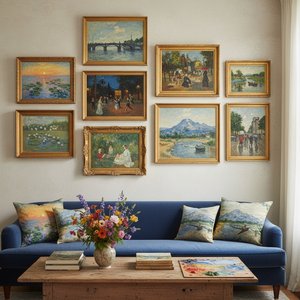
Impressionismens landskapskunst: Topp 10 mesterverk som definerte en epoke | AllPaintingsStore.no
Opplev impressionismens magi! Utforsk 10 ikoniske landskapsmalerier av Monet, Renoir og Van Gogh. Lær om kunsthistorien bak mesterverkene & finn din perfekte veggkunst på AllPaintingsStore.com – museumskvalitet for ditt hjem.

John Constable: Topp 25 Maler – Engelsk Landskapskunst i Ditt Hjem
Opplev John Constables 25 mest ikoniske malerier! Fordyp deg i engelsk romantikk, landskapskunst og atmosfæriske scener. Finn museumskvalitets reproduksjoner & interiørinspirasjon på AllPaintingsStore.com. Utforsk samlingen online!

