Pengene tilbake-garanti · 100 dager Gratis levering over hele verden
449564kunstverk 30613kunstnere 4660museer 32språk
Katalogoppføring

Homework

1874. Acrylic On Canvas.

Fig. 1. Winslow Homer, Homework, 1874. Vist som den reproduksjonen du har spesifisert: , .

§ 1Katalogdata

§ 2Abstrakt

Beskrivelse av objektet

Winslow Homer

Om kunstneren

Winslow Homer (1836-1910): Amerikansk realistisk kunstner kjent for sine kraftfulle bilder av hav og landskap! Opplev klassiske verk som Breezing Up og Gulf Stream.

§ 3Kommentarer

Homework by Winslow Homer: A Study in Quiet Observation

Winslow Homer’s “Homework,” painted in 1874, isn't merely a depiction of domestic life; it’s a masterful distillation of American Impressionism at its most poignant. This watercolor captures a moment of profound stillness—a young boy absorbed in his studies at a desk bathed in the soft glow of afternoon sunlight. Homer eschews grand narratives or dramatic gestures, instead favoring meticulous detail and subtle tonal shifts to convey an atmosphere of contemplative seriousness. The scene unfolds within a sparsely furnished room, dominated by a window that frames the exterior landscape – a muted expanse of greens and browns hinting at the natural world beyond the confines of the boy’s solitary pursuit.
  • Style: Homer's approach aligns perfectly with Impressionism, prioritizing capturing fleeting impressions rather than striving for photographic realism. He achieves this through loose brushstrokes and blended colors, creating an ethereal quality that softens the edges of form and emphasizes light—a technique he honed during his extensive excursions to Maine’s coastlines.
  • Technique: Homer's watercolor mastery is evident in his masterful control over pigment dispersion and layering. Notice how he builds up color gradually, achieving luminous effects through translucent washes that reveal underlying tones. The artist skillfully utilizes hatching and cross-hatching to sculpt form and create depth, subtly suggesting the contours of the desk and boy’s body.
  • Historical Context: Painted during Homer's formative years as an illustrator and artist, “Homework” reflects the burgeoning interest in capturing everyday life—a reaction against the academic conventions that dominated European art at the time. It speaks to a broader cultural shift toward valuing sincerity and observation over idealized representations.

Symbolism Within Simplicity

The painting’s quietude is laden with symbolic significance. The boy's posture—head bowed, hands clasped—represents diligence, focus, and the internalization of knowledge. Homer deliberately avoids portraying any outward emotion or dramatic action; instead, he invites viewers to contemplate the inner world of childhood experience. The window serves as a visual reminder of the natural world—a counterpoint to the boy’s indoor activity—suggesting an appreciation for harmony between human endeavor and the rhythms of nature. This juxtaposition reinforces Homer's belief that beauty can be found in the simplest of subjects, rendered with unwavering honesty.

Similar Works by Winslow Homer: Exploring Themes of Domesticity and Observation

Homer’s artistic vision extended beyond individual portraits; he consistently explored themes of rural life and human connection. Consider his celebrated paintings like “Children on a Fence,” housed at the Williams College Museum of Art, which similarly captures a moment of serene contemplation amidst the pastoral landscape—a testament to Homer's ability to distill profound emotion into understated visual language. Similarly, "Fresh Eggs," part of the National Gallery of Art’s collection, exemplifies his fascination with capturing the beauty of ordinary objects and scenes. These works underscore Homer’s enduring legacy as an artist who championed observation and empathy, qualities that continue to resonate powerfully with audiences today.

Owning a Piece of Homer's Vision: Reproductions Available at AllPaintingsStore.com

For those seeking to experience the beauty and contemplative spirit of “Homework” firsthand, high-quality reproductions are available at AllPaintingsStore.com. Crafted with meticulous attention to detail, these prints allow you to bring Homer’s masterful technique and evocative imagery into your home—a tangible connection to one of America's greatest artistic achievements. Explore the Williams College Museum of Art and the National Gallery of Art for inspiration and further insight into Homer’s oeuvre.

Spørsmål og svar

Hvilken kunstner og hvilken stil står bak "Homework"?

Bak "Homework" står Winslow Homer og Other-bevegelsen.

Hvordan knytter "Homework" av Winslow Homer Other til kunstnerens hjemland?

"Homework" ble skapt av Winslow Homer, som er født i USA, innenfor Other-bevegelsen. Kunstnerens opprinnelse knytter verket til Other slik det utøves av kunstnere fra USA.

Hvem er kunstneren bak "Homework"?

Kunstneren bak "Homework" er Winslow Homer. Verket er katalogisert under Winslow Homer sitt navn.
§ 4Kunstneren

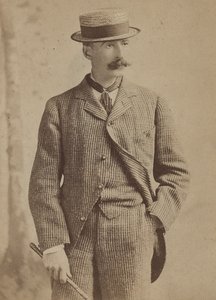
Winslow Homer

Winslow Homer

1836 - 1910, USA

Kort om Winslow Homer

  • Artistic Movement Or Style: Amerikansk Realisme
  • Artists Or Movements Influenced By This Artist: ['Amerikanske malere']
  • Artists Who Influenced This Artist:
    • Barbizon skole
    • Courbet
    • Millet
  • Date Of Birth: 24. februar 1836
  • Date Of Death: 29. september 1910
  • Full Name: Winslow Homer
  • Nationality: Amerikaner
  • Notable Artworks:
    • Breezing Up
    • Gulfstrømmen
    • Usinn
    • Vitenskapsmann
  • Place Of Birth: Boston, USA

Om kunstneren

A Brush with the American Spirit: The Life and Art of Winslow Homer

Winslow Homer, born in Boston in 1836, wasn’t sculpted by the traditional European art academies that shaped so many of his contemporaries. Instead, he emerged from a distinctly American experience, one rooted in practicality and observation. His journey began not with grand historical canvases, but as a commercial illustrator at the tender age of twelve for Harper's Weekly. This early apprenticeship was formative, honing an exceptional ability to capture scenes with clarity and detail – skills that would become hallmarks of his mature work. He wasn’t learning perspective in Paris; he was learning to *see* America, its people, and its unfolding story. The bustling streets of Boston, the quiet dignity of rural New England life, these were his first subjects, rendered with a precision born of necessity for the demands of print media. This foundation allowed him to transition into painting, initially in watercolor, before fully embracing the expressive potential of oil paints.

From Pastoral Scenes to the Raw Power of Nature

Homer’s early paintings often depicted idyllic scenes – children playing, farmers tending their fields, quiet moments of domesticity. These works, while charming, hinted at a deeper artistic sensibility waiting to be unleashed. The catalyst for this transformation was undoubtedly the Civil War. As a war correspondent for Harper's Weekly, Homer witnessed firsthand the brutal realities of conflict. He didn’t focus on heroic battles or grand strategies; instead, he documented the everyday lives of soldiers and civilians, the quiet moments of grief and resilience amidst chaos. This experience profoundly altered his artistic vision. The pastoral scenes gave way to more challenging subjects: veterans grappling with trauma, freed slaves navigating a new world, and the stark beauty of landscapes touched by hardship. He began to explore themes of struggle, isolation, and humanity’s precar He wasn't interested in imitating European styles; he wanted to create an art that was uniquely American, reflecting its landscapes, its people, and its challenges. His style also evolved, becoming bolder and more direct, reflecting the raw emotional impact of what he had witnessed. Breezing Up (A Fair Wind), painted in 1876, exemplifies this skill – a quintessential depiction of American maritime life, brimming with energy and movement. The Gulf Stream, created decades later, is perhaps his most iconic work, a powerful and symbolic portrayal of a lone man battling the forces of nature, a metaphor for human struggle against overwhelming odds. He wasn’t simply painting what he saw; he was conveying a feeling, an emotional truth about the human condition.

Mastering Light, Texture, and the American Landscape

Winslow Homer's artistic technique is immediately recognizable for its solidity and texture. He wasn’t interested in fleeting impressions; he wanted to build up a sense of tangible reality on the canvas. His oil paintings are characterized by a direct painting approach – layers of paint applied with confidence, creating depth and luminosity. He possessed an extraordinary ability to capture light, whether it was the dazzling glare of the sun on the ocean or the soft glow of twilight over a rural landscape. This mastery extended to his watercolors, where he achieved remarkable atmospheric effects through vibrant colors and delicate washes. He admired European artists like those of the Barbizon school – known for their realistic depictions of rural life – and acknowledged influences from Courbet and Millet, but he ultimately forged his own distinctly American path.

A Legacy Forged in American Realism

Winslow Homer's art offers a profound window into 19th-century America, providing invaluable insights into the social, political, and cultural landscape of his time. His paintings are not merely beautiful representations; they are powerful statements about human resilience, the beauty and power of nature, and the complexities of the American experience. He died in 1910, leaving behind a prolific body of work that continues to resonate with audiences today. His ability to depict America with honesty and authenticity – without romanticizing or idealizing it – ensures his place as one of America’s most important and enduring artists. His influence can be seen in the work of later American painters who sought to depict their own country with similar directness and emotional depth.
  • His work continues to inspire contemporary artists.
  • Homer remains a pivotal figure in the development of American Realism.

§ 5Relaterte verk

§ 6Spørsmål

Kort om verket

  • Influences: American Landscape Painting
  • Medium: Watercolor on paper
  • Artist: Winslow Homer
  • Title: Homework
  • Subject or theme: Domestic life

Kunnequiz om kunst

Det er kun ett riktig svar på hvert spørsmål.

Spørsmål 1:
What artistic style is prominently featured in Winslow Homer’s ‘Homework’?
Spørsmål 2:
The painting depicts a scene of everyday life. What element contributes to the artwork's quiet contemplation?
Spørsmål 3:
'Homework' showcases Homer’s mastery of watercolor technique. What characteristic is particularly notable about his approach?
Spørsmål 4:
Where can viewers experience ‘Homework’ firsthand?
Spørsmål 5:
Besides Homer, which other artist's paintings share similar themes of rural life and observation?

§ 7Sitér dette oppslaget

AllPaintingsStore.com, “Winslow Homer, Homework (1874)”, https://allpaintingsstore.com/no/art/winslow-homer-homework-8BX2LA-en/ArtistReproduction/ (hentet 7 October 2026).

§ 8Reproduksjonen

Håndlaget oljereproduksjon

Håndmalt olje på lerret i din valgte størrelse og ramme, laget på bestilling av våre kunstnere. ( Bytt til trykk Bytt til digitalt bilde)

Det er spesifisert i margen på ordreskjemaet; den nåværende statusen for dette skjemaet lyder som følger.

Homework

Trykkmetode

Størrelse på reproduksjon

-

Utvalgte mesterkunstnere

Mer detaljrikdom, finesse og ekstra produksjonstid

-

Innramming av reproduksjon

-

-

For kunstverk eller reproduksjoner som er større enn 105 cm (ca. 41 tommer) på noen side, vil rammen bli sendt som et sett som må monteres. Denne metoden sikrer trygg levering og forhindrer skader under transport.

Krever profesjonell montering – dette er ikke et DIY-produkt.
Settet må monteres og lerretet strammes av en erfaren profesjonell rammelegger, ved bruk av trelim (følger ikke med), en lerretstang og klemmer for å holde rammelisten vinkelrett mens limet tørker. Feilaktig montering eller ujevn stramming av lerretet kan påføre kunstverket permanente skader og er ikke dekket av vår garanti.

  • Alle massive trelister er inkludert, presist tilpasset i størrelse.

  • Monteres med de medfølgende skruene, samt trelim til hjørnene, som ikke er inkludert og må anskaffes av din rammehandler.

  • Profesjonelt verktøy er nødvendig og er ikke inkludert: en lerretstang (strammer) og klemmer for å holde rammene vinkelrette mens limet tørker.

Viktig:
Hjørnene krever trelim, listene må holdes på plass med tvinger til limet er helt tørt, og stramming av lerretet på den ferdige rammen krever en lerretstang. Ingen av disse produktene er inkludert i settet. Vennligst sørg for tilgang til en erfaren profesjonell rammehandler før du bestiller denne størrelsen.

Navneskilt

-

-

Beskyttende ferniss

Blank lakk (forsterker farger, beskytter mot lys og fuktighet)

-

Tilpass mitt kunstverk

Eksempler på hva som kan endres: Erstatt ansikt med bilde av kunden; Legg til kjæledyr (f.eks. bytt ut katt med hund); Inkluder en skjult melding i bakgrunnen; Endre bakgrunnslandskap eller elementer.

-

Ekspresslevering

Verdensomspennende levering () på 3–4 uker i stedet for standard 5 uker. (4 November). Ingen kompromisser med kvaliteten.

-

Ekspresslevering

Verdensomspennende levering til innen 5 uker. (11 November).

Inkludert frakt

Totalpris for valgte alternativer

Nkr 2466

Inkludert med hver bestilling

  • Gratis ekspressfrakt over hele verden
  • Lerretsduk av lin av høy kvalitet
  • Full transportforsikring
  • Garanti for refusjon av toll og importavgifter
  • Garantert fargegjengivelse
  • 100 dagers returrett ved fabrikasjonsfeil
  • 100% pengene tilbake-garanti
  • Rabatt ved flere kjøp
Bestillingsskjema