Gwarancja zwrotu pieniędzy · 100 dni Darmowa dostawa na cały świat
646 446dzieła sztuki 53 409artyści 5 406muzea 32język
Portret Jacob Vrel

18 najsłynniejszych obrazów artysty Jacob Vrel do wyboru

Aktualizacja: Październik 2026 · ranking według naszego wskaźnika popularności (liczba wyszukiwań, wizyt i zamówień dla każdego dzieła) · 19 dzieł Jacob Vrel w naszym katalogu

Szybka odpowiedź

Najważniejszym dziełem wśród obrazów Jacob Vrel jest Street Scene (1658), którego oryginał znajduje się w Muzeum J. Paula Getty'ego, Los Angeles. Na drugim i trzecim miejscu: An Old Woman by a Fireplace (1550) oraz Old woman seated with a young girl before a window (1645). Nasz katalog zawiera 19 dzieł autorstwa Jacob Vrel. Wymienione poniżej 18 pozycji to najsłynniejsze z nich, uszeregowane według rangi, wraz z rokiem powstania i muzeum, w którym znajduje się oryginał.

1630 – 1681, Friesland Dutch golden age Najwięcej dzieł: Ermitaż

Top 10: najsłynniejsze obrazy artysty Jacob Vrel

1
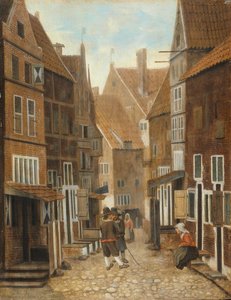
Street Scene (1658) autorstwa Jacob Vrel

Street Scene

1658 · Oil · Muzeum J. Paula Getty'ego, Los Angeles

is a somber and atmospheric Dutch Golden Age street scene dating from 1658. The composition utilizes a vertical orientation to emphasize the height of the surrounding architecture, creating a sense of enclosure within a narrow, cobblestone alleyway. This urban setting is lined with tall, weathered brick buildings that recede into the shadows through a one-point perspective, providing a sense of depth.

Hand-painted oil reproduction from $245 29 × 35 cm
Wybierz rozmiar Zobacz szczegóły
2
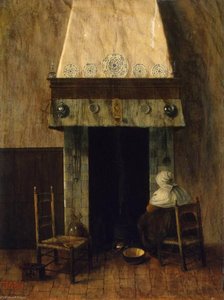
An Old Woman by a Fireplace (1550) autorstwa Jacob Vrel

An Old Woman by a Fireplace

1550 · Oil · Ermitaż, Sankt Petersburg

In the quiet shadows of a rural dwelling, An Old Woman by a Fireplace brings a solitary moment of domestic life into view. This work by Jacob Vrel captures a portrait of an old woman, her presence felt through the stillness of her surroundings. The scene unfolds around the warmth of a hearth, a fireplace scene that anchors the entire composition. It is a glimpse into a private, unhurried existence,…

Hand-painted oil reproduction from $170 27 × 37 cm Same size as the original $174 31 × 36 cm Order at original size →
Zamów ten obraz Szczegóły obrazu
4
An Old Woman by a Fireplace (1550) autorstwa Jacob Vrel

An Old Woman by a Fireplace

1550 · Oil · Ermitaż, Sankt Petersburg

An elderly woman sits positioned before the hearth, seeking warmth from the glowing embers. The composition captures a private instance of domestic life, where the soft light of the fire illuminates her features and the surrounding room. Two bowls rest near her, suggesting a simple meal or drink, while a bottle stands nearby in the shadows. A clock hangs upon the wall above the mantel, its presence marking the steady…

Hand-painted oil reproduction from $170 27 × 36 cm Same size as the original $174 31 × 36 cm Order at original size →
Zamów ten obraz Szczegóły obrazu
5
The Little Nurse (1655) autorstwa Jacob Vrel

The Little Nurse

1655 · National Gallery of Art, Waszyngton

The Little Nurse, painted by the Dutch artist Jacobus Vrel in 1655, is a captivating oil on panel artwork that showcases the artist's skill in capturing intimate domestic scenes. This painting is part of the collection at the Ashmolean Museum in Oxford, United Kingdom. Artistic Style and Technique Jacobus Vrel was known for his unique style, which often blended elements of realism with a sense of tranquility. In The Little…

Hand-painted oil reproduction from $170 27 × 37 cm Same size as the original $208 42 × 54 cm Order at original size →
Wybierz rozmiar Zobacz szczegóły

Od 11 do 18 miejsca: więcej obrazów autorstwa Jacob Vrel

Obrazy artysty Jacob Vrel według tematu

Cztery najczęstsze tematy w tym rankingu wraz z najważniejszym dziełem dla każdego z nich.

Muzea posiadające oryginały artysty Jacob Vrel

8 muzeów, w których znajduje się najwięcej obrazów z tej strony.

Muzea Miasto Dzieła artysty Jacob Vrel Obrazy z tej listy
Ermitaż, Sankt PetersburgErmitaż Sankt Petersburg 2 An Old Woman by a Fireplace, An Old Woman by a Fireplace
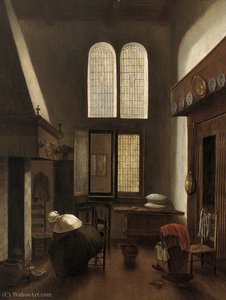
Thyssen-Bornemisza Museum, MadrytThyssen-Bornemisza Museum Madryt 2 Interior Scene (Woman Seated by a Hearth), Interior with a Woman Seated by a Hearth
Rijksmuseum, AmsterdamRijksmuseum Amsterdam 2 Woman at the hearth, City view
Muzeum J. Paula Getty'ego, Los AngelesMuzeum J. Paula Getty'ego Los Angeles 1 Street Scene
National Gallery of Art, WaszyngtonNational Gallery of Art Waszyngton 1 The Little Nurse
Kunsthistorisches Museum, WiedeńKunsthistorisches Museum Wiedeń 1 Women at the window
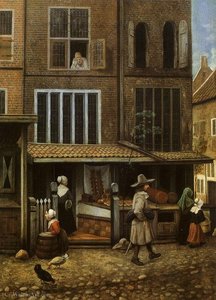
Bawarskie Państwowe Zbiory Malarstwa, MonachiumBawarskie Państwowe Zbiory Malarstwa Monachium 1 View of a street
Królewskie Muzea Sztuk Pięknych w Belgii, BrukselaKrólewskie Muzea Sztuk Pięknych w Belgii Bruksela 1 Dutch interior

Najlepszy obraz dekady: Jacob Vrel

Dzieła według dekad

Wybierz dekadę, aby zobaczyć jej najważniejszy obraz.

Obrazy: Jacob Vrel – FAQ

Które dzieło jest najsłynniejszym dziełem Jacob Vrel?Pokaż odpowiedź

Street Scene (1658), Muzeum J. Paula Getty'ego, Los Angeles, zajmuje pierwsze miejsce, a następnie An Old Woman by a Fireplace (1550) i Old woman seated with a young girl before a window (1645).

W jakim wieku Jacob Vrel namalował/a Street Scene?Pokaż odpowiedź

Jacob Vrel miał 28 lat: Street Scene pochodzi z 1658, a Jacob Vrel urodził się w 1630.

Jakie są dziesięć najsłynniejszych obrazów, których autorem jest Jacob Vrel?Pokaż odpowiedź

Street Scene, An Old Woman by a Fireplace, Old woman seated with a young girl before a window, An Old Woman by a Fireplace, The Little Nurse, Women at the window, View of a street, Dutch interior, Interior Scene (Woman Seated by a Hearth) i Sleeping Woman (The Convalescent). Rok powstania oraz muzeum dla każdego z nich znajdują się w powyższym rankingu.

Ile obrazów artysty Jacob Vrel znajduje się na liście?Pokaż odpowiedź

W naszym katalogu znajduje się 19 dzieł artysty Jacob Vrel, datowanych od 1645 do 1662.

W których muzeach znajdują się najsłynniejsze oryginały dzieł Jacob Vrel?Pokaż odpowiedź

Głównie w Ermitaż (Sankt Petersburg), Thyssen-Bornemisza Museum (Madryt) i Rijksmuseum (Amsterdam). Pełna lista znajduje się w powyższej tabeli muzeów.

Kiedy powstały najważniejsze obrazy artysty Jacob Vrel?Pokaż odpowiedź

W okresie 1650s: 6 z 18 obrazów znajdujących się na tej liście pochodzi z tego czasu, w tym Street Scene.

Jakie są najstarsze i najnowsze słynne obrazy artysty Jacob Vrel?Pokaż odpowiedź

Najwcześniejsze na tej stronie: Old woman seated with a young girl before a window (1645). Najnowsze: Interior with a Woman Combing a Little Girl's Hair (1662).

Jakie tematy najczęściej pojawiają się na obrazach Jacob Vrel?Pokaż odpowiedź

Spośród 18 obrazów sklasyfikowanych tutaj: Buildings (3), Portraiture (3) i Women (3).

Która technika jest najczęstsza w obrazach Jacob Vrel?Pokaż odpowiedź

Oil, spośród 3 z 18 obrazów sklasyfikowanych tutaj.

Do jakiego nurtu należą obrazy Jacob Vrel?Pokaż odpowiedź

Dutch golden age, na podstawie obrazów uszeregowanych na tej stronie.

Jakie słynne obrazy Jacob Vrel znajdują się w Ermitaż?Pokaż odpowiedź

Muzeum Ermitaż, Sankt Petersburg posiada 2 z obrazów wymienionych na tej liście, w tym An Old Woman by a Fireplace i An Old Woman by a Fireplace.

Czy mogę kupić reprodukcję obrazu Jacob Vrel?Pokaż odpowiedź

Tak. Każdy obraz na tej stronie można zamówić jako ręcznie malowaną reprodukcję olejną lub wydruk. Otwórz obraz, wybierz rozmiar i złóż zamówienie.

Jacob Vrel: artysta stojący za tymi dziełami

Jacobus Vrel: The Shadow Painter Who Illuminated Vermeer’s Legacy

Jacobus Vrel (c. 1617 – 1681) remains an artist shrouded in mystery, a figure whose brilliance was largely eclipsed by the towering presence of Johannes Vermeer during his lifetime and subsequently overshadowed by scholarly debates about his artistic lineage. Despite the initial confusion surrounding his identity—often mistaken for Vermeer’s imitator—recent research has definitively established Vrel as a genuine innovator, a precursor to Vermeer who subtly reshaped the landscape of Dutch Baroque painting. This rediscovery marks a pivotal moment in art history, prompting historians and critics alike to reconsider our understanding of artistic influences and creative processes.
  • Early Life & Origins: Little is known about Vrel’s birthdate or place of origin. Records indicate he was born around 1617 in Delft, the Netherlands—a city renowned for its artistic patronage during the Golden Age. However, definitive proof of his familial background remains elusive, fueling speculation and prompting ongoing investigations into his ancestry.
  • Training & Artistic Influences: Vrel’s formative years were spent under the tutelage of Rembrandt Harmenszoon van Rijn, arguably the most celebrated painter of his era. This association profoundly impacted Vrel's artistic style, imparting a meticulous attention to detail and fostering an appreciation for dramatic lighting—characteristics that would become hallmarks of Vermeer’s oeuvre. Beyond Rembrandt, Vrel absorbed influences from Pieter Janssens Elinga and Gerard Ter Borch, artists who championed the genre scene and contributed to shaping the visual vocabulary of their time.

A Distinctive Style: Interiors & Atmospheric Perspective

Vrel's artistic vision centered on capturing the essence of domestic life—particularly interiors bathed in soft light—a stylistic preoccupation that anticipated Vermeer’s groundbreaking explorations of spatial illusion and psychological realism. Unlike Rembrandt, who favored grand narratives and theatrical compositions, Vrel opted for understated elegance, prioritizing subtle nuances of color and texture to convey mood and atmosphere. His paintings are characterized by a remarkable sensitivity to natural illumination, achieved through masterful use of chiaroscuro—the interplay between light and shadow—a technique that Vermeer perfected with unparalleled precision.
  • Genre Scenes: Vrel excelled in depicting genre scenes—scenes from everyday life—featuring women engaged in domestic activities such as cooking, sewing, and caring for children. These paintings are imbued with a palpable sense of intimacy and immediacy, reflecting Vrel’s fascination with capturing the subtleties of human emotion and behavior.
  • Atmospheric Perspective: Vrel skillfully employed atmospheric perspective—the gradual blurring of distant objects due to haze—to create depth and realism in his landscapes and interiors alike. This technique demonstrates Vrel's mastery of optical principles and underscores his commitment to conveying a convincing illusion of space.

Rediscovery & Recognition: The Vermeer Connection

The attribution of Vrel’s paintings to Vermeer initially sparked considerable controversy within the art historical community. However, meticulous dendrochronological analyses—the dating of wooden panels using tree ring patterns—have conclusively proven that Vrel predated Vermeer by several years. This groundbreaking discovery revolutionized our understanding of artistic chronology and challenged prevailing assumptions about Vermeer's stylistic development.
  • Théophile Thoré & Cornelis Hofstede de Groot: The pivotal role played by Théophile Thoré and Cornelis Hofstede de Groot in establishing Vrel’s identity cannot be overstated. Thoré, recognizing the similarities between Vrel's paintings and Vermeer’s work—particularly the use of atmospheric perspective—challenged the conventional wisdom that Vermeer was merely a follower of Rembrandt. Hofstede de Groot further solidified Vrel’s reputation by publishing an influential article in 1903 that definitively refuted the Vermeer attribution, marking a watershed moment in art scholarship.

Legacy & Significance: A Quiet Genius Ahead of His Time

Despite his obscurity during his lifetime, Jacobus Vrel has emerged as a celebrated figure in contemporary art history—a testament to the enduring power of artistic innovation and the importance of revisiting overlooked masterpieces. His paintings continue to captivate viewers with their serene beauty, psychological depth, and subtle mastery of technique—qualities that resonate powerfully with Vermeer’s legacy. Vrel stands as an exemplar of Dutch Baroque painting, demonstrating a profound understanding of human experience and a remarkable ability to convey emotion through visual imagery—a quiet genius who illuminated the path toward Vermeer's unparalleled artistic achievement.

Notable Works