

1911. Acrylic On Canvas.

§ 1Catalogue data


§ 2Abstract
Opis obiektu
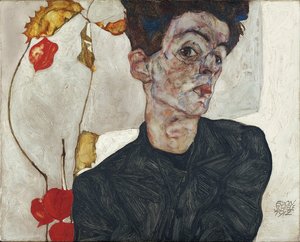
Egon Schiele’s ‘Moa’ (1911) captures a dancer enveloped in rich textiles, showcasing his innovative Expressionist style and departure from Klimt's influence. Explore the painting’s striking contrasts & emotive power.
 Rozwiń treść
Biografia artysty
Egon Schiele – ekspresjonista z Wiednia. Mocne portrety, psychologiczne tematy i unikalne linie. Odkryj jego dzieła! Reprodukcje dostępne na AllPaintingsStore.
§ 3Commentary
Egon Schiele’s “Moa”: A Study in Vulnerability and Expressionist Boldness
The painting "Moa" by Egon Schiele, created in 1911, stands as a haunting testament to the artist's preoccupation with mortality and his masterful manipulation of color and form. It depicts a dancer—referred to as Moa—immersed within richly patterned textiles, capturing Schiele’s distinctive Expressionist style and decisively departing from Klimt’s opulent ornamentation. This artwork immediately draws the eye with its striking contrasts: the vibrant hues of the fabric juxtaposed against the stark simplicity of the nude figure beneath, creating a visual tension that speaks volumes about the psychological landscape of the era.A Departure From Klimt's Influence
Schiele’s artistic vision was profoundly shaped by Klimt’s decorative style—particularly “The Kiss”—but he resolutely rejected its gilded surface and stylized figures. Instead, Schiele prioritized raw emotion and anatomical precision, pushing boundaries of representation to convey inner turmoil. The dancer is rendered in a manner that eschews idealized beauty; her body is painted in reds and blues, colors often associated with passion and sorrow respectively, highlighting the vulnerability inherent in the human condition—a theme central to Schiele’s oeuvre.Technique and Composition: Bold Lines and Fragmented Form
Schiele employed a meticulous technique characterized by bold lines and fragmented form. Pencil strokes delineate the contours of the dancer's body with unwavering certainty, emphasizing her physicality while simultaneously conveying a sense of instability. The drapery—a dominant element in the composition—is rendered in geometric patterns that serve to obscure the nude figure beneath, creating an illusionistic depth that amplifies the painting’s emotional impact. This deliberate fragmentation reflects Schiele’s exploration of psychological states and his rejection of traditional artistic conventions.Symbolism: Facing Mortality
“Moa” embodies a powerful symbolic resonance rooted in Schiele's fascination with death and decay—themes recurrent throughout his work. The dancer’s gaze, directed upwards and slightly off-center, suggests defiance yet simultaneously conveys a profound awareness of mortality. This subtle gesture underscores Schiele’s belief that art should confront uncomfortable truths about human existence. The artist’s use of color – particularly the reds and blues – reinforces this symbolic dimension, representing passion and sorrow—the fundamental emotions underpinning the experience of life and death.Emotional Impact: A Portrait of Anxiety
Ultimately, “Moa” succeeds in capturing a palpable sense of anxiety and vulnerability. Schiele's masterful rendering of human anatomy combined with his expressive use of color creates an image that lingers in the viewer’s mind long after encountering it. It is not merely a depiction of a dancer; it is a portrait of the human spirit grappling with existential questions—a timeless masterpiece that continues to resonate with audiences today. The painting invites contemplation on themes of fragility, beauty and confronting one's own mortality.- Artist: Egon Schiele
- Year Created: 1911
- Medium: Watercolor and Pencil
- Style: Expressionism
Pytania i odpowiedzi
Jakie umiejscowienie najlepiej pasuje do formatu dzieła „Moa” – Egon Schiele?
Format Portrait dzieła „Moa” – Egon Schiele jest rekomendowany do Hotel Lobby. Format oraz przestrzeń wspólnie pomagają w odpowiednim rozmieszczeniu reprodukcji.
Jak mogę podejrzeć reprodukcję dzieła „Moa” – Egon Schiele?
Strona Podgląd w pomieszczeniu dzieła „Moa” pozwala na podgląd obrazu przed złożeniem zamówienia.
Czy mogę użyć rozszerzonej rzeczywistości, aby zobaczyć „Moa” – Egon Schiele w swoim pokoju?
„Moa” posiada podgląd w rozszerzonej rzeczywistości: strona Podgląd w AR pozwala zobaczyć dzieło w Twojej własnej przestrzeni na kompatybilnym urządzeniu.


 Przełącz na wydania drukowane


 W przypadku dzieł sztuki lub reprodukcji, których którykolwiek z boków przekracza 105 cm (około 41 cali), rama zostanie wysłana w formie zestawu do samodzielnego montażu. Metoda ta zapewnia bezpieczną dostawę i zapobiega uszkodzeniom podczas transportu.


