Zobacz w skali 1:1
 Wyślij
 Udostępnij
 Szczegóły
 Przewodnik

 Pobierz plik obrazu
 Podobne obiekty
 RTG
RTG Pokaz slajdów
 Statystyki
Świąteczna wycieczka


 Czytaj więcej
Ręcznie malowana reprodukcja olejowa
Ręcznie malowany obraz olejny na płótnie, wykonany na zamówienie przez naszych artystów w wybranym przez Ciebie wymiarze i oprawie. ( Przełącz na wersję drukowaną Przełącz na wersję cyfrową)




P118B $10

P118H $10

P118W $10

P438Z $10

P508JH $12

P508YH $12

P805H $10

P805Z $10

P919BZ $10

P919G $10

P919XJ $10

P959ZH $10

P968JZ $12

W106C $8

W218G $10

W218JH $8

W218Y $10

W307PJ $10

W316G $10

W316PJ $8

W316Y $10

W398PJ $8

W4111J $10

W500HY $15

W500JH $15

W692G $12

W849H $8

W940BG $15

W953PJ $8




Wybierz spośród naszych standardowych rozmiarów, które zachowują oryginalne proporcje dzieła sztuki.

Możesz wprowadzić własne wymiary, aby dopasować obraz do konkretnej ramy lub przestrzeni. Jeśli wybrany rozmiar nie będzie odpowiadał proporcjom oryginału, przytniecie dzieło sztuki lub rozszerzymy je o dodatkowe elementy, ręcznie domalowane przez artystę. Przed rozpoczęciem produkcji wyślemy projekt cyfrowy do Twojej akceptacji.
Należy pamiętać, że podgląd na ekranie nie odzwierciedla rzeczywistego przycinania ani rozszerzania obrazu. Tylko projekt dokładnie pokaże ostateczną kompozycję.
Choć oferujemy możliwość zamówienia niestandardowych rozmiarów, zalecamy wybór wymiaru z gotowej listy, aby zachować oryginalne proporcje dzieła.
Po złożeniu zamówienia zespół AllPaintingsStore.com skontaktuje się z klientem drogą mailową w celu uzyskania instrukcji i prześle wizualizację projektu
Dostawa na całym świecie () w ciągu 3–4 tygodni zamiast standardowych 5 tygodni. (22 Wrzesień). Bez kompromisów w kwestii jakości.

Bezpłatna ekspresowa wysyłka na cały świat

Wysokiej jakości płótno lniane

Pełne ubezpieczenie transportowe

Gwarancja zwrotu należności celnych i podatków importowych

Gwarancja idealnego odwzorowania barw

100-dniowy okres na zwrot dzieła w przypadku wykrycia wad produkcyjnych

Gwarancja 100% zwrotu pieniędzy

Oferta przy zakupie wielu sztuk
 Opcja ze szkłem jest dostępna wyłącznie w rozmiarach poniżej 110 cm

Świąteczna wycieczka
Technika wykonania
Rozmiar reprodukcji
-


Suma do zapłaty
$ 283
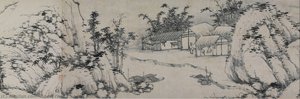
Shen Zhou’s Spring Outing: A Masterpiece of Tranquility
Shen Zhou’s “Spring Outing,” painted circa 1483 during the Ming Dynasty, stands as a testament to the zenith of scholar-artist ideals—a realm where artistic expression served as a conduit for philosophical contemplation and refined aesthetic sensibility. More than just a depiction of a wintry landscape, it embodies a profound meditation on harmony between humanity and nature, reflecting the prevailing worldview of its time and cementing Shen Zhou’s place among the Four Masters of Ming painting. The scroll's enduring appeal lies not merely in its visual beauty but also in its subtle layering of symbolism and masterful execution—elements that continue to captivate audiences centuries later.- Style & Technique: The artwork exemplifies the Wu School’s distinctive approach, prioritizing atmospheric perspective and understated brushwork. Shen Zhou skillfully employed long hemp-fibre texture strokes – a technique borrowed directly from Huang Gongwang – to render the rocky hillsides with remarkable realism, capturing the ruggedness of the terrain while simultaneously conveying a sense of timeless grandeur. Complementing this textural richness is Ni Zan’s characteristic dotting method, applied delicately to create luminous highlights and imbue the scene with an ethereal quality.
- Composition & Perspective: The horizontal format—a hallmark of scroll paintings—immediately establishes a serene rhythm, guiding the viewer's gaze across the expansive vista. Layers of hills dominate the upper portion of the composition, framing a central area populated by buildings and figures – primarily scholars engaged in an outing. Shen Zhou’s masterful use of perspective subtly diminishes the scale of distant mountains, reinforcing the impression of boundless space and conveying a feeling of profound contemplation.
- Color Palette & Light: Remarkably devoid of vibrant hues, “Spring Outing” relies solely on variations in ink density to generate tonal depth and luminosity. The predominant grayscale palette—ranging from muted washes to darker outlines—creates an atmosphere of quiet solemnity, mirroring the contemplative mood evoked by the subject matter. Shen Zhou’s subtle manipulation of light contributes significantly to the painting's emotional impact, casting a soft glow upon the snow-covered ground and highlighting the contours of the hillsides.
- Subject Matter & Symbolism: The scene depicts a wintry landscape—a deliberate choice reflecting the Wu School’s fascination with capturing the beauty of winter’s stillness and resilience. Scattered trees punctuate the horizon, adding visual interest while simultaneously symbolizing longevity and permanence – concepts central to Confucian philosophy. The presence of scholars engaged in an outing speaks to the importance of intellectual pursuits and harmonious living within the natural world.
- Historical Context: Painted during a period marked by significant political upheaval and artistic innovation, “Spring Outing” reflects the Wu School’s commitment to upholding traditional values amidst turbulent times. Shen Zhou's meticulous attention to detail—evident in the rendering of rocks, trees, and buildings—demonstrates his unwavering dedication to mastering established techniques while simultaneously injecting them with a personal vision. The scroll bears seals bearing the Qianlong Emperor’s signature, signifying its prestige and confirming its place within the canon of Ming art.
- Shen Zhou: Discover Shen Zhou (1427–1509), founder of the Wu School & Ming Dynasty master! Explore his serene landscapes, delicate ‘boneless’ floral art, and legacy as a scholar-artist.
- Shen Zhou, A Spring Gathering - Smarthistory: Artists during the Ming dynasty often honored their patrons by portraying them in a garden studio.…
- Shen Zhou, A Spring Gathering (article) - Khan Academy: Sprouting willows and blossoming peach trees suggest it is springtime.…
- A Spring Gathering 《春行訪友圖》 - National Museum of Asian Art: A Spring Gathering 《春行訪友圖》 is an object in the NMAA collection.…
- Zhou Shen: Zhou Shen (Chinese: 周深; pinyin: Zhōu Shēn; born (1992-09-29)29 September 1992), also known as Charlie Zhou, is a Chinese singer.…
Podobne dzieła


Biografia artysty
A Life Dedicated to Art and Contemplation
Shen Zhou, a name synonymous with the flourishing of scholar-artist ideals in Ming dynasty China, was born in 1427 near Suzhou into a family whose wealth stemmed from both land ownership and service as tax collectors. This fortunate circumstance afforded him an upbringing steeped in learning and cultural refinement, yet he consciously chose a path diverging from the conventional expectations of his social standing. Rather than pursuing official examinations and a career within the imperial bureaucracy, Shen Zhou dedicated himself to filial piety, caring for his widowed mother, Chang Su-wan. This decision wasn’t one of resignation but rather a deliberate embrace of a reclusive life centered on artistic pursuits, intellectual exchange, and quiet contemplation – a lifestyle that would profoundly shape both his art and legacy. He lived a long life, dying in 1509, witnessing significant shifts within the Chinese political and artistic landscape, and ultimately becoming a pivotal figure in defining a new aesthetic direction.The Rise of the Wu School and a Revivalist Spirit
Shen Zhou’s artistic development unfolded during a period of considerable transition in Chinese painting history. The relocation of the Ming capital from Nanjing to Beijing created a cultural distance, lessening the direct influence of imperial tastes and allowing for regional styles to flourish. It was within this environment that Shen Zhou emerged as the founder of the Wu School, based in Suzhou. This wasn’t merely a geographical designation; it represented a conscious revival of artistic principles championed by scholar-painters of the preceding Yuan dynasty. These artists viewed painting not as a profession or a means to courtly favor, but as an integral part of self-cultivation – a meditative practice reflecting one's inner world and understanding of the universe. The Wu School painters deliberately distanced themselves from the more formal, technically precise style favored by the Ming court, seeking instead a return to the expressive freedom and individualistic spirit of earlier masters.Mastering Tradition, Forging a Unique Style
Shen Zhou’s artistic foundations were deeply rooted in the legacy of Yuan dynasty painters like Wang Meng, Huang Gongwang, and Wu Zhen. He meticulously studied their techniques, absorbing their compositional strategies and brushwork nuances. However, he wasn't simply an imitator; he possessed a remarkable ability to synthesize these influences with his own innovative sensibilities. His landscapes are particularly celebrated for their meticulous detail, reflecting both a reverence for Chinese history and the philosophical underpinnings of Confucianism. He also became renowned for his distinctive “boneless” flower paintings – delicate renderings of blossoms and foliage achieved without strong outlines, echoing the ethereal quality found in the works of Yuan masters. This technique demanded exceptional control over ink wash and an intuitive understanding of form. Beyond technical skill, Shen Zhou’s work is characterized by a harmonious integration of painting, poetry, and calligraphy. He frequently collaborated with fellow artists, engaging in gatherings where these art forms intertwined, creating holistic expressions of artistic vision. The accompanying poems were not mere embellishments but integral components of the artwork itself, adding layers of meaning and emotional resonance.A Lasting Legacy: The Four Masters and Beyond
Shen Zhou’s impact on Chinese art history is immeasurable. His establishment of the Wu School fostered a new generation of scholar-artists who carried forward his ideals of artistic independence and expressive freedom. He is rightfully regarded as one of the “Four Masters of Ming,” alongside Wen Zhengming, Tang Yin, and Qiu Ying – a testament to his enduring influence and exceptional talent. His art continues to be studied and admired for its technical brilliance, profound philosophical depth, and embodiment of the scholar-artist ideal. Shen Zhou’s work represents not just a revival of past traditions but a vital contribution to the ongoing evolution of Chinese painting, shaping the course of Ming dynasty aesthetics and leaving an indelible mark on subsequent generations of artists. He remains a significant figure whose serene landscapes and delicate floral studies continue to captivate and inspire.
Shen Zhou
1427 - 1509 , China
Najważniejsze informacje
- Artistic Movement Or Style: Wu School
- Artists Or Movements Influenced By This Artist:
- Wen Zhengming
- Tang Yin
- Qiu Ying
- Wu School
- Artists Who Influenced This Artist:
- Wang Meng
- Huang Gongwang
- Wu Zhen
- Date Of Birth: 1427
- Date Of Death: 1509
- Full Name: Shen Zhou
- Nationality: Chinese
- Notable Artworks:
- Landscape with Four Pines
- Marsh Scene with Birds
- Autumn Colors among Streams…
- Place Of Birth: Xiangcheng, China
Zobacz także powiązane artykuły
Efemerowe Wyrażenia: Niuanse Malarstwa Tuszem w Historii i Sztuce Współczesnej
Poznaj fascynujący świat malarstwa tuszem! Odkryj historię, techniki i filozofię tej wyjątkowej sztuki azjatyckiej. Przewodnik po mistrzach pędzla i inspiracje dla współczesnych artystów.

Katsushika Hokusai: 25 Arcydzieł Sztuki Japońskiej dla Kolekcjonerów i Miłośników Dekoracji
Odkryj 25 arcydzieł Katsushika Hokusai, mistrza ukiyo-e! Poznaj historię Wielkiej Fali i innych ikonicznych drzeworytów. Inspiracje wnętrzarskie i reprodukcje obrazów najwyższej jakości na AllPaintingsStore.com – sztuka japońska dla Twojego domu.

The Beauty of Ink Wash: Discover Serene & Soulful Art for Your Home
Discover the tranquil beauty of ink wash painting. Explore how Sumi-e and monochrome landscapes bring Zen-inspired serenity and soulful elegance to your home decor through expert curation and timeless East Asian aesthetics.

Xie Zhiliu: A Legacy of Ink Wash Painting & Modern Chinese Literati Tradition
Explore the legacy of Xie Zhiliu, a master of Chinese ink wash painting & prominent figure in modern art. Discover his techniques, influences, and contributions to literati tradition. A guide for discerning collectors.
The Alchemy of Ink: Mastering the Timeless Beauty and Art History of Paper and Brush
Embark on a sophisticated exploration of ink wash painting and Sumi-e. Uncover the profound historical lineages, Zen philosophies, and technical mastery behind this timeless medium in our authoritative guide for fine art enthusiasts.