A Legacy in the Stable
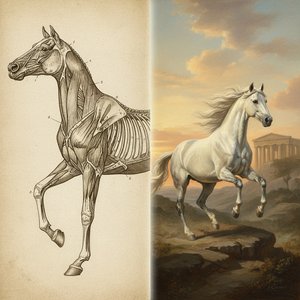
Born into a family where the scent of oil paint and the presence of livestock were constant, Benjamin Herring II grew up in the shadow of a significant artistic lineage. As the youngest of six children, his early years were spent observing the work of his father, John Frederick Herring, Sr. He did not merely learn to paint; he learned to see the specific anatomy of a horse and the quiet stillness of a farmyard. His training was intimate, passed down through direct observation and the shared language of the brush, as he assisted his father on various compositions.
His focus remained fixed on the sporting life. He spent his career looking closely at the musculature of a horse in motion and the textures of the turf. While he shared the family's preoccupation with equine subjects, his hand moved with a different sensibility. He moved away from the heavy, deep tones favored by his kin, choosing instead a palette of softer, pastel colors. This choice gave his work a lightness that distinguished his output from the more somber traditions of his brothers and father.
The Hand and the Horse
His work is defined by a specific way of handling the subject matter. He sought to capture the fluidity of movement, ensuring that a horse appeared to possess weight and life rather than being a static figure. His technical approach relied on a realistic rendition of the animal, focusing on the way light hits a coat or the tension in a limb. His exhibitions at the Royal Society of British Artists and the British Institution placed his work among the professional circles of his time.
The records of his output include specific studies of racing and stable life:
A Shortened Career
The time Benjamin Herring II spent producing work was relatively brief. He died at the age of 41, leaving behind a small body of paintings. There is a sense that his skill deepened as he aged, with his most accomplished pieces appearing toward the end of his life. His contribution to the tradition of British sporting art lies in this quiet, specialized focus on the horse, rendered through a lens of softer color and a keen eye for the physical reality of the animal.
Pytania i odpowiedzi
Gdzie mogę zobaczyć wszystkie dzieła Benjamin Herring II?
Wszystkie dzieła Benjamin Herring II dostępne w niniejsza strona można przeglądać na stronie Wszystkie dzieła artysty.
Do jakiej epoki należał/a Benjamin Herring II?
Benjamin Herring II tworzył w okresie 19th Century. Epoka ta osadza twórczość artysty w kontekście historycznym.
Jakich kolorów Benjamin Herring II używał najczęściej?
Sposób wykorzystania koloru przez Benjamin Herring II w pracach wymienionych na niniejsza strona można przestudiować na stronie Genom Palety artysty.
Jak znaleźć wszystkie dzieła Benjamin Herring II wykonane w danej technice?
Aby znaleźć wszystkie dzieła artysty Benjamin Herring II wykonane w danej technice, odwiedź stronę Wszystkie techniki.