


 Visualizar em escala
 Enviar
 Compartilhar
 Ver detalhes
 Guia
Guia

 Baixar imagem
 Semelhantes
 Raio X
 Apresentação de slides
 Estatísticas
Portrait of Madame Paul Guillaume with a large hat
 Oil On Canvas
- WallArt
- Fauvism
 1928
1928 92.0 x 73.0 cm
 Ver mais
Reprodução em Óleo Feita à Mão
Óleo sobre tela pintado à mão no tamanho e moldura de sua escolha, feito sob encomenda pelos nossos artistas. ( Alternar para Impressão Ver Imagem Digital)




P118B $10

P118H $10

P118W $10

P438Z $10

P508JH $12

P508YH $12

P805H $10

P805Z $10

P919BZ $10

P919G $10

P919XJ $10

P959ZH $10

P968JZ $12

W106C $8

W218G $10

W218JH $8

W218Y $10

W307PJ $10

W316G $10

W316PJ $8

W316Y $10

W398PJ $8

W4111J $10

W500HY $15

W500JH $15

W692G $12

W849H $8

W940BG $15

W953PJ $8




Escolha entre os nossos tamanhos pré-definidos que respeitam as proporções originais da obra de arte.

Pode inserir as suas próprias dimensões para se adequar a uma moldura ou espaço específico. Se o tamanho selecionado não corresponder às proporções da imagem original, iremos cortar a obra de arte ou estender a pintura com elementos adicionais pintados à mão. Um esboço digital será enviado para sua aprovação antes do início da produção.
Tenha em atenção que a pré-visualização no ecrã não reflete o corte ou extensão real. Apenas o esboço mostrará com precisão a composição final.
Embora tamanhos personalizados estejam disponíveis, recomendamos selecionar uma dimensão da lista predefinida para preservar as proporções originais.
Após o pedido, a equipa AllPaintingsStore.com enviará um e-mail ao cliente para solicitar instruções e fornecer uma prévia do esboço.
Entrega mundial () em 3 a 4 semanas, em vez das 5 semanas padrão. (21 Setembro). Sem comprometer a qualidade.

Envio expresso gratuito para todo o mundo

Tela de Linho Premium

Seguro de transporte total

Garantia de Reembolso de Impostos Alfandegários

Garantia de Fidelidade de Cor

Política de Devolução em 100 Dias (Apenas para Defeitos)

Garantia de reembolso de 100%

Desconto para múltiplas unidades
 A opção de vidro está disponível apenas para tamanhos inferiores a 110 cm

Portrait of Madame Paul Guillaume with a large hat
Técnica de Reprodução
Dimensões da Reprodução
-


Preço Total
$ 258
A Glimpse into the Creative Soul: Portrait of Madame Paul Guillaume with a large hat
To stand before André Derain’s Portrait of Madame Paul Guillaume with a large hat is to step directly into the vibrant, charged atmosphere of an early twentieth-century artist's studio. This painting is far more than a mere likeness; it is a meditation on creativity itself. The subject, seated amidst the beautiful chaos of artistic tools—canvases leaning against unseen supports, palettes bearing the ghosts of color—commands our attention with a serene yet profoundly thoughtful gaze. Derain captures not just a woman, but a moment suspended in the act of contemplation, allowing us an intimate view into the life lived at the intersection of beauty and labor.
Mastery of Color and Brushwork
Technically, the work is a magnificent display of oil paint applied with palpable energy. One can almost feel the texture beneath the surface; Derain’s visible brushstrokes lend an immediate, tactile quality to every fold of the white gown and every sweep of the dramatic straw hat. While the overall impression leans toward early 20th-century realism, it is infused with the expressive spirit that characterized modern movements. The color palette sings a warm song—rich yellows and oranges dominate the background, suggesting sunlit dust motes dancing over accumulated genius—beautifully counterpointed by the cool, luminous whites of Madame Paul Guillaume’s attire. This interplay between earthy warmth and ethereal coolness gives the piece its remarkable depth.
Symbolism Woven into the Canvas
The setting itself is deeply symbolic. The cluttered studio functions as a visual metaphor for the creative process—a place where ideas accumulate, sometimes overwhelming, yet always fertile. The large hat, so dramatically placed, invites speculation; does it serve as an accessory of fashion, or perhaps as a subtle veil, suggesting a boundary between the private self and the public eye? Madame Paul Guillaume’s expression hovers beautifully between tranquility and a gentle melancholy, inviting the viewer to ponder the weight of inspiration. It is a portrait that speaks volumes without uttering a single word.
A Touch of Fauvist Spirit in Modern Realism
Though rooted in realism, the painting carries echoes of Derain’s association with Fauvism—a spirit unbound by strict academic rules. The lines defining the forms are confident and immediate, giving the composition an almost spontaneous vitality. This blend of structured portraiture with expressive color application makes it endlessly engaging for both the seasoned collector and the admirer of decorative art. For those seeking a piece that anchors a room with intellectual weight while radiating artistic warmth, this reproduction offers not just decoration, but conversation.
Bringing the Studio Home
Owning a reproduction of Portrait of Madame Paul Guillaume is to curate a corner of your space with history and artistry. The size, 92 x 73 cm, allows it to make a significant, commanding statement on a wall, drawing the eye into its rich textures and warm glow. It serves as an exquisite focal point for those who appreciate the narrative power inherent in great art—a piece that suggests depth, contemplation, and the enduring magic found within human creativity.
Obras Relacionadas


Biografia do Artista
Early Life and the Seeds of Fauvism
André Derain, born in 1880 in the charming village of Chatou near Paris, wasn’t initially destined for a life steeped in paint and canvas. Contrary to some narratives suggesting an immediate artistic awakening through encounters with fellow painters like Vlaminck or Matisse, Derain embarked on his artistic journey independently around 1895. These early explorations were often undertaken alongside Father Jacomin and his sons during countryside excursions—a formative experience that instilled a deep appreciation for the natural world. He briefly pursued engineering at the Académie Camillo in 1898, where fatefully, he crossed paths with Henri Matisse, initiating a pivotal artistic partnership. Further studies under Eugène Carrière honed his foundational skills, but it was military service from 1901 to 1904 that temporarily interrupted his burgeoning career. Upon his return, persuaded by the unwavering belief of Matisse, Derain decisively abandoned engineering and fully committed himself to painting, continuing his education at the Académie Julian. This commitment marked a turning point, setting him on a path toward becoming a central figure in one of modern art’s most revolutionary movements.The Explosive Birth of Color: Fauvism
The summer of 1905 proved to be an explosive moment for Derain and Matisse as they collaborated in the sun-drenched coastal village of Collioure. This period birthed works like “Mountains at Collioure,” characterized by a radical departure from representational color. The landscapes weren’t merely depictions of places; they were expressions of feeling, rendered through intensely vibrant, non-naturalistic hues. When their work was exhibited at the Salon d'Automne that same year, it provoked outrage and astonishment. Critic Louis Vauxcelles famously dubbed them “Les Fauves”—the wild beasts—a name initially intended as derisive but ultimately embraced by the artists themselves. Derain’s contribution to this movement wasn’t merely stylistic; he possessed a unique ability to translate emotional intensity into pure color. In 1906, Ambroise Vollard commissioned him to paint London, resulting in a series of striking canvases depicting the Thames and Tower Bridge. These weren't conventional cityscapes; they were bold interpretations, capturing the energy and atmosphere of London through an unconventional lens—a testament to Derain’s innovative vision. Influenced by artists like Van Gogh and Cézanne, he pushed the boundaries of color and form, laying the groundwork for future generations of expressionist painters.Beyond Fauvism: A Shifting Aesthetic
The initial fervor of Fauvism didn't define Derain’s entire artistic trajectory. Around 1907, his style began a significant evolution, moving away from the unrestrained chromatic exuberance toward more subdued tones and an increased emphasis on form. This period, often referred to as his “gothic” phase (1911-1914), reflected a growing interest in structure and composition. He immersed himself in the study of Old Masters, incorporating elements of Cubism while simultaneously seeking inspiration from classical forms. This wasn’t a rejection of his earlier work but rather an expansion of his artistic vocabulary. Derain's versatility extended beyond painting; in 1919, he designed the ballet “La Boutique Fantasque” for Sergei Diaghilev’s Ballets Russes, demonstrating his aptitude for theatrical design and further showcasing his diverse talents. Key works from this era, such as "Harlequin and Pierrot" and the monumental mural "Return of Ulysses," exemplify this stylistic shift—a move toward a more controlled and intellectually rigorous approach to artmaking.Major Achievements and Legacy
André Derain’s legacy is firmly rooted in his pivotal role in establishing Fauvism, a movement that irrevocably altered the course of modern painting. His bold use of color, coupled with an expressive brushstroke, created works that were both emotionally charged and visually arresting. Beyond this foundational contribution, he demonstrated remarkable adaptability throughout his career. His London paintings stand as particularly significant examples of his ability to capture atmosphere and emotion through unconventional means. Later in life, he returned to a more classical style, producing portraits, landscapes, and still lifes characterized by a refined elegance. His work was exhibited widely across Europe and America, solidifying his reputation as one of the most important artists of the early 20th century. His influence can be seen in the works of numerous subsequent painters who followed in his footsteps, embracing color and experimentation.A Complex Figure
André Derain’s life was not without its complexities. During World War II, his presence in Germany drew criticism, leading to a period of estrangement from some former supporters after the war. Despite this controversy, his artistic contributions remain undeniable. He died in 1954, leaving behind a rich and diverse body of work that continues to be studied and admired for its innovation, emotional intensity, and enduring appeal. His journey represents not only an artistic evolution but also a reflection of the turbulent times through which he lived—a testament to the power of art to both reflect and shape our understanding of the world.
André Derain
1880 - 1954 , França
Informações Rápidas
- Artistic Movement Or Style: Fauvismo, Cubismo
- Artists Or Movements Influenced By This Artist:
- Matisse
- Cubismo
- Artists Who Influenced This Artist:
- Van Gogh
- Cézanne
- Date Of Birth: 10 Jun 1880
- Date Of Death: 8 Sep 1954
- Full Name: André Derain
- Nationality: Francês
- Notable Artworks:
- Montanhas Collioure
- Harlequin Pierrot
- Londres - Porto
- Place Of Birth: Chatou, França
Artigos Relacionados

Wild Colors & Bold Strokes: A Definitive Guide to the Primal Magic of Fauvism
Explore the vibrant world of Fauvism with our expert guide. Discover how Matisse and Derain revolutionized art through bold colors and expressive strokes. Perfect for classic art enthusiasts seeking to deepen their passion for modern masterpieces.

The Raw Emotion of Color: Exploring Fauvism's Revolutionary Expression
Explore the revolutionary world of Fauvism! Discover the bold colors & expressive power of Matisse, Derain & Vlaminck. Learn about this pivotal art movement's history and lasting impact on modern painting.

Fauvismo: 10 Obras-Primas que Definiram a Expressão Artística | AllPaintingsStore
Descubra as 10 obras-primas do Fauvismo com Matisse, Derain e Vlaminck. Explore a história, cores vibrantes e emoção por trás deste movimento artístico revolucionário. Reproduções de arte exclusivas em AllPaintingsStore.com!

Fauvismo: 10 Obras-Primas que Revolucionaram a Arte Moderna | AllPaintingsStore
Descubra as 10 obras-primas do Fauvismo, com Matisse e Derain! Explore a história, cores vibrantes e técnicas revolucionárias deste movimento artístico. Encontre reproduções de arte exclusivas para decorar sua casa em AllPaintingsStore.com.
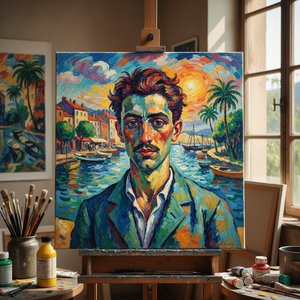
André Derain: Fauvism's Bold Visionary & the Evolution of Modern Color
Explore the revolutionary art of André Derain, co-founder of Fauvism. Discover his bold use of color, evolution from radical expressionism to classicism, and lasting influence on modern art history. Learn more at AllPaintingsStore.


