Primeiros Anos, Família e Formação
A história de August Macke tem início na cidade de Meschede, na Alemanha, onde nasceu em 3 de janeiro de 1887. Ele foi o único filho de August Friedrich Hermann Macke, um empreiteiro e artista amador, e Maria Florentine. Sua infância foi moldada pelas flutuações da fortuna da empresa de seu pai, que levou a família para Colônia e, posteriormente, para Bonn. Mesmo ainda criança, a inclinação para a expressão visual era evidente; ele passava seus primeiros anos esboçando e desenhando cenários para peças escolares, encontrando uma maneira de traduzir o que o rodeava para o papel muito antes de ingressar em uma academia formal.
Sua educação formal nas artes começou de fato quando chegou à Academia de Düsseldorf, onde estudou de 1904 a 1906. Sob a orientação de Adolf Maennchen, ele aprendeu a disciplina da técnica tradicional, mas seu espírito parecia ansiar por algo mais expansivo. Essa inquietação o levou a buscar mais conhecimento por meio de aulas noturnas com Fritz Helmut Ehmke. Sua fome de compreender o ofício o impulsionou em direção a Berlim, onde estudou com o pintor alemão Lovis Corinth. Esses anos de treinamento rigoroso forneceram a base técnica sobre a qual ele construiria, mais tarde, sua linguagem visual única, afastando-se das restrições de sua instrução inicial em direção a uma forma de ver mais pessoal.
A Influência do Modernismo Francês
As ruas de Paris exerceram um fascínio avassalador sobre o jovem artista, atraindo-o para longe das estruturas tradicionais de sua formação. Durante sua primeira visita à cidade, em 1907, ele sentiu-se profundamente comovido pelos pintores impressionistas. August Macke começou a emular essa abordagem, buscando capturar o jogo de luz através de cores sutilmente salpicadas. Este não foi um interesse passageiro; ele retornou a Paris com frequência entre 1907 e 1912, permitindo que a atmosfera da capital francesa remodelasse sua percepção sobre a tela.
Um momento transformador surgiu em 1912, quando ele encontrou Robert Delaunay. Este encontro revelou-se uma epifania, alterando fundamentalmente o rumo de sua obra. Ele tornou-se profundamente influenciado pelo cubismo cromático de Delaunay, um estilo que focava no ritmo da cor e da luz. Essa abordagem, frequentemente associada ao Orfismo, encorajou-o a mover-se em direção a uma forma de ver mais dinâmica e não representativa. Ele passou a experimentar com planos de cor fragmentados, buscando traduzir a sensação da vida moderna em uma linguagem de pura luz e forma.
A Participação no Der Blaue Reiter
A trajetória da vida de August Macke sofreu uma mudança significativa em 1909, quando chegou a Munique. Foi ali que ele encontrou Franz Marc, um encontro que desencadearia uma amizade profunda e duradoura. Essa conexão o atraiu para um círculo de pensadores e criadores que buscavam ir além da mera imitação da natureza. Por volta de 1911, August Macke já havia se tornado um membro de destaque do influente grupo expressionista conhecido como Der Blaue Reiter. Ele não apenas participou do movimento; ele ajudou a moldar sua própria essência, contribuindo para suas exposições e para a disseminação de suas ideias radicais.
Seu lugar dentro deste círculo de vanguarda foi fortalecido por seus laços estreitos com outras luminárias da época. Ele compartilhava um vínculo profundo com Marc e Paul Klee, encontrando na companhia deles uma busca comum pelo espiritual e pelo emotivo. Mesmo enquanto navegava pelas paisagens mutáveis do modernismo, suas interações com figuras como Robert Delaunay ajudaram a refinar sua perspectiva única. Enquanto outros membros do grupo frequentemente exploravam temas mais sombrios ou ansiosos, August Macke buscava um sentido de harmonia e beleza. Ele olhava para o mundo e via um lugar de luz e alegria, mesmo quando as sombras políticas da Europa começavam a se alongar.
Técnica e Estilo Artísticos
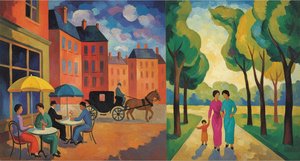
August Macke buscava capturar o espírito interior de uma cena, indo muito além da mera superfície das coisas. Sua pincelada afastava-se da reprodução objetiva da realidade, optando, em vez disso, por expressar sentimentos e estados de espírito profundos. Para alcançar esse objetivo, ele frequentemente distorcia tanto a cor quanto a forma, moldando o mundo físico para atender às suas necessidades emocionais. Suas composições baseavam-se, muitas vezes, em cores ousadas e formas geométricas, criando um senso de estrutura em meio ao fluxo expressivo de seus temas. Ele encontrou uma maneira de tecer o dinamismo do Futurismo Italiano em suas composições, imbuindo suas cenas com uma sensação de movimento e energia moderna.
Essa busca pela luz e pela cor atingiu o seu ápice durante suas viagens ao Norte da África. Suas aquarelas tunisianas de 1914 revelam um domínio excepcional da cor, capturando a luz intensa e mutável daquela região. Nessas obras, o pigmento parece pulsar com vida própria, transcendendo a simples representação em direção a uma essência mais luminosa e espiritual. Ele não apenas pintava a paisagem; ele pintava a sensação de estar imerso nela.
Obras-Primas e Legado Imortal
À medida que sua visão artística amadurecia, August Macke passou a capturar os ritmos silenciosos da vida moderna através de uma lente de cores intensas. Em 1913, ele deu vida a Woman in a Green Jacket, uma obra que irradia uma vitalidade singular por meio de sua paleta audaciosa e pinceladas confiantes. Seu fascínio pelo jogo entre a luz e a urbanidade levou-o a criar Large Bright Shop Window, onde explorou a maneira como a luz se filtra através do vidro. Frequentemente, ele voltava seu olhar para os prazeres simples da existência, como em Bathing girls with town in the backgraund, buscando retratar uma sensação de tranquilidade idílica através de formas simplificadas.
O período final de sua vida, moldado por suas viagens ao Norte da África, trouxe uma luminosidade inédita às suas telas. Sua estadia na Tunísia resultou em uma série de obras que muitos consideram seus maiores triunfos, com destaque para Türkisches Café. Este período também deu origem a Market in Tunis, uma obra que alcançou o impressionante valor de US$ 4,1 milhões (£2,86 milhões) em um leilão no ano 2000. Mesmo quando as sombras da guerra começavam a pairar, ele continuou a encontrar beleza em cenários íntimos, como em The Couple at a Garden Table, que foi vendida por £2 milhões em um leilão da Christie's em 1997.
- 1913: Woman in a Green Jacket
- 1914: Market in Tunis
- 1914: The Couple at a Garden Table
Anos Finais e uma Morte Trágica
O ano de 1914 trouxe uma mudança súbita na luz que August Macke tanto buscava capturar. Na primavera, ele viajou para Túnis, na Tunísia, acompanhado por Paul Klee e Louis Moilliet. Esta excursão permitiu que ele testemunhasse um tipo diferente de sol, influenciando a abordagem luminista que viria a definir o seu período final. Ele retornou para uma Europa que mergulhava rapidamente no caos. À medida que o primeiro mês da Grande Guerra passava, o artista viu-se atraído pelo conflito. Movido por um senso de dever, ele voluntariou-se para o serviço militar.
O fim chegou com uma rapidez assustadora. No segundo mês da Primeira Guerra Mundial, August Macke foi morto em combate na frente de batalha, na França. Ele tombou perto de Perthes-lès-Hurlus em 26 de setembro de 1914. Tinha apenas 27 anos. Sua morte ocorreu justamente quando sua linguagem artística alcançava um novo nível de clareza e luminosidade. A brevidade de sua partida deixou um vazio nos círculos de vanguarda da Alemanha, interrompendo precocemente uma carreira que fora definida por um espírito inquieto e em constante busca.
Legado e Influência
Embora seu tempo sob a luz tenha sido breve, o impacto que August Macke deixou nos grandes movimentos artísticos do século XX permanece profundo. Ele consolidou seu lugar na história como uma figura significativa dentro do Expressionismo, oferecendo uma perspectiva que frequentemente buscava a harmonia onde outros encontravam apenas a discórdia. Sua habilidade de sintetizar as ideias radicais de seus contemporâneos em uma linguagem pessoal garantiu que sua visão não se perdesse nas sombras da Grande Guerra.
O peso de sua contribuição foi formalmente reconhecido muito tempo após sua partida, levando à criação do Prêmio August Macke em 1959. Esta honraria continua a celebrar o espírito de sua investigação criativa. Ainda hoje, sua presença é sentida na maneira como os artistas contemporâneos continuam a explorar as conexões profundas entre a cor e a emoção humana. Ele nos ensinou que a luz e o matiz podem falar do estado interior da alma, uma lição que ressoa através das décadas.
Onde Ver as Obras Hoje
Para percorrer os salões onde o seu espírito ainda ressoa, pode-se viajar até Bonn, na Alemanha. Lá, a August-Macke-Haus ergue-se como um santuário dedicado, preservando a memória do homem entre as mesmas paredes onde ele outrora viveu e trabalhou. Foi nesta casa que ele encontrou o seu estúdio, um espaço que permitiu à sua energia criativa florescer antes que as sombras da guerra interviessem. Nas proximidades, o Kunstmuseum de Bonn também abriga as suas pinturas, garantindo que a sua visão permaneça acessível àqueles que buscam a luz que ele tão cuidadosamente capturou.
A sua presença é sentida através de muitas fronteiras, transportada pelas coleções de grandes instituições. Em Colónia, o Museum Ludwig guarda as suas obras, enquanto o Museum Folkwang, em Essen, mantém as suas telas para observação do público. É também possível encontrar os seus traços na Staatsgalerie Moderner Kunst, em Munique, onde as suas cores continuam a falar através das molduras. Mesmo em Zurique, o Kunsthaus Zürich preserva parte do seu legado, detendo pinturas que refletem a sua forma única de enxergar o mundo.


 Ler mais


 Alternar para Impressão


 Para obras de arte ou reproduções com mais de 105 cm (aproximadamente 41 polegadas) em qualquer um dos lados, a moldura será enviada como um kit desmontado. Este método garante uma entrega segura e evita danos durante o transporte.