- Início

- Impressão em tela
- Benvenuto Cellini
- Study for a seal

 Visualizar em escala
 Enviar
 Compartilhar
 Detalhes da obra

 Baixar
 Semelhantes
 Raio X
 Slideshow
Study for a seal
 Acrylic On Canvas
- WallArt
- Renaissance Mannerism
 1560
1560 315.0 x 125.0 cm
 Museu do Louvre
 Ver mais
Giclê / Impressão de Arte
Impressão giclée ou em tela de qualidade de museu, com produção rápida e opções flexíveis de acabamento. ( Mudar para pintura feita à mão Alternar para Imagem)




P118B $10

P118H $10

P118W $10

P438Z $10

P508JH $12

P508YH $12

P805H $10

P805Z $10

P919BZ $10

P919G $10

P919XJ $10

P959ZH $10

P968JZ $12

W106C $8

W218G $10

W218JH $8

W218Y $10

W307PJ $10

W316G $10

W316PJ $8

W316Y $10

W398PJ $8

W4111J $10

W500HY $15

W500JH $15

W692G $12

W849H $8

W940BG $15

W953PJ $8




Escolha entre os nossos tamanhos pré-definidos que respeitam as proporções originais da obra de arte.

Você pode inserir suas próprias dimensões para se ajustar a uma moldura ou espaço específico. Se o tamanho selecionado não corresponder às proporções da imagem original, iremos recortar a obra de arte ou estender a imagem com uma borda espelhada ou preenchimento sólido. Um mockup digital será enviado para sua aprovação antes do início da produção.
Por favor, observe que a visualização na tela não reflete o recorte ou a extensão real. Apenas o mockup mostrará com precisão a composição final.
Embora tamanhos personalizados estejam disponíveis, recomendamos selecionar uma dimensão da lista predefinida para preservar as proporções originais.
Entrega mundial () em 2 semanas, em vez das 4/5 semanas padrão. (30 Julho)

Envio Expresso Gratuito para todo o Mundo

Tela de Linho Premium

Seguro de envio completo

Garantia de Reembolso de Impostos Alfandegários

Garantia de Fidelidade de Cores

Política de Devolução de 60 Dias (Apenas para Defeitos)

Garantia de 100% de Reembolso

Desconto para múltiplas unidades
 A opção de vidro está disponível apenas para tamanhos inferiores a 110 cm

Study for a seal
Giclê / Impressão de Arte
Dimensões da Reprodução
-


Preço Total Final
$ 64
Descrição da Obra
Benvenuto Cellini’s “Study for a Seal”: A Glimpse into Renaissance Genius
The world of 16th-century Florence pulsed with artistic fervor, a crucible where innovation and tradition intertwined to forge masterpieces that continue to captivate us centuries later. Among the giants of this era stands Benvenuto Cellini, not merely a goldsmith or sculptor, but a polymath—a writer, musician, soldier, and above all, an intensely self-aware artist who meticulously documented his life and work in his celebrated autobiography. Within this rich tapestry of creativity lies “Study for a Seal,” a remarkably intimate pen drawing executed around 1560 and currently residing within the hallowed halls of the Musée du Louvre. This seemingly modest piece offers a profound window into Cellini’s artistic process, revealing a meticulous mind grappling with form, symbolism, and the very essence of Renaissance aesthetics.
The drawing itself is deceptively simple: an angelic or mythological figure, rendered in delicate pen lines, stands poised upon what appears to be a stylized serpent. The creature possesses a distinctly human-like quality—a noble face, expressive eyes—yet simultaneously boasts features that transcend the purely mortal; notably, its feathered wings and the suggestion of divine attributes. This deliberate ambiguity is characteristic of Cellini’s work – he frequently blurred the boundaries between the earthly and the celestial, reflecting his own complex personality and a fascination with both the tangible beauty of craftsmanship and the intangible realm of spiritual significance. The background remains strikingly minimalist, composed of geometric shapes and lines that serve not as mere decoration but rather to frame and elevate the central figure, drawing our attention entirely to this enigmatic being.
A Master’s Process: Technique and Materials
Cellini's mastery is immediately evident in the execution of “Study for a Seal.” The work is executed entirely with pen and ink on paper, a medium that allowed him unparalleled control over line weight and detail. Observe how he employs hatching to create subtle gradations of tone, suggesting volume and texture without resorting to shading. The precision of his lines speaks volumes about his dedication to craft; each stroke is deliberate, imbued with the artist’s considered hand. The paper itself bears the marks of time – slight discoloration and warping—testaments to its age but also adding a layer of authenticity and historical resonance. It's not simply a drawing; it’s a tangible record of a creative journey, offering a rare glimpse into the mind of a master at work.
Symbolism and Context: The Seal of Florence
The “Study for a Seal” is inextricably linked to the burgeoning artistic and political landscape of Florence in the mid-16th century. In 1562, the Accademia del Disegno—the Florentine Academy of Drawing—was formally established, marking a pivotal moment in the development of Renaissance art theory and practice. The academy sought to establish standards for artistic training and patronage, and naturally required an official seal to authenticate its documents and represent its authority. Cellini, already a celebrated artist with connections to powerful figures like Francis I of France, was commissioned to design this emblem. The drawing itself is believed to be a preliminary study for the final seal, offering insights into Cellini’s initial conceptualization of the design.
The symbolism embedded within the image is rich and layered. The central figure, often interpreted as an angelic or mythological being, likely represents a deity or allegorical figure associated with wisdom, justice, or divine grace—themes frequently explored in Renaissance art. The serpent beneath suggests both temptation and transformation, reflecting the complex moral landscape of the era. The geometric background may allude to architectural principles, reinforcing the idea that art was not merely decorative but also served as a means of communicating profound philosophical and spiritual truths. It’s important to note that Cellini himself meticulously documented his artistic process in his autobiography, revealing a deep engagement with the intellectual currents of his time.
A Legacy of Craftsmanship: Reproduction Possibilities
“Study for a Seal” stands as a testament to Benvenuto Cellini's extraordinary talent and enduring legacy. Its intricate detail, evocative symbolism, and historical significance make it a truly remarkable work of art. For those seeking to experience the beauty and artistry of this masterpiece firsthand, high-quality reproductions are available through AllPaintingsStore.com. These meticulously crafted oil paintings capture the essence of Cellini’s original drawing, allowing you to bring a piece of Renaissance genius into your home or office. Consider this reproduction not merely as an image but as a portal—a connection to a world of artistic innovation and profound human expression.
Obras Relacionadas


Biografia do Artista
Benvenuto Cellini: Um Gênio Renascentista Entre a Arte e a Aventura
Benvenuto Cellini, um nome que ressoa com a exuberância e o espírito indomável do Renascimento italiano, foi muito mais do que um simples artista. Ele personificou a figura do homem universal, dominando a ourivesaria, a escultura, a música, a escrita e até mesmo as artes da guerra. Sua vida, narrada em uma autobiografia vibrante e reveladora, é uma crônica fascinante de ambição, talento, perigo e triunfo, oferecendo um vislumbre único do mundo artístico e social da Itália nos séculos XVI.
Da Música à Ourofexaria: A Formação de um Artista Multifacetado
Nascido em Florença em 1500, filho de um músico e fabricante de instrumentos, Cellini inicialmente demonstrou aptidão para a música. No entanto, aos quinze anos, sua paixão pela arte o levou a convencer seu pai a permitir que aprendesse a arte da ourivesaria com Marcone. Essa decisão marcaria o início de uma jornada artística extraordinária, embora não isenta de desafios. Aos dezesseis anos, envolvido em um confronto, foi banido de Florença e passou um período trabalhando em Siena sob a tutela do ourives Fracastoro. Essas experiências iniciais moldaram seu caráter e aprimoraram suas habilidades técnicas, lançando as bases para o sucesso futuro.
Obras-Primas que Encarnam o Espírito Mannerista
A genialidade de Cellini se manifesta em uma série de obras-primas que exemplificam o estilo Mannerista, caracterizado pela dramaticidade, a elegância e a complexidade. O *Altar da Catedral de Florença*, embora inacabado, demonstra sua ambição monumental. No entanto, é o *Cálice de Sal para Francisco I* que se destaca como talvez sua obra mais famosa – uma peça deslumbrante em prata e esmalte, repleta de figuras dinâmicas e detalhes intrincados, atualmente abrigada no Kunsthistorisches Museum em Viena. A escultura *Perseu com a Cabeça de Medusa*, exibida na Loggia dei Lanzi em Florença, é outro testemunho de sua maestria técnica e composicional, capturando o momento triunfal do herói grego com uma expressividade impressionante. Além disso, suas medalhas, como a dedicada a Leda e o Cisne, revelam sua habilidade em combinar mitologia clássica com um requinte artesanal inigualável.
A Autobiografia: Um Retrato Íntimo de um Artista
Além de seu talento artístico, Cellini deixou um legado literário duradouro através de sua autobiografia. Escrita em um estilo vívido e pessoal, a obra oferece uma visão privilegiada da vida de um artista renascentista, repleta de anedotas sobre patronos, rivalidades e aventuras pessoais. Embora por vezes tendenciosa e autoelogiativa, a autobiografia é uma fonte inestimável para compreender o contexto artístico, social e cultural da época. Através de suas palavras, somos transportados para um mundo de intrigas palacianas, festas extravagantes e paixões intensas, revelando a personalidade complexa e multifacetada de Benvenuto Cellini.
Um Legado Duradouro: O Artista Como Ícone do Renascimento
Benvenuto Cellini faleceu em Florença em 1571, deixando para trás um legado artístico e literário que continua a inspirar admiração e fascínio. Sua habilidade técnica, sua inovação artística e sua autobiografia cativante o consagraram como uma das figuras mais importantes do Mannerismo. Ele personifica o ideal renascentista – um homem de múltiplas habilidades, impulsionado pela ambição e ousado em expressar sua individualidade. Suas obras, celebradas por sua beleza, artesanato impecável e poder dramático, garantem seu lugar como um dos pilares da história da arte ocidental.

Benvenuto Cellini
1500 - 1571 , Itália
Informações Rápidas
- Artistas Que Influenciaram Este Artista: ['Michelangelo']
- Data De Falecimento: 13 de fevereiro de 1571
- Data De Nascimento: 1º de novembro de 1500
- Local De Nascimento: Florença, Itália
- Movimento Artístico: Mannerismo
- Nacionalidade: Italiano
- Nome Completo: Benvenuto Cellini
- Obras Notáveis:
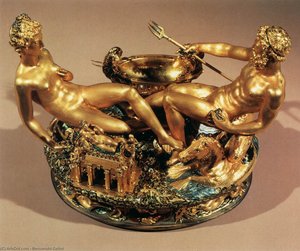
- Saladeira de Francisco I
- Perseu com a cabeça de Medusa
Artigos Relacionados
Metropolitan Museum of Art: 25 Obras-Primas Essenciais para Amantes da Arte
Descubra as 25 obras-primas do Metropolitan Museum of Art em Nova York! Explore a história de Van Gogh, Monet e outros artistas renomados. Encontre reproduções de arte exclusivas para decorar sua casa com elegância. AllPaintingsStore.com – Sua fonte de inspiração artística.
Renascimento Inicial: 10 Obras-Primas que Moldaram a Arte Moderna | AllPaintingsStore
Descubra as 10 obras-primas do Renascimento Inicial que revolucionaram a arte! Explore Botticelli, Leonardo da Vinci e Michelangelo. Encontre reproduções de alta qualidade para decorar sua casa com elegância em AllPaintingsStore.com.

Sandro Botticelli: As 25 Obras-Primas que Definem um Mestre do Renascimento | AllPaintingsStore
Descubra as 25 obras-primas de Sandro Botticelli, o mestre do Renascimento italiano! Explore a beleza atemporal de 'O Nascimento de Vênus', 'Primavera' e outras pinturas icônicas. Encontre reproduções de arte exclusivas e inspire sua decoração em AllPaintingsStore.com.
Renascimento Humanista: 10 Obras-Primas que Moldaram a Arte Moderna | AllPaintingsStore
Descubra as 10 obras-primas do Renascimento Humanista! Explore a história de Leonardo da Vinci, Michelangelo e Rafael. Encontre reproduções de arte exclusivas para decorar sua casa com elegância. AllPaintingsStore: beleza atemporal ao seu alcance.

Proto-Renascimento: 10 Obras-Primas que Moldaram a Arte Moderna | AllPaintingsStore
Descubra as 10 obras-primas do Proto-Renascimento que revolucionaram a arte! Explore Giotto, Duccio e Cimabue. Encontre reproduções de alta qualidade para decorar sua casa com AllPaintingsStore.com. Inspire-se!