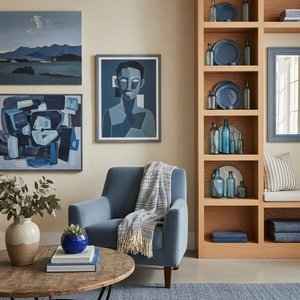
Oil On Canvas.

§ 1Dados do catálogo

Esta obra está protegida por direitos autorais
A obra de arte exibida nesta página é protegida por leis de direitos autorais, o que significa que não podemos criar ou vender legalmente uma reprodução idêntica. Esta proteção é aplicada por meio de acordos internacionais, tais como a Convenção de Berna e pelas leis nacionais, incluindo as estabelecidas por Lei de Direitos Autorais dos EUA - Título 17.
Como uma alternativa respeitosa e legal, oferecemos obras de arte personalizadas e pintadas à mão, inspiradas na obra original. Nossos artistas profissionais e experientes estudam cuidadosamente o estilo, a atmosfera e a essência artística da obra original para criar uma peça nova e única que evoque a mesma sensação — permanecendo como uma criação original por direito próprio.
Este método cumpre plenamente as regulamentações de direitos autorais, pois não envolve a cópia ou duplicação da obra protegida. Em vez disso, trata-se de uma reinterpretação criativa — uma nova pintura que é influenciada pela original, mas não idêntica a ela.
 Leia mais
§ 2Abstrato
Descrição do Item
Explore Edward Hopper’s ‘untitled (8756)’ – a haunting oil painting of alienation & impending doom. Symbolism, Expressionist style, visible brushwork evoke anxiety & isolation.
Biografia do Artista
Edward Hopper: mestre do realismo americano, captura solidão e vida urbana com luzes e sombras evocativas. Explore suas obras icônicas como Nighthawks e Monhegan Houses.
§ 3Comentário
A Portrait of Urban Isolation: Exploring Edward Hopper’s ‘untitled (8756)’
Edward Hopper's 'untitled (8756)' isn’t merely a depiction of a diner at night; it’s a masterful distillation of the anxieties and quiet desperation that characterized American modernism. Completed in 1942, amidst the backdrop of wartime uncertainty, this oil on canvas transcends its simple subject matter to become an enduring emblem of solitude—a feeling Hopper himself famously resisted acknowledging as central to his artistic vision. The painting’s power resides not just in its visual precision but also in its ability to conjure a palpable atmosphere of unease and unspoken longing.- Composition & Style: Hopper employs a flattened perspective, characteristic of Expressionism, prioritizing emotional resonance over photographic realism. Geometric shapes—rectangles for the figures and table—are strategically utilized to emphasize spatial limitations and contribute to the overall sense of confinement. The muted palette dominated by cool blues and greens reinforces the melancholic mood, mirroring the pervasive feeling of disillusionment prevalent during the period.
- Technique & Texture: Visible brushstrokes—a deliberate impasto technique—lend texture to surfaces like the clown’s costume and the woman's face, conveying a physicality that contrasts with the stillness of the scene. This textural richness isn’t merely decorative; it serves to heighten emotional impact and invites contemplation about the materiality of experience.
- Symbolism & Narrative: The figures themselves embody complex symbolic representations. The woman, seated rigidly, embodies composure yet hints at hidden vulnerability. The man stares blankly ahead, accepting his fate with passive resignation. Crucially, the clown—a jarring presence amidst the subdued tones—represents chaos and disruption, juxtaposed against the prevailing stillness. Hopper’s inspiration reportedly stemmed from Hemingway's stories, specifically “The Killers” and “A Clean, Well-Lighted Place,” reflecting a fascination with themes of alienation and psychological introspection.
- Historical Context: Painted during World War II, ‘untitled (8756)’ speaks to the anxieties of a nation grappling with uncertainty and confronting profound social shifts. Hopper’s depiction of urban life—a world increasingly disconnected from traditional values—captures the spirit of an era marked by disillusionment and introspection.
- Emotional Impact: Ultimately, ‘untitled (8756)’ evokes feelings of anxiety, isolation, and a pervasive sense that something fundamental is amiss. It’s a painting that lingers in the viewer's mind long after viewing, prompting reflection on themes of human connection and the unspoken burdens we carry within ourselves—a testament to Hopper’s unparalleled ability to convey profound emotion through subtle visual cues.
Perguntas e Respostas
Qual cor predomina na composição de "untitled (8756)", de Edward Hopper?
A cor que mais se destaca em "untitled (8756)" é Espresso (#5c4f4c). A cor dominante é útil ao combinar uma obra de arte com um ambiente interno.
De que material é feita a obra "untitled (8756)" e em qual estilo?
"untitled (8756)", de Edward Hopper combina a técnica de Oil On Canvas com o estilo Expressionism. Técnica e movimento descrevem a execução e o estilo da obra.
Que sentimento transmite "untitled (8756)", de Edward Hopper?
A atmosfera de "untitled (8756)", de Edward Hopper é Dramatic, e seu tom emocional é Melancholic.


 Alternar para Impressão


 Para obras de arte ou reproduções com mais de 105 cm (aproximadamente 41 polegadas) em qualquer um dos lados, a moldura será enviada como um kit desmontado. Este método garante uma entrega segura e evita danos durante o transporte.