Garantia de Reembolso · 100 dias Entrega gratuita para todo o mundo
449.587obras de arte 30.613artistas 4.660museus 32idiomas
Catalogue entry

High Altar

1577. Acrylic On Canvas. Santo Domingo el Antiguo.

Fig. 1. El Greco, High Altar, 1577. Shown as the reproduction you are specifying: , .

§ 1Catalogue data

§ 2Abstract

Descrição do Item

Biografia do Artista

Explore a obra-prima de El Greco: 'São Francisco Recebendo as Estigmas'. Uma intensa representação da fé, sofrimento e graça divina em uma pintura icônica do século XVI.

§ 3Commentary

A Vision of Faith Illuminated: Exploring El Greco’s High Altar

The painting “High Altar,” completed in 1577 by Domenikos Theotokópoulos, known universally as El Greco, stands as a testament to the artist's singular ability to fuse Byzantine tradition with Renaissance fervor. More than just a depiction of religious iconography—it’s an immersive experience designed to evoke contemplation and reverence within its viewer. Located in Toledo Cathedral, Spain, this monumental artwork embodies the spiritual anxieties and artistic breakthroughs characteristic of the late Mannerist period.
  • Subject Matter & Composition: At its core lies a dramatic portrayal of Christ crucified, dominating the central panel with an arresting gaze that commands attention. Surrounding him are depictions of saints—Saint Mary Magdalene and Saint John the Evangelist—each rendered in meticulous detail, reflecting El Greco’s unwavering commitment to portraying biblical figures with palpable emotion. The overall composition is deliberately unsettling; figures are elongated, distorted, and positioned off-center, mirroring a stylistic trend that prioritized psychological intensity over realistic representation.
  • Style & Technique: El Greco's distinctive style—often termed Mannerism—is instantly recognizable. He eschewed the smooth surfaces and idealized forms favored by earlier Renaissance artists, opting instead for thick impasto brushstrokes that create a textured surface brimming with luminosity. This technique lends an ethereal quality to the painting, enhancing the dramatic impact of the scene. The artist’s use of color is equally striking—deep reds, blues, and golds dominate the palette, conveying both solemnity and grandeur.

Historical Context: Toledo Cathedral and the Renaissance Spirit

Toledo Cathedral represents a pivotal moment in European art history. Constructed over centuries, it exemplifies the ambition of the Spanish Habsburg monarchy to assert religious dominance following the Reconquista—the Christian reconquest of Iberia from Muslim rule. El Greco’s commission coincided with this period of fervent piety and artistic experimentation. The cathedral's architectural grandeur served as inspiration for artists like El Greco, who sought to convey spiritual truths through emotionally charged imagery. Furthermore, the painting reflects broader humanist concerns about mortality and divine grace—themes prevalent in Renaissance thought.
  • Symbolism: Each element within “High Altar” carries significant symbolic weight. The crucifix itself represents Christ’s sacrifice for humanity's salvation, while the saints embody virtues such as compassion and faith. The candles flanking the altar symbolize divine illumination and prayer—a visual reminder of the spiritual quest at the heart of Christian belief. The statue of Jesus atop the dome reinforces the cathedral’s central role as a symbol of Christendom.

Emotional Impact & Legacy

“High Altar” transcends mere representation; it aspires to elicit an emotional response from the viewer. El Greco's masterful manipulation of perspective and color creates a palpable sense of drama, drawing the eye inward toward the crucified Christ. The painting’s unsettling distortions serve not merely as stylistic devices but also as conduits for conveying profound psychological states—fear, sorrow, and acceptance. Its enduring influence can be seen in subsequent artistic movements, foreshadowing Expressionism's preoccupation with emotional authenticity and informing explorations of distorted forms. Today, reproductions of “High Altar” continue to captivate audiences worldwide, offering a glimpse into the visionary spirit of El Greco and the transformative power of art.

Perguntas e Respostas

A imagem de "High Altar", de El Greco pode ser reproduzida livremente?

Informação de direitos autorais para "High Altar", de El Greco: a obra está em em domínio público — seus direitos autorais expiraram. Isso determina se reproduções da imagem podem ser feitas livremente.

Onde posso comprar uma imagem digital de "High Altar", de El Greco?

Para obter uma versão digital de "High Altar", de El Greco, peça download de imagem digital em alta resolução em sua página Imagem Digital de Alta Resolução.

Como o contraste e a harmonia se combinam em "High Altar"?

A análise cromática de "High Altar", de El Greco revela um contraste Bold e uma harmonia Balanced Harmony.
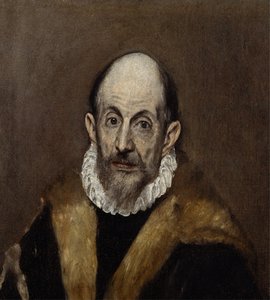
§ 4The artist

El Greco

El Greco

1541 - 1614, Grécia

Quick facts about El Greco

  • Artistic Movement Or Style: Mannerismo e Barroco
  • Artists Who Influenced This Artist:
    • Titian
    • Tintoretto
  • Date Of Birth: 1541
  • Full Name: Doménikos Theotokópoulos
  • Nationality: Grega
  • Notable Artworks:
    • Burial of the Count of Orgaz
    • View of Toledo
    • El Espolio
    • Saint Sebastian
  • Place Of Birth: Crete, Greece

Biografia do Artista

Doménikos Theotokópoulos, called El Greco

Doménikos Theotokópoulos, universally known as El Greco – “the Greek” – stands as one of the most enigmatic and influential figures in Western art history. Born around 1541 in Crete, then under Venetian rule, his artistic journey transcended geographical boundaries and stylistic conventions, establishing him as a pioneer whose vision anticipated movements like Expressionism and Cubism centuries later. More than just a painter, El Greco was a sculptor and architect who embodied the spirit of his time—a testament to faith, innovation, and an unwavering pursuit of artistic truth.

Early Training and Cretan Roots

El Greco’s formative years were steeped in Byzantine tradition. Crete, at that time a bastion of Orthodox Christianity, nurtured a rich artistic heritage characterized by meticulous detail, symbolic imagery, and profound spiritual contemplation. He received his initial training within this environment, mastering the techniques of icon painting—a craft demanding unwavering precision and an understanding of theological concepts. This foundational knowledge would profoundly shape his subsequent artistic endeavors, informing his approach to composition, color palette, and expressive gesture. The influence of Byzantine art is palpable in his early works, particularly *Saint Titus*, where the drapery folds are rendered with astonishing realism and imbued with a sense of solemn dignity—a hallmark of Cretan painting during the Renaissance.

Venetian Exposure: Embracing Innovation

Around 1567, El Greco embarked on a transformative voyage to Venice, Italy’s artistic epicenter at the time. This relocation marked a pivotal moment in his artistic development, exposing him to the groundbreaking innovations championed by Titian, Tintoretto, and Veronese—masters who had revolutionized painting with their mastery of color, perspective, and dramatic lighting. He eagerly absorbed their techniques, experimenting with looser brushwork and embracing the sensual qualities of oil paint—a departure from the more restrained mediums favored in Crete. The Venetian influence is vividly apparent in *Saint Sebastian*, painted shortly after his arrival, where anatomical accuracy blends seamlessly with theatrical chiaroscuro—creating a scene brimming with emotional intensity. This encounter with Venetian art propelled him toward a bolder stylistic vision, one that would ultimately define his legacy.

Roman Aspirations and Mannerist Influence

El Greco’s ambition extended beyond Venice; he sought recognition in Rome, the heart of the Renaissance and papal patronage. Despite facing considerable competition within the Roman art world—a realm dominated by established artists and conservative tastes—he persevered, honing his skills and producing a series of works that showcased his talent for capturing psychological nuance and conveying profound emotion. However, El Greco struggled to gain widespread acclaim in Rome, finding it difficult to secure commissions from influential patrons. Nevertheless, he absorbed the stylistic precepts of Mannerism—a movement characterized by elongated figures, distorted perspectives, and stylized compositions—further enriching his artistic repertoire. This exposure to Mannerist aesthetics contributed to the distinctive elongation of his figures and the unsettling grandeur of his canvases—elements that would become synonymous with El Greco’s style.

Toledo: Spiritual Synthesis and Artistic Zenith

In 1577, El Greco established himself in Toledo, Spain—a city steeped in religious fervor during the Counter- Reformation and renowned for its magnificent cathedral and monastic institutions. This relocation proved to be instrumental in achieving his artistic zenith, providing him with a supportive environment and fostering collaborations with prominent patrons who recognized his singular genius. It was here that he produced his most celebrated paintings—works imbued with an unparalleled blend of Byzantine tradition, Venetian innovation, and Mannerist refinement. *The Burial of the Count of Orgaz*, considered El Greco’s masterpiece, exemplifies this synthesis perfectly—a monumental composition featuring elongated figures bathed in ethereal light, conveying a sense of spiritual transcendence that captivated audiences throughout Europe. His Toledo paintings stand as enduring symbols of faith, artistic ambition, and the transformative power of creative vision—solidifying his place among the greatest artists of all time.

§ 5Comparanda

§ 6Questions

Informações Rápidas

  • Artistic style: Expressive; stylized realism
  • Location: Toledo Cathedral, Spain
  • Movement: Spanish Mannerism
  • Influences: Byzantine art"; "Italian Renaissance
  • Year: 1577

Quiz de Arte

Cada pergunta possui apenas uma resposta correta.

Pergunta 1:
What is the primary subject depicted in El Greco’s ‘High Altar’?
Pergunta 2:
The image shows a church altar adorned with what prominent artistic element?
Pergunta 3:
El Greco’s style is characterized by:
Pergunta 4:
In what historical period was ‘High Altar’ created?
Pergunta 5:
What artistic influence is El Greco's style often compared to?

§ 7Cite this entry

AllPaintingsStore.com, “El Greco, High Altar (1577)”, https://allpaintingsstore.com/pt/art/el-greco-high-altar-8Y3C2U-en/ (accessed 3 Outubro 2026).

§ 8The reproduction

Reprodução em Óleo Feita à Mão

Óleo sobre tela pintado à mão no tamanho e moldura de sua escolha, feito sob encomenda pelos nossos artistas. ( Alternar para Impressão Alternar para Imagem Digital)

It is specified on the order sheet in the margin; the present state of that sheet reads as follows.

High Altar

Técnica de Reprodução

Tamanho da Reprodução

-

Artista Sênior de Elite

Mais detalhes, refinamento e tempo de produção adicional

-

Moldura para Reprodução

-

-

Para obras de arte ou reproduções com mais de 105 cm (aproximadamente 41 polegadas) em qualquer um dos lados, a moldura será enviada como um kit desmontado. Este método garante uma entrega segura e evita danos durante o transporte.

Montagem profissional necessária — este não é um produto DIY (faça você mesmo).
O kit deve ser montado e a tela esticada por um profissional de molduraria experiente, utilizando cola de madeira (não inclusa), um alicate de esticar tela e grampos para manter as travessas alinhadas enquanto a cola seca. A montagem incorreta ou a tensão desigual da tela podem danificar permanentemente a obra de arte e não estão cobertas pela nossa garantia.

  • Todas as barras de madeira maciça estão incluídas, precisamente cortadas ao tamanho certo.

  • Montado com os parafusos fornecidos, além de cola para madeira para as junções dos cantos, que não está inclusa e deve ser providenciada pelo seu moldurista.

  • São necessárias ferramentas profissionais não incluídas: um alicate de estiramento de tela (esticador) e grampos para manter as ripas alinhadas enquanto a cola seca.

Importante:
As junções dos cantos requerem cola para madeira, as ripas devem ser mantidas com grampos até que a cola esteja completamente seca, e o estiramento da tela na moldura montada requer um alicate de esticar tela. Nenhum destes itens está incluído no kit. Por favor, certifique-se de contar com um profissional de molduraria experiente antes de encomendar este tamanho.

Etiqueta de identificação

-

-

Verniz de Proteção

Verniz brilhante (realça as cores e protege contra a luz e a umidade)

-

Personalizar minha obra

Exemplos de alterações possíveis: Substituir o rosto por uma foto do cliente; Adicionar um animal de estimação (ex.: substituir gato por cachorro); Incluir uma mensagem oculta no fundo; Alterar a paisagem ou os elementos do fundo.

-

Urgente

Entrega mundial () em 3 a 4 semanas, em vez das 5 semanas padrão. (31 Outubro). Sem comprometer a qualidade.

-

Envio Expresso

Entrega mundial para em 5 semanas. (7 Novembro).

Com envio incluído

Preço Total

€ 229

Included with every order

  • Envio expresso gratuito para todo o mundo
  • Tela de Linho de Alta Qualidade
  • Seguro de transporte completo
  • Garantia de Reembolso de Impostos Alfandegários
  • Garantia de Fidelidade Cromática
  • Política de Devolução em 100 Dias (Apenas para Defeitos)
  • Garantia de reembolso de 100%
  • Oferta de desconto por quantidade
Order sheet