

Cubism · 1918
Composition (Fernand Léger, 1918)
Composition é uma obra de Fernand Léger (1881–1955). Data de 1918. Pertence ao movimento Cubism. É feito em Acrylic On Canvas.
- 1918
- Acrylic On Canvas

 Visualizar na parede

 Impressão
 Compartilhar
 Compartilhar
 Ficha técnica


 Baixar imagem
 Semelhantes
 Raio X
 Ver diaporama
 Perguntas e Respostas

 Estatísticas
Composition: detalhes principais
- Título
- Composition
- Artista
- Fernand Léger (1881–1955)
- Artista nascido em
- Argentan, França
- Data
- 1918
- Técnica
- Acrylic On Canvas
- Movimento
- Cubism
- Tema
- geometric shapes, bold colors, machine forms, dynamic composition, surreal elements, cubist influence
O que Composition mostra?
Fernand Léger’s “Composition of the Medallion”: A Symphony of Geometric Form
A Life Forged in Form: The World of Fernand Léger Fernand Léger, born Joseph Fernand Henri Léger in 1881 amidst the rural landscapes of Argentan, Normandy, stands as a pivotal figure in the evolution of modern art. His journey from the farmlands of his youth to the forefront of Parisian avant-garde circles is a testament to an unwavering artistic vision and a relentless pursuit of capturing the spirit of the machine age. Unlike many of his contemporaries who embraced abstraction as a retreat from representation, Léger sought to *integrate* modernity – its dynamism, its mechanical forms, its very essence – into a new visual language that was both powerfully abstract and deeply rooted in the observable world. His early life, steeped in the physicality of agricultural labor, provided a grounding contrast to the industrialized future he would so passionately depict. Initially destined for architecture, Léger’s path shifted towards painting after arriving in Paris around 1900, supporting himself through illustration work while honing his artistic skills.Cubism and Surrealist Influences: Bridging Two Movements
Léger's artistic development was profoundly shaped by the burgeoning movements of Cubism and Surrealism. Initially drawn to Picasso’s pioneering explorations of fractured perspectives – a technique he adopted early in his career – Léger skillfully blended these influences with elements of Surrealist dream imagery. This fusion resulted in canvases that defied conventional notions of realism, prioritizing instead the expressive power of geometric abstraction. The deliberate simplification of forms and the fragmentation of surfaces served not merely as stylistic choices but as conceptual devices aimed at conveying a sense of mechanized repetition and underlying order amidst apparent chaos. Léger wasn’t simply rejecting traditional art; he was actively constructing a new visual vocabulary to articulate the anxieties and aspirations of his time.Technique: Bold Color Palette and Textured Surfaces
Léger's distinctive technique involved applying paint in thick, textured layers—a process known as *impasto*. This method allowed him to imbue his canvases with palpable physicality, mirroring the solidity and rhythm of industrial machinery. He favored a vibrant color palette dominated by reds, yellows, blues, and greens – colors he considered “the colors of the machine.” These hues weren’t blended smoothly but rather juxtaposed boldly, creating visual contrasts that heightened the dynamism of the composition. Léger meticulously crafted surfaces using brushes, knives, and spatulas, achieving remarkable textural variations that enhanced the expressive qualities of his artwork. The resulting canvases pulsate with energy, inviting viewers to engage in a tactile experience alongside their visual perception.Symbolism Within Abstraction: Representing Urban Life
Despite its apparent lack of recognizable imagery, Léger’s “Composition of the Medallion” is laden with symbolic significance. The prominent circles—particularly the large one dominating the upper left corner—represent not merely geometric shapes but also wheels and gears – emblems of industrial progress and relentless movement. These circular forms encapsulate the repetitive cycles inherent in urban life and convey a sense of inescapable momentum. Furthermore, the chair positioned on the right side serves as an anchor point amidst the swirling abstraction, symbolizing human presence within the machine age—a reminder that even amidst technological advancement, humanity retains its grounding in tangible reality. Léger’s intention was to capture not just *what* we see but *how* it feels – the pervasive influence of machinery on our perceptions and experiences.Emotional Impact: Optimism Amidst Uncertainty
Ultimately, “Composition of the Medallion” communicates an enduring message of optimism tempered by awareness of societal anxieties. Léger’s bold color choices and textured surfaces evoke a visceral response, conveying excitement and dynamism while simultaneously hinting at underlying tensions. The artwork's refusal to succumb to sentimentalism speaks to Léger’s conviction that art should confront uncomfortable truths without sacrificing beauty or expressive power. It stands as a testament to the transformative potential of abstraction—its ability to distill complex ideas into compelling visual forms—and invites viewers to contemplate the relationship between humanity and technology in an era defined by rapid industrialization. The painting's enduring appeal lies in its capacity to inspire contemplation and provoke dialogue about our place within the evolving landscape of modern civilization.Composition: ficheiros de imagem

Fernand Léger, Composition (1918). Domínio público.
Preparado a partir de uma imagem de maior resolução em nossa base de dados, não a imagem da web: mínimo de 300 DPI. Cores conferidas com o original, arquivo retocado por um especialista digital.
Comprar imagem em alta resoluçãoPerguntas sobre Composition
Em que ano foi criada a obra "Composition", de Fernand Léger?
"Composition", de Fernand Léger foi criado em 1918.
De que técnica é feita a obra "Composition"?
"Composition" é executada em Acrylic On Canvas.
Quais temas aparecem em "Composition", de Fernand Léger?
Os temas de "Composition" são geometric shapes, bold colors, machine forms, dynamic composition, surreal elements, cubist influence, circular patterns.
"Composition" está em domínio público?
Quanto aos direitos autorais, "Composition" está em em domínio público — seus direitos autorais expiraram.
Quem criou "Composition"?
O artista por trás de "Composition" é Fernand Léger. A obra está catalogada sob o nome de Fernand Léger.
A qual estilo pertence "Composition"?
O movimento associado a "Composition", de Fernand Léger é Cubism. Esta classificação situa a obra entre artistas e obras de arte relacionados.
A que período da carreira de Fernand Léger pertence "Composition"?
Dentro da trajetória de Fernand Léger, "Composition" pertence ao período Mature Period. Esta fase permite compará-la com outras obras do artista.
Qual era a idade de Fernand Léger ao criar "Composition" em 1918?
Quando "Composition" foi criada em 1918, Fernand Léger — nascido(a) em 1881 — tinha 37 anos.
"Composition", de Fernand Léger, está em domínio público? E por quê?
"Composition", de Fernand Léger, está em em domínio público — seus direitos autorais expiraram. Os termos de direitos autorais são calculados a partir do falecimento do artista, e Fernand Léger faleceu em 1955.
Sobre Fernand Léger
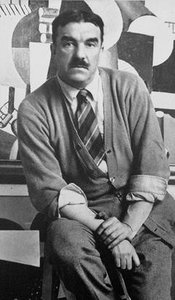
1881–1955, França
Fernand Léger
A Vida de Fernand Léger A história de Fernand Léger começa na aldeia de Argentan, situada na região de Orne, na Baixa Normandia. Ele chegou a este mundo em 4 de fevereiro de 1881, como filho único. Seus primeiros anos foram moldados pela quietude do campo francês e pela presença de sua mãe, Marie-Adèle Daunou. Seu pai, um homem que ganhava a vida como criador de gado, faleceu quando Fernand ainda era apenas um menino, deixando a criança para ser criada pela mãe em um lar marcado pela piedade e por uma certa natureza humilde.
Cada obra de Fernand Léger, com dimensões e preços → Página do artista Obras famosas de Fernand Léger
Outras obras de Fernand Léger
 A Cidade1919
 O Mecânico1920
 Três Mulheres1921
 Nudes na Floresta1910
Artigos sobre Composition
 10 Iconic Masterpieces That Defined Geometric AbstractionJourney through the bold shapes and vibrant colors of geometric abstraction. Explore 10 iconic masterpieces from Mondrian to Malevich and f…
 Steel & Soul: 10 Powerful Artworks That Capture the Industrial VibeExplore 10 iconic artworks that define the gritty, powerful industrial aesthetic. From urban landscapes to metallic textures, discover the …
 Mastering the Machine Age: The Top 25 Fernand Léger ArtworksImmerse yourself in the vibrant world of Fernand Léger. Explore 25 iconic Cubist masterpieces, from bold Tubism to machine-age aesthetics. …