

Oil On Canvas.

§ 1Dados do catálogo


§ 2Abstrato
Descrição do Item
Fernand Léger’s Landscape1 embodies bold modernist abstraction—a striking fusion of geometric shapes and vibrant hues that captures the energy of the machine age. This evocative piece showcases Leger's distinctive style, inviting viewers to explore his vision of a mechanized landscape.
 Ler mais
Biografia do Artista
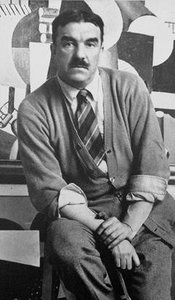
Descubra Fernand Léger (1881-1955): Pioneiro do Cubismo & 'Tubismo'! Explore obras vibrantes que celebram a vida moderna, máquinas e a forma humana – um precursor da Pop Art.
§ 3Comentário
The Pulse of Modernity: Reimagining Fernand Léger’s Landscape1
To step into the world of Fernand Léger is to abandon the delicate shadows of the past and embrace a reality that pulses with the rhythmic, metallic hum of a city in motion. His masterpiece, Landscape1, serves as a profound gateway into this vibrant universe. Painted during the transformative decades between 1920 and 1930, this enigmatic canvas transcends mere depiction to embody the very essence of the industrial revolution. It is not simply a view of an outdoor setting; it is a carefully engineered visual experience that celebrates the strength, geometry, and unapologetic beauty of the machine age.
At first glance, the composition presents a deceptively simple arrangement of objects—bottles scattered across the plane, a tree trunk rendered as a bold vertical line, and a prominent vase anchoring the right side of the frame. Yet, beneath this apparent austerity lies a complex tapestry of innovation. Léger, a pioneer of geometric abstraction, eschewed traditional representational methods in favor of exploring fundamental shapes. Through his unique lens, circles, squares, and triangles become the building blocks of a new visual language, creating a flattened perspective that rejects illusionistic depth to emphasize compositional clarity and structural integrity.
A Symphony of Color and Form
The technique employed in Landscape1 is nothing short of visceral. Léger utilizes bold, contrasting colors—primarily striking reds, yellows, and blues—applied with thick, impasto strokes that lend a palpable texture to the artwork’s surface. This physicality allows the painting to command attention, making it an ideal centerpiece for those seeking to inject energy into a sophisticated interior. The way the light interacts with the heavy paint creates a sense of movement, as if the objects themselves are vibrating with the kinetic energy of a modernizing world.
This approach aligns Léger with the movements of Cubism and Constructivism, yet he forged a path entirely his own. While contemporaries like Picasso were often preoccupied with the fragmentation of space, Léger sought to rebuild the world through a lens of volume and robust presence. His style, sometimes referred to as "tubism," celebrates the cylinder and the solid form, mirroring the architectural precision of the era's technological advancements. For the collector or interior designer, this piece offers a perfect balance of avant-garde intellect and aesthetic boldness.
The Spirit of the Machine Age
The historical context of Landscape1 adds a layer of profound emotional resonance to its geometric beauty. Emerging from the devastation of World War I, Léger responded to the era's societal upheaval not with melancholy, but with an optimistic assertion of form. He believed that abstraction could capture the dynamism and progress of the modern age without sacrificing beauty. The painting acts as a bridge between the tranquil, rural landscapes of his youth in Normandy and the roaring, high-voltage atmosphere of the Parisian avant-garde.
For those looking to adorn a space with a high-quality reproduction, Landscape1 offers more than just decoration; it offers an invitation to contemplate the intersection of humanity and industry. It is a piece that inspires conversation, inviting viewers to find harmony in the mechanical and grace in the abstract. Whether placed in a minimalist contemporary gallery or a richly textured study, this work remains a timeless declaration of the beauty found within the structured, vibrant rhythm of modern life.
Perguntas e Respostas
Qual artista e qual estilo estão por trás de "Landscape1"?
"Landscape1" foi criada por Fernand Léger no estilo Geometric Abstraction. O artista e o movimento identificam a tradição da obra.
As cores de "Landscape1" são vibrantes ou suaves?
A cor de "Landscape1" apresenta Subtle Color de saturação e Balanced de intensidade.
Posso visualizar "Landscape1", de Fernand Léger antes de fazer o pedido?
Para visualizar uma reprodução de "Landscape1", de Fernand Léger, acesse a página de Pré-visualização da obra.


 Alternar para Impressão


 Para obras de arte ou reproduções com mais de 105 cm (aproximadamente 41 polegadas) em qualquer um dos lados, a moldura será enviada como um kit desmontado. Este método garante uma entrega segura e evita danos durante o transporte.


