Garantia de Reembolso · 100 dias Entrega gratuita para todo o mundo
449.582obras de arte 30.618artistas 4.705museus 32idiomas
Moeda
    Idioma
      Ateliê · Desde 2015 · Paris, França
      AllPaintingsStore
      allpaintingsstore.com
      Visualizar em escala Visualizar em RA Alternar para Impressão Ver Imagem Digital Enviar
      Ver detalhes Guia de Obras do Aluno Adicionar aos favoritos Baixar imagem Semelhantes Raio X Apresentação de slides Estatísticas

      The Face (Face and Hands)

      Explore 'The Face' by Fernand Léger – a striking bronze relief depicting a veiled figure. Cubist & Expressionistic, this artwork captures modern mystery & human emotion.

      Descubra Fernand Léger (1881-1955): Pioneiro do Cubismo & 'Tubismo'! Explore obras vibrantes que celebram a vida moderna, máquinas e a forma humana – um precursor da Pop Art.

      Reprodução em Óleo Feita à Mão

      Óleo sobre tela pintado à mão no tamanho e moldura de sua escolha, feito sob encomenda pelos nossos artistas. ( Alternar para Impressão Ver Imagem Digital)

      Corner sample of the P118B picture frame: moulded polystyrene, 5 cm wide and 3 cm thick
      P118B 10
      Corner sample of the P118H picture frame: moulded polystyrene, 5 cm wide and 3 cm thick
      P118H 10
      Corner sample of the P118W picture frame: moulded polystyrene, 5 cm wide and 3 cm thick
      P118W 10
      Corner sample of the P438Z picture frame: moulded polystyrene, 5.5 cm wide and 3.5 cm thick
      P438Z 10
      Corner sample of the P508JH picture frame: moulded polystyrene, 7 cm wide and 3.5 cm thick
      P508JH 12
      Corner sample of the P508YH picture frame: moulded polystyrene, 7 cm wide and 3.5 cm thick
      P508YH 12
      Corner sample of the P805H picture frame: moulded polystyrene, 5 cm wide and 3.5 cm thick
      P805H 10
      Corner sample of the P805Z picture frame: moulded polystyrene, 5 cm wide and 3.5 cm thick
      P805Z 10
      Corner sample of the P919BZ picture frame: moulded polystyrene, 7 cm wide and 3.5 cm thick
      P919BZ 10
      Corner sample of the P919G picture frame: moulded polystyrene, 7 cm wide and 3.5 cm thick
      P919G 10
      Corner sample of the P919XJ picture frame: moulded polystyrene, 7 cm wide and 3.5 cm thick
      P919XJ 10
      Corner sample of the P959ZH picture frame: moulded polystyrene, 5 cm wide and 3 cm thick
      P959ZH 10
      Corner sample of the P968JZ picture frame: moulded polystyrene, 6 cm wide and 4 cm thick
      P968JZ 12
      Corner sample of the W106C picture frame: solid wood, 5 cm wide and 3 cm thick
      W106C 8
      Corner sample of the W218G picture frame: solid wood, 5 cm wide and 3 cm thick
      W218G 10
      Corner sample of the W218JH picture frame: solid wood, 5 cm wide and 3 cm thick
      W218JH 8
      Corner sample of the W218Y picture frame: solid wood, 5 cm wide and 3 cm thick
      W218Y 10
      Corner sample of the W307PJ picture frame: solid wood, 6 cm wide and 3 cm thick
      W307PJ 10
      Corner sample of the W316G picture frame: solid wood, 6 cm wide and 3 cm thick
      W316G 10
      Corner sample of the W316PJ picture frame: solid wood, 6 cm wide and 3 cm thick
      W316PJ 8
      Corner sample of the W316Y picture frame: solid wood, 6 cm wide and 3 cm thick
      W316Y 10
      Corner sample of the W398PJ picture frame: solid wood, 5 cm wide and 3 cm thick
      W398PJ 8
      Corner sample of the W4111J picture frame: solid wood, 6.5 cm wide and 3.5 cm thick
      W4111J 10
      Corner sample of the W500HY picture frame: solid wood, 7 cm wide and 5 cm thick
      W500HY 15
      Corner sample of the W500JH picture frame: solid wood, 7 cm wide and 5 cm thick
      W500JH 15
      Corner sample of the W692G picture frame: solid wood, 8 cm wide and 4 cm thick
      W692G 12
      Corner sample of the W849H picture frame: solid wood, 5 cm wide and 3 cm thick
      W849H 8
      Corner sample of the W940BG picture frame: solid wood, 7.5 cm wide and 4.5 cm thick
      W940BG 15
      Corner sample of the W953PJ picture frame: solid wood, 6 cm wide and 3.5 cm thick
      W953PJ 8

      Padrão
      sob medida
      CM
      INCH

      Escolha entre os nossos tamanhos pré-definidos que respeitam as proporções originais da obra de arte.

      largura
      altura

      Pode inserir as suas próprias dimensões para se adequar a uma moldura ou espaço específico. Se o tamanho selecionado não corresponder às proporções da imagem original, iremos cortar a obra de arte ou estender a pintura com elementos adicionais pintados à mão. Um esboço digital será enviado para sua aprovação antes do início da produção.
      Tenha em atenção que a pré-visualização no ecrã não reflete o corte ou extensão real. Apenas o esboço mostrará com precisão a composição final.
      Embora tamanhos personalizados estejam disponíveis, recomendamos selecionar uma dimensão da lista predefinida para preservar as proporções originais.

      Exemplos do que pode ser personalizado: Substituir o rosto pela foto do cliente; Adicionar um animal de estimação (ex: substituir gato por cão); Incluir uma mensagem oculta no fundo; Alterar a paisagem ou elementos do fundo.
      Após o pedido, a equipa AllPaintingsStore.com enviará um e-mail ao cliente para solicitar instruções e fornecer uma prévia do esboço.

      Entrega mundial () em 3 a 4 semanas, em vez das 5 semanas padrão. (11 Outubro). Sem comprometer a qualidade.

      Envio expresso gratuito para todo o mundo
      Tela de Linho Premium
      Seguro de transporte total
      Garantia de Reembolso de Impostos Alfandegários
      Garantia de Fidelidade de Cor
      Política de Devolução em 100 Dias (Apenas para Defeitos)
      Garantia de reembolso de 100%
      Desconto para múltiplas unidades

      Preço Total

      € 222

      The Face (Face and Hands)

      Técnica de Reprodução

      Dimensões da Reprodução

      -

      Preço Total

      € 222

      Detalhes Rápidos

      • movement: Expressionism, Cubism ('Tubism')
      • title: The Face (Face and Hands)
      • style: Stylized, Simplified Forms, Graphic Lines
      • dimensions: 42 x 38 cm
      • year: Unknown
      • medium: Bronze or Copper Relief

      Teste de Conhecimentos Artísticos

      Cada pergunta possui apenas uma resposta correta.

      Questão 1:
      Fernand Léger is most closely associated with which artistic movement, characterized by fragmented forms and geometric shapes?
      Questão 2:
      The artwork 'The Face (Face and Hands)' is primarily constructed using what material and technique, giving it a three-dimensional quality?
      Questão 3:
      What is a prominent characteristic of Léger's 'Tubism', as seen in this work and others?
      Questão 4:
      The hands prominently featured in the artwork contribute most to a sense of…?

      A Veiled Visage: Exploring Fernand Léger’s ‘The Face (Face and Hands)’

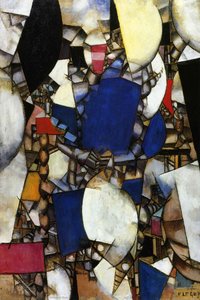
      This striking work by Fernand Léger, measuring 42 x 38 cm, is a powerful exploration of human emotion and the complexities of identity. Rendered in textured metal – likely bronze or copper – *The Face (Face and Hands)* presents a tightly cropped portrait dominated by a face partially obscured by hands. It’s an image that immediately draws the viewer into a space of introspection and mystery.

      Stylistic Roots & ‘Tubism’

      Léger's artistic journey began with Impressionism, but he quickly became a pivotal figure in the development of Cubism. However, his unique approach – often termed “Tubism” – distinguished him from other practitioners like Picasso and Braque. Instead of fracturing forms into fragmented planes, Léger emphasized simplified, cylindrical shapes and bold outlines. This is clearly evident in *The Face*, where facial features are reduced to strong lines and angles, creating a sense of monumental solidity. The work shares stylistic similarities with his series of faces framed by hands, such as “Face by hand on a red background” and other iterations titled "Face with both hands", suggesting this piece belongs to a recurring thematic exploration for the artist.

      Technique & Materiality

      The relief-like quality of *The Face* indicates it was likely created using casting techniques, potentially the lost-wax method. This process allows for intricate detail and a tactile surface texture that is crucial to the artwork’s impact. The choice of metal – bronze or copper – isn't merely aesthetic; it imbues the work with weight, permanence, and a sense of timelessness. The minimal use of traditional chiaroscuro (light and shadow) further emphasizes the sculptural form and relies instead on variations in the metal’s surface to define volume.

      Symbolism & Emotional Resonance

      The hands covering the face are central to the artwork's symbolism. They can be interpreted as representing protection, vulnerability, concealment, or even a struggle for self-definition. The gesture evokes feelings of privacy and introspection, inviting viewers to contemplate the hidden depths within each individual. Is this a figure shielding itself from the world, or is it attempting to contain something within? This ambiguity is key to the work’s enduring power.

      Léger & Modern Life

      Born in 1881, Fernand Léger lived through a period of rapid industrialization and social change. His art often reflected this modern world, celebrating machinery, urban landscapes, and the energy of contemporary life. While *The Face* is more focused on the human condition than his depictions of factories or cityscapes, it still embodies Léger’s commitment to representing the complexities of modern existence. He sought to create an art that was accessible and relevant to a wider audience, foreshadowing elements of Pop Art decades later.

      A Piece for Collectors & Designers

      *The Face (Face and Hands)* is more than just a visually compelling artwork; it’s a profound statement about the human experience. Its bold forms, tactile texture, and evocative symbolism make it a striking focal point for any collection or interior space. The dark metallic tones lend themselves well to modern and minimalist settings, while its inherent drama adds depth and intrigue to traditional décor. A high-quality reproduction of this piece would bring Léger’s unique vision and emotional power into any home or office.

      Perguntas e Respostas

      Qual nível de contraste apresenta "The Face (Face and Hands)" de Fernand Léger?

      O contraste entre claro e escuro de "The Face (Face and Hands)" é registrado como Statement. O contraste descreve a intensidade da diferença entre as áreas claras e escuras.

      As cores de "The Face (Face and Hands)" de Fernand Léger são vibrantes ou suaves?

      A cor de "The Face (Face and Hands)" possui Muted de saturação e Monochromatic de intensidade.

      Quem é o artista por trás de "The Face (Face and Hands)"?

      O artista por trás de "The Face (Face and Hands)" é Fernand Léger. A obra está catalogada sob o nome de Fernand Léger.

      A que época pertence "The Face (Face and Hands)"?

      "The Face (Face and Hands)" pertence à era Modern.

      Que atmosfera uma reprodução de "The Face (Face and Hands)" de Fernand Léger traria para um ambiente?

      "The Face (Face and Hands)" de Fernand Léger possui uma atmosfera Dramatic e é recomendado para um(a) Living Room. O clima é o que a obra traz para o espaço ao seu redor.

      Como posso adquirir uma impressão de "The Face (Face and Hands)" de Fernand Léger?

      "The Face (Face and Hands)" está disponível como uma impressão fine art em tela de algodão ou papel canvas de arquivo. Os pedidos podem ser feitos em esta página, no tamanho de sua escolha.

      Quem vende cópias pintadas à mão de "The Face (Face and Hands)" de Fernand Léger?

      Você pode encomendar uma reprodução pintada à mão de "The Face (Face and Hands)" de Fernand Léger diretamente em esta página: uma reprodução a óleo pintada à mão sobre tela de linho, feita sob encomenda.


      Biografia do Artista

      A Life Forged in Form: The World of Fernand Léger

      Fernand Léger, born Joseph Fernand Henri Léger em 1881, emergiu das paisagens rurais de Argentan, Normandia, como uma figura central na evolução da arte moderna. Sua jornada das fazendas de sua juventude para o centro da vanguarda parisiense é um testemunho de uma visão artística inabalável e de uma busca incessante por capturar o espírito da era da máquina. Diferentemente de muitos de seus contemporâneos que abraçaram a abstração como um refúgio da representação, Léger buscou *integrar* a modernidade – sua dinâmica, suas formas mecânicas, sua própria essência – em uma nova linguagem visual que era ao mesmo tempo poderosamente abstrata e profundamente enraizada no mundo observável. Sua vida inicial, imersa na fisicalidade do trabalho agrícola, forneceu um contraste de base para o futuro industrializado que ele tanto apaixonadamente retrataria. Inicialmente destinado à arquitetura, o caminho de Léger se desviou para a pintura após chegar a Paris por volta de 1900, sustentando-se através do trabalho de desenho enquanto aperfeiçoava suas habilidades artísticas. Este período foi marcado por treinamento acadêmico tradicional, mas não foi até encontrar o trabalho inovador de Paul Cézanne que uma verdadeira transformação começou a se desenrolar.

      The Birth of ‘Tubism’ and the Section d’Or

      A retrospectiva de Cézanne em 1907 atuou como um catalisador, libertando Léger das representações convencionais e impulsionando-o em direção a uma abordagem mais geométrica e estrutural. Ele começou a desmontar formas, analisando suas estruturas subjacentes e reconstruindo-as sobre tela com uma nova ênfase na solidez e no volume. Esta exploração levou-o rapidamente ao círculo de Cubismo, mas Léger não estava contente em simplesmente replicar os estilos de Picasso ou Braque. Em vez disso, ele desenvolveu seu próprio idioma distinto – uma forma pessoal de Cubismo que os críticos apelidaram carinhosamente de “Tubismo”. Caracterizado por formas cilíndricas, planos achatados e contrastes de cores ousadas, Tubismo celebrou a estética da máquina muito antes de se tornar uma preocupação artística generalizada. Era uma arte nascida da observação do mundo industrial em ascensão, reconhecendo beleza em suas formas funcionais e ritmos mecânicos. Este período viu Léger participando ativamente da cena vanguardista, juntando-se a artistas como Jean Metzinger, Henri Le Fauconnier, Francis Picabia e Marcel Duchamp dentro do Grupo Puteaux, também conhecido como a Section d’Or (A Seção de Ouro). O grupo explorava princípios matemáticos de harmonia e proporção, buscando infundir sua arte com um senso de ordem e racionalidade. Suas investigações coletivas ultrapassaram os limites da expressão artística, pavimentando o caminho para o desenvolvimento futuro da arte abstrata.

      War, Mechanization, and a New Aesthetic

      O estopim da Primeira Guerra Mundial teve um impacto profundo na vida e obra de Léger. Servir na frente de 1914 a 1916 expôs-o às realidades brutais da guerra moderna – bombardeios de artilharia, combate aéreo e os efeitos desumanizadores do conflito mecanizado. Esta experiência não levou à desilusão ou ao abandono da modernidade; na verdade, solidificou sua fascinação por máquinas e seu poder. Esboços feitos durante seu serviço documentaram a beleza austera da tecnologia militar, transformando instrumentos de destruição em assuntos de contemplação artística. Após retornar à vida civil, a estética de Léger passou por uma evolução adicional. Suas pinturas começaram a refletir uma sensibilidade mais aerodinâmica e mecanizada, celebrando a dinâmica e a eficiência do mundo industrial. *Soldier with a Pipe* (1916) exemplifica esta mudança, apresentando formas simplificadas e cores ousadas que evocam a sensação de precisão mecânica. Não se tratava apenas de uma escolha estética; era uma declaração filosófica – uma afirmação do potencial da modernidade para o progresso e a renovação, mesmo em face da devastação causada pelo conflito.

      The Evolution of Tubism and Figurative Work

      Following the war, Léger continued to explore the intersection of art and industry, developing his style further. He moved away from the strict geometric forms of early Tubism, incorporating more figurative elements into his work while retaining a fascination with machine aesthetics. He began to paint scenes of urban life, factories, and transportation systems, often depicting them in a stylized manner that combined abstraction and representation. This period saw him experimenting with color palettes and techniques, seeking to capture the energy and dynamism of the modern world. Léger’s work became increasingly popular during the 1920s and 30s, exhibiting at major galleries and museums throughout Europe and America. His paintings were praised for their bold colors, simplified forms, and innovative approach to subject matter.

      Legacy and Lasting Influence

      In his post-war years, Léger continued to explore the intersection of art and industry, creating works that celebrated modern life with a unique blend of abstraction and figuration. His *Paysages animés* (Animated Landscapes) series from 1921 showcased figures and animals seamlessly integrated into streamlined compositions, blurring the boundaries between organic and inorganic forms. He also experimented with sculpture and filmmaking, expanding his artistic practice beyond the confines of traditional painting. Léger’s influence on subsequent generations of artists is undeniable. His bold simplification of form, his embrace of industrial imagery, and his celebration of popular culture anticipated the emergence of Pop Art decades later. Artists like Roy Lichtenstein and Andy Warhol owe a clear debt to Léger's pioneering work. He bridged the gap between abstract art and figurative representation, demonstrating that it was possible to create works that were both intellectually rigorous and visually engaging. Today, Fernand Léger’s paintings are held in major museums worldwide, including the Musée d'Art et d'Histoire in France and the Musée National Fernand Léger, dedicated solely to his work. He remains a towering figure of 20th-century art – a visionary who dared to find beauty in the machine age and to translate its energy onto canvas with unparalleled boldness and originality. His legacy is not merely as a painter, but as a prophet of modernity. *A true pioneer whose work continues to resonate with audiences today.*
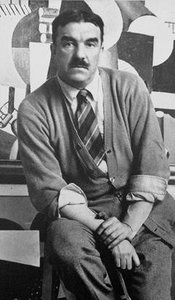
      Fernand Léger

      Fernand Léger

      1881 - 1955 , França

      Informações Rápidas

      • Artistic Movement Or Style: Cubismo, Tubismo
      • Artists Or Movements Influenced By This Artist: ['Pop Art']
      • Artists Who Influenced This Artist: ['Paul Cézanne']
      • Date Of Birth: 4 de fevereiro de 1881
      • Date Of Death: 17 de agosto de 1955
      • Full Name: Fernand Léger
      • Nationality: Francês
      • Notable Artworks:
        • A Grande Parada
        • Soldado com cano
        • Elemento Máquina
      • Place Of Birth: Argentan, França
      Explore obras de arte organizadas por temas, estilos e características.