Garantia de Reembolso · 100 dias Entrega gratuita para todo o mundo
449.587obras de arte 30.613artistas 4.660museus 32idiomas
Catalogue entry

Weeping Coconuts

Oil On Board.

Fig. 1. Frida Kahlo, Weeping Coconuts. Shown as the reproduction you are specifying: , .

§ 1Catalogue data

§ 2Abstract

Descrição do Item

Frida Kahlo (1907-1954) was a Mexican painter known for her self-portraits and exploration of themes like identity, pain, and feminist legacy.

Biografia do Artista

Explore 'As Duas Fridas' de Frida Kahlo: um autorretrato pungente sobre dor, resiliência e identidade. Mergulhe na arte surrealista e no legado mexicano da artista.

§ 3Commentary

A Surrealist Symphony of Sorrow and Resilience

In the quiet, evocative depths of Frida Kahlo’s 1951 masterpiece, "Weeping Coconuts", we encounter a world where the boundaries between the organic and the emotional dissolve. This painting is far more than a mere study of tropical fruit; it is a profound, surrealist meditation on the human condition. At first glance, the viewer is met with a vibrant still life, yet a closer gaze reveals a haunting transformation. The coconuts, rendered with a startlingly anthropomorphic quality, appear to possess eyes and mouths that weep, turning a mundane bowl of fruit into a vessel for profound grief. This unsettling imagery serves as a window into Kahlo’s inner landscape, where the physical pain of her lifelong medical struggles meets an unyielding spiritual strength.

The technique employed in this work showcases Kahlo’s mastery of oil on board. Her brushwork is a delicate balance of meticulous precision and expressive fluidity. She layers colors to create a luminous surface, allowing light to dance across the textures of the fruit, from the rough, earthy husiness of the coconuts to the smooth, bright skins of apples and oranges. This interplay of light and shadow does not merely define form; it breathes life into the inanimate. For collectors and lovers of fine art, this technical brilliance offers a captivating visual experience that commands attention, making it a centerpiece capable of anchoring any sophisticated interior with its depth and complexity.

Symbolism and the Mexican Soul

To understand "Weeping Coconuts" is to understand the cultural and personal tapestry of Frida Kahlo. The painting is steeped in the symbolism of Mexicanidad, where elements of nature are often imbued with political and social significance. The coconut, a symbol of fertility and abundance in many Latin American traditions, is here presented in a state of vulnerability. By imbuing these fruits with the ability to mourn, Kahlo bridges the gap between the external world and her internal reality. The presence of skulls within the composition further reinforces the memento mori tradition, reminding the viewer of the cyclical nature of life, death, and the persistence of memory.

The emotional impact of the piece lies in its ability to transform suffering into something beautiful and enduring. As Kahlo navigated her final years, often accompanied by intense physical agony, her art became a way to transmute pain into a legacy of resilience. For an interior designer or a discerning collector, bringing a reproduction of this work into a space introduces a narrative of profound strength. It is a conversation piece that invites contemplation, offering a sense of soulful gravity and a reminder that even in our most vulnerable moments, there is a capacity for transformative beauty.

Perguntas e Respostas

"Weeping Coconuts" é típico do que Frida Kahlo costumava criar?

Os temas recorrentes de Frida Kahlo incluem mexican folk art style, personal trauma reflection, identity exploration, symbolic representation, diego rivera collaboration, political engagement, iconic surrealist image; "Weeping Coconuts" foca em mexican art, surrealism, self-portrait, symbolism, pain, emotion, botanical still life.

Como "Weeping Coconuts" se integra aos temas e ao estilo de Frida Kahlo?

"Weeping Coconuts" compartilha com as outras obras de Frida Kahlo o seu estilo Surrealism e os temas recorrentes: mexican folk art style, personal trauma reflection, identity exploration, symbolic representation, diego rivera collaboration, political engagement, iconic surrealist image.

A obra "Weeping Coconuts" está disponível para download em alta resolução?

"Weeping Coconuts" está disponível como download de imagem digital em alta resolução, podendo ser adquirido diretamente em sua página de Imagem Digital de Alta Resolução.
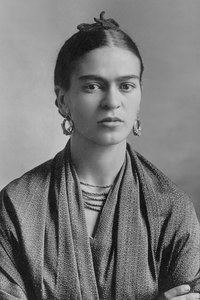
§ 4The artist

Frida Kahlo

Frida Kahlo

1907 - 1954, México

Quick facts about Frida Kahlo

  • Artistic Movement Or Style: Surrealismo, Folk art
  • Artists Or Movements Influenced By This Artist: ['Chicano art']
  • Artists Who Influenced This Artist:
    • Diego Rivera
    • Mexican folk artists
  • Date Of Birth: 6 julho 1907
  • Date Of Death: 13 julho 1954
  • Full Name: Magdalena Carmen Frida Kahlo y Calderón
  • Nationality: Mexicana
  • Notable Artworks:
    • As Duas Fridas
    • Flor da Vida
    • Henry Ford Hospital
  • Place Of Birth: Cidade do México, México

Biografia do Artista

A Life Forged in Pain and Passion

Magdalena Carmen Frida Kahlo y Calderón, known to the world simply as Frida Kahlo, was more than an artist; she was a force of nature, a defiant spirit whose life became inextricably woven into her art. Born on July 6, 1907, in Coyoacán, Mexico City, her existence was marked by physical suffering and emotional turbulence, experiences that would ultimately fuel the intensely personal and symbolic imagery for which she is celebrated. Her father, Guillermo Kahlo, a German-Mexican photographer, fostered her intellectual curiosity and artistic inclinations from an early age. However, Frida’s childhood was shadowed by illness; at six years old, she contracted polio, leaving her with a permanent limp and impacting her physical development. This early encounter with vulnerability and limitation would become a recurring theme in her work, shaping her perspective on the body, pain, and resilience.

The Shattered Body, The Blossoming Art

In 1925, at the tender age of eighteen, Frida’s life irrevocably changed. A horrific bus accident left her with catastrophic injuries – fractures to her spine, pelvis, and leg, among others. Confined to a lengthy period of recovery, often bedridden and encased in plaster casts, she turned inward, finding solace and expression through painting. Her mother provided an easel adapted for use while lying down, transforming the confines of her physical limitations into a space for artistic exploration. It was during this time that Frida began to explore self-portraiture with relentless intensity. Unable to venture out into the world, she turned her gaze inward, meticulously documenting her own image as a means of understanding and confronting her pain, both physical and emotional. These early works were not merely representations of her likeness; they were visceral explorations of identity, vulnerability, and the enduring power of the human spirit. The accident wasn’t simply a tragedy; it was a catalyst that unlocked her artistic potential, forcing her to confront her own mortality and find meaning in suffering.

A Tumultuous Union and Artistic Flourishing

Frida's life took another pivotal turn in 1929 when she married the renowned Mexican muralist Diego Rivera. Their relationship was a passionate but tempestuous affair, marked by intense love, infidelity, artistic rivalry, and periods of separation and reconciliation. Despite the emotional turmoil, Rivera proved to be a significant influence on Frida’s artistic development. He encouraged her unique vision, offering constructive criticism while recognizing the raw power and originality of her work. Under his guidance, and through her own relentless experimentation, Frida's style began to coalesce, blending elements of Mexican folk art, realism, and surrealism into a distinctive visual language. Her paintings became increasingly symbolic, exploring themes of identity, the human body, pain, death, and the complexities of female experience. She didn’t shy away from depicting her own suffering; instead, she embraced it as a central theme in her work, transforming personal trauma into universal statements about the human condition.

Symbols of Suffering, Resilience, and Identity

Frida Kahlo is perhaps best known for her self-portraits, which are characterized by their unflinching honesty and symbolic depth. Works like The Two Fridas (1939), a powerful depiction of her dual identity following her divorce from Rivera, showcase her ability to externalize internal conflict through striking visual metaphors. Self-Portrait with Thorn Necklace and Hummingbird (1940) is laden with symbolism – the thorns representing pain, the hummingbird symbolizing hope and resilience, and the black cat a harbinger of bad luck. The Broken Column (1944), a harrowing portrayal of her physical suffering, depicts Frida’s torso split open to reveal a crumbling Ionic column in place of her spine, held together by straps and pierced with nails. Even Henry Ford Hospital (1932), a raw and deeply personal depiction of her miscarriage, demonstrates her willingness to confront taboo subjects with unflinching honesty. These paintings are not merely representations of pain; they are acts of defiance, assertions of selfhood in the face of adversity.

A Lasting Legacy

Frida Kahlo’s influence extends far beyond the realm of art. She was a cultural icon who challenged traditional gender roles and societal expectations through her life and work. Her embrace of Mexican culture and identity helped to elevate its profile on the international stage, and her unflinching portrayal of pain resonated with audiences worldwide, making her a symbol of resilience and strength. She became an important figure for Chicanos in the United States, representing their cultural heritage and struggles. Though she resisted being categorized as a Surrealist, her work shares affinities with the movement’s exploration of the subconscious and dreamlike imagery. Today, Frida Kahlo is celebrated as one of the most important artists of the 20th century, whose legacy continues to inspire generations to embrace their identities, confront adversity, and express themselves authentically. Her art remains a testament to the enduring power of the human spirit to find beauty and meaning even in the darkest of times.

§ 5Comparanda

§ 6Questions

Informações Rápidas

  • Location: Los Angeles County Museum of Art
  • Title: Weeping Coconuts
  • Medium: Oil on board
  • Artist: Frida Kahlo
  • Influences: Mexican culture
  • Year: 1951

§ 7Cite this entry

AllPaintingsStore.com, “Frida Kahlo, Weeping Coconuts”, https://allpaintingsstore.com/pt/art/frida-kahlo-weeping-coconuts-8CEFJK-en/ (accessed 3 Outubro 2026).

§ 8The reproduction

Reprodução em Óleo Feita à Mão

Óleo sobre tela pintado à mão no tamanho e moldura de sua escolha, feito sob encomenda pelos nossos artistas. ( Alternar para Impressão Alternar para Imagem Digital)

It is specified on the order sheet in the margin; the present state of that sheet reads as follows.

Weeping Coconuts

Técnica de Reprodução

Tamanho da Reprodução

-

Artista Sênior de Elite

Mais detalhes, refinamento e tempo de produção adicional

-

Moldura para Reprodução

-

-

Para obras de arte ou reproduções com mais de 105 cm (aproximadamente 41 polegadas) em qualquer um dos lados, a moldura será enviada como um kit desmontado. Este método garante uma entrega segura e evita danos durante o transporte.

Montagem profissional necessária — este não é um produto DIY (faça você mesmo).
O kit deve ser montado e a tela esticada por um profissional de molduraria experiente, utilizando cola de madeira (não inclusa), um alicate de esticar tela e grampos para manter as travessas alinhadas enquanto a cola seca. A montagem incorreta ou a tensão desigual da tela podem danificar permanentemente a obra de arte e não estão cobertas pela nossa garantia.

  • Todas as barras de madeira maciça estão incluídas, precisamente cortadas ao tamanho certo.

  • Montado com os parafusos fornecidos, além de cola para madeira para as junções dos cantos, que não está inclusa e deve ser providenciada pelo seu moldurista.

  • São necessárias ferramentas profissionais não incluídas: um alicate de estiramento de tela (esticador) e grampos para manter as ripas alinhadas enquanto a cola seca.

Importante:
As junções dos cantos requerem cola para madeira, as ripas devem ser mantidas com grampos até que a cola esteja completamente seca, e o estiramento da tela na moldura montada requer um alicate de esticar tela. Nenhum destes itens está incluído no kit. Por favor, certifique-se de contar com um profissional de molduraria experiente antes de encomendar este tamanho.

Etiqueta de identificação

-

-

Verniz de Proteção

Verniz brilhante (realça as cores e protege contra a luz e a umidade)

-

Personalizar minha obra

Exemplos de alterações possíveis: Substituir o rosto por uma foto do cliente; Adicionar um animal de estimação (ex.: substituir gato por cachorro); Incluir uma mensagem oculta no fundo; Alterar a paisagem ou os elementos do fundo.

-

Urgente

Entrega mundial () em 3 a 4 semanas, em vez das 5 semanas padrão. (31 Outubro). Sem comprometer a qualidade.

-

Envio Expresso

Entrega mundial para em 5 semanas. (7 Novembro).

Com envio incluído

Preço Total

€ 229

Included with every order

  • Envio expresso gratuito para todo o mundo
  • Tela de Linho de Alta Qualidade
  • Seguro de transporte completo
  • Garantia de Reembolso de Impostos Alfandegários
  • Garantia de Fidelidade Cromática
  • Política de Devolução em 100 Dias (Apenas para Defeitos)
  • Garantia de reembolso de 100%
  • Oferta de desconto por quantidade
Order sheet