1665. Oil On Canvas, 49.0 x 39.0 cm. Museu Metropolitano de Arte.

§ 1Catalogue data

- 49.0 x 39.0 cm


§ 2Abstract
Descrição do Item
Discover Gerrit Dou’s ‘Self-Portrait,’ a captivating Baroque masterpiece showcasing masterful chiaroscuro and intricate detail. Explore the artist's unique style & technique in this stunning 1665 painting.
 Ler mais
Biografia do Artista
Gerrit Dou (1613-1675) foi um mestre da pintura holandesa do Século de Ouro, conhecido por suas pinturas minuciosas e iluminadas, cenas de gênero e o uso magistral do chiaroscuro em ambientes noturnos. Descubra sua obra!
§ 3Commentary
A Moment of Contemplation: Gerrit Dou’s ‘Self-Portrait’
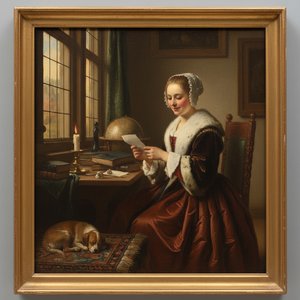
Gerrit Dou's 1665 self-portrait is more than just a likeness; it’s an exquisitely rendered meditation on the artist’s own presence and the quiet beauty he sought to capture. Painted during the height of the Dutch Golden Age, this work exemplifies the meticulous style that earned Dou the moniker “Gérard Dou” – a testament to his dedication to detail and mastery of light. The painting immediately draws the eye to the artist himself, seated on a simple bench, holding an open book, a gesture suggesting both intellectual pursuit and personal reflection. This isn’t a flamboyant self-promotion; rather, it's a deeply intimate portrayal, inviting us into Dou’s world.
The Art of Chiaroscuro and Trompe-l'oeil
Dou’s technique is the cornerstone of this captivating piece. He was a leading figure within the Leiden fijnschilders – a group known for their incredibly detailed and realistic paintings, particularly their innovative use of chiaroscuro, the dramatic interplay of light and shadow. Notice how he skillfully manipulates darkness to sculpt the folds of his clothing, creating a palpable sense of volume and texture. The subtle gradations of tone are achieved through layers upon layers of translucent glazes – a hallmark of Dou’s process – building up color slowly to achieve an almost luminous effect. Furthermore, elements within the composition subtly employ trompe-l'oeil techniques, particularly in the rendering of the potted plants and the bird perched above, creating an illusion of three-dimensionality that further enhances the painting’s realism.
Symbolism and Context
The inclusion of the book suggests a connection to learning and knowledge, aligning with Dou’s own intellectual curiosity. The potted plants – likely herbs or flowers – were not merely decorative; they held symbolic significance in Dutch art, representing prosperity, fertility, and domestic tranquility. The bird, a frequent motif in Dou's work, could symbolize hope, freedom, or even the fleeting nature of time. Painted in 1665, this self-portrait reflects a period of relative stability for the Netherlands following the Thirty Years’ War, yet also hints at the anxieties and uncertainties that permeated society. Dou’s dedication to capturing these nuances speaks volumes about his artistic vision.
A Legacy of Refinement
Measuring 49 x 39 cm, this intimate self-portrait offers a rare glimpse into the studio of one of the Dutch Golden Age's most accomplished artists. Gerrit Dou’s meticulous approach and profound understanding of light and shadow have secured his place as a master of realism and a key figure in the development of Northern European painting. This hand-painted reproduction allows you to experience the full impact of Dou’s artistry, bringing this captivating moment of contemplation into your own space.
Perguntas e Respostas
"Self-Portrait", de Gerrit Dou está entre as obras de Baroque Dutch Painting mais procuradas?
Dentro do movimento Baroque Dutch Painting, "Self-Portrait" possui um nível de popularidade Recognized.
Como "Self-Portrait" se insere na trajetória artística de Gerrit Dou?
"Self-Portrait" integra a produção Baroque Dutch Painting de Gerrit Dou, cujos temas recorrentes incluem dutch golden age, religious contemplation, light, genre scene mastery, leiden fijnschilders influence, dou’s polished realism.
Gerrit Dou, criador(a) de "Self-Portrait", é conhecido(a) por outros nomes?
Gerrit Dou também é conhecido pelos nomes Gerard Dou.


 Alternar para Impressão


 Para obras de arte ou reproduções com mais de 105 cm (aproximadamente 41 polegadas) em qualquer um dos lados, a moldura será enviada como um kit desmontado. Este método garante uma entrega segura e evita danos durante o transporte.