


 Visualizar em escala
 Enviar
 Compartilhar
 Ver detalhes
 Guia
Guia

 Baixar imagem
 Semelhantes
 Raio X
 Apresentação de slides
 Estatísticas
The Dutch Housewife or, The Woman Hanging a Cockerel in the Window
 Oil
Oil- WallArt
- Baroque Painting
 1650
1650- Early Modern
 27.0 x 21.0 cm
 Museu do Louvre
 Ver mais
Reprodução em Óleo Feita à Mão
Óleo sobre tela pintado à mão no tamanho e moldura de sua escolha, feito sob encomenda pelos nossos artistas. ( Alternar para Impressão Ver Imagem Digital)




P118B $10

P118H $10

P118W $10

P438Z $10

P508JH $12

P508YH $12

P805H $10

P805Z $10

P919BZ $10

P919G $10

P919XJ $10

P959ZH $10

P968JZ $12

W106C $8

W218G $10

W218JH $8

W218Y $10

W307PJ $10

W316G $10

W316PJ $8

W316Y $10

W398PJ $8

W4111J $10

W500HY $15

W500JH $15

W692G $12

W849H $8

W940BG $15

W953PJ $8




Escolha entre os nossos tamanhos pré-definidos que respeitam as proporções originais da obra de arte.

Pode inserir as suas próprias dimensões para se adequar a uma moldura ou espaço específico. Se o tamanho selecionado não corresponder às proporções da imagem original, iremos cortar a obra de arte ou estender a pintura com elementos adicionais pintados à mão. Um esboço digital será enviado para sua aprovação antes do início da produção.
Tenha em atenção que a pré-visualização no ecrã não reflete o corte ou extensão real. Apenas o esboço mostrará com precisão a composição final.
Embora tamanhos personalizados estejam disponíveis, recomendamos selecionar uma dimensão da lista predefinida para preservar as proporções originais.
Após o pedido, a equipa AllPaintingsStore.com enviará um e-mail ao cliente para solicitar instruções e fornecer uma prévia do esboço.
Entrega mundial () em 3 a 4 semanas, em vez das 5 semanas padrão. (21 Setembro). Sem comprometer a qualidade.

Envio expresso gratuito para todo o mundo

Tela de Linho Premium

Seguro de transporte total

Garantia de Reembolso de Impostos Alfandegários

Garantia de Fidelidade de Cor

Política de Devolução em 100 Dias (Apenas para Defeitos)

Garantia de reembolso de 100%

Desconto para múltiplas unidades
 A opção de vidro está disponível apenas para tamanhos inferiores a 110 cm

The Dutch Housewife or, The Woman Hanging a Cockerel in the Window
Técnica de Reprodução
Dimensões da Reprodução
-


Preço Total
$ 258
A Window Into Domestic Tranquility
In the quiet corners of the seventeenth-century Netherlands, there existed a profound appreciation for the beauty found within the mundane. Gerrit Dou’s 1650 masterpiece, The Dutch Housewife or, The Woman Hanging a Cockerel in the Window, serves as an exquisite portal into this era of domestic serenity. As a leading figure of the Leiden fijnschilders—the "fine painters"—Dou invites us to witness a meticulously crafted tableau of everyday life. The scene captures a fleeting moment of quietude: a woman, dressed in a vibrant red gown, tends to her household duties with a grace that elevates simple labor into a form of art. Through the window ledge, we glimpse a world where the boundaries between the interior sanctuary and the natural world blur, creating an atmosphere of profound peace and stability.
The painting is far more than a mere depiction of a household chore; it is a masterclass in Baroque precision. Dou’s technique is characterized by an almost superhuman attention to detail, achieved through the painstaking layering of glazes that lends the surface an ethereal, shimmering luminescence. This method allows for a breathtakingly realistic rendering of textures—from the soft, delicate down of the birds scattered throughout the composition to the heavy, tactile folds of the woman's crimson dress. His use of chiaroscuro—the dramatic interplay of light and shadow—creates a palpable sense of depth, pulling the viewer into the room as if we were standing just beside the window, breathing in the stillness of the Dutch afternoon.
Symbolism and the Golden Age Spirit
Beyond its visual splendor, the artwork is steeped in the cultural values of the Dutch Golden Age. During this period, the home was viewed as a microcosm of the state—a place where piety, virtue, and industriousness were cultivated. The act of hanging the cockerel is not merely a task; it symbolizes the careful stewardship of one's environment and the quiet dignity found in domestic responsibility. The presence of various birds throughout the scene adds layers of symbolic complexity, perhaps representing the fleeting nature of life or the interconnectedness of the domestic sphere with the wider world. For the discerning collector, this painting offers a profound exploration of psychological realism, capturing not just a person, but a sense of character and moral fortitude.
For interior designers and lovers of classical art, a reproduction of this work brings an incomparable sense of history and sophistication to any space. The rich palette of deep reds, warm earth tones, and luminous highlights provides a focal point that is both intellectually stimulating and visually soothing. It is a piece that commands attention through its subtlety rather than through loudness, making it an ideal selection for those seeking to infuse their homes with a sense of timeless elegance, warmth, and the enduring spirit of Dutch mastery.
Obras Relacionadas


Biografia do Artista
Gerrit Dou (1613 - 1675)
Gerrit Dou was born in Leiden, Netherlands, on April 7, 1613, the son of Marytje Jansdr van Rosenburg and the glassmaker and engraver Douwe Jansz de Vries van Arentsvelt. According to Jan Jansz. Orlers’s biography published in 1641, *Beschryvinge van de Stad Leyden,* Dou evinced “a pleasure and desire toward painting” at a young age. He studied drawing under Bartholomäus Dolendo, and then trained in the stained-glass workshop of Pieter Couwenhorn. In February 1628, at the age of fourteen, his father sent him to study painting in the studio of Rembrandt van Rijn, who lived nearby. From Rembrandt, with whom he remained for about three years, Dou acquired his skill in colouring and in the more subtle effects of *chiaroscuro*, and his master’s style is reflected in several of his earlier pictures, notably a self-portrait at the age of 22, around 1635–1638, in the Bridgewater Collection, and in the *Blind Tobit going to meet his Son*, at Wardour Castle. Rembrandt's influence was profound, shaping Dou’s artistic vision and technique.Artistic Style and Specialization
Gerrit Dou is renowned for his distinctive “fijnschilder” style—fine painting—characterized by meticulous detail and polished realism. He achieved this remarkable level of precision through innovative methods, including the use of a concave lens combined with a convex mirror to examine subjects accurately and meticulously applying brushstrokes. This technique allowed him to capture subtle nuances of light and texture, creating images that are both visually stunning and intellectually stimulating. Dou’s mastery of *chiaroscuro*, particularly in his candlelit night-scenes—such as *The Astronomer by Candlelight*—established him as a pioneer in portraying atmospheric illumination with unparalleled fidelity. These paintings exemplify the Leiden Fijnschilders' commitment to capturing the essence of reality through masterful manipulation of light and shadow.Notable Works and Collections
Gerrit Dou produced over 200 paintings during his lifetime, many of which are housed in prominent museums across Europe. Among his most celebrated works is *The Astronomer by Candlelight*, a masterpiece that exemplifies his exceptional skill in rendering candlelight effects—a technique he perfected through painstaking observation and experimentation. This painting resides on AllPaintingsStore.com. Furthermore, the Leiden Collection, located in New York, showcases an impressive assemblage of artworks by Gerrit Dou alongside other masters of the Dutch Golden Age. For a comprehensive guide to this collection, visit Leiden Collection, New York: A Comprehensive Guide on AllPaintingsStore.com.Influences and Legacy
Gerrit Dou’s artistic trajectory was shaped by several influential figures, notably Rembrandt van Rijn, who served as his mentor during his formative years. Dou's pupil Frans van Mieris the Elder continued Dou’s legacy, inheriting his meticulous style and mastering the art of *trompe l'œil*, creating illusions that blurred the boundaries between reality and representation. Gerrit Dou’s work has been recognized for its enduring beauty and technical brilliance, securing his place as one of the most important artists of the Dutch Golden Age. His influence extends beyond his immediate contemporaries, inspiring generations of painters who sought to emulate his masterful approach to artmaking. You can find more information about Gerrit Dou's legacy in museums like Het Rijksmuseum in Amsterdam and The Mauritshuis in Delft.
Gerrit Dou
1613 - 1675 , Países Bajos
Informações Rápidas
- Artistic Movement Or Style: Fijnschilder (Fine Painting)
- Artists Or Movements Influenced By This Artist: ['Leiden Fijnschilders']
- Artists Who Influenced This Artist: ['Rembrandt van Rijn']
- Date Of Birth: 7 de abril de 1613
- Full Name: Gerrit Dou
- Nationality: Holandés
- Notable Artworks:
- O Astrônomo à luz de velas
- Retrato de uma Velha
- Place Of Birth: Leiden, Países Bajos
Artigos Relacionados
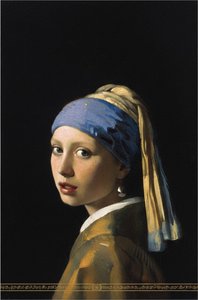
A Era de Ouro Holandesa: 10 Mestras-Obras Imperdíveis para Decorar com Arte
Descubra as 10 obras-primas da Era de Ouro Holandesa! Explore a história, técnica e beleza atemporal de Rembrandt, Vermeer e outros mestres. Encontre reproduções de arte exclusivas para decorar sua casa com elegância em AllPaintingsStore.com.

Chiaroscuro and Character: A Definitive Guide to Light and Shadow in the Dutch Baroque Era
Explore the dramatic mastery of the Dutch Baroque era. Discover how masters like Rembrandt used chiaroscuro to transform everyday life into timeless art. An expert guide for collectors and enthusiasts seeking to understand the profound interplay of light and shadow.

Golden Light & Dutch Skies: The Timeless Magic of Dutch Golden Age Landscapes
Discover the breathtaking beauty of Dutch Golden Age landscapes. Explore the mastery of light, chiaroscuro, and 17th-century realism through an expert art history lens, celebrating the enduring legacy of the Dutch Masters for discerning collectors and art lovers.
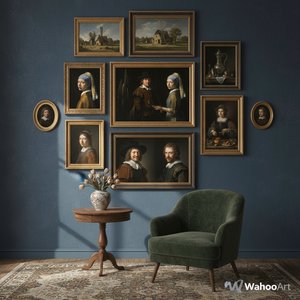
Os 10 Mestres do Barroco Holandês: Obras Essenciais para Decorar com Arte e História
Descubra os 10 mestres do Barroco Holandês! Explore a história e o legado de Rembrandt, Vermeer e outros artistas icônicos. Encontre reproduções de arte de alta qualidade para decorar sua casa com elegância em AllPaintingsStore.com.
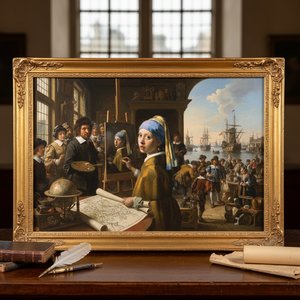
Golden Age Reflections: Dutch Baroque Painting & Cultural Innovation
Explore the Dutch Golden Age of painting! Discover key artists like Vermeer & ter Borch, their innovative techniques, and the rich cultural context behind these Baroque masterpieces. Learn about collecting & appreciating this iconic art period.


