


 Visualizar em escala
 Enviar
 Compartilhar
 Ver detalhes
 Guia de Obras do Aluno

 Baixar imagem
 Semelhantes
 Raio X
 Apresentação de slides
 Estatísticas
Horatio Gates


 Ver mais
Reprodução em Óleo Feita à Mão
Óleo sobre tela pintado à mão no tamanho e moldura de sua escolha, feito sob encomenda pelos nossos artistas. ( Alternar para Impressão Ver Imagem Digital)




P118B €10

P118H €10

P118W €10

P438Z €10

P508JH €12

P508YH €12

P805H €10

P805Z €10

P919BZ €10

P919G €10

P919XJ €10

P959ZH €10

P968JZ €12

W106C €8

W218G €10

W218JH €8

W218Y €10

W307PJ €10

W316G €10

W316PJ €8

W316Y €10

W398PJ €8

W4111J €10

W500HY €15

W500JH €15

W692G €12

W849H €8

W940BG €15

W953PJ €8




Escolha entre os nossos tamanhos pré-definidos que respeitam as proporções originais da obra de arte.

Digite a largura e a altura de que necessita, para se ajustar à sua moldura ou à sua parede. Esta obra é pintada à mão, por isso, para um tamanho com uma proporção diferente, o artista pode pintar um pouco mais ao redor da imagem ou cortar um pouco — você escolhe. Enviamos-lhe uma maquete digital para aprovação antes de a pintura começar. A imagem exibida nesta página não mostra o resultado real — apenas a maquete mostra.
Após o pedido, a equipa AllPaintingsStore.com enviará um e-mail ao cliente para solicitar instruções e fornecer uma prévia do esboço.
Entrega mundial () em 3 a 4 semanas, em vez das 5 semanas padrão. (22 Outubro). Sem comprometer a qualidade.

Envio expresso gratuito para todo o mundo

Tela de Linho Premium

Seguro de transporte total

Garantia de Reembolso de Impostos Alfandegários

Garantia de Fidelidade de Cor

Política de Devolução em 100 Dias (Apenas para Defeitos)

Garantia de reembolso de 100%

Desconto para múltiplas unidades
 A opção de vidro está disponível apenas para tamanhos inferiores a 110 cm

Horatio Gates
Técnica de Reprodução
Dimensões da Reprodução
-


Preço Total
€ 226
A Portrait of Statesmanship: Gilbert Stuart’s Horatio Gates
Gilbert Stuart's "Horatio Gates," painted in 1793, is more than just a likeness; it’s a carefully constructed embodiment of the ideals and anxieties of early American republicanism. This portrait, rendered in oil on canvas with the meticulous detail characteristic of Stuart’s mature style, offers a glimpse into the life of a man deeply intertwined with the nation's nascent identity – Horatio Gates, a distinguished general who played a pivotal role in the Revolutionary War.
The painting immediately draws the eye to Gates himself. He is depicted in a commanding three-quarter pose, his gaze direct and resolute. The lighting, expertly employed by Stuart, sculpts his features, highlighting the strength of his jawline and the intelligence in his eyes. His attire – a dark military coat adorned with the subtle embellishments of rank, a crisp white shirt beneath, and a vibrant blue sash – speaks volumes about his service and status within the newly formed United States Army. Crucially, a gold medal rests prominently around his neck, a tangible symbol of recognition for his bravery and leadership during the war, particularly at Saratoga – an event that secured crucial French support for the American cause.
Neoclassical Precision and Stuart’s Signature Style
Stylistically, “Horatio Gates” firmly places itself within the Neoclassical tradition, a movement deeply influenced by classical Greek and Roman art. This is evident in the carefully balanced composition, the restrained palette dominated by deep browns, blues, and whites, and the emphasis on idealized form. However, Stuart’s genius lies not simply in replicating classical ideals but in imbuing them with an distinctly American sensibility. He avoids overt theatricality, opting instead for a dignified and understated elegance that reflects the values of republican virtue.
The brushwork itself is remarkably refined – a hallmark of Stuart's later career. Notice the subtle gradations of tone, particularly in the rendering of Gates’ clothing and the folds of his coat. This meticulous attention to detail speaks to Stuart’s dedication to capturing not just the outward appearance but also the very essence of his subject. The background, deliberately dark and indistinct, serves to further emphasize Gates as the focal point, creating a sense of importance and gravitas.
Symbolism and the Ideals of Republican Virtue
Beyond its technical brilliance, “Horatio Gates” is rich in symbolic meaning. The military attire, naturally, represents his service and sacrifice for the nation. However, it’s the medal that carries the most potent message – a testament to his commitment to republican virtue and the ideals upon which America was founded. The choice of a gold medal, a symbol of honor and distinction, underscores the importance Stuart placed on recognizing those who upheld these values during a critical period in American history.
Furthermore, Gates’ posture and gaze convey a sense of quiet authority and unwavering resolve. He embodies the stoic ideal of the republican citizen – a man dedicated to public service and committed to upholding the principles of liberty and self-governance. The painting, therefore, functions as a visual manifesto for the nascent American republic, projecting an image of strength, integrity, and patriotic devotion.
A Legacy of Portraiture and American Identity
Gilbert Stuart’s “Horatio Gates” remains a significant work in the history of American portraiture. It exemplifies his mastery of technique, his ability to capture both physical likeness and psychological depth, and his profound understanding of the symbolic power of art. Reproductions of this iconic painting continue to resonate with viewers today, offering a tangible connection to a pivotal moment in American history – a time when the ideals of republicanism were being forged and enshrined.
Whether displayed as a centerpiece in a grand hall or incorporated into a carefully curated interior design scheme, “Horatio Gates” serves as a powerful reminder of the enduring legacy of Gilbert Stuart and his profound contribution to the visual representation of American identity.
Perguntas e Respostas
O que "Horatio Gates" de Gilbert Stuart retrata?
Os temas presentes em "Horatio Gates" de Gilbert Stuart incluem portraiture, military, american history, gilbert stuart, 18th century, colonial era, medal of honor. Juntos, eles resumem o assunto da obra.
Como as cores de "Horatio Gates" se relacionam entre si?
"Horatio Gates" de Gilbert Stuart apresenta uma harmonia de cores Strong Color Unity.
Qual é a tonalidade predominante que percorre "Horatio Gates" de Gilbert Stuart?
A tonalidade dominante de "Horatio Gates" de Gilbert Stuart é Amber to Saffron. A tonalidade é o tom subjacente da paleta.
Obras Relacionadas


Biografia do Artista
Gilbert Stuart: Uma Vida na Retratística
- Nascimento: 3 de dezembro de 1755, Saunderstown, Rhode Island
- Falecimento: 9 de julho de 1828, Boston, Massachusetts
- Nacionalidade: Americano
- Movimento: Neoclassicismo
- Conhecido por: Retratística, particularmente retratos de figuras proeminentes da história inicial da América.
Primeira Infância e Formação
- Gilbert Stuart nasceu em uma família com raíções escocesas; seu pai, também chamado Gilbert, era um inventor que estabeleceu o primeiro moinho de tabaco em Rhode Island.
- Seu talento artístico emergiu ainda muito jovem, demonstrando habilidade desde a infância.
- Aos 14 anos, ele pintou "Os Spaniels do Dr. Hunter", revelando uma promessa precoce.
- Ele viajou para a Escócia por volta de 1771 para estudar com Cosmo Alexander, mas retornou após a morte de Alexander em 1775.
- Um treinamento mais profundo ocorreu em Londres com Benjamin West, um proeminente pintor americano que residia na Inglaterra, de 1775 a 1780. Este período foi crucial para o desenvolvimento de seu estilo artístico e para ganhar reconhecimento dentro da Royal Academy.
Carreira Artística e Grandes Obras
- A carreira de Stuart enfrentou desafios durante a Revolução Americana, o que o levou a se mudar para a Inglaterra em 1775.
- Ele alcançou o sucesso inicial com "O Patinador" (1782), um retrato que estabeleceu sua reputação.
- Sua obra mais famosa é o retrato inacabado de George Washington, conhecido como o Retrato Athenaeum (iniciado em 1796). Esta imagem tornou-se icônica, aparecendo na moeda dos EUA e em selos postais. Stuart produziu inúmeras cópias deste retrato para patronos em toda a América e Europa.
- Ele pintou retratos de várias outras figuras proeminentes, incluindo John Adams, Thomas Jefferson, James Madison e muitos membros da elite Federalista.
- O estilo de Stuart era caracterizado por uma abordagem Neoclássica, enfatizando o realismo e capturando a semelhança e o caráter de seus modelos. Ele frequentemente empregava um uso dramático de luz e sombra para aumentar o impacto dos retratos.
Influências e Desenvolvimento
- Cosmo Alexander proporcionou o treinamento inicial em técnica e composição.
- A influência de Benjamin West foi significativa, moldando a compreensão de Stuart sobre a retratística e os princípios artísticos.
- O movimento Neoclássico, com sua ênfase em formas e ideais clássicos, influenciou fortemente seu estilo.
- As próprias observações e interações de Stuart com seus modelos contribuíram para a profundidade psicológica e o realismo em seus retratos. Ele buscava capturar não apenas uma semelhança física, mas também o caráter e a personalidade daqueles que pintava.
Significância Histórica e Legado
- Gilbert Stuart é considerado um dos mais importantes retratistas da América, desempenhando um papel vital na documentação dos primeiros anos dos Estados Unidos.
- O Retrato Athenaeum de George Washington tornou-se um símbolo duradouro da identidade e liderança americana.
- Seus retratos oferecem valiosas percepções históricas sobre a vida e a aparência de figuras proeminentes do final do século XVIII e início do século XIX.
- A obra de Stuart está representada em grandes museus nos Estados Unidos e na Europa, garantindo que seu legado continue sendo apreciado por gerações.
- Ele estabeleceu um estilo americano distinto de retratística, que fundiu técnicas europeias com sensibilidades unicamente americanas.

Gilbert Stuart
1755 - 1828 , Reino Unido
Informações Rápidas
- Artistic Movement Or Style: Neoclassicismo
- Artists Who Influenced This Artist:
- Cosmo Alexander
- Benjamin West
- Date Of Birth: 3 de dezembro de 1755
- Date Of Death: 9 de julho de 1828
- Full Name: Gilbert Charles Stuart
- Nationality: Americano
- Notable Artworks:
- O Ateneu e o Retrato inacabado
- George Washington
- Place Of Birth: Saunderstown, Rhode Island
Artigos Relacionados

The Enduring Legacy of Oil on Canvas: Technique, History & Aesthetic Impact
Explore the rich history & techniques of oil painting – from Renaissance masters to Impressionism. Discover pigments, layering methods, and why this timeless medium endures. Expert insights for artists & art enthusiasts.

Grant Wood & American Regionalism: Identity, Myth & the Rural Landscape
Explore the world of Grant Wood & American Regionalism with AllPaintingsStore. Discover the symbolism behind 'American Gothic', recurring themes, and the movement's lasting impact on art history. High-quality reproductions available.

American Regionalism: The Soul of the Heartland and the Mastery of Grant Wood
Explore the profound history of American Regionalism. Discover how Grant Wood captured the heart of the Midwest through masterpieces like American Gothic. An expert guide to the movement, its cultural impact, and the enduring beauty of American Realism.

Oil on Canvas: A Historical & Technical Exploration of a Timeless Artistic Medium
Explore the rich history & enduring techniques of oil painting on canvas. Discover the science behind its longevity, conservation practices, and contemporary relevance. Expert insights for art enthusiasts.
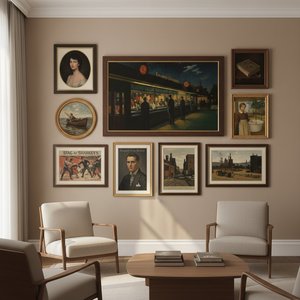
Realismo Americano: 10 Obras-Primas que Moldaram a Arte e Decoram o Lar
Descubra as 10 obras-primas do Realismo Americano! Explore a história de Hopper, Homer e Cassatt. Encontre reproduções de arte com qualidade museológica para decorar sua casa. Inspire-se em cores vibrantes e atmosferas únicas. Explore a coleção completa na AllPaintingsStore.com.


