Garantia de Reembolso · 100 dias Entrega gratuita para todo o mundo
449.564obras de arte 30.613artistas 4.660museus 32idiomas
Entrada de catálogo

After

1865. Acrylic On Canvas.

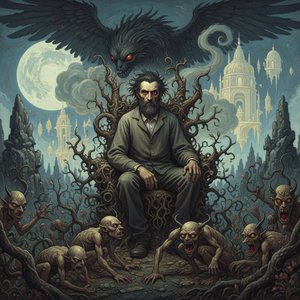
Fig. 1. Gustave Moreau, After, 1865. Apresentado como a reprodução que você está especificando: , .

§ 1Dados do catálogo

§ 2Abstrato

Descrição do Item

Explore Gustave Moreau's 'After' (1865), a captivating Symbolist masterpiece depicting a winged figure and dragon locked in mythical struggle. Discover its rich symbolism & historical context.

Biografia do Artista

Explore a obra singular de Gustave Moreau (1826-1898), mestre do simbolismo francês! Mitologia, religião e sonhos em pinturas exuberantes e enigmáticas. Influenciou Matisse & Rouault.

§ 3Comentário

A Realm of Myth and Shadow: Unveiling Gustave Moreau’s ‘After’

Gustave Moreau's 1865 illustration, ‘After,’ is not merely an image; it’s an immersion into a world steeped in myth, foreboding, and the sublime beauty of struggle. Dominated by a palette of somber greys and earthy browns, the work depicts a winged figure locked in combat atop a serpentine dragon – a scene that resonates with primal energies and timeless narratives. It is a piece that demands attention, not through vibrant color, but through an intricate web of line, texture, and symbolic weight.

Bridging Eras: Style and Technique

Moreau occupies a fascinating position in art history, standing as a pivotal figure in the burgeoning Symbolist movement while simultaneously drawing deeply from artistic traditions of the past. His style echoes the meticulous detail and narrative focus found within medieval illuminated manuscripts and Renaissance masterpieces, yet he infuses this historical aesthetic with a distinctly macabre sensibility. Executed primarily in pen and ink, ‘After’ showcases an extraordinary mastery of draftsmanship. The artist employs painstaking hatching and cross-hatching to build rich textures and create a sense of depth despite the somewhat flattened perspective. Angular shapes – evident in the dragon's scales, the figure’s armor, and the wings – provide a striking counterpoint to the flowing curves of the serpent’s body, amplifying the visual tension. This interplay between sharp definition and organic form is central to Moreau’s unique aesthetic.

The Language of Symbols: Mythological Resonance

At its heart, ‘After’ presents a classic mythological trope: the battle between a heroic figure and a dragon. However, for Moreau, this was never simply an illustration of legend; it was an opportunity to explore profound symbolic themes. The dragon, often representing chaos, primal forces, or even evil itself, is confronted by a warrior embodying order, courage, and perhaps divine authority. Scattered celestial bodies in the background elevate the conflict to a cosmic scale – a struggle not merely between earthly powers but of universal principles. Moreau was deeply inspired by mythology, literature—Shakespeare and the Bible being prominent sources—and history, reinterpreting these narratives through his unique Symbolist lens. The resolute expression on the figure’s face hints at unwavering determination, while the dragon's menacing form underscores the gravity of the challenge. It is a visual representation of an eternal conflict, a testament to the enduring power of myth.

A Reaction Against Modernity: Historical Context and Emotional Impact

Gustave Moreau lived during a period of rapid industrialization and societal change in 19th-century France. His art was, in many ways, a reaction against the perceived materialism of modern life, a yearning for deeper meaning through allegory and evocative imagery. As a leading figure in Symbolism, he rejected the realism and naturalism that dominated much of the artistic landscape, instead seeking to express subjective experience, imagination, and spiritual themes. ‘After’ evokes a powerful emotional response – one of foreboding, tension, and perhaps even awe. The somber color palette and dramatic composition create an atmosphere of mystery and intrigue. This artwork would be a striking addition to various interior design schemes, particularly those leaning towards gothic, Victorian, or eclectic styles. Consider pairing it with rich, jewel-toned fabrics and antique furniture; its monochromatic nature allows for versatility in complementing both warm and cool color palettes. Its dramatic presence would be especially effective within a library, study, or dining room—spaces that invite contemplation and conversation.

Perguntas e Respostas

O que "After", de Gustave Moreau retrata?

"After", de Gustave Moreau retrata: mythology, symbolism, fantasy, dragon, battle, foreboding, allegory, power.

Qual origem nacional fundamenta o Symbolism de "After"?

"After" foi criada por Gustave Moreau, nascido em França, dentro do movimento Symbolism. A origem do artista vincula a obra ao Symbolism, tal como praticado por artistas de França.

"After", de Gustave Moreau é uma obra de tons claros ou escuros?

Os valores registrados para "After", de Gustave Moreau são: balanced de brilho e Soft Shadow de luminância.
§ 4O artista

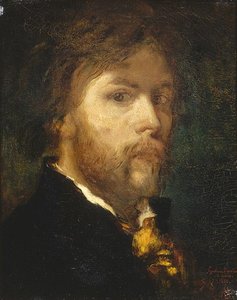
Gustave Moreau

Gustave Moreau

1826 - 1898, França

Informações rápidas sobre Gustave Moreau

  • Artistic Movement Or Style: Simbolismo
  • Artists Or Movements Influenced By This Artist:
    • Matisse
    • Rouault
  • Artists Who Influenced This Artist:
    • Delacroix
    • Michelangelo
    • Leonardo
  • Date Of Birth: 6 de abril de 1826
  • Date Of Death: 18 de abril de 1898
  • Full Name: Gustave Moreau
  • Nationality: Francês
  • Notable Artworks:
    • Salomé Dançando
    • Júpiter e Semele
    • Orfeu
    • A Aparição
    • Desdemona
  • Place Of Birth: Paris, França

Biografia do Artista

A Dream Weaver of Symbolism: The Life and Art of Gustave Moreau

Gustave Moreau, a name inextricably linked to the ethereal beauty and profound mysteries of Symbolist painting, emerged from 19th-century Paris as an artist utterly distinct in his vision. Born in 1826 into a comfortable bourgeois family—his father an architect and archivist—Moreau’s early life was steeped in intellectual curiosity and a deep appreciation for aesthetics. From a remarkably young age, he displayed a prodigious talent for drawing, nurtured through the rigorous training of the École des Beaux-Arts under masters like François-Édouard Picot. However, Moreau's artistic trajectory swiftly diverged from the prevailing Realist and Impressionist currents of his time. He wasn’t driven by a desire to capture fleeting moments or represent objective reality; instead, he sought to unlock the hidden realms of myth, religion, and the intricate workings of the human psyche through a deeply personal and symbolic visual language. His journey was one of inward exploration, translating subjective emotions and spiritual yearnings onto canvas with an almost obsessive attention to detail and a palette often rich in vibrant, unexpected hues.

The Forge of Imagination: Influences and Artistic Development

Moreau’s artistic development wasn't forged in isolation. While consciously rejecting the dominant trends of his era, he drew inspiration from a remarkably diverse range of sources. The dramatic use of color and exotic subject matter found in the works of Eugène Delacroix ignited within him a passionate interest in narrative painting imbued with intense emotionality. He held Renaissance masters—Michelangelo and Leonardo da Vinci, in particular—in high regard, deeply admiring their mastery of composition, anatomical precision, and their remarkable ability to penetrate the complexities of human psychology. Yet, Moreau wasn’t merely imitating these giants; he was skillfully synthesizing their influences into something entirely new, a distinctly personal style. His pivotal journey to Italy during the 1850s proved transformative, immersing him in the art of antiquity and the Renaissance. This experience provided an unparalleled wealth of motifs and stylistic cues that would subsequently populate his paintings—a treasure trove of imagery he meticulously studied and absorbed. He undertook countless copies of Old Master works, not as mere reproductions, but as a means of understanding their techniques and unlocking the secrets behind their enduring power. This dedication to meticulous study, combined with an increasingly fervent interest in mythology and literature, formed the bedrock of his unique artistic vision.

A World of Symbols: Themes and Techniques

Moreau’s paintings are not simply illustrations of myths or biblical stories; they are complex allegories designed to provoke contemplation and interpretation. He didn't aim to retell these narratives literally but rather to explore their underlying psychological and spiritual truths. His canvases are often teeming with symbolic imagery—serpents representing temptation, jewels signifying earthly desires, and figures embodying abstract concepts such as grief, loss, or redemption. He masterfully created an atmosphere of dreaminess through intricate detail, rich textures, and a frequently unsettling juxtaposition of light and shadow. Moreau’s technique was characterized by a deliberate layering of paint—a painstaking process that resulted in surfaces shimmering with iridescent colors and evoking a sense of otherworldly beauty. His skillful use of gold leaf further enhanced this effect, lending his works a Byzantine quality that underscored their spiritual dimension. Crucially, Moreau wasn't concerned with capturing realistic textures or perspectives; instead, he prioritized the expressive power of color and form to convey mood and meaning—a deliberate departure from conventional artistic practices.

Notable Works and Lasting Legacy

Throughout his prolific career, Gustave Moreau produced a remarkable body of work, including iconic paintings such as *Salome Dancing before Herod*, *Jupiter and Semele*, *Orpheus*, *The Apparition*, and *Desdemona*. *Salome Dancing before Herod*, perhaps his most celebrated painting, exemplifies his opulent style and enduring fascination with biblical narratives. *Jupiter and Semele* showcases his masterful command of composition and color, while *Orpheus* explores the themes of loss and artistic inspiration through multiple iterations. Moreau’s influence extended far beyond his own lifetime. He accepted a professorship at the École des Beaux-Arts in 1893, where he profoundly impacted generations of artists, including Henri Matisse and Georges Rouault, encouraging them to embrace imagination, symbolism, and individual expression. Despite initially facing mixed reactions from critics, Moreau’s work gained increasing recognition in the decades following his death in 1898, culminating in the establishment of the Musée Gustave Moreau in Paris—a dedicated space for showcasing his extraordinary artistic legacy. Today, Gustave Moreau is widely regarded as a pivotal figure in the Symbolist movement and a significant precursor to modern art, his paintings continuing to captivate audiences with their evocative beauty and profound psychological depth.

§ 5Obras relacionadas

§ 6Perguntas

Informações Rápidas

  • Notable elements or techniques: Hatching, line work
  • Subject or theme: Mythological conflict
  • Artist: Gustave Moreau
  • Medium: Pen and ink
  • Influences:
    • Medieval art
    • Renaissance

Quiz de Arte

Cada pergunta possui apenas uma resposta correta.

Pergunta 1:
In Gustave Moreau’s ‘After,’ what is the central subject matter depicted?
Pergunta 2:
Which artistic movement is Gustave Moreau most closely associated with?
Pergunta 3:
What technique does Moreau primarily employ in ‘After’ to create texture and depth?
Pergunta 4:
The imagery of a dragon in ‘After’ often symbolizes what?
Pergunta 5:
What is a key characteristic of the color palette used in ‘After’?

§ 7Cite esta entrada

AllPaintingsStore.com, “Gustave Moreau, After (1865)”, https://allpaintingsstore.com/pt/art/gustave-moreau-after-8XY747-en/ (acessado em 9 Outubro 2026).

§ 8A reprodução

Reprodução em Óleo Feita à Mão

Óleo sobre tela pintado à mão no tamanho e moldura de sua escolha, feito sob encomenda pelos nossos artistas. ( Alternar para Impressão Alternar para Imagem Digital)

Está especificado na margem da folha de pedido; o estado atual dessa folha é o seguinte.

After

Técnica de Reprodução

Tamanho da Reprodução

-

Artista Sênior de Elite

Mais detalhes, refinamento e tempo de produção adicional

-

Moldura para Reprodução

-

-

Para obras de arte ou reproduções com mais de 105 cm (aproximadamente 41 polegadas) em qualquer um dos lados, a moldura será enviada como um kit desmontado. Este método garante uma entrega segura e evita danos durante o transporte.

Montagem profissional necessária — este não é um produto DIY (faça você mesmo).
O kit deve ser montado e a tela esticada por um profissional de molduraria experiente, utilizando cola de madeira (não inclusa), um alicate de esticar tela e grampos para manter as travessas alinhadas enquanto a cola seca. A montagem incorreta ou a tensão desigual da tela podem danificar permanentemente a obra de arte e não estão cobertas pela nossa garantia.

  • Todas as barras de madeira maciça estão incluídas, precisamente cortadas ao tamanho certo.

  • Montado com os parafusos fornecidos, além de cola para madeira para as junções dos cantos, que não está inclusa e deve ser providenciada pelo seu moldurista.

  • São necessárias ferramentas profissionais não incluídas: um alicate de estiramento de tela (esticador) e grampos para manter as ripas alinhadas enquanto a cola seca.

Importante:
As junções dos cantos requerem cola para madeira, as ripas devem ser mantidas com grampos até que a cola esteja completamente seca, e o estiramento da tela na moldura montada requer um alicate de esticar tela. Nenhum destes itens está incluído no kit. Por favor, certifique-se de contar com um profissional de molduraria experiente antes de encomendar este tamanho.

Etiqueta de identificação

-

-

Verniz de Proteção

Verniz brilhante (realça as cores e protege contra a luz e a umidade)

-

Personalizar minha obra

Exemplos de alterações possíveis: Substituir o rosto por uma foto do cliente; Adicionar um animal de estimação (ex.: substituir gato por cachorro); Incluir uma mensagem oculta no fundo; Alterar a paisagem ou os elementos do fundo.

-

Urgente

Entrega mundial () em 3 a 4 semanas, em vez das 5 semanas padrão. (6 Novembro). Sem comprometer a qualidade.

-

Envio Expresso

Entrega mundial para em 5 semanas. (13 Novembro).

Com envio incluído

Preço Total

€ 230

Incluído em todos os pedidos

  • Envio expresso gratuito para todo o mundo
  • Tela de Linho de Alta Qualidade
  • Seguro de transporte completo
  • Garantia de Reembolso de Impostos Alfandegários
  • Garantia de Fidelidade Cromática
  • Política de Devolução em 100 Dias (Apenas para Defeitos)
  • Garantia de reembolso de 100%
  • Oferta de desconto por quantidade
Folha de pedido