Garantia de Reembolso · 100 dias Entrega gratuita para todo o mundo
449.587obras de arte 30.613artistas 4.660museus 32idiomas
Catalogue entry

Prometheus

Óleo sobre tela.

Fig. 1. Gustave Moreau, Prometheus. Shown as the reproduction you are specifying: , .

§ 1Catalogue data

§ 2Abstract

Descrição do Item

Explore 'Prometheus' de Gustave Moreau: um épico símbolo do sacrifício e da busca pelo conhecimento em meio à rebelião contra os deuses. Uma obra-prima do simbolismo francês.

Biografia do Artista

Explore a obra singular de Gustave Moreau (1826-1898), mestre do simbolismo francês! Mitologia, religião e sonhos em pinturas exuberantes e enigmáticas. Influenciou Matisse & Rouault.

§ 3Commentary

A Titan’s Defiance: Unveiling Gustave Moreau's "Prometheus"

Gustave Moreau’s “Prometheus” isn’t merely a painting; it’s an immersion into the very heart of Romantic rebellion and Symbolist introspection. Completed in 1868, this monumental canvas captures a pivotal moment – the chained Titan enduring his eternal punishment, yet extending a fragile flame towards a world shrouded in darkness. Moreau doesn't present us with a triumphant hero, but rather a figure burdened by sacrifice, a solitary beacon against a desolate landscape, embodying both defiance and profound melancholy. The work stands as a cornerstone of Symbolist art, deliberately rejecting the literalism of Realism to delve into the realm of subjective emotion, philosophical inquiry, and the potent language of myth.

The immediate impact of “Prometheus” lies in its dramatic composition and evocative color palette. Moreau masterfully employs a muted range – deep browns, somber blues, and grays – to create an atmosphere of immense scale and timelessness. These colors aren’t used to depict reality; instead, they amplify the painting's melancholic core, conveying a sense of isolation and the weight of ages. Visible brushstrokes define Prometheus’ muscular form and the jagged edges of the rock prison, while softer lines suggest swirling clouds and distant mountains, contributing to an overwhelming feeling of vastness. The artist strategically utilizes light – a single, intense source illuminating Prometheus' face and torso – casting dramatic shadows that heighten the sense of suffering and struggle. This deliberate manipulation of light isn’t about precise realism; it’s about capturing an *atmosphere*—a profound emotional resonance achieved through a flattened perspective.

Decoding the Symbols: A Gift and Its Cost

The symbolism woven into “Prometheus” is incredibly rich and layered, inviting endless interpretation. Prometheus himself embodies resilience, sacrifice, and the enduring human spirit in the face of oppression. The chains are not simply restraints; they represent the constraints imposed by authority – both divine and societal – that seek to stifle knowledge and progress. The flame he offers isn’t merely fire; it symbolizes knowledge, enlightenment, and the potential for civilization, yet it also carries within it the inherent risk of destruction. Crucially, Moreau doesn't depict Prometheus as a conqueror or a savior; instead, he is shown in a moment of quiet endurance, offering his gift with a solemn expression. Below him, a shadowy figure represents humanity, receiving this potentially dangerous knowledge – and bearing the responsibility that comes with it. The recurring motif of the bird—often seen in Moreau’s work—suggests freedom, spirituality, or a connection to the divine realm, providing a poignant counterpoint to Prometheus' earthly imprisonment.

Moreau and His Legacy: A Bridge Between Worlds

Gustave Moreau (1826-1898) was a pivotal figure in the Symbolist movement, forging his own path away from prevailing artistic trends. He wasn’t interested in capturing fleeting moments or objective reality; instead, he sought to unlock the hidden realms of myth, religion, and the human psyche through a deeply personal and symbolic visual language. Heavily influenced by literary giants like Shakespeare and Byron, Moreau transformed familiar myths into intensely personal statements. “Prometheus” exemplifies this approach, demonstrating his fascination with classical narratives and his ability to imbue them with a uniquely emotional charge. His work profoundly impacted later artists such as Henri Matisse and Georges Rouault, paving the way for modern art’s exploration of inner worlds and symbolic language. Moreau's legacy extends beyond individual paintings; he established the Musée Gustave Moreau in Paris, preserving his studio and an extensive collection of his works—a testament to his dedication to his artistic vision. “Prometheus” is more than just a historical artwork; it’s a timeless meditation on the human condition, capable of resonating with audiences for generations to come.

An Evocative Presence in Your Space

“Prometheus” evokes a powerful sense of awe, melancholy, and profound contemplation. Its dramatic composition and muted color palette make it a striking focal point for a study, library, or living room—a space where intellectual curiosity and artistic appreciation can thrive. The artwork pairs beautifully with dark wood furnishings, antique accents, and textured fabrics to enhance its Romantic atmosphere. A high-quality reproduction would add a touch of intellectual sophistication and artistic depth to any interior space – a constant reminder of the power of knowledge, the burden of freedom, and the enduring spirit of rebellion. Consider framing it in a rich, dark wood frame to further emphasize its dramatic presence.

Perguntas e Respostas

Onde posso encontrar estatísticas sobre "Prometheus", de Gustave Moreau?

As estatísticas sobre "Prometheus", de Gustave Moreau encontram-se na página de Estatísticas da obra: visitas mensais da obra, visitas às obras do artista e o detalhamento por país e idioma dos visitantes recentes.

É possível fazer o download de "Prometheus"?

Um download está disponível para "Prometheus": a página de Download da obra oferece download de imagem digital em alta resolução.

Que atmosfera "Prometheus", de Gustave Moreau traz a um ambiente?

A atmosfera Dramático de "Prometheus", de Gustave Moreau combina perfeitamente com o ambiente recomendado: um(a) Sala de Estar.
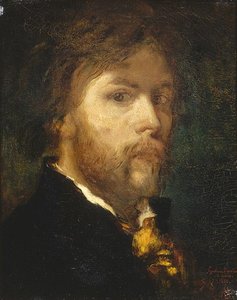
§ 4The artist

Gustave Moreau

Gustave Moreau

1826 - 1898, França

Quick facts about Gustave Moreau

  • Artistic Movement Or Style: Simbolismo
  • Artists Or Movements Influenced By This Artist:
    • Matisse
    • Rouault
  • Artists Who Influenced This Artist:
    • Delacroix
    • Michelangelo
    • Leonardo
  • Date Of Birth: 6 de abril de 1826
  • Date Of Death: 18 de abril de 1898
  • Full Name: Gustave Moreau
  • Nationality: Francês
  • Notable Artworks:
    • Salomé Dançando
    • Júpiter e Semele
    • Orfeu
    • A Aparição
    • Desdemona
  • Place Of Birth: Paris, França

Biografia do Artista

A Dream Weaver of Symbolism: The Life and Art of Gustave Moreau

Gustave Moreau, a name inextricably linked to the ethereal beauty and profound mysteries of Symbolist painting, emerged from 19th-century Paris as an artist utterly distinct in his vision. Born in 1826 into a comfortable bourgeois family—his father an architect and archivist—Moreau’s early life was steeped in intellectual curiosity and a deep appreciation for aesthetics. From a remarkably young age, he displayed a prodigious talent for drawing, nurtured through the rigorous training of the École des Beaux-Arts under masters like François-Édouard Picot. However, Moreau's artistic trajectory swiftly diverged from the prevailing Realist and Impressionist currents of his time. He wasn’t driven by a desire to capture fleeting moments or represent objective reality; instead, he sought to unlock the hidden realms of myth, religion, and the intricate workings of the human psyche through a deeply personal and symbolic visual language. His journey was one of inward exploration, translating subjective emotions and spiritual yearnings onto canvas with an almost obsessive attention to detail and a palette often rich in vibrant, unexpected hues.

The Forge of Imagination: Influences and Artistic Development

Moreau’s artistic development wasn't forged in isolation. While consciously rejecting the dominant trends of his era, he drew inspiration from a remarkably diverse range of sources. The dramatic use of color and exotic subject matter found in the works of Eugène Delacroix ignited within him a passionate interest in narrative painting imbued with intense emotionality. He held Renaissance masters—Michelangelo and Leonardo da Vinci, in particular—in high regard, deeply admiring their mastery of composition, anatomical precision, and their remarkable ability to penetrate the complexities of human psychology. Yet, Moreau wasn’t merely imitating these giants; he was skillfully synthesizing their influences into something entirely new, a distinctly personal style. His pivotal journey to Italy during the 1850s proved transformative, immersing him in the art of antiquity and the Renaissance. This experience provided an unparalleled wealth of motifs and stylistic cues that would subsequently populate his paintings—a treasure trove of imagery he meticulously studied and absorbed. He undertook countless copies of Old Master works, not as mere reproductions, but as a means of understanding their techniques and unlocking the secrets behind their enduring power. This dedication to meticulous study, combined with an increasingly fervent interest in mythology and literature, formed the bedrock of his unique artistic vision.

A World of Symbols: Themes and Techniques

Moreau’s paintings are not simply illustrations of myths or biblical stories; they are complex allegories designed to provoke contemplation and interpretation. He didn't aim to retell these narratives literally but rather to explore their underlying psychological and spiritual truths. His canvases are often teeming with symbolic imagery—serpents representing temptation, jewels signifying earthly desires, and figures embodying abstract concepts such as grief, loss, or redemption. He masterfully created an atmosphere of dreaminess through intricate detail, rich textures, and a frequently unsettling juxtaposition of light and shadow. Moreau’s technique was characterized by a deliberate layering of paint—a painstaking process that resulted in surfaces shimmering with iridescent colors and evoking a sense of otherworldly beauty. His skillful use of gold leaf further enhanced this effect, lending his works a Byzantine quality that underscored their spiritual dimension. Crucially, Moreau wasn't concerned with capturing realistic textures or perspectives; instead, he prioritized the expressive power of color and form to convey mood and meaning—a deliberate departure from conventional artistic practices.

Notable Works and Lasting Legacy

Throughout his prolific career, Gustave Moreau produced a remarkable body of work, including iconic paintings such as *Salome Dancing before Herod*, *Jupiter and Semele*, *Orpheus*, *The Apparition*, and *Desdemona*. *Salome Dancing before Herod*, perhaps his most celebrated painting, exemplifies his opulent style and enduring fascination with biblical narratives. *Jupiter and Semele* showcases his masterful command of composition and color, while *Orpheus* explores the themes of loss and artistic inspiration through multiple iterations. Moreau’s influence extended far beyond his own lifetime. He accepted a professorship at the École des Beaux-Arts in 1893, where he profoundly impacted generations of artists, including Henri Matisse and Georges Rouault, encouraging them to embrace imagination, symbolism, and individual expression. Despite initially facing mixed reactions from critics, Moreau’s work gained increasing recognition in the decades following his death in 1898, culminating in the establishment of the Musée Gustave Moreau in Paris—a dedicated space for showcasing his extraordinary artistic legacy. Today, Gustave Moreau is widely regarded as a pivotal figure in the Symbolist movement and a significant precursor to modern art, his paintings continuing to captivate audiences with their evocative beauty and profound psychological depth.

§ 5Comparanda

§ 6Questions

Informações Rápidas

  • Influências:
    • Romantismo
    • Simbolismo
  • Movimento: Simbolismo
  • Meio: Óleo sobre tela
  • Tema: Mitologia grega
  • Título: Prometheus
  • ElementosNotáveis: Chamas, titan, figura humana

Quiz de Arte

Cada pergunta possui apenas uma resposta correta.

Pergunta 1:
Qual o principal tema da pintura "Prometheus" de Gustave Moreau?
Pergunta 2:
Qual o movimento artístico ao qual Gustave Moreau está mais associado?
Pergunta 3:
Em que cor predominam as tonalidades da pintura "Prometheus"?
Pergunta 4:
Qual a técnica de pintura mais evidente na obra "Prometheus"?
Pergunta 5:
Qual o simbolismo da chama que Prometeu oferece?

§ 7Cite this entry

AllPaintingsStore.com, “Gustave Moreau, Prometheus”, https://allpaintingsstore.com/pt/art/gustave-moreau-prometheus-ARJELN-pt/ (accessed 3 Outubro 2026).

§ 8The reproduction

Reprodução em Óleo Feita à Mão

Óleo sobre tela pintado à mão no tamanho e moldura de sua escolha, feito sob encomenda pelos nossos artistas. ( Alternar para Impressão Alternar para Imagem Digital)

It is specified on the order sheet in the margin; the present state of that sheet reads as follows.

Prometheus

Técnica de Reprodução

Tamanho da Reprodução

-

Artista Sênior de Elite

Mais detalhes, refinamento e tempo de produção adicional

-

Moldura para Reprodução

-

-

Para obras de arte ou reproduções com mais de 105 cm (aproximadamente 41 polegadas) em qualquer um dos lados, a moldura será enviada como um kit desmontado. Este método garante uma entrega segura e evita danos durante o transporte.

Montagem profissional necessária — este não é um produto DIY (faça você mesmo).
O kit deve ser montado e a tela esticada por um profissional de molduraria experiente, utilizando cola de madeira (não inclusa), um alicate de esticar tela e grampos para manter as travessas alinhadas enquanto a cola seca. A montagem incorreta ou a tensão desigual da tela podem danificar permanentemente a obra de arte e não estão cobertas pela nossa garantia.

  • Todas as barras de madeira maciça estão incluídas, precisamente cortadas ao tamanho certo.

  • Montado com os parafusos fornecidos, além de cola para madeira para as junções dos cantos, que não está inclusa e deve ser providenciada pelo seu moldurista.

  • São necessárias ferramentas profissionais não incluídas: um alicate de estiramento de tela (esticador) e grampos para manter as ripas alinhadas enquanto a cola seca.

Importante:
As junções dos cantos requerem cola para madeira, as ripas devem ser mantidas com grampos até que a cola esteja completamente seca, e o estiramento da tela na moldura montada requer um alicate de esticar tela. Nenhum destes itens está incluído no kit. Por favor, certifique-se de contar com um profissional de molduraria experiente antes de encomendar este tamanho.

Etiqueta de identificação

-

-

Verniz de Proteção

Verniz brilhante (realça as cores e protege contra a luz e a umidade)

-

Personalizar minha obra

Exemplos de alterações possíveis: Substituir o rosto por uma foto do cliente; Adicionar um animal de estimação (ex.: substituir gato por cachorro); Incluir uma mensagem oculta no fundo; Alterar a paisagem ou os elementos do fundo.

-

Urgente

Entrega mundial () em 3 a 4 semanas, em vez das 5 semanas padrão. (31 Outubro). Sem comprometer a qualidade.

-

Envio Expresso

Entrega mundial para em 5 semanas. (7 Novembro).

Com envio incluído

Preço Total

€ 229

Included with every order

  • Envio expresso gratuito para todo o mundo
  • Tela de Linho de Alta Qualidade
  • Seguro de transporte completo
  • Garantia de Reembolso de Impostos Alfandegários
  • Garantia de Fidelidade Cromática
  • Política de Devolução em 100 Dias (Apenas para Defeitos)
  • Garantia de reembolso de 100%
  • Oferta de desconto por quantidade
Order sheet