

.

§ 1Dados do catálogo

Esta obra está protegida por direitos autorais
A obra de arte exibida nesta página é protegida por leis de direitos autorais, o que significa que não podemos criar ou vender legalmente uma reprodução idêntica. Esta proteção é aplicada por meio de acordos internacionais, tais como a Convenção de Berna e pelas leis nacionais, incluindo as estabelecidas por Lei de Direitos Autorais dos EUA - Título 17.
Como uma alternativa respeitosa e legal, oferecemos obras de arte personalizadas e pintadas à mão, inspiradas na obra original. Nossos artistas profissionais e experientes estudam cuidadosamente o estilo, a atmosfera e a essência artística da obra original para criar uma peça nova e única que evoque a mesma sensação — permanecendo como uma criação original por direito próprio.
Este método cumpre plenamente as regulamentações de direitos autorais, pois não envolve a cópia ou duplicação da obra protegida. Em vez disso, trata-se de uma reinterpretação criativa — uma nova pintura que é influenciada pela original, mas não idêntica a ela.
 Leia mais
§ 2Abstrato
Descrição do Item
Experience tenderness and care in Henry Moore's 'Lullaby Sleeping Head.' This evocative drawing captures a peaceful moment between a man and child, showcasing Moore’s signature abstract style. Explore the iconic British sculptor's legacy.
Biografia do Artista
Explore as esculturas icônicas de Henry Moore (1898-1986). Reconhecido por formas abstratas – figuras reclinadas e temas materno-filiais – Moore revolucionou a escultura britânica moderna. Descubra sua herança mundial.
§ 3Comentário
A Tender Moment Captured: Henry Moore's "Lullaby Sleeping Head"
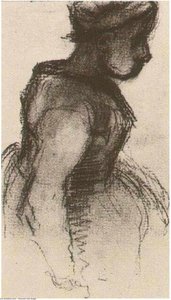
This evocative black and white drawing, “Lullaby Sleeping Head,” offers a poignant glimpse into the intimate bond between a parent and child. Created by the renowned British sculptor Henry Moore, this work transcends mere depiction; it’s an exploration of comfort, protection, and the profound tenderness inherent in nurturing relationships. While primarily known for his monumental sculptures, this drawing reveals another facet of Moore's artistic genius – his ability to distill complex emotions into deceptively simple forms. The image portrays a man gently cradling a sleeping child, their figures intertwined in a posture of serene repose. The man’s robe-like garment envelops both figures, creating a sense of warmth and security. The detail afforded to the man's face—his eyes and mouth—suggests quiet contemplation and unwavering care, while the partially obscured face of the sleeping child amplifies the feeling of vulnerability and trust.Style & Technique: A Sculptor’s Perspective
Moore’s artistic style is immediately recognizable even in this two-dimensional medium. Though he's celebrated for his three-dimensional works, here we see a direct translation of his sculptural principles. The drawing exhibits the hallmarks of Moore’s approach to form – simplification and abstraction. He doesn't strive for photographic realism; instead, he focuses on capturing the essence of the figures through carefully rendered lines and shading. This technique, rooted in direct carving—a method he championed—allows him to convey volume and weight despite the absence of physical depth. The use of black and white enhances the drawing’s emotional intensity, stripping away color distractions and focusing attention on the interplay of light and shadow that defines the forms. It's a testament to Moore’s mastery that he can evoke such powerful emotion with such economical means.Historical Context & Recurring Themes
“Lullaby Sleeping Head” was created during Moore’s prolific career, which spanned from the 1920s until his death in 1986. His work is deeply embedded within the context of Modernism, reacting against traditional representational art while simultaneously exploring universal human themes. Moore frequently depicted the mother-and-child motif throughout his oeuvre, recognizing its symbolic power as a representation of primal connection and enduring love. This drawing aligns with that recurring theme, but offers a unique perspective by portraying the father’s role in nurturing—a shift reflecting evolving societal roles during the mid-20th century. The post-war period saw a renewed emphasis on family and domesticity, and Moore's work often reflected these changing values.Symbolism & Emotional Impact
Beyond its literal depiction, “Lullaby Sleeping Head” resonates with profound symbolic meaning. The act of cradling—the protective embrace—represents security, vulnerability, and unconditional love. The sleeping child symbolizes innocence and trust, while the man embodies strength and guardianship. The absence of a detailed background further emphasizes the intimacy of the moment, drawing the viewer’s attention solely to the relationship between these two figures. The overall emotional impact is one of quiet serenity and profound tenderness—a universal expression of parental love that transcends cultural boundaries. This piece invites contemplation on the enduring power of human connection and the beauty found in simple, everyday moments.Perguntas e Respostas
A qual estilo pertence "Lullaby Sleeping Head"?
O movimento associado a "Lullaby Sleeping Head", de Henry Moore é Modernism. Esta classificação situa a obra entre artistas e obras de arte relacionados.
Henry Moore, criador(a) de "Lullaby Sleeping Head", é conhecido(a) por outros nomes?
Outros nomes registrados para Henry Moore, criador de "Lullaby Sleeping Head", incluem Henry Spencer Moore, Henry Lee Moore.
Existe uma ficha informativa sobre "Lullaby Sleeping Head", de Henry Moore para estudantes?
O guia para "Lullaby Sleeping Head" é a página de Ficha informativa da obra — uma ficha informativa imprimível que apresenta a obra com sua legenda, autoria e tabela de identificação (artista, datas, técnica, tamanho original, coleção).




 Alternar para Impressão


 Para obras de arte ou reproduções com mais de 105 cm (aproximadamente 41 polegadas) em qualquer um dos lados, a moldura será enviada como um kit desmontado. Este método garante uma entrega segura e evita danos durante o transporte.




