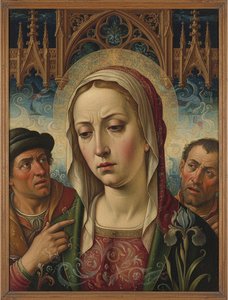
1467. Acrylic On Canvas, 33.0 x 23.0 cm. Kunsthistorisches Museum.

§ 1Dados do catálogo

- 33.0 x 23.0 cm


§ 2Abstrato
 Ler mais
Biografia do Artista
Hugo van der Goes (1440-1482): Mestre flamengo da Renascença, conhecido pela realista dramática e emocional, como o Altarpiece Portinari. Sua obra influenciou a arte italiana e marcou época!
§ 3Comentário
Hugo van der Goes’s “The Fall”: A Testament to Northern Renaissance Mastery
“The Fall,” painted between 1467 and 1468 by Hugo van der Goes, stands as an unparalleled achievement of Early Netherlandish art—a monumental depiction of the biblical narrative that transcends mere illustration, embodying profound psychological depth and masterful artistic execution. Housed within the Kunsthistorisches Museum in Vienna, Austria, this oil on oak panel masterpiece continues to captivate viewers with its breathtaking realism and enduring symbolic resonance.Composition and Technique: A Symphony of Light and Shadow
Van der Goes’s compositional brilliance is immediately apparent. He presents a dramatic tableau featuring Adam and Eve after their transgression against God's commandment—a scene fraught with emotion and imbued with an astonishing level of detail. The artist skillfully employs chiaroscuro, manipulating light and shadow to sculpt the figures and landscape alike, creating a palpable sense of three-dimensionality that was revolutionary for its time. Each brushstroke meticulously renders musculature, skin texture, and drapery folds, demonstrating Van der Goes’s unwavering commitment to anatomical accuracy—a hallmark of his distinctive style. The oak panel itself serves as an integral element of the artwork's aesthetic impact, grounding the scene in materiality and enhancing its visual presence.Symbolism: Decoding Layers of Meaning
Beyond its technical prowess, “The Fall” is rich in symbolism that speaks to fundamental theological concepts. The serpent, coiled around the Tree of Knowledge, embodies temptation and deceit—a recurring motif within Christian iconography. Eve’s gaze towards Adam reflects vulnerability and remorse as she confronts the consequences of her actions. The apple itself symbolizes forbidden knowledge and represents humanity's loss of innocence. Furthermore, the lush foliage surrounding the figures underscores the idyllic beauty of Eden before the Fall, serving as a poignant reminder of what has been irrevocably lost. Van der Goes’s deliberate use of color—primarily earthy tones—contributes to the painting’s somber mood, mirroring the spiritual anguish experienced by Adam and Eve.Historical Context: Pioneering Realism in a Turbulent Era
Created during the height of the Northern Renaissance, “The Fall” represents a pivotal moment in artistic history. Unlike its Italian counterparts, which often prioritized idealized beauty and mythological grandeur, Flemish painting—particularly under Van der Goes’s influence—embraced realism with unprecedented fervor. Rogier van der Weyden and Jan van Eyck, contemporaries of Van der Goes, had already established new standards for detail and naturalism; however, Hugo van der Goes elevated these achievements to an entirely different level. The painting reflects the intellectual ferment of the period, fueled by humanist scholarship and a renewed interest in classical art—a confluence that propelled artists toward exploring human psychology and conveying emotional intensity with unparalleled sensitivity.Emotional Impact: A Profound Reflection on Human Condition
“The Fall” continues to resonate powerfully with audiences today because it confronts fundamental questions about morality, faith, and the human condition. The painting’s depiction of Adam and Eve's despair captures the universal experience of regret and remorse—a timeless reminder that even in moments of transgression, humanity retains a capacity for compassion and vulnerability. Its masterful execution elevates it beyond mere narrative illustration, transforming it into an enduring meditation on spiritual struggle and the consequences of disobedience. Viewing this artwork evokes contemplation and invites viewers to consider the complexities of human behavior and the enduring power of symbolism.- Artist: Hugo van der Goes
- Date: 1467-68
- Medium: Oil on Oak Panel
- Location: Kunsthistorisches Museum, Vienna
For more information on Hugo Van Der Goes and his works, visit AllPaintingsStore.com and explore our collection of handmade oil painting reproductions.
Perguntas e Respostas
De que técnica é feita a obra "The Fall"?
A técnica de "The Fall", de Hugo van der Goes é Acrylic On Canvas. As reproduções visam reproduzir a aparência desta técnica.
"The Fall" está em domínio público?
"The Fall", de Hugo van der Goes está em em domínio público — seus direitos autorais expiraram. Este status determina como a imagem da obra pode ser reproduzida.
Posso ver uma imagem de raio-X de "The Fall", de Hugo van der Goes?
A página Raio X de "The Fall", de Hugo van der Goes é um visualizador interativo que permite percorrer onze camadas ópticas da imagem da obra, incluindo uma visualização em estilo raio-X.


 Alternar para Impressão


 Para obras de arte ou reproduções com mais de 105 cm (aproximadamente 41 polegadas) em qualquer um dos lados, a moldura será enviada como um kit desmontado. Este método garante uma entrega segura e evita danos durante o transporte.