


 Visualizar em escala
 Enviar
 Compartilhar
 Ver detalhes
 Guia
Guia

 Baixar imagem
 Semelhantes
 Raio X
 Apresentação de slides
 Estatísticas
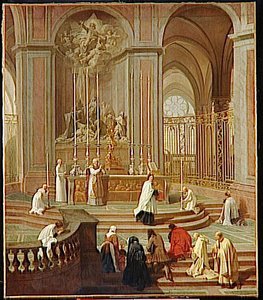
Le Révérend Père Pierre Jean Cayron

 Ver mais
Giclée / Impressão de Arte
Impressão giclée ou em tela de qualidade de museu, com produção rápida e opções flexíveis de acabamento. ( Encomendar reprodução pintada à mão Ver Imagem Digital)




































Escolha entre os nossos tamanhos pré-definidos que respeitam as proporções originais da obra de arte.

Você pode inserir suas próprias dimensões para se ajustar a uma moldura ou espaço específico. Se o tamanho selecionado não corresponder às proporções da imagem original, iremos recortar a obra de arte ou estender a imagem com uma borda espelhada ou preenchimento sólido. Um mockup digital será enviado para sua aprovação antes do início da produção.
Por favor, observe que a visualização na tela não reflete o recorte ou a extensão real. Apenas o mockup mostrará com precisão a composição final.
Embora tamanhos personalizados estejam disponíveis, recomendamos selecionar uma dimensão da lista predefinida para preservar as proporções originais.
Entrega mundial () em 2 semanas, em vez das 4/5 semanas padrão. (21 Setembro)

Envio expresso gratuito para todo o mundo

Tela de Linho Premium

Seguro de transporte total

Garantia de Reembolso de Impostos Alfandegários

Garantia de Fidelidade de Cor

Política de Devolução em 100 Dias (Apenas para Defeitos)

Garantia de reembolso de 100%

Desconto para múltiplas unidades
 A opção de vidro está disponível apenas para tamanhos inferiores a 110 cm

Le Révérend Père Pierre Jean Cayron
Giclée / Impressão de Arte
Dimensões da Reprodução
-


Preço Total
$ 64
Obras Relacionadas




Biografia do Artista
The Grace of Light and Shadow: The Life of Jean-Baptiste Despax
Jean-Baptiste Despax remains a captivating figure in the tapestry of French art, a painter whose brush captured the delicate transition between two of history's most evocative eras. Born in the culturally rich city of Valenciennes, France, Despax emerged during a period when the theatrical intensity of the Baroque was beginning to soften into the playful, ornamental elegance of the Rococo. His life, spanning from approximately 1709 to 1773, was a journey through an age of profound aesthetic transformation. While his early years were marked by the personal shadows of familial loss, these very hardships seemed to deepen his capacity for emotional resonance, allowing him to imbue his subjects with a soulfulness that transcended mere decoration. Through his formal training at the Académie Royale de Valenciennes, Despax mastered the rigorous techniques of his predecessors. He became an adept practitioner of chiaroscuro, utilizing the dramatic interplay of light and shadow to create depth and volume. This mastery of light allowed him to navigate the complexities of both religious and allegorical themes, bringing a sense of divine presence or mythological weight to his canvases. His ability to manipulate light was not merely a technical feat but a narrative tool, used to guide the viewer's eye through compositions that felt both monumental and intimately human.A Synthesis of Styles: Rococo Elegance Meets Baroque Drama
The true brilliance of Despax lies in his unique ability to bridge the gap between the heavy, dramatic traditions of the Baroque and the lighthearted, pastel-infused world of the Rococo. While he drew inspiration from the opulent ornamentation and asymmetrical grace championed by masters like François Boucher and Jean Honoré Fragonard, he never fully abandoned the structural integrity and emotional gravity of the older style. This stylistic synthesis created a body of work that felt simultaneously fresh and grounded, capable of depicting both the ethereal beauty of an angel and the somber dignity of a priest. His repertoire was remarkably diverse, ranging from deeply spiritual compositions to scenes of classical mythology. In works such as Tobie et l’Ange, one can witness his skill in weaving together narrative tension and delicate beauty. His religious paintings often utilized soft, luminous palettes to evoke a sense of heavenly peace, yet they retained a tactile realism that made the sacred scenes feel immediate and tangible. This duality—the ability to be both decorative and profound—is what distinguishes Despax from many of his contemporaries who leaned too heavily into either pure ornamentation or rigid classicism.Legacy and Artistic Significance
The historical significance of Jean-Baptiste Despax is found in his role as a stylistic mediator. He did not merely follow the trends of 18th-century France; he refined them, blending the technical rigor of the past with the aesthetic whimsy of the present. His portraits, such as the evocative Le Révérend Père Pierre Jean Cayron, demonstrate his capacity for capturing character through rich textures and realistic detail, ensuring that his subjects possessed a lasting, lifelike presence. Today, Despax’s work serves as a vital window into the French aesthetic evolution. His paintings remind us of a time when art was a delicate balance of:- Emotional Depth: Using light to convey the weight of human experience and spiritual devotion.
- Technical Mastery: The precise application of shadow to create three-dimensional reality on a flat surface.
- Aesthetic Harmony: The seamless integration of soft, pastel Rococo hues with the structured compositions of the Baroque tradition.

jean baptiste despax
1827 - 1875 , France
Informações Rápidas
- Artistic Movement Or Style: Romantic Art
- Artists Or Movements Influenced By This Artist: ['']
- Artists Who Influenced This Artist: ['']
- Date Of Birth: Valenciennes, France (1827)
- Date Of Death: 1875
- Full Name: Jean Baptiste Despax
- Nationality: French
- Notable Artworks:
- Tobie et l’Ange
- Le Roi David
- Jean Baptiste Despax
- Place Of Birth: Valenciennes
Artigos Relacionados

From Grandeur to Grace: Exploring the Evolution of Baroque & Rococo Art
Explore the captivating evolution from Baroque's drama to Rococo's grace! Discover key artists, characteristics & lasting influence of these art movements with expert insights at AllPaintingsStore.

Jean-Baptiste Pater: Rococo Charm & Ephemeral Beauty of 18th-Century France
Explore the captivating world of Jean-Baptiste Pater, a master of Rococo painting. Discover his elegant *fête galante* scenes and shimmering portraits – a glimpse into 18th-century French aristocracy. Learn about his legacy & find high-quality reproductions.

Barroco Brasileiro: Opulência e Emoção para Interiores Contemporâneos
Descubra como o Barroco brasileiro pode transformar seus interiores! Explore a história, elementos-chave e dicas para integrar este estilo luxuoso e cheio de emoção em sua casa.

The Dramatic Flourish: Exploring the Baroque Movement's Enduring Legacy in Art History
Explore the dramatic world of Baroque art! Discover iconic artists like Caravaggio & Rubens, defining techniques, and its lasting impact on art history. Expert insights for collectors & enthusiasts at AllPaintingsStore.

Simon Vouet: A Baroque Master's Journey from Italian Influence to French Classicism
Explore the life & art of Simon Vouet, a pivotal French Baroque painter who introduced Italian styles to France. Discover his masterpieces and lasting influence on 17th-century art.

