

Painting
1927. Oil On Canvas, 73.0 x 92.0 cm. Museu Metropolitano de Arte.

§ 1Catalogue data
 Oil On Canvas
- WallArt
- Surrealism
 1927
1927- Modern
 73.0 x 92.0 cm
 Museu Metropolitano de Arte
Esta obra está protegida por direitos autorais
A obra de arte exibida nesta página é protegida por leis de direitos autorais, o que significa que não podemos criar ou vender legalmente uma reprodução idêntica. Esta proteção é aplicada por meio de acordos internacionais, tais como a Convenção de Berna e pelas leis nacionais, incluindo as estabelecidas por Lei de Direitos Autorais dos EUA - Título 17.
Como uma alternativa respeitosa e legal, oferecemos obras de arte personalizadas e pintadas à mão, inspiradas na obra original. Nossos artistas profissionais e experientes estudam cuidadosamente o estilo, a atmosfera e a essência artística da obra original para criar uma peça nova e única que evoque a mesma sensação — permanecendo como uma criação original por direito próprio.
Este método cumpre plenamente as regulamentações de direitos autorais, pois não envolve a cópia ou duplicação da obra protegida. Em vez disso, trata-se de uma reinterpretação criativa — uma nova pintura que é influenciada pela original, mas não idêntica a ela.
 Leia mais
§ 2Abstract
Descrição do Item
Joan Miró’s 1927 abstract painting: a vibrant, chaotic composition of geometric shapes & bold colors. Explore this Surrealist masterpiece's unique style and evocative energy.
Biografia do Artista
Descubra o universo surrealista de Joan Miró! Pinturas abstratas e símbolos catalães em obras-primas que celebram sonhos e beleza artística. Uma figura essencial da arte moderna!
§ 3Commentary
A Glimpse into Miró’s Subconscious: An Exploration of Form and Feeling (1927)
This captivating painting by Joan Miró, created in 1927, offers a compelling entry point into the artist's unique visual language – a world where playful abstraction meets profound emotional resonance. Measuring 73 x 92 cm, this work exemplifies Miró’s pivotal role in bridging Surrealism and abstract art.Deconstructing the Composition
The canvas is dominated by expansive fields of white, applied with a loose, gestural freedom that suggests spontaneity and movement. These aren't simply areas of color; they are energetic brushstrokes that seem to breathe life into the composition. Scattered across this backdrop are carefully considered yet seemingly random geometric shapes – a triangle, star, circle, and a slender black line – punctuated by small accents of red and yellow. The deliberate imbalance in the arrangement contributes to a dynamic tension, preventing the eye from settling on any single point.Technique & Materials
Miró’s technique is immediately apparent: direct application of oil paint with visible brushstrokes and occasional drips. This isn't about meticulous detail; it’s about capturing a feeling, an impulse. The layering of paint creates texture and depth, inviting the viewer to explore the surface beyond its initial appearance. The use of oil paints allows for rich color saturation and expressive blending, qualities Miró expertly utilizes.Historical Context: A Pioneer of Abstraction
Created during a period of intense artistic experimentation, this painting reflects Miró’s growing departure from representational art. Having moved between Barcelona and Paris, he was deeply influenced by the burgeoning Surrealist movement while simultaneously forging his own distinct path. 1927 was a crucial year for Miró as he continued to refine his symbolic vocabulary and explore the possibilities of non-objective painting. He sought to dismantle traditional artistic conventions, believing they stifled genuine expression.Symbolism & Interpretation
While Miró resisted definitive interpretations of his work, preferring viewers to engage with it on a personal level, certain elements hint at deeper meanings. The geometric shapes could be seen as archetypal symbols – the triangle representing stability, the star signifying aspiration, and the circle embodying wholeness. However, these are not rigid signifiers; their ambiguity is intentional. The painting’s overall effect evokes a sense of childlike wonder, tapping into subconscious realms and dreamlike states.Emotional Impact & Interior Design
This artwork possesses a unique ability to evoke a range of emotions – from playful curiosity to quiet contemplation. Its abstract nature makes it incredibly versatile for interior design.- It would serve as a striking focal point in a modern living room, adding a touch of sophistication and artistic flair.
- Its neutral color palette (browns, whites, with pops of red & yellow) complements various décor styles, from minimalist to eclectic.
- The painting’s energetic composition can invigorate a study or home office, fostering creativity and inspiration.
Perguntas e Respostas
O que "Painting" compartilha com o restante da obra de Joan Miró?
"Painting" integra a produção Surrealism de Joan Miró, cujos temas recorrentes incluem early abstract exploration, playful, childlike imagery, expression of inner world, fauvism, cubism, surrealism, van gogh.
Qual é o lugar de "Painting", de Joan Miró na história da arte?
A classificação histórico-artística de "Painting", de Joan Miró é Surrealism, do período Modern.
Qual tamanho de impressão de "Painting", de Joan Miró se adequa ao ambiente recomendado?
Para um(a) Living Room, o tamanho de impressão recomendado para "Painting", de Joan Miró é Large.
§ 4The artist
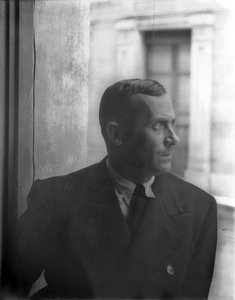
Joan Miró
1893 - 1983, Espanha
Dados Rápidos
- Artistic Movement Or Style: Surrealismo
- Artists Who Influenced This Artist:
- Pablo Picasso
- Van Gogh
- Date Of Birth: 20 Abril 1893
- Date Of Death: 25 Dezembro 1983
- Full Name: Joan Miró i Ferrà
- Nationality: Espanhol
- Notable Artworks:
- A Fazenda
- La Poetisa
- Dutch Interiors
- Place Of Birth: Barcelona, Espanha
Biografia do Artista
A Catalan Visionary: The Life and Art of Joan Miró
Joan Miró i Ferrà, born in Barcelona in 1893, stands as one of the most significant figures in 20th-century art. His journey was not merely a progression through styles but an exploration of inner worlds, translating dreams, memories, and Catalan identity onto canvas with a uniquely poetic visual language. From humble beginnings marked by illness and initial parental reservations about his artistic pursuits, Miró persevered, driven by an innate need to express the intangible—the emotions, sensations, and subconscious currents that lie beneath the surface of reality. His early life was steeped in the traditions of Barcelona, a city brimming with architectural marvels thanks to Antoni Gaudí, whose organic forms would subtly influence Miró’s later abstractions. The goldsmithing profession of his father instilled an appreciation for meticulous craftsmanship, while the rugged Catalan landscape became a recurring motif and source of inspiration throughout his career.Early Influences and the Path to Surrealism
Miró's formal artistic training began at La Llotja in Barcelona, where he honed his skills in traditional techniques. However, it was exposure to the avant-garde movements sweeping through Paris that truly ignited his creative evolution. The vibrant colors of Fauvism and the fragmented forms of Cubism resonated deeply, prompting him to move to Paris in 1920. This period proved pivotal as he encountered artists like Pablo Picasso and began experimenting with increasingly abstract compositions. Yet, Miró didn’t simply adopt these styles; he synthesized them, forging a path toward his own distinctive aesthetic. He sought to distill forms to their essence, stripping away representational details in favor of symbolic shapes and evocative colors. This exploration led him to the Surrealist group in 1924, aligning him with artists such as Max Ernst and Salvador Dalí. While embracing the Surrealist interest in the subconscious, Miró maintained a unique sensibility—his work was less about shocking imagery or Freudian symbolism than it was about creating a world of playful forms and poetic suggestion. He believed that art should be free from rational constraints, allowing for spontaneous expression and imaginative exploration.The Language of Symbols: Key Works and Artistic Innovations
Throughout the 1920s and 30s, Miró developed his signature visual vocabulary—a universe populated by biomorphic shapes, floating forms, and vibrant colors. The Farm (1922), often considered a cornerstone of his oeuvre, exemplifies this transition. It’s not merely a depiction of rural life but an evocation of Catalan identity and a symbolic representation of the natural world. The painting utilizes earthy tones contrasted with bursts of crimson and yellow—colors that mirror the vibrancy of the Catalan countryside and imbue the scene with a sense of primal energy. His collaborative spirit led to innovative techniques like *grattage*, pioneered with Max Ernst in 1926 for designs intended for Sergei Diaghilev's ballet, where textures were revealed by scraping paint across canvas. This technique allowed Miró to liberate forms from conventional representation, emphasizing surface qualities and creating a tactile experience for the viewer. The Dutch Interiors (1928) series demonstrated his ability to reinterpret the Old Masters through a distinctly modern lens, transforming domestic scenes into dreamlike abstractions. He approached Rembrandt’s portraits with an eye attuned to the subtleties of emotion and gesture, distilling them into simplified geometric shapes—a bold departure from traditional portraiture. Painting (1933), with its striking palette and dynamic composition, encapsulates Miró’s exploration of the subconscious and his rejection of conventional artistic boundaries. The painting's swirling lines and amorphous forms convey a sense of movement and disorientation, mirroring the anxieties of the era while simultaneously celebrating the boundless potential of imagination. Beyond painting, Miró fearlessly experimented with sculpture, ceramics, and printmaking, expanding his creative horizons and demonstrating a remarkable versatility.Legacy and Enduring Influence
Joan Miró's impact on 20th-century art is undeniable. He wasn’t simply a painter; he was a visionary who challenged the very definition of artistic expression. His work paved the way for abstract expressionism and continues to inspire artists across disciplines. He established two foundations—the Fundació Joan Miró in Barcelona (1975) and the Fundació Pilar i Joan Miró in Palma de Mallorca (1981)—ensuring that his legacy would endure, providing spaces for artistic exploration and education. Throughout his long career, he remained committed to pushing boundaries, questioning conventions, and exploring the depths of human imagination. Miró’s art is a testament to the power of abstraction, symbolism, and poetic expression—a vibrant celebration of life, dreams, and the enduring spirit of Catalan culture. His work continues to resonate with audiences worldwide, inviting us to enter a world where anything is possible and the boundaries between reality and fantasy blur into a captivating dance of color and form. He died in Palma de Mallorca in 1983, leaving behind an unparalleled body of work that remains a beacon of creativity and innovation.§ 5Comparanda


§ 6Questions
§ 7Further reading
Artigos Relacionados

Neo-Abstract Art Trend Forecast: High-Impact Geometric Compositions for Contemporary Commercial Interiors
Elevate commercial interiors with Neo-Abstract art. Discover how high-impact geometric compositions and custom oil reproductions provide scalable, sophisticated design solutions for hotels, restaurants, and corporate spaces. Expert procurement for large-scale hospitality projects.
Cite this entry
AllPaintingsStore.com, “Joan Miró, Painting (1927)”, https://allpaintingsstore.com/pt/art/joan-miro-painting-D32AM6-en/ArtistReproduction/ (accessed 1 Outubro 2026).
§ 8The reproduction
Reprodução em Óleo Feita à Mão
Óleo sobre tela pintado à mão no tamanho e moldura de sua escolha, feito sob encomenda pelos nossos artistas. ( Alternar para Impressão Alternar para Imagem Digital)
It is specified on the order sheet in the margin; the present state of that sheet reads as follows.

Painting
Técnica de Reprodução
Tamanho da Reprodução
-

Artista Sênior de Elite
Mais detalhes, refinamento e tempo de produção adicional
-

Moldura para Reprodução
-
-
Para obras de arte ou reproduções com mais de 105 cm (aproximadamente 41 polegadas) em qualquer um dos lados, a moldura será enviada como um kit desmontado. Este método garante uma entrega segura e evita danos durante o transporte.
Montagem profissional necessária — este não é um produto DIY (faça você mesmo).
O kit deve ser montado e a tela esticada por um profissional de molduraria experiente, utilizando cola de madeira (não inclusa), um alicate de esticar tela e grampos para manter as travessas alinhadas enquanto a cola seca. A montagem incorreta ou a tensão desigual da tela podem danificar permanentemente a obra de arte e não estão cobertas pela nossa garantia.
 Para obras de arte ou reproduções com mais de 105 cm (aproximadamente 41 polegadas) em qualquer um dos lados, a moldura será enviada como um kit desmontado. Este método garante uma entrega segura e evita danos durante o transporte.
Todas as barras de madeira maciça estão incluídas, precisamente cortadas ao tamanho certo.
Montado com os parafusos fornecidos, além de cola para madeira para as junções dos cantos, que não está inclusa e deve ser providenciada pelo seu moldurista.
São necessárias ferramentas profissionais não incluídas: um alicate de estiramento de tela (esticador) e grampos para manter as ripas alinhadas enquanto a cola seca.
Importante:
As junções dos cantos requerem cola para madeira, as ripas devem ser mantidas com grampos até que a cola esteja completamente seca, e o estiramento da tela na moldura montada requer um alicate de esticar tela. Nenhum destes itens está incluído no kit. Por favor, certifique-se de contar com um profissional de molduraria experiente antes de encomendar este tamanho.

Etiqueta de identificação
-
-

Verniz de Proteção
Verniz brilhante (realça as cores e protege contra a luz e a umidade)
-

Personalizar minha obra
Exemplos de alterações possíveis: Substituir o rosto por uma foto do cliente; Adicionar um animal de estimação (ex.: substituir gato por cachorro); Incluir uma mensagem oculta no fundo; Alterar a paisagem ou os elementos do fundo.
-

Urgente
Entrega mundial () em 3 a 4 semanas, em vez das 5 semanas padrão. (29 Outubro). Sem comprometer a qualidade.
-
Envio Expresso
Entrega mundial para em 5 semanas. (5 Novembro).
Com envio incluído
Preço Total
€ 227
Included with every order
- Envio expresso gratuito para todo o mundo
- Tela de Linho de Alta Qualidade
- Seguro de transporte completo
- Garantia de Reembolso de Impostos Alfandegários
- Garantia de Fidelidade Cromática
- Política de Devolução em 100 Dias (Apenas para Defeitos)
- Garantia de reembolso de 100%
- Oferta de desconto por quantidade


