


 Visualizar na parede
 Compartilhar
 Compartilhar
 Detalhes
 Guia
Guia

 Baixar imagem
 Semelhantes
 Raio X
 Ver diaporama
 Q&A
Q&A Estatísticas
Proyecto de ballet


 Ler mais
A obra de arte exibida nesta página é protegida por leis de direitos autorais, o que significa que não podemos criar ou vender legalmente uma reprodução idêntica. Esta proteção é aplicada por meio de acordos internacionais, tais como a Convenção de Berna e pelas leis nacionais, incluindo as estabelecidas por Lei de Direitos Autorais dos EUA - Título 17.
Este método cumpre plenamente as regulamentações de direitos autorais, pois não envolve a cópia ou duplicação da obra protegida. Em vez disso, trata-se de uma reinterpretação criativa — uma nova pintura que é influenciada pela original, mas não idêntica a ela.
Giclée / Impressão de Arte
Impressão giclée ou em tela de qualidade de museu, com produção rápida e opções flexíveis de acabamento. ( Comprar pintura feita à mão Alternar para Imagem Digital)




P118B €10

P118H €10

P118W €10

P438Z €10

P508JH €12

P508YH €12

P805H €10

P805Z €10

P919BZ €10

P919G €10

P919XJ €10

P959ZH €10

P968JZ €12

W106C €8

W218G €10

W218JH €8

W218Y €10

W307PJ €10

W316G €10

W316PJ €8

W316Y €10

W398PJ €8

W4111J €10

W500HY €15

W500JH €15

W692G €12

W849H €8

W940BG €15

W953PJ €8




Escolha entre os nossos tamanhos pré-definidos que respeitam as proporções originais da obra de arte.

Insira a largura e a altura desejadas para se ajustarem à sua moldura ou parede. Uma impressão pode ser apenas cortada, nunca ampliada além da imagem original; portanto, um tamanho com proporções diferentes resultará na perda de parte da imagem. Enviamos uma maquete digital para sua aprovação antes de realizarmos a impressão. A imagem exibida nesta página não mostra o corte real — apenas a maquete o faz.
Entrega mundial () em 2 semanas, em vez das 4/5 semanas padrão. (29 Outubro)

Envio expresso gratuito para todo o mundo

Tela de Linho de Alta Qualidade

Seguro de transporte completo

Garantia de Reembolso de Impostos Alfandegários

Garantia de Fidelidade Cromática

Política de Devolução em 100 Dias (Apenas para Defeitos)

Garantia de reembolso de 100%

Oferta de desconto por quantidade
 A opção de vidro está disponível apenas para tamanhos inferiores a 110 cm

Proyecto de ballet
Giclée / Impressão de Arte
Tamanho da Reprodução
-


Preço Total
€ 56
A Chaotic Symphony of Thought: Exploring Joan Miró’s “Proyecto de Ballet”
Joan Miró's "Proyecto de Ballet," a page ripped from his sketchbook, isn’t merely a drawing; it’s an invitation into the boundless realm of a creative mind in full flight. This work, rendered with a deceptively simple palette of off-white, black ink, and flashes of red and yellow, embodies Miró's signature Surrealist aesthetic – a deliberate rejection of conventional representation in favor of intuitive symbolism and dreamlike imagery. It’s a piece that whispers rather than shouts, demanding contemplation and rewarding repeated viewing with new layers of meaning.
The page pulsates with an almost frenetic energy. Dense blocks of French text intertwine with a constellation of abstract forms: circles morphing into figures, amorphous blobs suggesting both creatures and landscapes, and geometric shapes that seem to float weightlessly within the composition. There’s no single point of focus; instead, the eye is guided by the meandering lines of the script, tracing the contours of these enigmatic symbols as they dance across the surface. Miró wasn't interested in depicting reality but rather capturing a fleeting moment of inspiration – the genesis of an idea, perhaps, or the fragmented memory of a dream.
The Catalan Visionary and the Birth of Surrealism
Born in Barcelona in 1893, Joan Miró’s artistic journey was deeply rooted in his Catalan heritage. The city's vibrant architecture, particularly the organic forms championed by Antoni Gaudí, undoubtedly influenced his later work. Miró’s early life, marked by illness and initial parental reservations about his artistic pursuits, fostered a profound sense of independence and a determination to pursue his own unique vision. This spirit of rebellion against convention is powerfully evident in “Proyecto de Ballet.” He wasn't simply painting; he was translating the internal landscape of his mind onto paper – a process that would become synonymous with Surrealism.
Miró’s exploration of Catalan identity also played a crucial role in shaping his artistic style. He incorporated elements of traditional Catalan folklore, mythology, and language into his work, creating a visual vocabulary that was both deeply personal and universally resonant. The use of symbols like the bird – frequently appearing in his art – can be interpreted as representing freedom, flight, or even the subconscious mind. “Proyecto de Ballet” is therefore not just an abstract composition; it’s a coded conversation between the artist and his cultural roots.
Decoding the Language of Symbols
The seemingly random arrangement of elements in "Proyecto de Ballet" belies a complex system of symbolism. The text, written in French, likely represents fragmented thoughts or musical notations – perhaps the initial sketches for a ballet that never fully materialized. Miró’s use of color is equally deliberate. Black ink provides structure and definition, while red accents inject moments of intensity and drama. The yellow and blue hints suggest warmth and light within the otherwise muted palette.
The shapes themselves are deliberately ambiguous. They aren't meant to represent recognizable objects but rather evoke a sense of primal emotion or instinctive association. Circles can symbolize wholeness, cycles, or even the sun; ovals might represent fertility or femininity. The overall effect is one of controlled chaos – a visual representation of the creative process itself: a whirlwind of ideas and sensations coalescing into something new.
A Window into the Artist’s Soul
“Proyecto de Ballet” isn't simply a beautiful artwork; it’s a poignant glimpse into the mind of one of the 20th century’s most influential artists. It captures a moment of intense creativity, a fleeting expression of an inner world brimming with imagination and emotion. The work invites us to participate in Miró’s process, to decipher his symbols, and to lose ourselves in the dreamlike atmosphere he creates on the page. Reproductions of this piece offer a unique opportunity to bring this captivating vision into your home, serving as a constant reminder of the power of imagination and the beauty of spontaneous creation.
Perguntas e Respostas
Existem obras semelhantes a "Proyecto de ballet"?
Obras de arte semelhantes a "Proyecto de ballet", de Joan Miró podem ser encontradas na página de Obras semelhantes desta obra.
O que "Proyecto de ballet", de Joan Miró retrata?
Os temas de "Proyecto de ballet" são ballet, sketchbook, symbols, text, abstraction, dreams, experimentation.
Qual técnica foi utilizada em "Proyecto de ballet", de Joan Miró?
"Proyecto de ballet" é executada em Acrylic On Paper.
Obras Relacionadas


Biografia do Artista
A Catalan Visionary: The Life and Art of Joan Miró
Joan Miró i Ferrà, born in Barcelona in 1893, stands as one of the most significant figures in 20th-century art. His journey was not merely a progression through styles but an exploration of inner worlds, translating dreams, memories, and Catalan identity onto canvas with a uniquely poetic visual language. From humble beginnings marked by illness and initial parental reservations about his artistic pursuits, Miró persevered, driven by an innate need to express the intangible—the emotions, sensations, and subconscious currents that lie beneath the surface of reality. His early life was steeped in the traditions of Barcelona, a city brimming with architectural marvels thanks to Antoni Gaudí, whose organic forms would subtly influence Miró’s later abstractions. The goldsmithing profession of his father instilled an appreciation for meticulous craftsmanship, while the rugged Catalan landscape became a recurring motif and source of inspiration throughout his career.Early Influences and the Path to Surrealism
Miró's formal artistic training began at La Llotja in Barcelona, where he honed his skills in traditional techniques. However, it was exposure to the avant-garde movements sweeping through Paris that truly ignited his creative evolution. The vibrant colors of Fauvism and the fragmented forms of Cubism resonated deeply, prompting him to move to Paris in 1920. This period proved pivotal as he encountered artists like Pablo Picasso and began experimenting with increasingly abstract compositions. Yet, Miró didn’t simply adopt these styles; he synthesized them, forging a path toward his own distinctive aesthetic. He sought to distill forms to their essence, stripping away representational details in favor of symbolic shapes and evocative colors. This exploration led him to the Surrealist group in 1924, aligning him with artists such as Max Ernst and Salvador Dalí. While embracing the Surrealist interest in the subconscious, Miró maintained a unique sensibility—his work was less about shocking imagery or Freudian symbolism than it was about creating a world of playful forms and poetic suggestion. He believed that art should be free from rational constraints, allowing for spontaneous expression and imaginative exploration.The Language of Symbols: Key Works and Artistic Innovations
Throughout the 1920s and 30s, Miró developed his signature visual vocabulary—a universe populated by biomorphic shapes, floating forms, and vibrant colors. The Farm (1922), often considered a cornerstone of his oeuvre, exemplifies this transition. It’s not merely a depiction of rural life but an evocation of Catalan identity and a symbolic representation of the natural world. The painting utilizes earthy tones contrasted with bursts of crimson and yellow—colors that mirror the vibrancy of the Catalan countryside and imbue the scene with a sense of primal energy. His collaborative spirit led to innovative techniques like *grattage*, pioneered with Max Ernst in 1926 for designs intended for Sergei Diaghilev's ballet, where textures were revealed by scraping paint across canvas. This technique allowed Miró to liberate forms from conventional representation, emphasizing surface qualities and creating a tactile experience for the viewer. The Dutch Interiors (1928) series demonstrated his ability to reinterpret the Old Masters through a distinctly modern lens, transforming domestic scenes into dreamlike abstractions. He approached Rembrandt’s portraits with an eye attuned to the subtleties of emotion and gesture, distilling them into simplified geometric shapes—a bold departure from traditional portraiture. Painting (1933), with its striking palette and dynamic composition, encapsulates Miró’s exploration of the subconscious and his rejection of conventional artistic boundaries. The painting's swirling lines and amorphous forms convey a sense of movement and disorientation, mirroring the anxieties of the era while simultaneously celebrating the boundless potential of imagination. Beyond painting, Miró fearlessly experimented with sculpture, ceramics, and printmaking, expanding his creative horizons and demonstrating a remarkable versatility.Legacy and Enduring Influence
Joan Miró's impact on 20th-century art is undeniable. He wasn’t simply a painter; he was a visionary who challenged the very definition of artistic expression. His work paved the way for abstract expressionism and continues to inspire artists across disciplines. He established two foundations—the Fundació Joan Miró in Barcelona (1975) and the Fundació Pilar i Joan Miró in Palma de Mallorca (1981)—ensuring that his legacy would endure, providing spaces for artistic exploration and education. Throughout his long career, he remained committed to pushing boundaries, questioning conventions, and exploring the depths of human imagination. Miró’s art is a testament to the power of abstraction, symbolism, and poetic expression—a vibrant celebration of life, dreams, and the enduring spirit of Catalan culture. His work continues to resonate with audiences worldwide, inviting us to enter a world where anything is possible and the boundaries between reality and fantasy blur into a captivating dance of color and form. He died in Palma de Mallorca in 1983, leaving behind an unparalleled body of work that remains a beacon of creativity and innovation.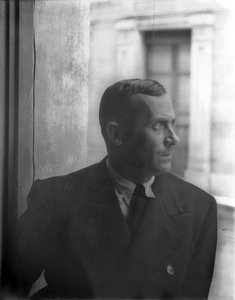
Joan Miró
1893 - 1983 , Espanha
Dados Rápidos
- Artistic Movement Or Style: Surrealismo
- Artists Who Influenced This Artist:
- Pablo Picasso
- Van Gogh
- Date Of Birth: 20 Abril 1893
- Date Of Death: 25 Dezembro 1983
- Full Name: Joan Miró i Ferrà
- Nationality: Espanhol
- Notable Artworks:
- A Fazenda
- La Poetisa
- Dutch Interiors
- Place Of Birth: Barcelona, Espanha
Artigos Relacionados

Neo-Abstract Art Trend Forecast: High-Impact Geometric Compositions for Contemporary Commercial Interiors
Elevate commercial interiors with Neo-Abstract art. Discover how high-impact geometric compositions and custom oil reproductions provide scalable, sophisticated design solutions for hotels, restaurants, and corporate spaces. Expert procurement for large-scale hospitality projects.

Strategic Sourcing of Premium Abstract Art for High-Impact Commercial Interiors and Large-Scale Hotel Projects
Streamline your commercial art procurement with our expert guide to sourcing premium abstract art for hotel and large-scale projects. Discover professional solutions for custom sizing, multi-panel layouts, and reliable bulk ordering designed for hospitality designers.

Contemporary Abstract Art: A Professional Buyer's Guide to Large-Scale Modern Decor for Hospitality and Corporate Interiors
A professional procurement guide for hotel designers and architects. Discover how to integrate large-scale contemporary abstract art into hospitality projects through high-volume, custom-sized oil reproductions, multi-panel layouts, and reliable global logistics.

Bold Distortion: A Trend Forecast for Impactful Abstract Art in Luxury Commercial and Hotel Interiors
Elevate hospitality design with the Bold Distortion trend. APS provides professional sourcing of large-scale abstract paintings for hotel interiors. Benefit from custom sizing, bulk-order efficiency, and reliable global shipping. High-impact art for high-volume procurement.


