


 Visualizar em escala
 Enviar
 Compartilhar
 Ver detalhes
 Guia de Obras do Aluno

 Baixar imagem
 Semelhantes
 Raio X
 Apresentação de slides
 Estatísticas
Untitled
 Acrylic On Canvas
- WallArt
- Surrealism
 1931
1931- Modern
 19.0 x 27.0 cm
 Ver mais
A obra de arte exibida nesta página é protegida por leis de direitos autorais, o que significa que não podemos criar ou vender legalmente uma reprodução idêntica. Esta proteção é aplicada por meio de acordos internacionais, tais como a Convenção de Berna e pelas leis nacionais, incluindo as estabelecidas por Lei de Direitos Autorais dos EUA - Título 17.
Como uma alternativa respeitosa e legal, oferecemos obras de arte personalizadas e pintadas à mão, inspiradas na obra original. Nossos artistas profissionais e experientes estudam cuidadosamente o estilo, a atmosfera e a essência artística da obra original para criar uma peça nova e única que evoque a mesma sensação — permanecendo como uma criação original por direito próprio.
Este método cumpre plenamente as regulamentações de direitos autorais, pois não envolve a cópia ou duplicação da obra protegida. Em vez disso, trata-se de uma reinterpretação criativa — uma nova pintura que é influenciada pela original, mas não idêntica a ela.
Reprodução em Óleo Feita à Mão
Óleo sobre tela pintado à mão no tamanho e moldura de sua escolha, feito sob encomenda pelos nossos artistas. ( Alternar para Impressão Ver Imagem Digital)




P118B €10

P118H €10

P118W €10

P438Z €10

P508JH €12

P508YH €12

P805H €10

P805Z €10

P919BZ €10

P919G €10

P919XJ €10

P959ZH €10

P968JZ €12

W106C €8

W218G €10

W218JH €8

W218Y €10

W307PJ €10

W316G €10

W316PJ €8

W316Y €10

W398PJ €8

W4111J €10

W500HY €15

W500JH €15

W692G €12

W849H €8

W940BG €15

W953PJ €8




Escolha entre os nossos tamanhos pré-definidos que respeitam as proporções originais da obra de arte.

Digite a largura e a altura de que necessita, para se ajustar à sua moldura ou à sua parede. Esta obra é pintada à mão, por isso, para um tamanho com uma proporção diferente, o artista pode pintar um pouco mais ao redor da imagem ou cortar um pouco — você escolhe. Enviamos-lhe uma maquete digital para aprovação antes de a pintura começar. A imagem exibida nesta página não mostra o resultado real — apenas a maquete mostra.
Após o pedido, a equipa AllPaintingsStore.com enviará um e-mail ao cliente para solicitar instruções e fornecer uma prévia do esboço.
Entrega mundial () em 3 a 4 semanas, em vez das 5 semanas padrão. (25 Outubro). Sem comprometer a qualidade.

Envio expresso gratuito para todo o mundo

Tela de Linho Premium

Seguro de transporte total

Garantia de Reembolso de Impostos Alfandegários

Garantia de Fidelidade de Cor

Política de Devolução em 100 Dias (Apenas para Defeitos)

Garantia de reembolso de 100%

Desconto para múltiplas unidades
 A opção de vidro está disponível apenas para tamanhos inferiores a 110 cm

Untitled
Técnica de Reprodução
Dimensões da Reprodução
-


Preço Total
€ 226
A Window into Miró’s Inner World: Exploring an Untitled Composition from 1931
This captivating work by Joan Miró, created in 1931, offers a compelling glimpse into the artist's unique visual language and psychological landscape. Measuring just 19 x 27 cm, its intimate scale belies the expansive world contained within. Painted on wood, this piece is part of a pivotal series produced following a period of personal crisis – a nervous breakdown – for Miró. This context is crucial to understanding the raw emotionality and dreamlike quality that permeate the composition. The artwork’s previous ownership by Surrealist poet Georges Hugnet, author of a seminal work on Miró himself, further anchors it within an important intellectual circle.Decoding the Visual Language: Style & Technique
The painting is a masterful example of Miró's evolving style, blending elements of Cubism and Surrealism into something distinctly his own. Biomorphic shapes, rounded and organic, dominate the canvas, suggesting figures or forms emerging from an unconscious realm. These aren’t representations in the traditional sense; rather, they are *evocations* – fragments of memory, emotion, or perhaps pure invention. The artist employs a fluid line and a warm palette of yellows and oranges, creating a dynamic yet harmonious interplay between form and color. While appearing spontaneous, the work reveals careful consideration of composition, with overlapping shapes and subtle variations in saturation used to suggest depth and movement within a deliberately flattened space. Brushwork is visible, adding texture and reinforcing the sense of immediacy.Symbolism & Psychological Resonance
Interpreting Miró’s symbolism is often an exercise in embracing ambiguity. The abstracted forms resist definitive readings, inviting viewers to project their own associations and emotions onto the work. Some scholars suggest these shapes represent fragmented human figures or psychological states – anxieties, desires, or subconscious impulses brought to the surface. The dreamlike quality isn’t accidental; Miró aimed to bypass rational thought and tap into the realm of the irrational, mirroring the principles championed by the Surrealist movement. The lack of a clear narrative encourages contemplation and allows for a deeply personal connection with the artwork. It's a visual poem rather than a literal depiction.Historical Context & Lasting Influence
Created in 1931, this piece reflects a period of significant artistic experimentation. The Surrealist movement was gaining momentum, challenging conventional notions of representation and exploring the power of the unconscious mind. Miró’s work, alongside that of artists like Dalí and Magritte, helped to define this revolutionary aesthetic. His influence extends far beyond painting; his distinctive visual vocabulary has resonated with designers, sculptors, and contemporary artists for generations. This *Untitled* composition is not merely a historical artifact but a testament to the enduring power of abstract art to evoke emotion, stimulate imagination, and offer a window into the complexities of the human psyche.Perguntas e Respostas
A que fase da carreira de Joan Miró corresponde a data de 1931 de "Untitled"?
Dada a sua data de 1931, "Untitled" insere-se no período Mature Period de Joan Miró.
Que técnica e estilo caracterizam "Untitled" de Joan Miró?
Em "Untitled", a técnica de Acrylic On Canvas encontra o movimento Surrealism.
Como posso visualizar uma reprodução de "Untitled" de Joan Miró?
A página de Visualização de "Untitled" permite que você visualize a obra de arte antes de fazer o pedido.
Obras Relacionadas


Biografia do Artista
A Catalan Visionary: The Life and Art of Joan Miró
Joan Miró i Ferrà, born in Barcelona in 1893, stands as one of the most significant figures in 20th-century art. His journey was not merely a progression through styles but an exploration of inner worlds, translating dreams, memories, and Catalan identity onto canvas with a uniquely poetic visual language. From humble beginnings marked by illness and initial parental reservations about his artistic pursuits, Miró persevered, driven by an innate need to express the intangible—the emotions, sensations, and subconscious currents that lie beneath the surface of reality. His early life was steeped in the traditions of Barcelona, a city brimming with architectural marvels thanks to Antoni Gaudí, whose organic forms would subtly influence Miró’s later abstractions. The goldsmithing profession of his father instilled an appreciation for meticulous craftsmanship, while the rugged Catalan landscape became a recurring motif and source of inspiration throughout his career.Early Influences and the Path to Surrealism
Miró's formal artistic training began at La Llotja in Barcelona, where he honed his skills in traditional techniques. However, it was exposure to the avant-garde movements sweeping through Paris that truly ignited his creative evolution. The vibrant colors of Fauvism and the fragmented forms of Cubism resonated deeply, prompting him to move to Paris in 1920. This period proved pivotal as he encountered artists like Pablo Picasso and began experimenting with increasingly abstract compositions. Yet, Miró didn’t simply adopt these styles; he synthesized them, forging a path toward his own distinctive aesthetic. He sought to distill forms to their essence, stripping away representational details in favor of symbolic shapes and evocative colors. This exploration led him to the Surrealist group in 1924, aligning him with artists such as Max Ernst and Salvador Dalí. While embracing the Surrealist interest in the subconscious, Miró maintained a unique sensibility—his work was less about shocking imagery or Freudian symbolism than it was about creating a world of playful forms and poetic suggestion. He believed that art should be free from rational constraints, allowing for spontaneous expression and imaginative exploration.The Language of Symbols: Key Works and Artistic Innovations
Throughout the 1920s and 30s, Miró developed his signature visual vocabulary—a universe populated by biomorphic shapes, floating forms, and vibrant colors. The Farm (1922), often considered a cornerstone of his oeuvre, exemplifies this transition. It’s not merely a depiction of rural life but an evocation of Catalan identity and a symbolic representation of the natural world. The painting utilizes earthy tones contrasted with bursts of crimson and yellow—colors that mirror the vibrancy of the Catalan countryside and imbue the scene with a sense of primal energy. His collaborative spirit led to innovative techniques like *grattage*, pioneered with Max Ernst in 1926 for designs intended for Sergei Diaghilev's ballet, where textures were revealed by scraping paint across canvas. This technique allowed Miró to liberate forms from conventional representation, emphasizing surface qualities and creating a tactile experience for the viewer. The Dutch Interiors (1928) series demonstrated his ability to reinterpret the Old Masters through a distinctly modern lens, transforming domestic scenes into dreamlike abstractions. He approached Rembrandt’s portraits with an eye attuned to the subtleties of emotion and gesture, distilling them into simplified geometric shapes—a bold departure from traditional portraiture. Painting (1933), with its striking palette and dynamic composition, encapsulates Miró’s exploration of the subconscious and his rejection of conventional artistic boundaries. The painting's swirling lines and amorphous forms convey a sense of movement and disorientation, mirroring the anxieties of the era while simultaneously celebrating the boundless potential of imagination. Beyond painting, Miró fearlessly experimented with sculpture, ceramics, and printmaking, expanding his creative horizons and demonstrating a remarkable versatility.Legacy and Enduring Influence
Joan Miró's impact on 20th-century art is undeniable. He wasn’t simply a painter; he was a visionary who challenged the very definition of artistic expression. His work paved the way for abstract expressionism and continues to inspire artists across disciplines. He established two foundations—the Fundació Joan Miró in Barcelona (1975) and the Fundació Pilar i Joan Miró in Palma de Mallorca (1981)—ensuring that his legacy would endure, providing spaces for artistic exploration and education. Throughout his long career, he remained committed to pushing boundaries, questioning conventions, and exploring the depths of human imagination. Miró’s art is a testament to the power of abstraction, symbolism, and poetic expression—a vibrant celebration of life, dreams, and the enduring spirit of Catalan culture. His work continues to resonate with audiences worldwide, inviting us to enter a world where anything is possible and the boundaries between reality and fantasy blur into a captivating dance of color and form. He died in Palma de Mallorca in 1983, leaving behind an unparalleled body of work that remains a beacon of creativity and innovation.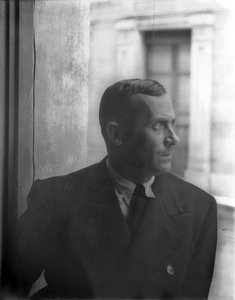
Joan Miró
1893 - 1983 , Espanha
Informações Rápidas
- Artistic Movement Or Style: Surrealismo
- Artists Who Influenced This Artist:
- Pablo Picasso
- Van Gogh
- Date Of Birth: 20 Abril 1893
- Date Of Death: 25 Dezembro 1983
- Full Name: Joan Miró i Ferrà
- Nationality: Espanhol
- Notable Artworks:
- A Fazenda
- La Poetisa
- Dutch Interiors
- Place Of Birth: Barcelona, Espanha
Artigos Relacionados

Abstração Geométrica: 10 Obras-Primas que Moldaram a Arte Moderna | AllPaintingsStore.com
Descubra as 10 obras-primas da Abstração Geométrica que revolucionaram a arte moderna! Explore Kandinsky, Mondrian e outros artistas icônicos. Encontre reproduções de alta qualidade para decorar sua casa com AllPaintingsStore.com.

Surrealismo na Pintura: 10 Obras-Primas que Definiram um Movimento Artístico
Descubra as 10 obras-primas que moldaram o Surrealismo! Explore a história de Dalí, Magritte e Miró. Encontre reproduções de arte exclusivas para transformar sua casa com AllPaintingsStore.com.

Surrealismo: 10 Obras-Primas que Moldaram um Movimento Artístico Inesquecível
Descubra as 10 obras-primas que revolucionaram o Surrealismo! Explore a história de Dalí, Magritte e Miró. Encontre reproduções de arte exclusivas para decorar sua casa com estilo em AllPaintingsStore.com.

Top 10 Obras-Primas do Expressionismo Abstrato: Arte para Decorar e Inspirar | AllPaintingsStore.com
Descubra as 10 obras-primas do Expressionismo Abstrato com Jackson Pollock, Mark Rothko e mais! Explore a história, técnica e emoção por trás de cada pintura. Encontre reproduções de arte exclusivas para decorar sua casa em AllPaintingsStore.com.
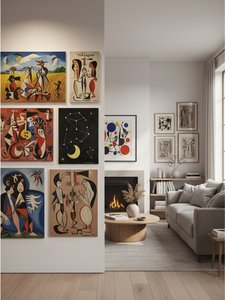
Joan Miró: As 25 Obras-Primas que Definem um Ícone da Arte Moderna | AllPaintingsStore
Descubra as 25 obras-primas de Joan Miró que revolucionaram a arte moderna! Explore o surrealismo, cores vibrantes e a história por trás dos quadros mais famosos do artista catalão. Encontre reproduções de alta qualidade para decorar sua casa com AllPaintingsStore.com.


