Garantia de Reembolso · 100 dias Entrega gratuita para todo o mundo
449.564obras de arte 30.613artistas 4.658museus 32idiomas
Entrada de catálogo

M. Carey Thomas

1899. Oil On Canvas, 147.0 x 96.0 cm.

Fig. 1. John Singer Sargent, M. Carey Thomas, 1899. Apresentado como a reprodução que você está especificando: , .

§ 1Dados do catálogo

Dimensões
147.0 x 96.0 cm

§ 2Abstrato

Descrição do Item

John Singer Sargent's "M. Carey Thomas" captures the refined beauty of Edwardian society with masterful realism and subtle impressionistic brushstrokes, portraying a woman seated elegantly against a dark backdrop.

Biografia do Artista

Explore a vida e obra de John Singer Sargent! Retratos icônicos, paisagens impressionistas e a elegância da Era Vitoriana do mestre americano. Descubra sua arte!

§ 3Comentário

A Portrait of Intellectual Grace

In the quiet, hallowed halls of Bryn Mawr College, there hangs a masterpiece that does more than merely record a face; it captures a soul defined by purpose and profound intellect. John Singer Sargent’s 1899 portrait of M. Carey Thomas is a breathtaking encounter with the Edwardian era's quiet strength. As one gazes upon this canvas, the immediate impression is not just of a woman of status, but of an individual possessing an unmistakable aura of dignity and refined composure. Sargent, the preeminent portraitist of his generation, moves beyond the superficiality of mere likeness to weave a narrative of authority through every deliberate brushstroke.

The subject herself, Martha Carey Thomas, was a formidable force in American education—a linguist, suffragist, and the second president of Bryn Mawr. Sargent captures this essence by positioning her with a centered, commanding presence. While she sits with a certain formal stillness, there is an underlying vitality in the way the light interacts with her form. The composition, though anchored by her seated figure, possesses a subtle dynamism; the slight off-center placement and the soft, indistinct figures receding into the shadows create a sense of depth that draws the viewer into her private world of thought and leadership.

The Alchemy of Light and Impressionistic Realism

To study this work is to witness Sargent’s unparalleled mastery of Impressionistic realism. He does not rely on the rigid, clinical lines of traditional academic painting; instead, he employs a sophisticated blend of meticulous anatomical observation and loose, fluid brushwork. The way the light falls across M. Carey Thomas’s face and upper body is nothing short of theatrical. A strong, singular light source illuminates her features, casting much of the background into a deep, mysterious shadow that emphasizes her prominence.

The color palette is a masterclass in understated luxury. Dominated by dark, muted tones, the painting utilizes a rich spectrum of blacks and greys that suggest a profound depth of pigment. Upon closer inspection, one discovers subtle, whispered notes of blue and purple dancing within the folds of her dark attire, adding a layer of complexity to the texture. This technique allows the fabric to appear heavy and opulent, yet light enough to suggest movement. For the collector or interior designer, this interplay of shadow and soft illumination offers a sophisticated focal point that brings a sense of timelessness and "old world" elegance to any curated space.

A Legacy Captured in Oil

Beyond the technical bravado lies the historical heartbeat of the piece. Created at the turn of the century, the portrait reflects the anxieties and aspirations of the Edwardian period—a time of rapid societal shifts and a burgeoning interest in identity. Through his use of atmospheric perspective, Sargent creates a sense of a world that is both present and receding, mirroring the way history itself feels: tangible yet shrouded in the mists of time. The painting serves as a window into an era of gilded elegance and intellectual awakening.

For those seeking to bring the prestige of the Gilded Age into a modern interior, a high-quality reproduction of this work offers more than decoration; it offers an invitation to reflection. The emotional impact of "M. Carey Thomas" lies in its ability to command respect and inspire awe. It is a piece that speaks of permanence in a transient world, making it an ideal acquisition for those who value art that possesses both historical weight and an enduring, aesthetic beauty.

Perguntas e Respostas

De que forma o estilo de "M. Carey Thomas" se relaciona com a época de seu criador?

Em "M. Carey Thomas", de John Singer Sargent, o movimento Impressionistic Realism encontra a era Século XIX.

Posso ver "M. Carey Thomas" como um slideshow em tela cheia?

Um slideshow está disponível: a página Apresentação de imagens de "M. Carey Thomas", de John Singer Sargent.

Como "M. Carey Thomas" se integra aos temas e ao estilo de John Singer Sargent?

"M. Carey Thomas" compartilha com as outras obras de John Singer Sargent o seu estilo Impressionistic Realism e os temas recorrentes: european tradition, victorian society, psychological depth, sargent legacy, portrait mastery.
§ 4O artista

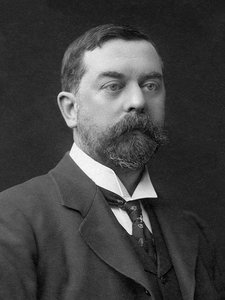
John Singer Sargent

John Singer Sargent

1856 - 1925, Itália

Informações rápidas sobre John Singer Sargent

  • Artistic Movement Or Style: Impressionismo
  • Artists Or Movements Influenced By This Artist: ['Whistler']
  • Artists Who Influenced This Artist:
    • Carolus-Duran
    • Velázquez
  • Date Of Birth: 12 de janeiro de 1856
  • Date Of Death: 14 de abril de 1925
  • Full Name: John Singer Sargent
  • Nationality: Americano
  • Notable Artworks:
    • Madame X
    • El Jaleo
    • Carnation, Lily, Lily, Rose
  • Place Of Birth: Florença, Itália

Biografia do Artista

A Life Immersed in Light and Society

John Singer Sargent, a name synonymous with the Gilded Age and its shimmering portraits of elegance, was an American artist who spent most of his life cultivating his craft within the European art world. Born in Florence, Italy, in 1856 to American expatriate parents, Fitzwilliam and Mary Newbold Sargent, his upbringing was anything but conventional. The family’s nomadic existence – constantly traversing France, Germany, Italy, and Switzerland – instilled in young John a cosmopolitan sensibility and an early exposure to the artistic treasures of Europe. Rather than formal schooling, his education unfolded within museum halls and ancient churches, fostering a visual literacy that would profoundly shape his artistic vision. This itinerant childhood, while lacking traditional structure, provided a rich tapestry of cultural experiences that fueled his developing talent. His father, a surgeon, and his mother, an amateur artist, encouraged his inclinations, recognizing early on the remarkable acuity of his observational skills. It was clear from a young age that John’s path lay not in medicine or conventional pursuits, but within the realm of art.

From Parisian Atelier to Portrait Master

In 1874, at the age of eighteen, Sargent embarked on a pivotal chapter of his artistic development by entering the Paris studio of Carolus-Duran. This mentorship proved transformative. Duran’s emphasis on *direct painting* – a technique eschewing preliminary sketches in favor of immediate application of paint to canvas – honed Sargent's already impressive technical facility and instilled within him an astonishing ability to capture likenesses with speed and precision. It was a revolutionary approach, encouraging boldness and spontaneity, and it became the hallmark of Sargent’s style. He absorbed Duran’s lessons wholeheartedly, mastering the art of capturing not just physical resemblance but also the very essence of his sitters. Simultaneously, he enrolled at the École des Beaux-Arts to study drawing from casts and life models, further refining his skills in composition and technique. However, it was the influence of Spanish masters like Diego Velázquez, encountered during a formative trip to Spain in 1879, that truly ignited Sargent’s artistic imagination. He became captivated by Velázquez’s masterful use of light, brushwork, and psychological insight – qualities he would strive to emulate throughout his career. The meticulous study of Velázquez's techniques, particularly the way he captured fleeting moments and imbued his subjects with a sense of inner life, profoundly shaped Sargent’s approach to portraiture.

Navigating Fame, Scandal, and Artistic Evolution

Sargent quickly established himself as a sought-after portraitist in Paris, attracting commissions from the city’s elite. His ability to capture not just physical likeness but also the personality and social standing of his subjects made him immensely popular among the wealthy and influential. However, his ascent was not without its challenges. The unveiling of *Madame X* (Portrait of Madame Pierre Gautreau) at the 1884 Salon ignited a scandal that threatened to derail his burgeoning career. The painting’s daring depiction of socialite Virginie Amélie Avegno Gautreau – with her pale complexion, suggestive pose, and fallen strap – was deemed provocative and scandalous by Parisian society. Though Sargent later repainted the strap, the damage was done. Disheartened by the controversy, he relocated to London in 1886, where he found a more receptive audience for his talents. In London, he continued to paint portraits of the wealthy and prominent, capturing the opulence and social dynamics of Edwardian society with unparalleled skill. Yet, Sargent’s artistic ambitions extended beyond the confines of commissioned portraiture. He yearned for greater creative freedom and increasingly devoted himself to landscape painting and plein-air studies, embracing an Impressionistic style characterized by loose brushwork, vibrant colors, and a focus on capturing fleeting moments of light and atmosphere. These landscapes reveal a different side of Sargent – one less concerned with social status and more attuned to the beauty of the natural world. His travels throughout Europe and beyond—from Venice to the Tyrol—provided endless inspiration for his evocative depictions of light, color, and form.

Influences and Artistic Kinships

  • Carolus-Duran: His teacher, who instilled in him a direct painting technique and encouraged spontaneity.
  • Diego Velázquez: Sargent deeply admired Velázquez’s mastery of light, brushwork, and psychological insight, particularly evident in his Spanish works. He studied the master's techniques with intense dedication, seeking to replicate his ability to capture both the outward appearance and inner character of his subjects.
  • Impressionism: The Impressionists' emphasis on capturing fleeting moments and atmospheric effects profoundly impacted his landscape paintings, leading to a looser, more expressive style. Sargent absorbed the principles of *plein air* painting and experimented with broken color and visible brushstrokes, reflecting the influence of artists like Monet and Renoir.
  • James Abbott McNeill Whistler: Sargent shared with Whistler an interest in aestheticism and the pursuit of “art for art’s sake,” influencing his approach to composition and color. Both artists sought to elevate painting beyond mere representation, emphasizing beauty, harmony, and emotional expression.

A Lasting Legacy

While celebrated as “the leading portrait painter of his generation,” John Singer Sargent’s artistic legacy extends far beyond his masterful depictions of society figures. His major works, such as *El Jaleo*, a dynamic portrayal of Spanish flamenco dancers, and *Carnation, Lily, Lily, Rose*, a serene depiction of two young girls in an English garden, demonstrate his versatility and technical brilliance. These paintings showcase not only his skill in capturing likenesses but also his ability to evoke atmosphere, emotion, and narrative. Later in life, he embarked on ambitious mural projects, including the monumental cycle at the Boston Public Library, showcasing his ability to translate his artistic vision onto a grand scale. His influence can be seen in the work of subsequent generations of artists who admired his technical skill, his bold brushwork, and his ability to capture both physical likeness and psychological depth. The rediscovery of his previously overlooked male nudes in the 1980s further broadened our understanding of Sargent’s artistic range and revealed a more complex and nuanced artist than previously recognized. His paintings continue to captivate audiences worldwide, offering a fascinating glimpse into a bygone era while simultaneously transcending time through their enduring beauty and technical mastery. He remains, undeniably, one of the most significant American artists of his generation, whose work continues to inspire and provoke admiration.

§ 5Obras relacionadas

§ 6Perguntas

Informações Rápidas

  • Title: M. Carey Thomas
  • Medium: Oil on Canvas
  • Movement: Impressionism
  • Artist: John Singer Sargent
  • Influences: European Art Tradition
  • Artistic style: Realism

§ 7Cite esta entrada

AllPaintingsStore.com, “John Singer Sargent, M. Carey Thomas (1899)”, https://allpaintingsstore.com/pt/art/john-singer-sargent-m-carey-thomas-8YDFSH-en/ArtistReproduction/ (acessado em 11 Outubro 2026).

§ 8A reprodução

Reprodução em Óleo Feita à Mão

Óleo sobre tela pintado à mão no tamanho e moldura de sua escolha, feito sob encomenda pelos nossos artistas. ( Alternar para Impressão Alternar para Imagem Digital)

Está especificado na margem da folha de pedido; o estado atual dessa folha é o seguinte.

M. Carey Thomas

Técnica de Reprodução

Tamanho da Reprodução

-

Artista Sênior de Elite

Mais detalhes, refinamento e tempo de produção adicional

-

Moldura para Reprodução

-

-

Para obras de arte ou reproduções com mais de 105 cm (aproximadamente 41 polegadas) em qualquer um dos lados, a moldura será enviada como um kit desmontado. Este método garante uma entrega segura e evita danos durante o transporte.

Montagem profissional necessária — este não é um produto DIY (faça você mesmo).
O kit deve ser montado e a tela esticada por um profissional de molduraria experiente, utilizando cola de madeira (não inclusa), um alicate de esticar tela e grampos para manter as travessas alinhadas enquanto a cola seca. A montagem incorreta ou a tensão desigual da tela podem danificar permanentemente a obra de arte e não estão cobertas pela nossa garantia.

  • Todas as barras de madeira maciça estão incluídas, precisamente cortadas ao tamanho certo.

  • Montado com os parafusos fornecidos, além de cola para madeira para as junções dos cantos, que não está inclusa e deve ser providenciada pelo seu moldurista.

  • São necessárias ferramentas profissionais não incluídas: um alicate de estiramento de tela (esticador) e grampos para manter as ripas alinhadas enquanto a cola seca.

Importante:
As junções dos cantos requerem cola para madeira, as ripas devem ser mantidas com grampos até que a cola esteja completamente seca, e o estiramento da tela na moldura montada requer um alicate de esticar tela. Nenhum destes itens está incluído no kit. Por favor, certifique-se de contar com um profissional de molduraria experiente antes de encomendar este tamanho.

Etiqueta de identificação

-

-

Verniz de Proteção

Verniz brilhante (realça as cores e protege contra a luz e a umidade)

-

Personalizar minha obra

Exemplos de alterações possíveis: Substituir o rosto por uma foto do cliente; Adicionar um animal de estimação (ex.: substituir gato por cachorro); Incluir uma mensagem oculta no fundo; Alterar a paisagem ou os elementos do fundo.

-

Urgente

Entrega mundial () em 3 a 4 semanas, em vez das 5 semanas padrão. (8 Novembro). Sem comprometer a qualidade.

-

Envio Expresso

Entrega mundial para em 5 semanas. (15 Novembro).

Com envio incluído

Preço Total

€ 230

Incluído em todos os pedidos

  • Envio expresso gratuito para todo o mundo
  • Tela de Linho de Alta Qualidade
  • Seguro de transporte completo
  • Garantia de Reembolso de Impostos Alfandegários
  • Garantia de Fidelidade Cromática
  • Política de Devolução em 100 Dias (Apenas para Defeitos)
  • Garantia de reembolso de 100%
  • Oferta de desconto por quantidade
Folha de pedido