


 Visualizar em escala
 Enviar
 Compartilhar
 Ver detalhes

 Baixar
 Semelhantes
 Raio X
 Apresentação de slides
Scenes 166


 Ver mais
Giclée / Impressão de Arte
Impressão giclée ou em tela de qualidade de museu, com produção rápida e opções flexíveis de acabamento. ( Encomendar reprodução pintada à mão Comprar imagem em alta resolução)




































Escolha entre os nossos tamanhos pré-definidos que respeitam as proporções originais da obra de arte.

Você pode inserir suas próprias dimensões para se ajustar a uma moldura ou espaço específico. Se o tamanho selecionado não corresponder às proporções da imagem original, iremos recortar a obra de arte ou estender a imagem com uma borda espelhada ou preenchimento sólido. Um mockup digital será enviado para sua aprovação antes do início da produção.
Por favor, observe que a visualização na tela não reflete o recorte ou a extensão real. Apenas o mockup mostrará com precisão a composição final.
Embora tamanhos personalizados estejam disponíveis, recomendamos selecionar uma dimensão da lista predefinida para preservar as proporções originais.
Entrega mundial () em 2 semanas, em vez das 4/5 semanas padrão. (17 Agosto)

Envio Expresso Gratuito para todo o Mundo

Tela de Linho Premium

Seguro de transporte total

Garantia de Reembolso de Impostos Alfandegários

Garantia de Fidelidade de Cor

Política de Devolução de 60 Dias (Apenas para Defeitos)

Garantia de reembolso de 100%

Desconto para múltiplas unidades
 A opção de vidro está disponível apenas para tamanhos inferiores a 110 cm

Scenes 166
Giclée / Impressão de Arte
Dimensões da Reprodução
-


Preço Total
$ 64
Obras Relacionadas
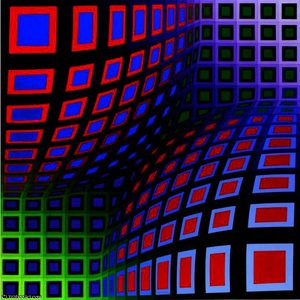

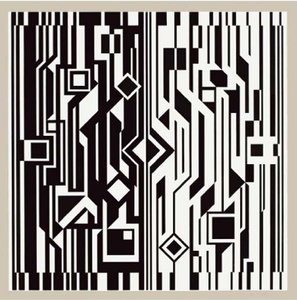

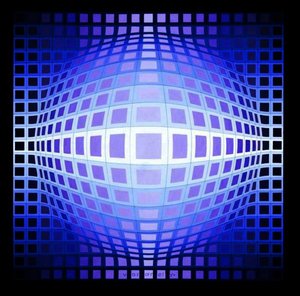


Biografia do Artista
The Architecture of Memory: The Art of Katrien de Blauwer
Born in the quiet Belgian town of Ronse in 1969, Katrien de Blauwer carries within her work the profound echoes of a childhood marked by adversity. This early turbulence did not merely serve as a backdrop to her life but became the very crucible in which her artistic identity was forged. Her journey took her from the provincial landscapes of her youth to the vibrant academic environments of Ghent and Antwerp, where she initially pursued painting and fashion design. While she eventually stepped away from a formal career in fashion, the discipline of that study remained etched into her creative DNA. The meticulous eye for texture, the curation of mood, and the structural understanding of fabric and form would later find a new, more visceral expression through the medium of collage.
De Blauwer’s practice is often described by the evocative phrase, "a photographer without a camera." Rather than capturing light through a lens, she captures it through the act of reclamation. She acts as a neutral intermediary between the past and the present, collecting and recycling fragments from vintage magazines, old newspapers, and discarded papers. This process is far more than mere assembly; it is a therapeutic investigation of the self. By cutting away body parts and obscuring faces, she achieves a haunting sense of universalization. In her hands, the intimate becomes anonymous, allowing the viewer to find their own reflections within the fractured portraits she constructs. Her work operates through an accumulation of memory, where each layer of paper serves as a temporal stratum, building a narrative that is both deeply personal and broadly human.
Neo-Dadaism and the Fragmented Self
In the contemporary landscape, de Blauwer stands as a significant figure within the Neo-Dada movement, utilizing the aesthetics of fragmentation to mirror the complexities of modern existence. Her technique avoids the polished, seamless surfaces of traditional portraiture, opting instead for a deliberate disruption of the image. Through the use of cutouts and layered textures, she creates compositions that are simultaneously recognizable and elusive, much like the fleeting nature of a dream or a distant memory. This approach draws heavily from Surrealist traditions, particularly in its exploration of the subconscious. Her pieces often feel like visual manifestations of dreamlike imagery, where the boundaries between reality and the imagined world are blurred by the sharp edge of a blade.
The influences that converge in her work create a rich, multidisciplinary tapestry:
- Cinema and Photography: The use of found images evokes the rhythm of film editing, where the cut serves as a frame to mark the essential.
- Dance and Movement: A fascination with kinetic energy allows her to convey emotion and rhythm through the placement of static elements.
- Fashion and Graphic Design: Her early training provides a sophisticated sense of composition, color theory, and the curation of visual "moods."
- Literature and Poetry: The works of thinkers like Anais Nin and Louise Bourgeois resonate within her explorations of identity and the interior world.
Legacy and the Beauty of the Residual
The significance of Katrien de Blauwer’s work lies in her ability to give new life to what is residual. She finds beauty in the discarded, saving images from the destruction of time and reintegrating them into a new, coherent narration. Her art does not seek to subtract or simplify; rather, it seeks to expand through the layering of history. This philosophy is evident in her celebrated works such as "Scenes 162," where the interplay of obscured figures and textured surfaces invites deep contemplation on the nature of identity.
As her work continues to be showcased in prestigious institutions—from Gallery Fifty One in Antwerp to Galerie Les Fillettes du Calvaire in Paris—de Blauwer’s reputation as a master of the contemporary collage grows. She remains an artist who reminds us that we do not see things as they are, but as we are. Through her meticulous recycling of the past, she constructs a mirror for the present, proving that even in fragmentation, there is a profound and enduring wholeness.

katrien de blauwer
1969 - , Belgium
Informações Rápidas
- Artistic Movement Or Style: Neo Dada Collage
- Date Of Birth: 1969
- Full Name: katrien de blauwer
- Nationality: Belgian
- Notable Artworks:
- Scenes 162
- Untitled
- Untitled
- Place Of Birth: Ronse, Belgium



