Visualizar em escala
 Enviar
 Compartilhar
 Ver detalhes

 Baixar
 Semelhantes
 Raio X
 Apresentação de slides
A la manera de Delvaux


 Ver mais
Giclée / Impressão de Arte
Impressão giclée ou em tela de qualidade de museu, com produção rápida e opções flexíveis de acabamento. ( Encomendar reprodução pintada à mão Comprar imagem em alta resolução)




P118B $10

P118H $10

P118W $10

P438Z $10

P508JH $12

P508YH $12

P805H $10

P805Z $10

P919BZ $10

P919G $10

P919XJ $10

P959ZH $10

P968JZ $12

W106C $8

W218G $10

W218JH $8

W218Y $10

W307PJ $10

W316G $10

W316PJ $8

W316Y $10

W398PJ $8

W4111J $10

W500HY $15

W500JH $15

W692G $12

W849H $8

W940BG $15

W953PJ $8




Escolha entre os nossos tamanhos pré-definidos que respeitam as proporções originais da obra de arte.

Você pode inserir suas próprias dimensões para se ajustar a uma moldura ou espaço específico. Se o tamanho selecionado não corresponder às proporções da imagem original, iremos recortar a obra de arte ou estender a imagem com uma borda espelhada ou preenchimento sólido. Um mockup digital será enviado para sua aprovação antes do início da produção.
Por favor, observe que a visualização na tela não reflete o recorte ou a extensão real. Apenas o mockup mostrará com precisão a composição final.
Embora tamanhos personalizados estejam disponíveis, recomendamos selecionar uma dimensão da lista predefinida para preservar as proporções originais.
Entrega mundial () em 2 semanas, em vez das 4/5 semanas padrão. (21 Agosto)

Envio Expresso Gratuito para todo o Mundo

Tela de Linho Premium

Seguro de transporte total

Garantia de Reembolso de Impostos Alfandegários

Garantia de Fidelidade de Cor

Política de Devolução de 60 Dias (Apenas para Defeitos)

Garantia de reembolso de 100%

Desconto para múltiplas unidades
 A opção de vidro está disponível apenas para tamanhos inferiores a 110 cm

A la manera de Delvaux
Giclée / Impressão de Arte
Dimensões da Reprodução
-


Preço Total
$ 64
Descrição do Item
A Whisper of Delvaux: Duchamp’s Enigmatic Reverie
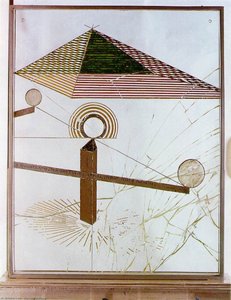
Marcel Duchamp's *A la manera de Delvaux* (In the Manner of Delvaux) is not a painting in the traditional sense, but rather a meticulously constructed collage that operates as a fascinating echo of Surrealist painter Paul Delvaux. Created in 1942, this work exists as a subtle yet potent exploration of desire, memory, and the unsettling beauty found within the subconscious. It’s a piece born from exile and artistic questioning, reflecting Duchamp's evolving stance towards representation and the very definition of art itself.
The image centers around a poignant scene: a baby, seemingly nursing from a bottle held by a maternal figure. This intimate act is framed within a larger composition populated by shadowy figures, hinting at a narrative that remains tantalizingly out of reach. The sepia tone imbues the work with a nostalgic quality, evoking faded photographs and half-remembered dreams. Duchamp doesn’t attempt to replicate Delvaux's style directly; instead, he *interprets* it, distilling its essence into a fragmented visual poem. He achieves this through the skillful juxtaposition of found imagery – likely cut from magazines or other printed sources – creating a dreamlike atmosphere that is both alluring and disquieting.
The Shadow of Surrealism and Duchamp’s Conceptual Shift
To understand *A la manera de Delvaux*, one must consider the artistic climate of the time. Duchamp had already shaken the foundations of the art world with his “readymades” – ordinary manufactured objects elevated to the status of art through sheer force of conceptual intent, most famously exemplified by *Fountain* (1917). By 1942, he was living in New York, having fled Europe during World War II. He found himself amidst a burgeoning Surrealist movement, and while not fully embracing its tenets, he engaged with its ideas about the unconscious mind and the power of irrationality. Delvaux’s paintings, with their eerie depictions of classical architecture populated by nude figures and trains, provided a particularly resonant visual language for Duchamp to explore.
However, *A la manera de Delvaux* isn't merely an homage; it’s a subtle critique. Duchamp wasn’t interested in simply mimicking another artist’s style. He was probing the nature of representation itself. By creating a work “in the manner of” Delvaux, he highlights the act of imitation and questions originality. The collage format further emphasizes this deconstruction, breaking down images into their constituent parts and reassembling them to create something new – or rather, something that *comments* on what already exists. It’s a precursor to his later, more ambitious conceptual works, like *Étant donnés*, where the viewer is confronted with a hidden world revealed through a peephole.
Emotional Resonance and Interior Spaces
The emotional impact of *A la manera de Delvaux* is subtle but profound. The image evokes feelings of longing, vulnerability, and perhaps even a touch of melancholy. The nursing baby, a universal symbol of innocence and dependence, is rendered with a delicate ambiguity. Is it a scene of comfort or one of quiet desperation? The shadowy figures surrounding the central subject add to this sense of unease, suggesting hidden anxieties and unspoken desires.
For collectors and interior designers, a reproduction of *A la manera de Delvaux* offers a unique opportunity to introduce a touch of intellectual sophistication into any space. Its muted tones and enigmatic imagery lend themselves well to a variety of settings, from modern lofts to classic libraries. The work’s conceptual depth invites contemplation, making it a conversation starter and a testament to the power of art to challenge our perceptions. It is not simply a decorative piece; it's an invitation to delve into the complexities of the human psyche and the ever-evolving nature of artistic expression.
Obras Relacionadas


![Genre Allegory [george Washington] — Marcel Duchamp, Surrealism](/media/artworks/images/thumbnails/d5/e4/d5e4be0dfecf484fa25788135248eb9c.jpg)


Biografia do Artista
Marcel Duchamp, A Revolutionary Spirit: The Life and Art of Marcel Duchamp
Marcel Duchamp, born Henri-Robert-Marcel Duchamp in 1887 in Blainville-Crevon, Normandy, was more than an artist; he was a philosophical provocateur who fundamentally altered the course of modern art. His early life, though seemingly conventional – nurtured within a family that appreciated artistic expression with both brothers pursuing successful careers as artists – hinted at the iconoclasm to come. Duchamp initially pursued formal training, mastering traditional techniques and experimenting with post-impressionist styles. However, this academic foundation served not as an end in itself, but as a springboard for questioning the very nature of art, its purpose, and its definition. He wasn’t content merely to depict the world; he sought to challenge how we perceive it, and what constitutes artistic value. This restless intellectual curiosity would become the defining characteristic of his prolific career.Early Artistic Explorations: Cubism and Impressionism
Duchamp's initial foray into art began with a grounding in traditional techniques—primarily painting—influenced by Impressionism and Post-Impressionism. He honed his skills studying under Gustave Moreau at École Supérieure des Beaux-Arts in Paris, absorbing the stylistic innovations of artists like Cézanne and Picasso. His early canvases demonstrate an aptitude for capturing light and color, reflecting a sensitivity to visual aesthetics. However, Duchamp quickly recognized that mere imitation wasn’t sufficient to express his profound ideas about art and its role in society. The devastating impact of World War I profoundly affected him, fueling disillusionment with the prevailing artistic conventions of the time. This experience spurred him toward a radical rethinking of artistic practice—a rejection of established norms and a determination to disrupt accepted notions of beauty.The Dadaist Rebellion: Challenging Artistic Conventions
Duchamp’s engagement with Dadaism marked a decisive turning point in his artistic trajectory. Emerging from the disillusionment following World War I, Dada rejected logic, reason, and traditional artistic values—a defiant stance against the perceived hypocrisy of bourgeois society. Artists like Tristan Tzara, Hugo Ball, and Hans Arp embraced absurdity and chance as creative tools, producing performances and collages that deliberately undermined conventional aesthetic standards. Duchamp’s contribution to Dada was particularly significant: he championed the concept of “readymade”—ordinary manufactured objects presented as art—a provocative gesture designed to dismantle hierarchies within the art world. His most famous readymade, *Fountain* (1917), consisted of a porcelain urinal signed "R. Mutt," submitted anonymously to Marcel Duchamp’s own exhibition in New York City. This audacious act challenged the very definition of artistic skill and authorship—was it the artist's hand that created the work, or was it merely the artist’s conceptual intervention?The Readymades: Conceptual Art Takes Root
Duchamp’s exploration of readymades solidified his position as a pioneer of Conceptual Art. He argued that the essence of art resided not in its visual appearance but in its underlying idea—a notion that fundamentally shifted the focus from craftsmanship to intellectual inquiry. Other notable readymades included *L.H.O.O.Q.* (1919), a reproduction of Leonardo da Vinci’s Mona Lisa overlaid with a mustache and goatee, and *The Large Glass* (1915–1923), an ambitious multi-faceted artwork incorporating glass panels, mirrors, and intricate engravings—a testament to Duchamp's meticulous attention to detail and his unwavering commitment to challenging artistic conventions. These works weren’t intended to elicit admiration for their aesthetic qualities; they were designed to provoke contemplation and confront viewers with uncomfortable questions about art history and cultural values.Legacy and Enduring Influence
Marcel Duchamp’s influence on subsequent generations of artists is undeniable. He irrevocably transformed our understanding of art, establishing Conceptual Art as a dominant force in the latter half of the 20th century. His insistence that the artist's concept superseded visual form continues to inspire creativity today—artists grapple with questions of authorship, originality, and the role of intention in artistic creation. Duchamp’s unwavering belief in intellectual rigor and his willingness to disrupt established norms cemented his place as one of the most important figures in modern art history. His legacy persists, urging artists to question assumptions and embrace radical experimentation—a challenge that resonates powerfully within contemporary artistic discourse. He remains a symbol of artistic freedom and intellectual provocation, demonstrating that true innovation lies not merely in mastering technique but in confronting fundamental questions about what constitutes art itself.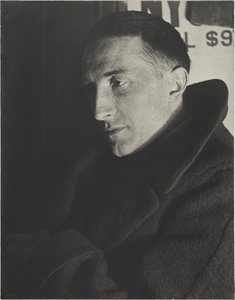
Marcel Duchamp
1887 - 1968 , França
Informações Rápidas
- Artistic Movement Or Style:
- Cubismo
- Dadaísmo
- Artists Or Movements Influenced By This Artist: ['Minimalismo']
- Date Of Birth: 28 Jul 1887 Blainville
- Date Of Death: 2 Oct 1968
- Full Name: Marcel Duchamp Henri-Robert-Marcel
- Nationality: Francês-Americano
- Notable Artworks:
- Fonte
- L.H.O.O.Q.
- Grande Cristal
- Place Of Birth: Normandia França
Artigos Relacionados

Marcel Duchamp: Challenging Conventions & Redefining Art in the 20th Century
Explore the revolutionary art of Marcel Duchamp! Discover how his Dadaist readymades challenged artistic conventions & redefined modern art. A deep dive into 'Fountain', conceptual shifts, and his lasting impact.
Dada: A Revolution of Anti-Art & the Rejection of Reason in Early 20th Century Aesthetics
Explore the revolutionary Dada art movement! Discover its origins, key artists like Duchamp & Arp, and lasting impact on modern art. A deep dive into anti-art & challenging conventions.

The Enigmatic Realm of Paul Delvaux: Surrealism, Memory & the Poetics of Disquiet
Explore the haunting dreamscapes of Paul Delvaux, a master of Surrealism. Discover his iconic motifs, classical influences & enduring legacy with AllPaintingsStore.com.
Dadaism: A Rebellion Against Reason – Exploring the Origins, Characteristics, and Enduring Legacy of an Anti-Art Movement
Explore the revolutionary Dada art movement! Discover its origins in WWI, key artists like Duchamp & Höch, core principles, and lasting impact on modern and contemporary art. A comprehensive guide for enthusiasts.
René Magritte: As 25 Obras-Primas do Mestre Surrealista | AllPaintingsStore
Descubra as 25 obras-primas de René Magritte, o mestre do surrealismo! Explore a história, significado e técnica por trás de quadros icônicos como 'Golconda' e 'O Falso Problema'. Encontre reproduções de arte exclusivas para decorar seu lar com AllPaintingsStore.com.