Garantia de Reembolso · 30 dias Entrega gratuita para todo o mundo
449.332obras de arte 30.637artistas 4.753museus 32idiomas
Moeda
Idioma
Ateliê · Desde 2015 · Paris, França
AllPaintingsStore
allpaintingsstore.com
Minha conta Lista de desejos Carrinho
Visualizar em escalaVisualizar em escala Visualizar em RAVisualizar em RA Encomendar impressão Encomendar impressãoComprar imagem em alta resolução Comprar imagem em alta resolução EnviarEnviar
Ver detalhesVer detalhes Adicionar aos favoritos Adicionar aos favoritos BaixarBaixar SemelhantesSemelhantes Raio XRaio X Apresentação de slidesApresentação de slides

Suspension (Bec Auer)

A solitary light bulb hangs in this unsettling Expressionist sketch by Marcel Duchamp that captures the profound uncertainty of the Dadaist era, inviting you to explore a masterpiece of conceptual provocation.

Marcel Duchamp: artista francês que revolucionou a arte ao desafiar conceitos tradicionais e usar objetos cotidianos como obras de arte, marcando o início da arte conceitual.

Reprodução em Óleo Feita à Mão

Óleo sobre tela pintado à mão no seu tamanho e moldura, feito sob encomenda pelos nossos artistas. (Encomendar impressão Encomendar impressãoComprar imagem em alta resolução Comprar imagem em alta resolução)

P118B $10
P118H $10
P118W $10
P438Z $10
P508JH $12
P508YH $12
P805H $10
P805Z $10
P919BZ $10
P919G $10
P919XJ $10
P959ZH $10
P968JZ $12
W106C $8
W218G $10
W218JH $8
W218Y $10
W307PJ $10
W316G $10
W316PJ $8
W316Y $10
W398PJ $8
W4111J $10
W500HY $15
W500JH $15
W692G $12
W849H $8
W940BG $15
W953PJ $8

Standard
custom
CM
INCH

Escolha entre os nossos tamanhos pré-definidos que respeitam as proporções originais da obra de arte.

largura
altura

Pode inserir as suas próprias dimensões para se adequar a uma moldura ou espaço específico. Se o tamanho selecionado não corresponder às proporções da imagem original, iremos cortar a obra de arte ou estender a pintura com elementos adicionais pintados à mão. Um esboço digital será enviado para sua aprovação antes do início da produção.
Tenha em atenção que a pré-visualização no ecrã não reflete o corte ou extensão real. Apenas o esboço mostrará com precisão a composição final.
Embora tamanhos personalizados estejam disponíveis, recomendamos selecionar uma dimensão da lista predefinida para preservar as proporções originais.

Exemplos do que pode ser personalizado: Substituir o rosto pela foto do cliente; Adicionar um animal de estimação (ex: substituir gato por cão); Incluir uma mensagem oculta no fundo; Alterar a paisagem ou elementos do fundo.
Após o pedido, a equipa AllPaintingsStore.com enviará um e-mail ao cliente para solicitar instruções e fornecer uma prévia do esboço.

Entrega mundial () em 3 a 4 semanas, em vez das 5 semanas padrão. (13 Agosto). Sem comprometer a qualidade.

why_choose_icon
Envio Expresso Gratuito para todo o Mundo
why_choose_icon
Tela de Linho Premium
why_choose_icon
Seguro de transporte total
why_choose_icon
Garantia de Reembolso de Impostos Alfandegários
why_choose_icon
Garantia de Fidelidade de Cor
why_choose_icon
Política de Devolução de 60 Dias (Apenas para Defeitos)
why_choose_icon
Garantia de reembolso de 100%
why_choose_icon
Desconto para múltiplas unidades

Preço Total

$ 258

reproduction

Suspension (Bec Auer)

Técnica de Reprodução

Dimensões da Reprodução

-

Preço Total

$ 258

Detalhes Rápidos

  • Notable elements or techniques: Sketching, Wire detail
  • Location: Private Collection
  • Subject or theme: Light bulb
  • Year: 1967
  • Movement: Expressionism
  • Artistic style: Dadaist
  • Influences: Cubism

Teste de Conhecimentos Artísticos

Cada pergunta possui apenas uma resposta correta.

Questão 1:
What artistic movement is Marcel Duchamp most associated with?
Questão 2:
The image depicts a light bulb being drawn or sketched. What stylistic element contributes to this unfinished appearance?
Questão 3:
'Suspension' exemplifies Duchamp’s approach to art by questioning...
Questão 4:
According to the WikiArt description, 'The Bec Auer' is characterized by:
Questão 5:
Marcel Duchamp’s biographical information highlights his...

Descrição da Obra

A Flickering Echo of Uncertainty

In the quiet, contemplative space of modern art history, few images possess the haunting simplicity of Marcel Duchamp’s “The Bec Auer.” Completed in 1967, this work serves as a profound, late-career testament to an artist who spent his life dismantling the boundaries of what we consider "art." At first glance, the viewer is met with a solitary light bulb suspended from a wire, appearing almost like a fleeting sketch captured mid-motion. There is an undeniable vulnerability in its presentation; it does not demand attention through grand scale or vibrant color, but rather through a delicate, unfinished quality that suggests a moment of creative thought caught in the act of becoming. For the collector or the interior designer, this piece offers a sophisticated focal point—a conversation starter that brings a sense of intellectual depth and minimalist elegance to any curated space.

< p>The technique employed here is deeply rooted in Expressionism, moving away from the rigid precision of academic realism to embrace the visceral power of the gesture. Duchamp utilizes loose, rhythmic brushstrokes that prioritize tonal variation and movement over meticulous detail. This deliberate lack of polish creates a palpable sense of immediacy, as if the artist’s hand were still fresh upon the canvas. The way the light bulb is rendered—partially sketched, partially realized—mirrors the artist's own fascination with the process of creation itself. It is not merely a representation of an object, but a representation of the idea of an object, inviting the observer to fill in the shadows and the light with their own perception.

The Philosophy of the Found Object

To understand "The Bec Auer" is to understand the revolutionary concept of the "readymade." Duchamp was a master of provocation, famously arguing that the essence of art resided not in the manual skill of the execution, but in the conceptual choice of the artist. By elevating a commonplace, industrial item like a light bulb to the status of a fine art subject, he challenged the very foundations of artistic dogma. This piece carries the DNA of Dadaism, a movement born from the chaos and disillusionment of the early 20th century, which sought to reject logic and embrace the absurd. In this painting, the light bulb becomes a symbol of illumination amidst uncertainty, a small spark of clarity held precariously by a single wire.

The historical context of the late 1960s adds another layer of emotional resonance to the work. Created during a period of significant global upheaval and cultural shifts, the painting reflects a broader sense of post-war anxiety and the questioning of established truths. For those looking to adorn a contemporary home or gallery, "The Bec Auer" provides more than just aesthetic beauty; it offers an emotional anchor. It is a piece that embodies the tension between the seen and the unseen, the finished and the unfinished, making it an ideal acquisition for those who appreciate art that functions as both a visual masterpiece and a philosophical inquiry.


Biografia do Artista

Marcel Duchamp, A Revolutionary Spirit: The Life and Art of Marcel Duchamp

Marcel Duchamp, born Henri-Robert-Marcel Duchamp in 1887 in Blainville-Crevon, Normandy, was more than an artist; he was a philosophical provocateur who fundamentally altered the course of modern art. His early life, though seemingly conventional – nurtured within a family that appreciated artistic expression with both brothers pursuing successful careers as artists – hinted at the iconoclasm to come. Duchamp initially pursued formal training, mastering traditional techniques and experimenting with post-impressionist styles. However, this academic foundation served not as an end in itself, but as a springboard for questioning the very nature of art, its purpose, and its definition. He wasn’t content merely to depict the world; he sought to challenge how we perceive it, and what constitutes artistic value. This restless intellectual curiosity would become the defining characteristic of his prolific career.

Early Artistic Explorations: Cubism and Impressionism

Duchamp's initial foray into art began with a grounding in traditional techniques—primarily painting—influenced by Impressionism and Post-Impressionism. He honed his skills studying under Gustave Moreau at École Supérieure des Beaux-Arts in Paris, absorbing the stylistic innovations of artists like Cézanne and Picasso. His early canvases demonstrate an aptitude for capturing light and color, reflecting a sensitivity to visual aesthetics. However, Duchamp quickly recognized that mere imitation wasn’t sufficient to express his profound ideas about art and its role in society. The devastating impact of World War I profoundly affected him, fueling disillusionment with the prevailing artistic conventions of the time. This experience spurred him toward a radical rethinking of artistic practice—a rejection of established norms and a determination to disrupt accepted notions of beauty.

The Dadaist Rebellion: Challenging Artistic Conventions

Duchamp’s engagement with Dadaism marked a decisive turning point in his artistic trajectory. Emerging from the disillusionment following World War I, Dada rejected logic, reason, and traditional artistic values—a defiant stance against the perceived hypocrisy of bourgeois society. Artists like Tristan Tzara, Hugo Ball, and Hans Arp embraced absurdity and chance as creative tools, producing performances and collages that deliberately undermined conventional aesthetic standards. Duchamp’s contribution to Dada was particularly significant: he championed the concept of “readymade”—ordinary manufactured objects presented as art—a provocative gesture designed to dismantle hierarchies within the art world. His most famous readymade, *Fountain* (1917), consisted of a porcelain urinal signed "R. Mutt," submitted anonymously to Marcel Duchamp’s own exhibition in New York City. This audacious act challenged the very definition of artistic skill and authorship—was it the artist's hand that created the work, or was it merely the artist’s conceptual intervention?

The Readymades: Conceptual Art Takes Root

Duchamp’s exploration of readymades solidified his position as a pioneer of Conceptual Art. He argued that the essence of art resided not in its visual appearance but in its underlying idea—a notion that fundamentally shifted the focus from craftsmanship to intellectual inquiry. Other notable readymades included *L.H.O.O.Q.* (1919), a reproduction of Leonardo da Vinci’s Mona Lisa overlaid with a mustache and goatee, and *The Large Glass* (1915–1923), an ambitious multi-faceted artwork incorporating glass panels, mirrors, and intricate engravings—a testament to Duchamp's meticulous attention to detail and his unwavering commitment to challenging artistic conventions. These works weren’t intended to elicit admiration for their aesthetic qualities; they were designed to provoke contemplation and confront viewers with uncomfortable questions about art history and cultural values.

Legacy and Enduring Influence

Marcel Duchamp’s influence on subsequent generations of artists is undeniable. He irrevocably transformed our understanding of art, establishing Conceptual Art as a dominant force in the latter half of the 20th century. His insistence that the artist's concept superseded visual form continues to inspire creativity today—artists grapple with questions of authorship, originality, and the role of intention in artistic creation. Duchamp’s unwavering belief in intellectual rigor and his willingness to disrupt established norms cemented his place as one of the most important figures in modern art history. His legacy persists, urging artists to question assumptions and embrace radical experimentation—a challenge that resonates powerfully within contemporary artistic discourse. He remains a symbol of artistic freedom and intellectual provocation, demonstrating that true innovation lies not merely in mastering technique but in confronting fundamental questions about what constitutes art itself.
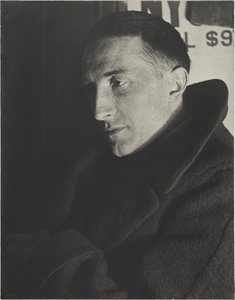
Marcel Duchamp

Marcel Duchamp

1887 - 1968 , França

Informações Rápidas

  • Artistic Movement Or Style:
    • Cubismo
    • Dadaísmo
  • Artists Or Movements Influenced By This Artist: ['Minimalismo']
  • Date Of Birth: 28 Jul 1887 Blainville
  • Date Of Death: 2 Oct 1968
  • Full Name: Marcel Duchamp Henri-Robert-Marcel
  • Nationality: Francês-Americano
  • Notable Artworks:
    • Fonte
    • L.H.O.O.Q.
    • Grande Cristal
  • Place Of Birth: Normandia França
Explore obras de arte organizadas por temas, estilos e características.