


 Visualizar em escala
 Enviar
 Compartilhar
 Ver detalhes
 Guia
Guia

 Baixar imagem
 Semelhantes
 Raio X
 Apresentação de slides
 Estatísticas
Fresco from Santa Croce(detail)

 Ver mais
Reprodução em Óleo Feita à Mão
Óleo sobre tela pintado à mão no tamanho e moldura de sua escolha, feito sob encomenda pelos nossos artistas. ( Alternar para Impressão Ver Imagem Digital)




































Escolha entre os nossos tamanhos pré-definidos que respeitam as proporções originais da obra de arte.

Pode inserir as suas próprias dimensões para se adequar a uma moldura ou espaço específico. Se o tamanho selecionado não corresponder às proporções da imagem original, iremos cortar a obra de arte ou estender a pintura com elementos adicionais pintados à mão. Um esboço digital será enviado para sua aprovação antes do início da produção.
Tenha em atenção que a pré-visualização no ecrã não reflete o corte ou extensão real. Apenas o esboço mostrará com precisão a composição final.
Embora tamanhos personalizados estejam disponíveis, recomendamos selecionar uma dimensão da lista predefinida para preservar as proporções originais.
Após o pedido, a equipa AllPaintingsStore.com enviará um e-mail ao cliente para solicitar instruções e fornecer uma prévia do esboço.
Entrega mundial () em 3 a 4 semanas, em vez das 5 semanas padrão. (21 Setembro). Sem comprometer a qualidade.

Envio expresso gratuito para todo o mundo

Tela de Linho Premium

Seguro de transporte total

Garantia de Reembolso de Impostos Alfandegários

Garantia de Fidelidade de Cor

Política de Devolução em 100 Dias (Apenas para Defeitos)

Garantia de reembolso de 100%

Desconto para múltiplas unidades
 A opção de vidro está disponível apenas para tamanhos inferiores a 110 cm

Fresco from Santa Croce(detail)
Técnica de Reprodução
Dimensões da Reprodução
-


Preço Total
$ 308
Obras Relacionadas


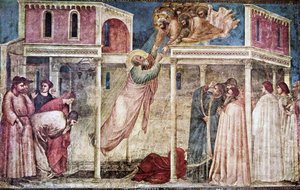

![Legend Of St Francis - [21] - Apparition To Fra Agostino And To Bishop Guido Of Arezzo — Giotto Di Bondone, Proto-renaissance](/media/artworks/images-thumb/8a/06/8a0632ef03ba49f12919faa78718a88b.jpg)


Biografia do Artista
A Florentine Echo of Giotto: The Life and Art of Maso di Banco
Maso di Banco, a name resonating softly through the annals of 14th-century Italian painting, stands as a pivotal figure in the transition from the Gothic style towards the burgeoning Renaissance. Active primarily in Florence between approximately 1320 and 1346, he wasn’t merely a follower of his master, Giotto di Bondone, but a vital link in the chain of artistic innovation that would reshape Western art. While biographical details remain frustratingly scarce—a common fate for artists of this period—the power and eloquence of his surviving frescoes and panel paintings speak volumes about his skill, sensitivity, and enduring influence.
Early Training and Artistic Foundations
Born in Florence, Maso di Banco’s early life is shrouded in the mists of time. What we know with certainty is that he entered Giotto’s workshop during a period when the master was revolutionizing painting. Giotto, rejecting the stylized conventions of Byzantine art, sought to depict figures with greater naturalism and emotional depth. Maso absorbed these lessons wholeheartedly, developing a keen understanding of three-dimensional form, spatial coherence, and narrative clarity. Lorenzo Ghiberti, in his autobiographical *I Commentari*, singled out Maso as Giotto’s most gifted pupil—a testament to his exceptional talent. This training wasn't simply about technique; it was an immersion into a new way of seeing the world, one that prioritized human experience and emotional resonance.
The Santa Croce Chapel: A Masterpiece of Narrative Frescoes
Maso di Banco’s most significant surviving work is undoubtedly the fresco cycle in the Bardi Chapel of the Basilica of Santa Croce in Florence. Commissioned by the powerful Bardi banking family around 1335-1340, these frescoes depict scenes from the life of Pope Saint Sylvester I. The narrative unfolds with a remarkable sense of drama and clarity. The compositions are carefully structured, guiding the viewer’s eye through each episode with deliberate precision. What sets Maso apart is his ability to imbue his figures with both monumentality and emotional weight. In scenes like “St. Sylvester Resurrecting Two Magi Killed by a Dragon,” we see not only a miraculous event but also the profound grief of those witnessing it, and the righteous power of the saint. The architectural settings are rendered with meticulous detail, creating a believable sense of space that further enhances the narrative impact. The symbolic use of elements—the dragon representing pagan ignorance, for example—adds layers of meaning to the already compelling scenes.
Style and Influences: Bridging Gothic and Renaissance
Maso di Banco’s style represents a fascinating synthesis of Gothic elegance and the emerging principles of the Renaissance. He retained a certain refinement in his figures, with graceful contours and harmonious color palettes—elements that reflect influences from both Sienese and Florentine traditions. However, he infused this elegance with Giotto's emphasis on monumentality and emotional realism. His work is characterized by a clarity of design and a deliberate avoidance of excessive ornamentation. While he wasn’t as radical in his innovations as Giotto himself, Maso skillfully adapted the master’s teachings to create a style that was both compelling and uniquely his own. Beyond Giotto, hints of Duccio's influence can be detected in the delicate rendering of fabrics and the expressive faces of his figures.
Legacy and Historical Significance
Although Maso di Banco’s oeuvre is relatively small—compared to some of his contemporaries—his impact on Florentine painting was significant. He served as a crucial link between Giotto's pioneering work and the later achievements of artists like Taddeo Gaddi and Masaccio. His frescoes in Santa Croce became a model for subsequent generations of painters, demonstrating the power of narrative clarity, emotional depth, and spatial coherence. The fact that Lorenzo Ghiberti specifically praised his talent underscores his importance within the artistic community of Florence. While much about his personal life remains unknown, Maso di Banco’s legacy endures through the enduring beauty and eloquence of his art—a testament to a master who helped pave the way for the glories of the Renaissance.

maso di banco
1348 , Italy
Informações Rápidas
- Artistic Movement Or Style: Early Renaissance
- Artists Or Movements Influenced By This Artist: ['Taddeo Gaddi']
- Artists Who Influenced This Artist: ['Giotto di Bondone']
- Date Of Birth: c. 1320
- Date Of Death: 1346
- Full Name: Maso di Banco
- Nationality: Italian
- Notable Artworks:
- Coronation of the Virgin
- Saint Anthony of Padua
- Fresco from Santa Croce
- Place Of Birth: Florence, Italy
Artigos Relacionados
Gothic Art Guide for Hotel Designers: Leveraging Dramatic Shadows and Architectural Grandeur in Luxury Interiors
Elevate hospitality interiors with our expert guide to Gothic art. Discover how to leverage dramatic shadows, architectural grandeur, and high-end reproductions to create sophisticated, atmospheric hotel spaces that captivate guests.

