Garantia de Reembolso · 100 dias Entrega gratuita para todo o mundo
449.587obras de arte 30.613artistas 4.660museus 32idiomas
Moeda
    Idioma
      Ateliê · Desde 2015 · Paris, França
      AllPaintingsStore
      allpaintingsstore.com
      Catalogue entry

      Albert Einstein (1879–1955)

      1922. Oil On Canvas, 100.0 x 75.0 cm. Royal Society.

      Fig. 1. Max Liebermann, Albert Einstein (1879–1955), 1922. Shown as the reproduction you are specifying: , .

      § 1Catalogue data

      § 2Abstract

      Descrição do Item

      Explore Max Liebermann’s 1922 portrait of Albert Einstein – an Impressionistic oil painting capturing scientific genius & intimacy. A unique piece reflecting a pivotal era.

      Biografia do Artista

      Max Liebermann (1847-1935): Pintor expressionista alemão, conhecido por cenas de vida moderna, retratos e jardins serenos. Explore sua rica herança artística!

      § 3Commentary

      A Portrait of Genius: Max Liebermann’s Einstein

      Max Liebermann's 1922 portrait of Albert Einstein isn’t merely a likeness; it’s a carefully constructed distillation of intellect, contemplation, and the burgeoning promise of a revolutionary mind. Painted during a pivotal period in Einstein’s career – immediately following his Nobel Prize win and the confirmation of his theories through the Eddington-Dyson eclipse observations – this oil painting transcends simple representation, offering a glimpse into the very essence of scientific genius. Liebermann, a master of Impressionism tempered with a keen observational eye, avoids the stark formality often associated with portraits of prominent figures, instead opting for an intimacy that draws the viewer directly into Einstein’s world.

      The composition itself is deceptively simple: Einstein occupies most of the frame, his face turned slightly towards the left, creating a sense of quiet engagement. His hands, resting loosely on what appears to be a table or desk, subtly convey a restless energy – a mind constantly in motion, grappling with complex ideas. Liebermann’s brushwork is deliberately loose and expressive, eschewing sharp lines for a more impressionistic approach. This technique isn't about photographic accuracy; it’s about capturing the *feeling* of Einstein, his thoughtful demeanor, and the aura of intellectual intensity that surrounded him. The use of browns and ochres dominates the palette, lending the painting a warm, almost contemplative atmosphere – a visual echo of the quiet hours spent in deep thought.

      The Impressionist Lens on Scientific Icon

      Liebermann’s stylistic choices are deeply rooted in the tenets of Impressionism. He prioritizes capturing fleeting moments and subjective impressions over meticulous detail. This is evident in the way he renders light, using broken brushstrokes to suggest the play of illumination across Einstein's face and clothing. The shallow perspective further enhances this effect, creating a sense of immediacy and drawing the viewer into the scene as if they are witnessing this portrait firsthand. Unlike traditional portraits that often aim for an idealized representation, Liebermann’s Einstein is presented with a certain vulnerability – a hint of weariness around the eyes, suggesting the immense mental effort required to unravel the mysteries of the universe.

      The historical context surrounding the painting is crucial to understanding its significance. 1922 was a time of great intellectual ferment in Europe, marked by the rise of modern physics and a growing sense of optimism about the future. Einstein’s work had already begun to transform our understanding of space, time, and gravity, and he was quickly becoming a global icon. Liebermann's portrait captures this moment perfectly, presenting Einstein not just as a brilliant scientist but also as a symbol of human ingenuity and progress.

      Symbolism and the Portrait’s Essence

      Beyond its technical merits, the painting is rich in symbolic meaning. The seated posture suggests contemplation and intellectual rigor – qualities inextricably linked to Einstein's legacy. The hands, resting casually yet deliberately, represent his engagement with ideas, his willingness to explore new possibilities. The muted color palette contributes to a sense of quiet introspection, inviting the viewer to share in Einstein’s mental landscape. It is important to note that Liebermann was not simply depicting a famous scientist; he was attempting to capture something deeper – the very spirit of scientific inquiry and the relentless pursuit of knowledge.

      Furthermore, the painting subtly reflects the broader cultural anxieties of the era. The rise of science and technology was accompanied by concerns about the potential consequences of unchecked progress. Liebermann’s portrait, with its emphasis on intellectual contemplation, can be interpreted as a reminder of the importance of ethical considerations alongside scientific advancement. It's a poignant image that speaks to both the brilliance and the responsibility inherent in pushing the boundaries of human understanding.

      A Timeless Reproduction

      Reproductions of Liebermann’s Einstein portrait offer an exceptional opportunity to bring this remarkable work into any setting. The textured brushwork, the subtle nuances of light and shadow, and the intimate portrayal of a scientific icon are all faithfully captured in high-quality reproductions. Whether displayed in a study, a gallery, or a private residence, this painting continues to resonate with viewers today, serving as a powerful reminder of the enduring legacy of Albert Einstein and the transformative power of art.

      Perguntas e Respostas

      "Albert Einstein (1879–1955)", de Max Liebermann é uma obra de arte clara ou escura?

      A luminosidade percebida de "Albert Einstein (1879–1955)", de Max Liebermann é shadow. Ela pode ser harmonizada com a iluminação do espaço pretendido.

      Onde posso encontrar um guia sobre "Albert Einstein (1879–1955)"?

      O guia para "Albert Einstein (1879–1955)" é a página de Ficha informativa da obra — uma ficha informativa imprimível que apresenta a obra com sua legenda, autoria e tabela de identificação (artista, datas, técnica, tamanho original, coleção).

      Quantas pessoas visualizam "Albert Einstein (1879–1955)"?

      As estatísticas sobre "Albert Einstein (1879–1955)", de Max Liebermann encontram-se na página de Estatísticas da obra: visitas mensais da obra, visitas às obras do artista e o detalhamento por país e idioma dos visitantes recentes.
      § 4The artist

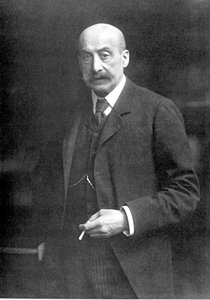
      Max Liebermann

      Max Liebermann

      1847 - 1935, Alemanha

      Quick facts about Max Liebermann

      • Artistic Movement Or Style: Impressionismo
      • Artists Or Movements Influenced By This Artist: ['Impressionismo alemão']
      • Artists Who Influenced This Artist:
        • Manet
        • Degas
      • Date Of Birth: 20 Jul 1847
      • Date Of Death: 8 Feb 1935
      • Full Name: Max Liebermann
      • Nationality: Alemão
      • Notable Artworks:
        • Jesus...
        • Casa holandesa
        • Retrato Einstein
      • Place Of Birth: Berlim, Alemanha

      Biografia do Artista

      A Life Immersed in Light: The World of Max Liebermann

      Born into a prosperous Jewish family in 1847 Berlin, Max Liebermann’s path to becoming one of Germany's foremost Impressionist painters wasn’t preordained. Initially steered towards the respectable professions of law and philosophy at the University of Berlin, his true calling resonated far more powerfully from the canvas than the courtroom. This early period of intellectual exploration, however, undoubtedly shaped his observant eye and thoughtful approach to depicting the world around him. It was a deliberate shift – studies in Weimar, Paris, and the Netherlands – that truly ignited his artistic passion, exposing him to diverse styles and laying the foundation for a career defined by capturing fleeting moments with an exquisite sensitivity to light and color. He wasn’t merely painting what he saw; he was translating the very essence of experience onto the canvas. Liebermann's early works often depicted scenes of everyday life, particularly those of the working class, rendered with a naturalism that challenged the prevailing romanticized aesthetic of the time. These paintings weren’t intended as social commentary, but rather as honest portrayals of human existence, imbued with dignity and respect.

      Embracing Impressionism in a German Context

      Liebermann's artistic development was profoundly influenced by his exposure to French Realism and, crucially, the burgeoning Impressionist movement. The spirit of Édouard Manet – his boldness, his rejection of academic convention, his focus on contemporary life – resonated deeply with Liebermann. However, he didn’t simply replicate what he saw in Paris; instead, he adapted these principles to a German sensibility, creating an Impressionism uniquely his own. His palette became brighter, his brushstrokes looser and more spontaneous, and his subjects shifted towards scenes of bourgeois leisure and the tranquil beauty of his garden near Lake Wannsee. This garden, in particular, became a recurring motif throughout his career, offering a sanctuary from the rapidly changing world outside and providing endless inspiration for his explorations of light and atmosphere. He wasn’t just painting flowers and foliage; he was capturing the very feeling of summer, the warmth of the sun, the gentle breeze rustling through the leaves. Liebermann's early works often featured vibrant colors and a focus on capturing the effects of light, reflecting the influence of artists like Claude Monet and Pierre-Auguste Renoir. He sought to translate the fleeting impressions of nature onto his canvases, prioritizing atmosphere and color over precise detail.

      A Champion of Artistic Freedom

      Liebermann wasn't content to simply paint; he actively championed artistic innovation and independence. Recognizing the stifling constraints imposed by the traditional art establishment, he became a driving force behind the Berlin Secession in 1898, leading this avant-garde group for over a decade. The Secession challenged conventional norms, providing a platform for artists working outside the confines of academic tradition. This commitment to artistic freedom extended beyond his own work; Liebermann believed passionately that artists should be free to explore their vision without interference from political or ideological pressures. His election to the Prussian Academy of Arts in 1909 and subsequent presidency in 1920 were testaments to his growing influence within the German art world, but these positions also brought him face-to-face with the rising tide of anti-Semitism and nationalism that would ultimately threaten his life’s work. The Secession fostered a spirit of experimentation and collaboration, encouraging artists to push boundaries and challenge established artistic conventions. Liebermann's leadership was instrumental in shaping the movement's identity and promoting its ideals.

      Shadows of a Changing World: Legacy and Resilience

      The rise of Nazism cast a dark shadow over Liebermann’s later years. His principled stance against discrimination led to his resignation from the Prussian Academy in 1933, a courageous act that signaled his refusal to compromise his values. Despite facing increasing persecution, he continued to paint, finding solace and purpose in his art. He passed away in Berlin in 1935, leaving behind a rich legacy of paintings, prints, and a profound commitment to artistic freedom. His wife, Martha, tragically took her own life in 1943 to avoid deportation, a heartbreaking testament to the horrors of the Holocaust. For years after the war, Liebermann’s work was somewhat overlooked, but in recent decades there has been a renewed appreciation for his contributions to German Impressionism and modern art history. Today, he is remembered not only as a brilliant painter but also as a courageous advocate for artistic expression and a symbol of resistance against tyranny. His paintings continue to captivate viewers with their luminous beauty, insightful observations, and enduring humanity.

      Key Achievements & Lasting Influence

      • “The Twelve-Year-Old Jesus in the Temple”: This early work sparked considerable debate due to its unconventional depiction of a Semitic-looking Jesus, challenging traditional religious iconography.
      • Leadership of the Berlin Secession: His pivotal role in leading this avant-garde movement challenged artistic norms and paved the way for modern art in Germany.
      • Presidency of the Prussian Academy of Arts: A significant recognition of his artistic merit, though ultimately compromised by the rise of Nazism.
      • Masterful Portraiture: His ability to capture the essence of his subjects in over 200 commissioned portraits cemented his reputation as a leading portrait painter.
      • Influence on German Impressionism: Liebermann successfully translated the principles of Impressionism into a uniquely German context, inspiring generations of artists.

      § 5Comparanda

      § 6Questions

      Informações Rápidas

      • Subject or theme: Portrait of Einstein
      • Medium: Oil on board
      • Notable elements: Loose brushwork, organic shapes
      • Dimensions: 100 x 75 cm
      • Artist: Max Liebermann
      • Location: Private Collection

      Quiz de Arte

      Cada pergunta possui apenas uma resposta correta.

      Pergunta 1:
      What artistic movement is most closely associated with Max Liebermann’s painting of Albert Einstein?
      Pergunta 2:
      The painting depicts Albert Einstein during which significant period in his career?
      Pergunta 3:
      What is a prominent feature of Liebermann’s technique in this portrait?
      Pergunta 4:
      What is the primary color palette used in the painting?
      Pergunta 5:
      Based on the description, what does the painting symbolically represent?

      § 7Cite this entry

      AllPaintingsStore.com, “Max Liebermann, Albert Einstein (1879–1955) (1922)”, https://allpaintingsstore.com/pt/art/max-liebermann-albert-einstein-1879-1955-AQSULF-en/ (accessed 2 Outubro 2026).

      § 8The reproduction

      Reprodução em Óleo Feita à Mão

      Óleo sobre tela pintado à mão no tamanho e moldura de sua escolha, feito sob encomenda pelos nossos artistas. ( Alternar para Impressão Alternar para Imagem Digital)

      It is specified on the order sheet in the margin; the present state of that sheet reads as follows.

      Albert Einstein (1879–1955)

      Técnica de Reprodução

      Tamanho da Reprodução

      -

      Artista Sênior de Elite

      Mais detalhes, refinamento e tempo de produção adicional

      -

      Moldura para Reprodução

      -

      -

      Para obras de arte ou reproduções com mais de 105 cm (aproximadamente 41 polegadas) em qualquer um dos lados, a moldura será enviada como um kit desmontado. Este método garante uma entrega segura e evita danos durante o transporte.

      Montagem profissional necessária — este não é um produto DIY (faça você mesmo).
      O kit deve ser montado e a tela esticada por um profissional de molduraria experiente, utilizando cola de madeira (não inclusa), um alicate de esticar tela e grampos para manter as travessas alinhadas enquanto a cola seca. A montagem incorreta ou a tensão desigual da tela podem danificar permanentemente a obra de arte e não estão cobertas pela nossa garantia.

      • Todas as barras de madeira maciça estão incluídas, precisamente cortadas ao tamanho certo.

      • Montado com os parafusos fornecidos, além de cola para madeira para as junções dos cantos, que não está inclusa e deve ser providenciada pelo seu moldurista.

      • São necessárias ferramentas profissionais não incluídas: um alicate de estiramento de tela (esticador) e grampos para manter as ripas alinhadas enquanto a cola seca.

      Importante:
      As junções dos cantos requerem cola para madeira, as ripas devem ser mantidas com grampos até que a cola esteja completamente seca, e o estiramento da tela na moldura montada requer um alicate de esticar tela. Nenhum destes itens está incluído no kit. Por favor, certifique-se de contar com um profissional de molduraria experiente antes de encomendar este tamanho.

      Etiqueta de identificação

      -

      -

      Verniz de Proteção

      Verniz brilhante (realça as cores e protege contra a luz e a umidade)

      -

      Personalizar minha obra

      Exemplos de alterações possíveis: Substituir o rosto por uma foto do cliente; Adicionar um animal de estimação (ex.: substituir gato por cachorro); Incluir uma mensagem oculta no fundo; Alterar a paisagem ou os elementos do fundo.

      -

      Urgente

      Entrega mundial () em 3 a 4 semanas, em vez das 5 semanas padrão. (31 Outubro). Sem comprometer a qualidade.

      -

      Envio Expresso

      Entrega mundial para em 5 semanas. (7 Novembro).

      Com envio incluído

      Preço Total

      € 229

      Included with every order

      • Envio expresso gratuito para todo o mundo
      • Tela de Linho de Alta Qualidade
      • Seguro de transporte completo
      • Garantia de Reembolso de Impostos Alfandegários
      • Garantia de Fidelidade Cromática
      • Política de Devolução em 100 Dias (Apenas para Defeitos)
      • Garantia de reembolso de 100%
      • Oferta de desconto por quantidade
      Order sheet