


 Visualizar na parede
 Compartilhar
 Compartilhar
 Detalhes
 Guia
Guia

 Baixar imagem
 Semelhantes
 Raio X
 Ver diaporama
 Estatísticas
Hope


 Ler mais
Giclée / Impressão de Arte
Impressão giclée ou em tela de qualidade de museu, com produção rápida e opções flexíveis de acabamento. ( Comprar pintura feita à mão Alternar para Imagem Digital)




P118B €10

P118H €10

P118W €10

P438Z €10

P508JH €12

P508YH €12

P805H €10

P805Z €10

P919BZ €10

P919G €10

P919XJ €10

P959ZH €10

P968JZ €12

W106C €8

W218G €10

W218JH €8

W218Y €10

W307PJ €10

W316G €10

W316PJ €8

W316Y €10

W398PJ €8

W4111J €10

W500HY €15

W500JH €15

W692G €12

W849H €8

W940BG €15

W953PJ €8




Escolha entre os nossos tamanhos pré-definidos que respeitam as proporções originais da obra de arte.

Insira a largura e a altura desejadas para se ajustarem à sua moldura ou parede. Uma impressão pode ser apenas cortada, nunca ampliada além da imagem original; portanto, um tamanho com proporções diferentes resultará na perda de parte da imagem. Enviamos uma maquete digital para sua aprovação antes de realizarmos a impressão. A imagem exibida nesta página não mostra o corte real — apenas a maquete o faz.
Entrega mundial () em 2 semanas, em vez das 4/5 semanas padrão. (27 Outubro)

Envio expresso gratuito para todo o mundo

Tela de Linho de Alta Qualidade

Seguro de transporte completo

Garantia de Reembolso de Impostos Alfandegários

Garantia de Fidelidade Cromática

Política de Devolução em 100 Dias (Apenas para Defeitos)

Garantia de reembolso de 100%

Oferta de desconto por quantidade
 A opção de vidro está disponível apenas para tamanhos inferiores a 110 cm

Hope
Giclée / Impressão de Arte
Tamanho da Reprodução
-


Preço Total
€ 56
Paolo Uccello’s ‘Hope’: A Renaissance Vision of Faith and Ascent
Paolo Uccello's “Hope,” painted around 1435, is not merely a depiction of a woman reaching towards the heavens; it’s a profound exploration of faith, perspective, and the burgeoning humanist ideals of the Early Renaissance. This captivating work, housed within the Duomo di Firenze (Florence Cathedral), offers a glimpse into Uccello's unique artistic vision – one characterized by an obsessive pursuit of mathematical precision blended with a vibrant, almost theatrical use of color and movement.
Uccello’s background as a barber-surgeon, coupled with his family’s noble lineage, instilled in him both a practical eye for detail and an appreciation for refined aesthetics. He wasn't simply a painter; he was a meticulous investigator, fascinated by the mechanics of sight and how to translate three-dimensional space onto a two-dimensional surface. This intellectual curiosity is strikingly evident in “Hope,” where he masterfully employs linear perspective – a technique still relatively new at this time – to create an illusion of depth that draws the viewer into the scene.
The Figure and Her Gesture
At the heart of the painting stands a woman, her posture radiating both serenity and fervent aspiration. She’s draped in a simple yet elegant green gown, its color echoing the lush foliage surrounding her – a subtle nod to nature's enduring symbolism of hope and renewal. Her hands are raised towards the sky, not in supplication, but with an expression of confident expectation. The gesture is crucial; it isn’t passive waiting, but active reaching, suggesting a belief in a future filled with promise.
The figure's face remains partially obscured, adding to her enigmatic quality and allowing viewers to project their own hopes and desires onto the image. She appears to be gazing at an unseen celestial event – perhaps a radiant angel or a divine manifestation – further emphasizing the painting’s spiritual core. The composition is carefully balanced; the woman occupies the central space, while the surrounding figures—a man on the left and two others on the right—create a dynamic backdrop that reinforces her upward trajectory.
Technique and Color
Uccello's mastery of color is immediately apparent. He utilizes a rich palette – yellows, blues, reds, and whites – to create a luminous effect, particularly in the depiction of the sky. The use of layered glazing techniques gives the colors depth and vibrancy, while strategically placed highlights draw attention to key elements within the composition. Notice how he employs atmospheric perspective, with distant objects appearing paler and less distinct, further enhancing the illusion of space.
The painting’s surface is characterized by a smooth, polished finish, indicative of Uccello's meticulous preparation and application of paint. His attention to detail extends beyond color; he carefully renders the folds of the woman’s gown, the textures of the surrounding foliage, and even the subtle expressions on the faces of the supporting figures. This dedication to realism, combined with his innovative use of perspective, distinguishes “Hope” as a landmark achievement in Renaissance art.
Symbolism and Context
"Hope" was likely commissioned for the Chapel of Our Lady of the Assumption within Florence’s Duomo. The chapel's design reflects the broader artistic trends of the period, incorporating elements of Gothic and Early Renaissance styles. The painting’s theme—hope—resonates deeply with the religious context of the commission, aligning with the church’s desire to inspire faith and devotion among its congregation.
Beyond its immediate religious significance, “Hope” embodies the humanist ideals that were gaining momentum during the Early Renaissance. The focus on human experience, particularly the aspiration for a better future, reflects a shift away from purely theological concerns towards a more worldly perspective. Uccello’s innovative use of perspective and his masterful rendering of space demonstrate a desire to understand and represent the world in a more accurate and compelling way – a hallmark of Renaissance art.
Bringing ‘Hope’ Home: A High-Quality Reproduction
AllPaintingsStore offers meticulously crafted, hand-painted reproductions of Paolo Uccello's “Hope,” allowing you to bring this iconic masterpiece into your home or office. Our skilled artists replicate Uccello’s distinctive style and techniques with the utmost care, ensuring that each reproduction captures the painting’s original beauty and emotional impact. Choose from a range of sizes and canvas materials to perfectly complement your décor. Experience the timeless allure of “Hope” – a testament to Renaissance artistry and enduring human aspiration.
Perguntas e Respostas
A qual artista "Hope" é atribuída?
"Hope" é atribuída a Paolo Uccello.
Para que tipo de uso é recomendada uma reprodução de "Hope", de Paolo Uccello?
Uma reprodução de "Hope", de Paolo Uccello é recomendada para Statement. Esta sugestão decorre do tema, da atmosfera e das cores da obra.
Qual é a situação dos direitos autorais de "Hope", de Paolo Uccello?
"Hope", de Paolo Uccello, está em em domínio público — seus direitos autorais expiraram. Os termos de direitos autorais são calculados a partir do falecimento do artista, e Paolo Uccello faleceu em 1475.
Obras Relacionadas


Biografia do Artista
A Florentine Visionary: The Life and Art of Paolo Uccello
Paolo Uccello, nascido Paolo di Dono em 1397, no coração das colinas perto de Florença, permanece uma figura incrivelmente enigmática e cativante do início da Renascença. Seu próprio apelido – “Uccello” – que significa “pássaro” – sugere uma natureza brincalhona e uma inclinação artística para representar o mundo aviário, mas esconde uma mente profundamente envolvida nas correntes intelectuais emergentes de seu tempo. Ele não era apenas um pintor; era um pioneiro, um matemático da tela, buscando desvendar os segredos do espaço visual e traduzi-los em obras de arte deslumbrantes. Seu pai, Dono di Paolo, praticava a dupla profissão de barbeiro-cirurgião, enquanto sua mãe, Antonia, vinha de uma família nobre florentina – uma linhagem que talvez tenha lhe conferido tanto uma sensibilidade prática quanto um apreço pela estética refinada. Desde 1412 até 1416, os anos formativos de Uccello foram passados sob a tutela de Lorenzo Ghiberti, cujo ateliê era um crisol de inovação artística, focado na criação das magníficas portas de bronze para o Batistério de Florença. Essa exposição precoce imergiu-o no estilo gótico predominante, com sua ênfase na elegância decorativa e clareza narrativa, mas também acendeu dentro dele um desejo de ir além dos limites estabelecidos.A Busca pela Perspectiva: Uma Mente Matemática em Jogo
O desenvolvimento artístico de Uccello não se limitava ao domínio da técnica; era impulsionado por uma curiosidade insaciável quanto aos princípios subjacentes que governam a percepção. Ele se tornou obcecado por matemática, particularmente geometria e perspectiva, não como disciplinas abstratas, mas como ferramentas para desbloquear uma representação mais autêntica da realidade. Embora Filippo Brunelleschi seja frequentemente creditado com a descoberta da perspectiva linear, Uccello foi um dos primeiros a aplicá-la sistematicamente à pintura, calculando meticulosamente pontos de fuga e linhas ortogonais para criar uma ilusão de profundidade que havia sido largamente ausente na arte. Não se tratava apenas de precisão técnica; para Uccello, a perspectiva tornou-se um meio de estruturar narrativas, realçar o drama e imbuir suas composições com um senso de ordem e rigor intelectual. Sua fascinação era quase obsessiva, como relatado por Giorgio Vasari, que descreveu Uccello passando inúmeras noites em contemplação dos pontos de fuga e relações espaciais. Essa dedicação, embora às vezes percebida como excêntrica, revolucionou a pintura e abriu o caminho para que futuras gerações de artistas seguissem seus passos.Maestros da Ilusão: Obras-Primas e Traços Estilísticos Distintivos
A obra de Uccello, embora relativamente pequena, é marcada por um estilo distinto que combina a elegância gótica com a inovação renascentista. A Batalha de São Romano, uma série de três painéis encomendada para comemorar uma vitória florentina em Siena em 1432, é talvez sua obra mais celebrada. Essas pinturas não são meras representações de guerra; são composições dinâmicas cheias de figuras giratórias, armaduras fragmentadas e lanças projetadas dramaticamente – todas renderizadas em cores vibrantes e dispostas de acordo com cálculos de perspectiva meticulosos. O Nascimento da Virgem demonstra o domínio de Uccello da perspectiva linear, criando uma ilusão convincente de profundidade dentro de um espaço raso, enquanto seu São Jorge e o Dragão apresenta uma representação impressionante do santo lendário, caracterizada por cores ousadas e formas estilizadas. Mesmo em obras como A Inundação e a Arca de Noé, parte das afrescos da Catedral de Florença, a fascinação de Uccello por detalhes arquitetônicos e composições complexas é evidente. Seu estilo consistentemente revela:- Uma paleta vibrante e o uso ousado da cor.
- Ênfase na perspectiva linear, muitas vezes empurrada ao limite para efeito dramático.
- Figuras estilizadas e padrões decorativos remanescentes do estilo gótico tardio a que Uccello permaneceu fiel.
- Uma profunda fascinação por formas geométricas e relações espaciais.
Legado e Influência: Um Impacto Duradouro na História da Arte
A contribuição de Paolo Uccello à Renascença vai muito além de suas pinturas individuais. Sua exploração pioneira da perspectiva alterou fundamentalmente o curso da história da arte, influenciando inúmeros artistas que o seguiram. Albrecht Dürer, o renomado pintor e gravurista alemão, foi profundamente inspirado pelo trabalho de Uccello, dedicando-se ao estudo da perspectiva e incorporando seus princípios em sua própria prática artística. Embora o estilo de Uccello permanecesse algo peculiar ao longo de sua carreira – uma combinação única de refinamento gótico e inovação renascentista – seu abordagem revolucionária do espaço e da forma garantiu seu lugar como figura fundamental no desenvolvimento da arte ocidental. Ele morreu em Florença em 1475, deixando para trás um legado não apenas de belas pinturas, mas também de curiosidade intelectual e ousadia artística. Sua obra continua a inspirar admiração e apreço, lembrando-nos que a verdadeira arte reside não apenas no que é visto, mas na compreensão de como o vemos.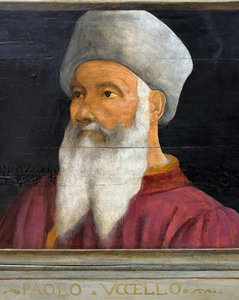
Paolo Uccello
1397 - 1475 , Itália
Dados Rápidos
- Artistic Movement Or Style: Renascimento
- Artists Or Movements Influenced By This Artist:
- Dürer
- Gótico
- Artists Who Influenced This Artist:
- Ghiberti
- Donatello
- Date Of Birth: 1397
- Date Of Death: 1475
- Full Name: Paolo Uccello
- Nationality: Italiano
- Notable Artworks:
- Batalha San Romano
- Nascimento Vênus
- São Jorge Dragão
- Place Of Birth: Pratovecchio, Itália
Artigos Relacionados

Fresco Art Guide: Mastering the Timeless Technique of Wall Painting for Luxury Interior Design
Master the art of fresco for luxury hospitality design. Explore technical insights into historical wall painting and discover how professional-grade, large-scale reproductions can elevate hotel interiors with timeless Renaissance elegance.


