


 Visualizar em escala
 Enviar
 Compartilhar
 Ver detalhes
 Guia de Obras do Aluno

 Baixar imagem
 Semelhantes
 Raio X
 Apresentação de slides
 Estatísticas
Warehousing


 Ver mais
Reprodução em Óleo Feita à Mão
Óleo sobre tela pintado à mão no tamanho e moldura de sua escolha, feito sob encomenda pelos nossos artistas. ( Alternar para Impressão Ver Imagem Digital)




P118B €10

P118H €10

P118W €10

P438Z €10

P508JH €12

P508YH €12

P805H €10

P805Z €10

P919BZ €10

P919G €10

P919XJ €10

P959ZH €10

P968JZ €12

W106C €8

W218G €10

W218JH €8

W218Y €10

W307PJ €10

W316G €10

W316PJ €8

W316Y €10

W398PJ €8

W4111J €10

W500HY €15

W500JH €15

W692G €12

W849H €8

W940BG €15

W953PJ €8




Escolha entre os nossos tamanhos pré-definidos que respeitam as proporções originais da obra de arte.

Digite a largura e a altura de que necessita, para se ajustar à sua moldura ou à sua parede. Esta obra é pintada à mão, por isso, para um tamanho com uma proporção diferente, o artista pode pintar um pouco mais ao redor da imagem ou cortar um pouco — você escolhe. Enviamos-lhe uma maquete digital para aprovação antes de a pintura começar. A imagem exibida nesta página não mostra o resultado real — apenas a maquete mostra.
Após o pedido, a equipa AllPaintingsStore.com enviará um e-mail ao cliente para solicitar instruções e fornecer uma prévia do esboço.
Entrega mundial () em 3 a 4 semanas, em vez das 5 semanas padrão. (25 Outubro). Sem comprometer a qualidade.

Envio expresso gratuito para todo o mundo

Tela de Linho Premium

Seguro de transporte total

Garantia de Reembolso de Impostos Alfandegários

Garantia de Fidelidade de Cor

Política de Devolução em 100 Dias (Apenas para Defeitos)

Garantia de reembolso de 100%

Desconto para múltiplas unidades
 A opção de vidro está disponível apenas para tamanhos inferiores a 110 cm

Warehousing
Técnica de Reprodução
Dimensões da Reprodução
-


Preço Total
€ 226
A Glimpse into Victorian Commerce: Paul Gustave Doré’s “Warehousing”
Paul Gustave Doré's "Warehousing," created around 1872, isn’t merely an illustration; it’s a meticulously rendered tableau of bustling urban life—a snapshot of London’s burgeoning commercial heart. The artwork transports us to a dimly lit warehouse interior, dominated by the rhythmic activity of men and boys laboring amidst towering stacks of barrels and sacks. It's a scene brimming with both industry and a palpable sense of human effort, offering a fascinating window into the Victorian era’s complex relationship with trade and its impact on everyday life. The piece immediately draws the eye with its dramatic chiaroscuro – the masterful use of light and shadow—a signature technique employed by Doré to create depth, drama, and an almost theatrical quality within his compositions.The Artist's Hand: Technique and Style
Doré’s artistic prowess is evident in every detail. He was a master of wood engraving, a process that demanded incredible precision and patience. The intricate lines, the subtle gradations of tone achieved through meticulous layering of ink, and the remarkably realistic depiction of textures—from the rough-hewn timber of the warehouse to the worn clothing of the workers—speak volumes about his technical skill. The style leans heavily into Romanticism, characterized by its emphasis on dramatic lighting, dynamic compositions, and a focus on human emotion. However, Doré’s work transcends simple romanticism; he imbues his scenes with a gritty realism that reflects the realities of Victorian society. Notice how he doesn't shy away from depicting the physical strain on the workers – their postures, expressions, and the sheer weight of the goods they are handling all contribute to a powerful sense of authenticity. The composition itself is carefully constructed, guiding the viewer’s eye through the scene with a deliberate flow, emphasizing the movement and activity within the warehouse.A City in Motion: Historical Context
“Warehousing” provides invaluable insight into London during the mid-19th century – an era defined by rapid industrialization and unprecedented economic growth. The city was transforming from a primarily mercantile center to a major manufacturing hub, fueled by advancements in technology and trade. Warehouses like this one were crucial nodes within this expanding network, facilitating the storage and distribution of goods arriving via docks and canals. The illustration captures not just the physical act of warehousing but also the social dynamics at play – the interplay between men and boys, the hierarchy of labor, and the constant flow of merchandise contributing to the city’s vitality. The inclusion of ships in the background subtly reinforces this connection to maritime trade, highlighting London's position as a global port.Symbolism and Emotional Resonance
Beyond its documentary value, “Warehousing” is rich in symbolic meaning. The scene embodies the relentless drive of progress – the tireless work ethic that underpinned Victorian society’s success. The shadows cast by the towering stacks of goods can be interpreted as representing the burdens and challenges faced by those engaged in manual labor. Yet, there's also a sense of camaraderie among the workers, suggesting a shared experience and a collective effort to contribute to the city’s prosperity. The overall mood is one of industriousness tempered with a hint of weariness—a poignant reflection on the human cost of economic advancement. The French title, “Un Entrepôt dans la Cité” (A Warehouse in the City), subtly elevates this scene from a simple depiction of commerce to an exploration of urban life itself.Bringing "Warehousing" Home: Reproductions and Artistic Legacy
Today, reproductions of Doré’s “Warehousing” remain highly sought after by collectors and interior designers alike. Its dramatic composition and evocative imagery lend themselves beautifully to a variety of settings, adding a touch of historical gravitas and artistic sophistication to any space. When selecting a reproduction, consider the quality of the print – a faithful rendering of Doré’s original wood engraving is essential to capturing its full impact. This artwork stands as a testament to Doré's enduring legacy—a powerful reminder of Victorian London’s dynamic energy and the human stories that shaped its remarkable transformation.Perguntas e Respostas
Que tipo de cores "Warehousing" utiliza?
"Warehousing" de Gustave Doré utiliza uma paleta de cores Neutrals. A paleta resume o caráter cromático geral da obra.
"Warehousing" de Gustave Doré é uma obra de tons claros ou escuros?
Os valores registrados para "Warehousing" de Gustave Doré são: brilliant de brilho, Bright Balance de luminância.
A que período da carreira de Gustave Doré pertence "Warehousing"?
"Warehousing" representa o Mature Period de Gustave Doré.
Obras Relacionadas


Biografia do Artista
A Life Etched in Shadow and Light: The World of Gustave Doré
Paul Gustave Louis Christophe Doré, known to the world as Gustave Doré, was a figure who straddled the worlds of illustration, painting, and sculpture with an astonishing virtuosity. Born in Strasbourg, France, on January 6th, 1832, his life unfolded during a period of immense social and artistic change, a time when Romanticism still held sway but was giving way to new currents of realism and symbolism. Even as a child, Doré displayed a precocious talent, not merely in drawing—which he began at an incredibly young age—but also in a personality that hinted at the dramatic flair which would come to define his work. Stories abound of youthful pranks demonstrating a maturity beyond his years, foreshadowing the complex and often melancholic themes that would permeate his art. He embarked on his professional career remarkably early, at just fifteen years old, as a caricaturist for the French journal *Le Journal pour rire*, honing his skills in observation and composition within the bustling world of Parisian satire.From Caricature to Literary Giants: The Rise of an Illustrator
Doré’s early commissions laid the foundation for his future renown. Works like *Les Travaux d'Hercule* (1847), *Trois artistes incompris et mécontents* (1851), and *Les Dés-agréments d'un voyage d'agrément* (1851) showcased a burgeoning talent for dynamic composition and a masterful use of light and shadow, even in these relatively modest beginnings. He was deeply influenced by the illustrations of J.J. Grandville, whose fantastical imagery and satirical edge resonated with Doré’s own developing style. However, it was through his collaborations with literary giants that Doré truly ascended to prominence. In 1853, he received a commission to illustrate the works of Lord Byron, an undertaking which opened doors to further prestigious projects. The monumental task of illustrating the Bible followed, a project that would cement his reputation and bring his art before a vast international audience. His illustrations for Cervantes’ *Don Quixote* in the 1860s were particularly impactful, profoundly influencing subsequent interpretations of the characters and narrative. He wasn't merely illustrating these stories; he was reimagining them, imbuing them with a dramatic intensity that captured the imagination of readers worldwide. The oversized edition of Edgar Allan Poe’s “The Raven,” completed in 1883, earned him an impressive 30,000 francs from Harper & Brothers, demonstrating the commercial success alongside the artistic acclaim he had achieved. His collaboration with Blanchard Jerrold on *London: A Pilgrimage* (1872) was a particularly poignant and controversial work, depicting the stark realities of Victorian London’s poverty and sparking debate about social conditions.A Master of Technique: Wood Engraving and Romantic Vision
Doré's artistic prowess lay not only in his imaginative vision but also in his technical mastery, particularly in wood engraving. He possessed an extraordinary ability to create incredibly detailed and dramatic images through this medium, a skill that allowed for the mass production and widespread dissemination of his work. His compositions are characterized by their dynamism, strong contrasts between light and shadow—a technique known as chiaroscuro—and a sense of grandeur that often evokes a feeling of awe or even terror. He frequently employed a large team of block-cutters to translate his designs into wood engravings, enabling the efficient production needed to meet the demands of publishers and readers alike. His style is firmly rooted in the Romantic tradition, emphasizing emotion, imagination, and the sublime—a fascination with the overwhelming power of nature and the human condition. He wasn’t merely recording scenes; he was interpreting them through a lens of heightened emotionality and dramatic flair. This approach, while celebrated by many, also drew criticism from some contemporaries who found his work overly theatrical or sensationalized.Notable Works and Lasting Influence
Doré's prolific output spanned a vast range of subjects and styles. His illustrations for Dante’s *Inferno* remain perhaps his most iconic achievement, capturing the terrifying visions of hell with unparalleled intensity. Similarly, his interpretations of Milton’s *Paradise Lost* and Cervantes’ *Don Quixote* are celebrated for their grandeur and dramatic flair. Beyond these monumental projects, Doré produced countless illustrations for popular literature, including works by Balzac, Coleridge, and Poe. His depictions of London—particularly *London: A Pilgrimage*, which offered a stark portrayal of poverty and social injustice—left a lasting impact on the public’s perception of the city. Despite facing some criticism during his lifetime—some found his style overly dramatic or lacking in subtlety—Doré's work is now celebrated for its artistic merit and historical importance. His illustrations continue to shape our understanding of classic literature and Victorian society, offering a powerful visual interpretation of timeless stories and enduring themes. He died on January 23rd, 1883, leaving behind an immense body of work that continues to captivate and inspire. *His art remains a testament to the power of illustration to not only depict but also to interpret and transform the world around us.*Key Characteristics
- Dramatic Composition: Doré’s works are renowned for their dynamic arrangements, often featuring sweeping vistas and figures in dramatic poses.
- Chiaroscuro: His masterful use of light and shadow creates a powerful sense of depth and atmosphere.
- Romantic Intensity: Doré's illustrations are infused with emotion, imagination, and a fascination with the sublime.
- Technical Skill: He was a highly skilled wood engraver, capable of producing incredibly detailed and intricate images.

Gustave Doré
1832 - 1883 , França
Informações Rápidas
- Artistic Movement Or Style: Romantismo
- Artists Or Movements Influenced By This Artist: ['Van Gogh']
- Artists Who Influenced This Artist: ['Grandville']
- Date Of Birth: 6 jan. 1832
- Date Of Death: 23 jan. 1883
- Full Name: Paul Gustave Doré
- Nationality: Francês
- Notable Artworks:
- Don Quixote
- Inferno
- Paraíso
- Place Of Birth: Estrasburgo, França
Artigos Relacionados

Angelo Chiacchio: A Mid-Century American Illustration Master & the Rise of Commercial Art
Explore the captivating world of Angelo Chiacchio, a master of mid-century American illustration. Discover his evolution, signature style, and lasting impact on commercial art & design. Learn about his legacy at the Museum of American Illustration.

Paul Gustave Doré: A Master of Romantic Realism & the Illustrated Imagination
Explore the captivating world of Gustave Doré, master of Romantic realism & iconic illustrator. Discover his dramatic wood engravings, paintings, and sculptures – a legacy shaping art history. Learn more at AllPaintingsStore.
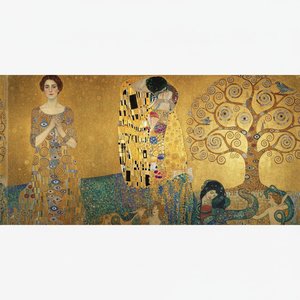
Gustav Klimt: As 25 Obras-Primas que Definem um Ícone da Arte e Decoração
Descubra as 25 obras-primas de Gustav Klimt, ícone da Secession Vienense e do Art Nouveau. Explore a beleza dourada, o simbolismo e a paixão em cada pintura. Encontre reproduções de arte exclusivas para decorar sua casa com elegância na AllPaintingsStore.com!

Top 10 Obras de Arte com Vibração Industrial | AllPaintingsStore.com
Descubra 10 obras de arte icônicas que capturam a atmosfera industrial! Explore Monet, Manet e outros mestres do Impressionismo e Realismo. Encontre reproduções de alta qualidade para transformar sua decoração em AllPaintingsStore.com.

Kay Rasmus Nielsen: A Golden Age Illustrator's Enchanting Legacy of Symbolism & Narrative
Explore the captivating world of Kay Rasmus Nielsen, a celebrated Golden Age illustrator renowned for his Art Nouveau fairy tale art & Disney contributions. Discover his unique style, enduring legacy, and how to collect his enchanting works.


