


 Visualizar na parede
 Compartilhar
 Compartilhar
 Detalhes
 Guia
Guia

 Baixar imagem
 Semelhantes
 Raio X
 Ver diaporama
 Q&A
Q&A Estatísticas
The Flame
 Oil On Board
- WallArt
- Abstract Expressionism
 1938
1938- Modern
 51.0 x 76.0 cm
 Ler mais
Giclée / Impressão de Arte
Impressão giclée ou em tela de qualidade de museu, com produção rápida e opções flexíveis de acabamento. ( Comprar pintura feita à mão Alternar para Imagem Digital)




P118B €10

P118H €10

P118W €10

P438Z €10

P508JH €12

P508YH €12

P805H €10

P805Z €10

P919BZ €10

P919G €10

P919XJ €10

P959ZH €10

P968JZ €12

W106C €8

W218G €10

W218JH €8

W218Y €10

W307PJ €10

W316G €10

W316PJ €8

W316Y €10

W398PJ €8

W4111J €10

W500HY €15

W500JH €15

W692G €12

W849H €8

W940BG €15

W953PJ €8




Escolha entre os nossos tamanhos pré-definidos que respeitam as proporções originais da obra de arte.

Insira a largura e a altura desejadas para se ajustarem à sua moldura ou parede. Uma impressão pode ser apenas cortada, nunca ampliada além da imagem original; portanto, um tamanho com proporções diferentes resultará na perda de parte da imagem. Enviamos uma maquete digital para sua aprovação antes de realizarmos a impressão. A imagem exibida nesta página não mostra o corte real — apenas a maquete o faz.
Entrega mundial () em 2 semanas, em vez das 4/5 semanas padrão. (31 Outubro)

Envio expresso gratuito para todo o mundo

Tela de Linho de Alta Qualidade

Seguro de transporte completo

Garantia de Reembolso de Impostos Alfandegários

Garantia de Fidelidade Cromática

Política de Devolução em 100 Dias (Apenas para Defeitos)

Garantia de reembolso de 100%

Oferta de desconto por quantidade
 A opção de vidro está disponível apenas para tamanhos inferiores a 110 cm

The Flame
Giclée / Impressão de Arte
Tamanho da Reprodução
-


Preço Total
€ 57
A Blaze of Early Expressionism: Examining Jackson Pollock’s “The Flame”
“The Flame,” painted by Paul Jackson Pollock in 1938, stands as a pivotal moment in the burgeoning Abstract Expressionist movement. More than just pigment on canvas, it embodies a radical reimagining of artistic process and intention—a testament to Pollock's formative explorations into the realm of spontaneous gesture and emotional resonance. Measuring 51 x 76 cm, this oil painting on fiberboard captures a dynamic composition dominated by swirling hues of dark tones punctuated by bursts of crimson and ochre, mirroring the very essence of its namesake.Composition and Symbolism: An Orchestration of Movement
At first glance, “The Flame” presents a deceptively simple visual narrative—a central motif representing an incandescent blaze engulfing scattered avian figures amidst an amorphous expanse. However, this apparent simplicity belies a profound symbolic depth. Pollock’s deliberate arrangement isn't merely decorative; it speaks to the movement and transformation inherent in fire itself – a metaphor for creative energy and spiritual rebirth. The birds, positioned strategically throughout the canvas, aren’t mere incidental additions but rather symbols of freedom and untamed instinct—a conscious nod to influences gleaned from Mexican muralism and Benton’s Regionalist aesthetic.Technique: Dripping Paint - A Revolutionary Approach
Pollock's groundbreaking technique – drip painting – distinguishes “The Flame” as a cornerstone of Abstract Expressionism. Rejecting traditional brushstrokes, he employed a method whereby paint was poured, dripped, splashed, and flung onto the canvas from above, allowing gravity to dictate patterns and textures. This process demanded an almost meditative focus on action and intuition, prioritizing feeling over meticulous representation. The resulting surface is characterized by interwoven lines and splatters of color that create an illusion of movement—a palpable energy captured in tangible form. It’s a technique directly traceable to Benton's influence and mirroring the expressive fervor found within Mexican muralism.Historical Context: Embracing Chance Amidst Artistic Dialogue
Created during a period of significant artistic experimentation, “The Flame” reflects the broader anxieties and aspirations of its time. Pollock wrestled with ideas surrounding automatism—the subconscious channeling of emotion into art—drawing inspiration from Surrealist principles alongside Benton’s emphasis on rhythmic composition. The painting's visual vocabulary – bold colors, gestural brushstrokes – aligns seamlessly with the stylistic trajectory established by artists like Mark Rothko and Yayoi Kusama, cementing Pollock’s place as a pioneer in redefining artistic expression.Emotional Resonance: Capturing Transient Feeling
Ultimately, “The Flame” transcends mere visual description; it strives to evoke an emotional response from the viewer. The painting's chromatic palette—dark hues contrasted by vibrant reds and yellows—creates a dramatic tension that mirrors the primal force of fire. More than just depicting a scene, Pollock sought to convey a state of mind – a feeling of unrestrained creativity and transformative potential. Reproductions offer a remarkable opportunity to experience this captivating artwork’s emotive power firsthand.Perguntas e Respostas
Qual é o tamanho de impressão recomendado para "The Flame"?
Sugere-se uma reprodução de Small para "The Flame", de Jackson Pollock. O tamanho pode ser ajustado mantendo as proporções.
"The Flame", de Jackson Pollock é uma pintura, um desenho ou uma gravura?
"The Flame", de Jackson Pollock é classificado como WallArt. A categoria descreve o tipo de obra de arte que a peça original representa.
Existe um guia para "The Flame", de Jackson Pollock?
Uma página de Ficha informativa está disponível para "The Flame", de Jackson Pollock: uma ficha informativa imprimível sobre a obra, projetada para estudantes e uso em sala de aula.
Obras Relacionadas


Biografia do Artista
Early Life and the Seeds of Innovation
Paul Jackson Pollock, born in Cody, Wyoming, in 1912, was a restless spirit from the outset. His early life was marked by frequent relocation as his father pursued work as a land surveyor across the vast landscapes of the American West. This itinerant existence instilled in young Pollock a deep connection to the natural world and an exposure to diverse cultures, particularly through encounters with Native American art during those surveying trips – impressions that would subtly permeate his artistic vision later in life. Though he never explicitly imitated Indigenous styles, the raw energy and spiritual resonance of these early experiences undoubtedly left their mark.
Pollock’s formal artistic training began at the Manual Arts High School in Los Angeles, followed by studies at the Art Students League of New York under the tutelage of Thomas Hart Benton. Benton, a prominent figure in the Regionalist movement, emphasized rhythmic composition and narrative themes rooted in American life. While Pollock initially absorbed these lessons, his inherent inclination leaned toward more abstract explorations. He was also profoundly impacted by Mexican muralists like José Clemente Orozco, whose powerful depictions of social struggle resonated deeply with him. These early influences laid a foundation, but it was the burgeoning world of Surrealism that truly unlocked Pollock’s artistic potential.
The Birth of Action Painting and a Revolutionary Technique
The 1930s saw Pollock experimenting with various techniques, seeking alternatives to traditional brushwork. He began pouring paint, exploring its fluidity and unpredictable nature. However, it was around 1947 that his artistic trajectory underwent a radical transformation. Abandoning the easel altogether, Pollock laid canvases directly on the floor, initiating what would become known as his “drip technique.” He then proceeded to drip, splash, and fling paint onto the canvas from above, orchestrating a dynamic dance between artist, medium, and surface.
This wasn’t merely about applying paint; it was about embodying the act of creation itself. Pollock's canvases became arenas for physical expression, capturing the immediacy of his gestures and emotions. The resulting paintings are characterized by their “all-over” composition – a lack of central focus that invites the viewer to explore the entire surface as a unified field of energy. Intricate networks of lines and colors intertwine, creating a visual complexity that is both captivating and challenging. He employed unconventional tools—sticks, knives, even syringes—to manipulate the paint in unpredictable ways, further emphasizing the spontaneous nature of his process.
This innovative approach positioned Pollock as a central figure in the burgeoning Abstract Expressionist movement, which emerged in post-World War II New York City. Abstract Expressionism prioritized spontaneous gesture, large scale, and non-representational imagery, reflecting a broader cultural shift away from traditional artistic conventions. His marriage to fellow artist Lee Krasner was also pivotal; she provided unwavering emotional support and actively encouraged his artistic development, recognizing the groundbreaking nature of his work.
Iconic Works and Lasting Legacy
Pollock’s most celebrated works—such as Number 1, 1950 (Lavender Mist), One: Number 31, 1950, Blue Poles: Number 11, 1952, and Convergence—are testaments to his revolutionary technique. These paintings are not simply images; they are records of a performance, imbued with the artist’s physical presence and emotional intensity. The dynamic energy that emanates from these canvases is palpable, drawing viewers into a world of pure abstraction.
His style transcends mere aesthetics; it's an exploration of process over product. Pollock sought to capture the immediacy of his actions and emotions on canvas, rejecting traditional notions of composition and representation. He delved into Jungian psychology, exploring archetypes and the subconscious in his art, seeking to tap into universal symbols and primal energies.
Pollock’s impact on the history of art is immeasurable. He fundamentally altered the way artists approached painting, breaking free from easel-based methods and embracing a more performative approach. His work helped solidify New York City's position as a global center for modern art, shifting the focus away from European dominance. His influence can be seen in the work of countless artists who followed, including those associated with Color Field painting and later forms of abstract expressionism.
A Complex Figure
Jackson Pollock’s life was marked by both artistic brilliance and personal struggles. He battled chronic alcoholism throughout much of his career, a condition that profoundly impacted his health and relationships. Despite these challenges, he remained fiercely dedicated to his art, constantly pushing the boundaries of creative expression. His reclusive nature and volatile personality often made him difficult to know personally, yet his work continues to resonate deeply with audiences around the world.
His legacy extends beyond the canvases themselves—it encompasses a revolutionary approach to painting that redefined artistic practice and forever altered the course of modern art. Pollock’s willingness to embrace spontaneity, challenge conventions, and explore the depths of human emotion cemented his place as one of the most important and influential artists of the 20th century.

Jackson Pollock
1912 - 1956 , Estados Unidos da América
Dados Rápidos
- Artistic Movement Or Style: Expressionismo Abstrato
- Artists Or Movements Influenced By This Artist:
- Color Field
- Expressionismo Abstrato
- Artists Who Influenced This Artist:
- Thomas Hart Benton
- André Masson
- Date Of Birth: 28 jan 1912
- Date Of Death: 11 ago 1956
- Full Name: Paul Jackson Pollock
- Nationality: Americano
- Notable Artworks:
- Número 1, 1950
- Um: Número 31, 1950
- Azul-Poles
- Convergência
- Place Of Birth: Cody, Wyoming
Artigos Relacionados
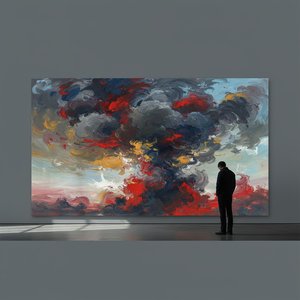
Beyond Representation: Exploring the Emotional Landscape of Abstract Expressionism
Explore the profound emotional world of Abstract Expressionism with AllPaintingsStore. Discover key artists like Pollock & Rothko, learn about collecting, and find museum-quality reproductions to inspire your space.

Kandinsky: As 25 Obras-Primas que Definem o Abstracionismo | AllPaintingsStore
Descubra as 25 obras-primas de Wassily Kandinsky, pioneiro da arte abstrata! Explore a história, cores e significado por trás de cada pintura. Encontre reproduções de alta qualidade e inspire sua decoração em AllPaintingsStore.com.
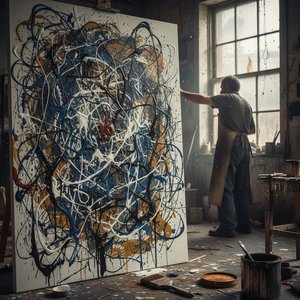
Paul Jackson Pollock: A Radical Departure – Exploring Abstract Expressionism's Pioneering Figure and His Enduring Legacy
Explore the revolutionary art of Jackson Pollock & Abstract Expressionism. Discover his iconic drip paintings, lasting impact, and considerations for collecting this pivotal American artist. Expert insights at AllPaintingsStore.

Top 10 Obras-Primas do Expressionismo Abstrato: Arte para Decorar e Inspirar | AllPaintingsStore.com
Descubra as 10 obras-primas do Expressionismo Abstrato com Jackson Pollock, Mark Rothko e mais! Explore a história, técnica e emoção por trás de cada pintura. Encontre reproduções de arte exclusivas para decorar sua casa em AllPaintingsStore.com.

Unleashing Emotion: A Connoisseur's Guide to the Power and Legacy of Abstract Expressionism
Explore the profound emotional depth of Abstract Expressionism. From Pollock's dynamic drips to de Kooning's gestural mastery, our expert guide offers art collectors a sophisticated analysis of this transformative movement and its enduring legacy in modern fine art.


