


 Visualizar em escala
 Enviar
 Compartilhar
 Ver detalhes
 Guia
Guia

 Baixar imagem
 Semelhantes
 Raio X
 Apresentação de slides
 Estatísticas
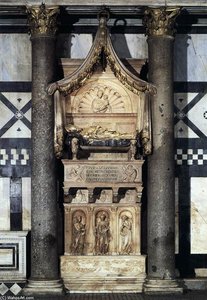
Monument to Doge Tommaso Mocenigo


 Ver mais
Reprodução em Óleo Feita à Mão
Óleo sobre tela pintado à mão no tamanho e moldura de sua escolha, feito sob encomenda pelos nossos artistas. ( Alternar para Impressão Ver Imagem Digital)




































Escolha entre os nossos tamanhos pré-definidos que respeitam as proporções originais da obra de arte.

Pode inserir as suas próprias dimensões para se adequar a uma moldura ou espaço específico. Se o tamanho selecionado não corresponder às proporções da imagem original, iremos cortar a obra de arte ou estender a pintura com elementos adicionais pintados à mão. Um esboço digital será enviado para sua aprovação antes do início da produção.
Tenha em atenção que a pré-visualização no ecrã não reflete o corte ou extensão real. Apenas o esboço mostrará com precisão a composição final.
Embora tamanhos personalizados estejam disponíveis, recomendamos selecionar uma dimensão da lista predefinida para preservar as proporções originais.
Após o pedido, a equipa AllPaintingsStore.com enviará um e-mail ao cliente para solicitar instruções e fornecer uma prévia do esboço.
Entrega mundial () em 3 a 4 semanas, em vez das 5 semanas padrão. (21 Setembro). Sem comprometer a qualidade.

Envio expresso gratuito para todo o mundo

Tela de Linho Premium

Seguro de transporte total

Garantia de Reembolso de Impostos Alfandegários

Garantia de Fidelidade de Cor

Política de Devolução em 100 Dias (Apenas para Defeitos)

Garantia de reembolso de 100%

Desconto para múltiplas unidades
 A opção de vidro está disponível apenas para tamanhos inferiores a 110 cm

Monument to Doge Tommaso Mocenigo
Técnica de Reprodução
Dimensões da Reprodução
-


Preço Total
$ 258
Obras Relacionadas




Biografia do Artista
Early Life and Florentine Beginnings
Niccolò di Piero Lamberti, a name resonating softly through the annals of Renaissance sculpture, emerged in Florence around 1370—a period brimming with artistic ferment. While precise details of his early life remain elusive, records indicate he was already established as a *magister* by 1391, working on the ambitious Porta della Mandorla for the Florence Cathedral. This initial involvement suggests an apprenticeship steeped in the traditions of Tuscan artistry and a rapid ascent within the city’s burgeoning artistic community. Married in Florence in 1392, Lamberti quickly became part of the fabric of Florentine creative life, participating in the famed 1401 competition for the North Doors of the Baptistery—a contest ultimately won by the prodigious Lorenzo Ghiberti. This early exposure to such monumental projects and formidable talent undoubtedly shaped his artistic trajectory.
The Cathedral Commissions and a Rising Reputation
Lamberti’s dedication to Florence Cathedral continued with his selection in 1408 as one of three sculptors tasked with creating the Evangelists for the cathedral's façade. The resulting statue of Saint Mark, completed in 1415, stands as a testament to his growing skill and stylistic maturity. Now housed within the Museo dell’Opera del Duomo, this sculpture reveals a blend of Gothic elegance and emerging Renaissance naturalism—a characteristic that would define much of his subsequent work. The figure possesses a dignified composure, yet retains a certain degree of stylized formality, indicative of the transitional period in which Lamberti was active. Beyond the cathedral, he contributed significantly to Orsanmichele, sculpting not only Saint Luke but also Saint James the Major for the Guild of Furriers and Skinners, further solidifying his position as a leading sculptor within Florence.
Venturing East: Venice and the Façade of St Mark’s
Around 1416, Lamberti embarked on a significant geographical shift, relocating to Venice with his son, Piero di Niccolò. This move marked a pivotal moment in his career, as he became deeply involved in the sculptural decoration of the upper storey of Saint Mark's Basilica’s façade—a project that would profoundly influence Venetian art. The Tuscan style, previously less prominent in the city, began to take root under Lamberti’s guidance, introducing a new level of detail and narrative complexity to the basilica’s architectural ornamentation. His work here wasn’t merely about adding sculpture; it was about integrating a distinct artistic sensibility into the very heart of Venetian identity.
Collaboration with Son and Continued Artistic Exploration
The partnership between Niccolò di Piero Lamberti and his son, Piero, proved remarkably fruitful. While Niccolò’s experience provided a foundation, Piero brought a fresh perspective to their collaborative endeavors. Together they undertook commissions in both Venice and Padua, demonstrating a shared commitment to quality craftsmanship and artistic innovation. The tomb of Tommaso Mocenigo in SS Giovanni e Paolo (Venice), completed in 1423, exemplifies their combined talents—a Late Gothic canopied wall tomb showcasing intricate detailing and a refined sense of proportion. Later, the collaboration extended to the tomb of Raffaello Fulgosio in Padua’s Santo, where they worked alongside Giovanni di Bartolomeo da Firenze, further broadening their artistic horizons.
Legacy and Historical Significance
Niccolò di Piero Lamberti occupies a unique position within the Renaissance art landscape. He wasn't a revolutionary like Donatello or Ghiberti, but rather a skilled artisan who played a crucial role in disseminating Tuscan artistic principles beyond Florence’s borders—most notably to Venice. His work embodies the transition from Gothic formalism to the burgeoning naturalism of the early Renaissance, blending elegance with increasing attention to anatomical accuracy and emotional expression. His influence extended through his son, Piero, ensuring that the Lamberti family left an indelible mark on the sculptural traditions of both Florence and Venice, shaping the aesthetic character of these iconic Italian cities for generations to come.

piero di niccolò lamberti
1370 - 1451 , Italy
Informações Rápidas
- Artistic Movement Or Style: Renaissance sculpture
- Date Of Birth: c. 1370
- Date Of Death: 1451
- Full Name: Niccolò di Piero Lamberti
- Nationality: Italian
- Notable Artworks:
- St. Mark Blessing
- Saint Luke
- St. James the Major
- Place Of Birth: Florence, Italy

