


 Visualizar na parede
 Compartilhar
 Compartilhar
 Detalhes
 Guia
Guia

 Baixar imagem
 Semelhantes
 Raio X
 Ver diaporama
 Perguntas e Respostas
 Estatísticas
Diptych

- 18.0 x 12.0 cm


 Ler mais
Obtenha um arquivo pronto para impressão que vai muito além da visualização na web. Cada imagem digital que vendemos provém de um arquivo mestre de alta resolução em nosso banco de dados — geralmente entre 5.000 e 15.000 pixels de largura — para que você possa imprimir em grandes formatos, realizar cortes precisos ou reproduzir detalhes minuciosos com total confiança.
Nenhum arquivo sai do nosso estúdio sem passar por um cuidadoso processo de revisão. Um especialista digital verifica as cores em relação à pintura original e as corrige se necessário, aumentando então a clareza e o detalhe com ferramentas profissionais de retoque — sempre mantendo a fidelidade às pinceladas e ao estilo do artista. O resultado é uma imagem que se assemelha à pintura, e não a um scan com filtros.
Aprovação antes da finalização: nosso especialista enviará a imagem por e-mail em até 72 horas para sua revisão. Não ficou satisfeito? Solicite melhorias ou correções, ou peça o reembolso caso a qualidade não atenda às suas expectativas.
Esta é a qualidade em que confiam editoras, estúdios de design, galerias e gráficas.
Imagem Digital
Baixe um arquivo de alta resolução para exibição pessoal, impressão e projetos criativos. ( Alternar para Impressão Comprar pintura feita à mão)
Incluído em cada compra de imagem digital
Entrega Digital Especializada e Garantida
Ao escolher o AllPaintingsStore.com, você não está apenas adquirindo uma imagem — você está recebendo uma obra de arte digital profissionalmente aprimorada, elaborada com precisão e com garantia de satisfação. Aqui está tudo o que acompanha seu pedido, automaticamente:

Entrega rápida por e-mail
O seu arquivo de imagem digital em alta resolução será enviado por e-mail em até 72 horas após o pedido — pronto para uso imediato.

Arquivo Digital com IA Otimizado
Sua obra de arte é otimizada profissionalmente por meio de ferramentas avançadas de IA e edição manual, garantindo o máximo de detalhes, clareza e precisão de cores.

Reenvio gratuito vitalício
Apagou ou perdeu o seu ficheiro acidentalmente? Não se preocupe – nós reenviamos para si a qualquer momento, gratuitamente.

Sem Taxas de Importação - Sempre
Desfrute da sua obra de arte instantaneamente, sem taxas alfandegárias, impostos ou custos de entrega — downloads digitais são sempre isentos de taxas.

Garantia de Fidelidade de Cores
Garantimos que sua imagem digital reflita as cores originais com a maior fidelidade possível, utilizando ferramentas profissionais e gerenciamento de cores.

Garantia de satisfação de 100 dias
Se não estiver satisfeito com a sua imagem digital, nós a revisaremos ou reembolsaremos 100% dentro de 100 dias — sem perguntas.

Garantia de Reembolso 100%
Não está satisfeito? Receba o reembolso total em até 100 dias após o recebimento do seu arquivo digital — sem perguntas.

Descontos para pedidos em lote
Compre 3 imagens, economize 10% - Compre 5, economize 15% - Compre 10+, economize 20%. Ideal para projetos criativos, galerias e agências.
A Testament to Faith: Examining Rogier van der Weyden’s Diptych
The image presented is a masterful depiction of two figures—a woman holding a child, and another woman adorned with a crown—captured within the confines of an 18 x 12 cm canvas. Executed in 1440 by Rogier van der Weyden, this “Philadelphia Diptych,” as it’s commonly known, transcends mere representation; it embodies the profound spiritual convictions characteristic of Early Netherlandish art and stands as a testament to the artistic prowess of its creator. The meticulous attention to detail—a hallmark of Van der Weyden's oeuvre—is immediately apparent in every brushstroke, reflecting his unwavering dedication to capturing reality with breathtaking accuracy.The Composition: A Narrative of Devotion
At first glance, the scene unfolds as a poignant tableau of maternal tenderness and solemn piety. The woman on the left cradles her infant son, gazing upwards with an expression imbued with serene contemplation—a gaze that directs our attention beyond the frame, hinting at a divine presence. Her attire is rendered in rich blues, symbolizing purity and spiritual grace, while the crown signifies royalty – perhaps referencing Mary’s role as Queen of Heaven and Mother of God, a central theme within Christian iconography. Conversely, the woman on the right holds another child, albeit less prominently displayed, conveying a similar sense of maternal care. She wears scarlet robes—a color traditionally associated with martyrdom and sacrifice—and grasps a sword, symbolizing strength and defense of faith; this juxtaposition underscores the duality inherent in spiritual devotion – vulnerability alongside unwavering conviction.Technical Brilliance: Van der Weyden’s Pioneering Approach
Rogier van der Weyden's technique exemplifies the groundbreaking innovations that defined the Northern Renaissance. He employed oil paint—a relatively new medium at the time—allowing for unprecedented luminosity and tonal subtlety, surpassing the limitations of tempera painting. The artist meticulously layered pigments to achieve astonishing realism, capturing textures like fabric folds and skin pores with remarkable precision. Observe particularly the rendering of the infant’s face; it possesses an uncanny likeness to life, achieved through masterful blending and shading techniques that would inspire generations of artists. Furthermore, Van der Weyden skillfully incorporated landscapes—a burgeoning trend in Northern Renaissance art—creating a backdrop that enhances the emotional impact of the figures depicted. The left landscape features dense foliage and towering trees, symbolizing earthly paradise and divine providence, while the right landscape presents a mountainous vista—representing challenges to faith and the grandeur of God’s creation.Symbolism and Spiritual Resonance
The Diptych operates on multiple symbolic levels, reflecting the dominant theological concerns of its time. The depiction of Mary and Jesus embodies the Virgin Mother's role as protector and intercessor before God, a cornerstone of Christian belief. The sword symbolizes courage and resilience in upholding religious dogma against adversity—a motif prevalent throughout medieval art. Beyond these explicit references, however, lies a deeper resonance with humanist ideals emerging from Italy; the figures’ expressions convey profound emotion – sorrow, compassion, and unwavering faith – mirroring the burgeoning interest in portraying human psychology with psychological depth.A Legacy of Emotion: Why This Artwork Matters Today
More than six centuries after its creation, Rogier van der Weyden's Diptych continues to captivate audiences worldwide. Its enduring appeal stems from its masterful execution—a triumph of artistic technique—and its profound spiritual message. It serves as a poignant reminder of the importance of faith, compassion, and unwavering devotion – qualities that remain relevant in our contemporary world. Reproductions of this iconic artwork offer an opportunity to experience firsthand the beauty and emotional power of Early Netherlandish painting, transporting viewers back to a period defined by artistic innovation and religious fervor.Perguntas e Respostas
Quem criou "Diptych" e em que ano?
A obra "Diptych" é de autoria de Rogier van der Weyden e data de 1440.
Que paleta e que sentimento "Diptych" evoca?
Em "Diptych", cores de Earthy acompanham um sentimento Tranquil.
De que material é feita a obra "Diptych" e em qual estilo?
"Diptych", de Rogier van der Weyden combina a técnica de Acrylic On Canvas com o estilo Early Netherlandish Painting. Técnica e movimento descrevem a execução e o estilo da obra.
Obras Relacionadas


Biografia do Artista
A Master of Emotion: The Life and Legacy of Rogier van der Weyden
Rogier van der Weyden, a pivotal figure in the burgeoning world of Early Netherlandish painting, emerged from the vibrant city of Tournai around 1400. While details surrounding his early life remain somewhat shrouded in mystery, it’s believed he initially honed his skills not with brush and pigment alone, but as a goldsmith – a training that instilled within him an unwavering dedication to meticulous detail and a refined sensibility for craftsmanship, qualities that would become hallmarks of his artistic style. The precision demanded by working with precious metals undoubtedly translated into the exquisite rendering of textures, fabrics, and expressions that define his masterpieces. He wasn’t merely depicting reality; he was recreating it with painstaking accuracy, imbued with an almost reverent attention to detail.From Tournai to Brussels: A Rising Star
By 1427, van der Weyden had ascended to the rank of master within the Guild of Saint Luke in Tournai – a significant turning point that solidified his position as a professional artist and opened doors to important commissions. His ascent continued when he entered the service of Philip the Good, Duke of Burgundy, in 1435 – a patronage that would profoundly shape his career for the remainder of his life. Serving as court painter afforded him not only financial security but also access to an elite circle of influence and exposure to some of the most discerning eyes of the era. It was during this period that van der Weyden’s artistic vision truly began to mature, moving away from the somewhat rigid conventions of earlier Netherlandish painters towards a more emotionally resonant and naturalistic approach. He wasn't simply painting religious scenes; he was striving to evoke genuine feeling in the viewer, to create an experience that transcended mere observation.The Language of Feeling: Style and Technique
Rogier van der Weyden’s artistic signature is immediately recognizable through several defining characteristics. His palette was remarkably rich and diverse, a vibrant tapestry of colors carefully chosen to avoid repetition and create depth and complexity within his compositions. He possessed an extraordinary ability to convey profound emotion – *pathos* – particularly in depictions of religious subjects like the Lamentation, where grief and sorrow are palpable. This emotional intensity wasn’t achieved through dramatic gestures or exaggerated expressions; rather, it was subtly woven into the very fabric of the painting, conveyed through delicate nuances of facial expression, body language, and composition. His figures, while adhering to the conventions of the time, demonstrate a growing interest in realistic representation – not just in anatomy and drapery, but also in capturing the psychological states of his subjects. They possess a dignified, almost sculptural quality, particularly evident in his grand triptychs, lending them an air of solemnity and reverence. He masterfully employed oil paint, building up layers of translucent glazes to achieve luminous effects and create a sense of depth and realism that was revolutionary for its time.Notable Works and Enduring Masterpieces
Throughout his prolific career, van der Weyden produced numerous works that stand as testaments to his artistic prowess. *St Luke Drawing a Portrait of the Madonna*, housed in the Museum of Fine Arts, Boston, showcases his mastery of oil on panel and meticulous observation. The *Lamentation*, residing in the Musée des Beaux-Arts Tournai, Belgium, is perhaps his most celebrated work – a powerfully emotive depiction of Christ’s mourning, renowned for its dramatic use of *chiaroscuro* and its ability to evoke profound sorrow in the viewer. Multiple versions of *The Deposition* exist, each demonstrating his skill in conveying grief and drama with breathtaking sensitivity. The *Annunciation*, a masterpiece of refined style and attention to detail, exemplifies his ability to imbue even the most traditional subjects with a sense of freshness and vitality. And finally, the intricate and richly detailed *Bladelin Triptych* stands as a monumental achievement – a complex altarpiece that showcases the full range of van der Weyden’s artistic abilities. These works, and many others, continue to captivate audiences today, solidifying his position as one of the most important painters of the 15th century.Lasting Influence: A Legacy Forged in Paint
Van der Weyden’s influence extended far beyond the borders of his native Flanders. His works were highly sought after throughout Europe, particularly in Italy and Spain, where they introduced a new level of emotional depth and naturalism to local artistic traditions. Although his fame experienced a period of relative decline in the 17th century, a rediscovery during the 19th century cemented his place as one of the most important painters of the 15th century. He stands alongside Jan van Eyck and Robert Campin as one of the “three great” Early Flemish masters, each contributing uniquely to the development of Northern Renaissance art. His innovative techniques and emotionally charged compositions paved the way for future generations of artists, inspiring countless imitators and influencing the course of Western painting for centuries to come. He helped establish oil painting as the dominant medium and elevated the status of the artist within society, transforming them from skilled craftsmen into revered creators. Rogier van der Weyden’s legacy continues to resonate today, a testament to his enduring genius and his profound understanding of the human condition.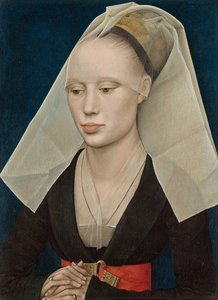
Rogier van der Weyden
1400 - 1464 , Bélgica
Breve Biografia
- Artistic Movement Or Style: Pintura Flamenga
- Artists Or Movements Influenced By This Artist:
- Renascença Italiana
- Pintura Espanhola
- Artists Who Influenced This Artist:
- Campin
- Van Eyck
- Date Of Birth: c. 1400
- Date Of Death: 1464
- Full Name: Rogier van der Weyden
- Nationality: Beldica
- Notable Artworks:
- Lamentação
- Deposição
- Anunciação
- Triptique Bladelin
- Place Of Birth: Tournai, Bélgica