Garantia de Reembolso · 100 dias Entrega gratuita para todo o mundo
449.564obras de arte 30.613artistas 4.660museus 32idiomas
Entrada de catálogo

Cape Cod still life

1972. Acrylic, 152.0 x 243.0 cm.

Fig. 1. Roy Lichtenstein, Cape Cod still life, 1972. Apresentado como a reprodução que você está especificando: , .

§ 1Dados do catálogo

Dimensões
152.0 x 243.0 cm

§ 2Abstrato

Descrição do Item

Experience Roy Lichtenstein’s iconic Pop Art masterpiece—'Cape Cod Still Life,' a vibrant exploration of color and geometric precision inspired by Picasso and Cézanne—bringing American modernism into your home.

Biografia do Artista

Roy Lichtenstein (1923-1997): Pioneiro da Pop Art, famoso por pontos Ben-Day, inspiração em quadrinhos e crítica à cultura de consumo. Explore 'Whaam!' & mais.

§ 3Comentário

A Vibrant Echo of American Modernism

Roy Lichtenstein’s “Cape Cod Still Life,” completed in 1972, stands as a cornerstone of Pop Art—a movement that irrevocably challenged the conventions of fine art and embraced imagery derived from popular culture. More than just a depiction of objects; it's an astute commentary on consumerism and a masterful distillation of artistic influences.

Born in Manhattan in 1923, Roy Fox Lichtenstein’s formative years were marked by exposure to museums and jazz music—experiences that instilled within him a profound appreciation for visual storytelling. Initially drawn to realistic drawing and painting, he swiftly transitioned towards experimentation with Ben-Day dots—a printing technique popularized in advertising—which would become his signature stylistic element.

The Technique of Bold Color and Geometric Precision

“Cape Cod Still Life” exemplifies Lichtenstein’s distinctive approach. The artist employs a palette of vibrant hues—primarily reds, yellows, and blues—to create an arresting visual composition. These colors are applied in flat planes, devoid of shading or blending, mirroring the aesthetic principles of comic strip art.

Crucially, Lichtenstein utilizes Ben-Day dots—tiny colored squares meticulously arranged to simulate halftone printing—to achieve a textured effect and heighten the illusion of depth. This technique, borrowed directly from advertising campaigns, elevates the seemingly simple subject matter into an intellectually stimulating exercise in visual perception.

Historical Context and Artistic Dialogue

Created during the height of the Pop Art movement, “Cape Cod Still Life” responds to the pervasive influence of mass media—particularly print advertisements—which dominated American culture in the early 1970s. Lichtenstein deliberately appropriates stylistic conventions from art history, referencing Picasso’s Cubism and Cézanne’s Impressionism, subtly undermining their perceived seriousness.

The arrangement itself is carefully considered: bottles, a rope, a bowl, and a book—objects familiar to the domestic sphere—are presented in a stylized tableau. This deliberate juxtaposition underscores Lichtenstein's intention to engage viewers in a dialogue about art’s relationship with everyday life and its capacity for ironic commentary.

Emotional Resonance and Artistic Legacy

"Cape Cod Still Life" transcends mere representation; it communicates an underlying sense of optimism and playful experimentation. The bold colors, geometric shapes, and meticulous Ben-Day dot pattern evoke a feeling of immediacy and visual excitement—a characteristic that continues to resonate with audiences today.

More than just a beautiful image, Lichtenstein’s masterpiece serves as a testament to the transformative power of Pop Art—a movement that redefined artistic boundaries and cemented Lichtenstein's place among the most influential artists of the twentieth century. Its enduring appeal lies in its ability to capture both the spirit of an era and the timeless fascination with visual language.

Perguntas e Respostas

Como posso obter uma versão digital de "Cape Cod still life", de Roy Lichtenstein?

Para obter uma versão digital de "Cape Cod still life", de Roy Lichtenstein, peça download de imagem digital em alta resolução em sua página Imagem Digital de Alta Resolução.

Que harmonia de cores apresenta "Cape Cod still life", de Roy Lichtenstein?

"Cape Cod still life", de Roy Lichtenstein apresenta uma harmonia de cores Strong Color Unity.

Qual é a saturação e a intensidade de "Cape Cod still life", de Roy Lichtenstein?

As cores de "Cape Cod still life", de Roy Lichtenstein apresentam uma saturação Subtle Color com uma intensidade Balanced.
§ 4O artista

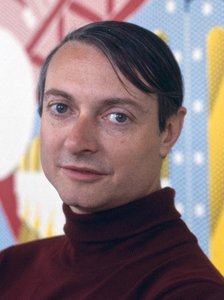
Roy Lichtenstein

Roy Lichtenstein

1923 - 1997, Estados Unidos da América

Informações rápidas sobre Roy Lichtenstein

  • Artistic Movement Or Style: Pop Art
  • Artists Or Movements Influenced By This Artist:
    • Designers
    • Ilustradores
  • Artists Who Influenced This Artist:
    • Reginald Marsh
    • Allan Kaprow
  • Date Of Birth: 27 de outubro de 1923
  • Date Of Death: 29 de setembro de 1997
  • Full Name: Roy Fox Lichtenstein
  • Nationality: Americano
  • Notable Artworks:
    • Whaam!
    • Drowning Girl
    • Masterpiece
  • Place Of Birth: Nova Iorque, EUA

Biografia do Artista

The Genesis of a Pop Visionary

Roy Fox Lichtenstein, born in the vibrant metropolis of New York City on October 27, 1923, indelibly altered the landscape of twentieth-century art. Emerging as a pivotal figure within the Pop Art movement, Lichtenstein didn’t simply reflect his era; he actively interrogated it, transforming commonplace imagery into compelling artistic statements. His upbringing in an upper-middle-class Jewish family fostered both a cultural awareness and an early artistic inclination. Childhood exposure to museums and concerts, coupled with a deep appreciation for jazz music, laid the groundwork for a creative spirit that would challenge conventional notions of fine art. Though initially drawn to realistic drawing and painting during his formative years, Lichtenstein’s formal training commenced at the Art Students League in 1939 under Reginald Marsh, followed by studies at Ohio State University – interrupted briefly by wartime service in the Army. These experiences provided a robust technical foundation that would later be brilliantly re-contextualized through the lens of mass culture and commercial aesthetics. The seeds of his signature style weren’t sown within the hallowed halls of artistic tradition but rather in the often-overlooked world of everyday imagery, particularly comic books and advertising.

From Abstraction to Appropriation: A Pivotal Shift

Lichtenstein's early work demonstrated a clear engagement with Abstract Expressionism, mirroring the dominant aesthetic trends of the post-war period. However, this phase proved transitional, a stepping stone towards his revolutionary style. A crucial moment arrived during his tenure at Rutgers University where he encountered Allan Kaprow, whose influence reignited Lichtenstein’s interest in proto-pop imagery. This encounter sparked a critical shift in his artistic trajectory, leading him to question the established boundaries between “high” and “low” art. He began looking beyond the subjective expression of Abstract Expressionism towards the objective language of popular culture – specifically, comic books and advertising. The year 1961 marked a turning point with *Look Mickey*, a work that boldly appropriated characters from Disney comics, signaling the beginning of his signature style. This wasn’t mere imitation; it was an act of artistic re-evaluation, elevating commonplace imagery to the status of fine art. He didn't simply copy comic strips; he meticulously recreated them using techniques mimicking commercial printing processes, a deliberate blurring of the lines between original artwork and mass production. This appropriation wasn’t about celebrating consumerism uncritically but rather examining its pervasive influence on American society and challenging traditional artistic hierarchies.

The Language of Ben-Day Dots and Bold Lines

Lichtenstein's artistic vocabulary is instantly recognizable: bold, primary colors, thick black outlines, and most famously, Ben-Day dots – a technique borrowed directly from the mechanical reproduction of comic books. These dots weren’t merely decorative; they were integral to his conceptual framework, representing the very process of mass production and challenging the traditional emphasis on the artist's hand. His paintings often enlarged details from comic strips to monumental scale, forcing viewers to confront the aesthetic qualities of an art form typically dismissed as trivial. Works like *Whaam!* (1963), *Drowning Girl* (1963), and *Oh, Jeff…I Love You, Too…But…* (1964) became iconic representations of Pop Art, capturing the anxieties and desires of a rapidly changing consumer culture. These weren’t simply depictions of comic book scenes; they were commentaries on themes of war, romance, and societal expectations, filtered through the visual language of mass media. He aimed to strip away any pretense of artistic subjectivity, presenting his work as objective reflections of American society – a mirror held up to its own manufactured reality. The deliberate flatness and lack of painterly gesture further emphasized this detachment, mimicking the impersonal nature of commercial printing.

Major Achievements and Lasting Impact

Roy Lichtenstein’s influence extends far beyond the realm of painting. His innovative use of commercial techniques and appropriation paved the way for new generations of artists exploring themes of consumerism, media saturation, and cultural identity. The sale of *Masterpiece* in 2017 for $165 million solidified his position as one of the most commercially successful American artists of all time, but his legacy is not solely defined by monetary value. He challenged traditional notions of artistic authorship and originality, forcing a re-evaluation of what constitutes “art” itself. His work continues to inspire graphic designers, illustrators, and visual artists across various disciplines.
  • Major Achievements: Pioneered Pop Art style; achieved international recognition with groundbreaking exhibitions.
  • Notable Works: *Whaam!*, *Drowning Girl*, *Oh, Jeff…I Love You, Too…But…*, *Masterpiece*.
  • Teaching Career: Influenced aspiring artists at SUNY Oswego and Rutgers University.
Lichtenstein passed away on September 29, 1997, leaving behind a body of work that remains as relevant and provocative today as it was during the height of the Pop Art movement. His art serves as a powerful reminder of the pervasive influence of mass media and its ability to shape our perceptions of reality. He didn’t just reflect his time; he actively interrogated it, leaving an indelible mark on the history of 20th-century art and continuing to inspire critical dialogue about the relationship between art, culture, and commerce.

§ 5Obras relacionadas

§ 6Perguntas

Informações Rápidas

  • Subject or theme: Still life
  • Artist: Roy Lichtenstein
  • Influences: Comic strip
  • Year: 1972
  • Medium: Oil on canvas
  • Notable elements or techniques: Benday dots

§ 7Cite esta entrada

AllPaintingsStore.com, “Roy Lichtenstein, Cape Cod still life (1972)”, https://allpaintingsstore.com/pt/art/roy-lichtenstein-cape-cod-still-life-8XYUZ9-en/ArtistReproduction/ (acessado em 8 Outubro 2026).

§ 8A reprodução

Reprodução em Óleo Feita à Mão

Óleo sobre tela pintado à mão no tamanho e moldura de sua escolha, feito sob encomenda pelos nossos artistas. ( Alternar para Impressão Alternar para Imagem Digital)

Está especificado na margem da folha de pedido; o estado atual dessa folha é o seguinte.

Cape Cod still life

Técnica de Reprodução

Tamanho da Reprodução

-

Artista Sênior de Elite

Mais detalhes, refinamento e tempo de produção adicional

-

Moldura para Reprodução

-

-

Para obras de arte ou reproduções com mais de 105 cm (aproximadamente 41 polegadas) em qualquer um dos lados, a moldura será enviada como um kit desmontado. Este método garante uma entrega segura e evita danos durante o transporte.

Montagem profissional necessária — este não é um produto DIY (faça você mesmo).
O kit deve ser montado e a tela esticada por um profissional de molduraria experiente, utilizando cola de madeira (não inclusa), um alicate de esticar tela e grampos para manter as travessas alinhadas enquanto a cola seca. A montagem incorreta ou a tensão desigual da tela podem danificar permanentemente a obra de arte e não estão cobertas pela nossa garantia.

  • Todas as barras de madeira maciça estão incluídas, precisamente cortadas ao tamanho certo.

  • Montado com os parafusos fornecidos, além de cola para madeira para as junções dos cantos, que não está inclusa e deve ser providenciada pelo seu moldurista.

  • São necessárias ferramentas profissionais não incluídas: um alicate de estiramento de tela (esticador) e grampos para manter as ripas alinhadas enquanto a cola seca.

Importante:
As junções dos cantos requerem cola para madeira, as ripas devem ser mantidas com grampos até que a cola esteja completamente seca, e o estiramento da tela na moldura montada requer um alicate de esticar tela. Nenhum destes itens está incluído no kit. Por favor, certifique-se de contar com um profissional de molduraria experiente antes de encomendar este tamanho.

Etiqueta de identificação

-

-

Verniz de Proteção

Verniz brilhante (realça as cores e protege contra a luz e a umidade)

-

Personalizar minha obra

Exemplos de alterações possíveis: Substituir o rosto por uma foto do cliente; Adicionar um animal de estimação (ex.: substituir gato por cachorro); Incluir uma mensagem oculta no fundo; Alterar a paisagem ou os elementos do fundo.

-

Urgente

Entrega mundial () em 3 a 4 semanas, em vez das 5 semanas padrão. (5 Novembro). Sem comprometer a qualidade.

-

Envio Expresso

Entrega mundial para em 5 semanas. (12 Novembro).

Com envio incluído

Preço Total

€ 229

Incluído em todos os pedidos

  • Envio expresso gratuito para todo o mundo
  • Tela de Linho de Alta Qualidade
  • Seguro de transporte completo
  • Garantia de Reembolso de Impostos Alfandegários
  • Garantia de Fidelidade Cromática
  • Política de Devolução em 100 Dias (Apenas para Defeitos)
  • Garantia de reembolso de 100%
  • Oferta de desconto por quantidade
Folha de pedido