


 Visualizar na parede
 Compartilhar
 Compartilhar
 Detalhes
 Guia
Guia

 Baixar imagem
 Semelhantes
 Raio X
 Ver diaporama
 Estatísticas
Chill-October
 Oil On Canvas
- WallArt
- Pre-Raphaelite Movement
 1870
1870 186.0 x 141.0 cm
 Ler mais
Reprodução em Óleo Feita à Mão
Óleo sobre tela pintado à mão no tamanho e moldura de sua escolha, feito sob encomenda pelos nossos artistas. ( Alternar para Impressão Alternar para Imagem Digital)




P118B €10

P118H €10

P118W €10

P438Z €10

P508JH €12

P508YH €12

P805H €10

P805Z €10

P919BZ €10

P919G €10

P919XJ €10

P959ZH €10

P968JZ €12

W106C €8

W218G €10

W218JH €8

W218Y €10

W307PJ €10

W316G €10

W316PJ €8

W316Y €10

W398PJ €8

W4111J €10

W500HY €15

W500JH €15

W692G €12

W849H €8

W940BG €15

W953PJ €8




Escolha entre os nossos tamanhos pré-definidos que respeitam as proporções originais da obra de arte.

Insira a largura e a altura desejadas para se ajustarem à sua moldura ou parede. Como esta obra é pintada à mão, para um tamanho com proporções diferentes, o artista poderá pintar um pouco mais ao redor da imagem ou reduzir ligeiramente a composição — você escolhe. Enviamos uma maquete digital para sua aprovação antes de iniciar a pintura. A imagem exibida nesta página não representa o resultado real — apenas a maquete mostra o resultado final.
Após o pedido, a equipa AllPaintingsStore.com enviará um e-mail ao cliente para solicitar instruções e fornecer uma prévia do esboço.
Entrega mundial () em 3 a 4 semanas, em vez das 5 semanas padrão. (25 Outubro). Sem comprometer a qualidade.

Envio expresso gratuito para todo o mundo

Tela de Linho de Alta Qualidade

Seguro de transporte completo

Garantia de Reembolso de Impostos Alfandegários

Garantia de Fidelidade Cromática

Política de Devolução em 100 Dias (Apenas para Defeitos)

Garantia de reembolso de 100%

Oferta de desconto por quantidade
 A opção de vidro está disponível apenas para tamanhos inferiores a 110 cm

Chill-October
Técnica de Reprodução
Tamanho da Reprodução
-


Preço Total
€ 226
Sir John Everett Millais's *Chill October*: A Symphony of Autumnal Serenity
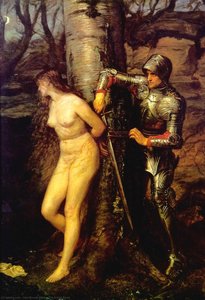
Sir John Everett Millais’s *Chill October*, completed in 1870, is more than just a depiction of a tranquil lake; it’s a profound meditation on the beauty and transience of nature, a cornerstone of the Pre-Raphaelite movement's dedication to meticulous observation and emotional resonance. Measuring 186 x 141 cm, this oil on canvas masterpiece transports the viewer to a moment suspended in time – a crisp October afternoon where sunlight dances upon the water and the vibrant hues of autumn leaves create an almost ethereal glow. The painting’s composition is remarkably balanced, with the trees framing the lake like watchful guardians, while the scattered birds subtly reinforce the sense of peaceful solitude.
A Masterclass in Pre-Raphaelite Technique
- Realism Elevated: Millais’s commitment to realism is immediately apparent. Every detail, from the individual veins on a leaf to the subtle ripples in the water, has been rendered with painstaking accuracy – a hallmark of the Pre-Raphaelite style that sought to reject the idealized forms prevalent in earlier art.
- Color as Emotion: The artist’s masterful use of color is crucial to the painting's impact. He employs a rich palette of autumnal reds, oranges, and yellows, not merely for their visual beauty but also to evoke specific emotions – warmth, melancholy, and the poignant awareness of seasonal change.
- Texture and Light: Millais’s technique utilizes thick impasto in areas to build up texture, particularly in the foliage, while delicate glazing creates a luminous effect on the water surface, capturing the play of light with remarkable fidelity.
Historical Context and Symbolism within the Scene
*Chill October* emerged during a period of significant artistic and social change in Britain. The Pre-Raphaelite Brotherhood, founded in 1848, was challenging the conventions of the Royal Academy, advocating for a return to the perceived sincerity and detail of art before Raphael. The painting reflects this rebellion, celebrating nature's untamed beauty rather than imposing idealized narratives. The inclusion of a small boat suggests human interaction with the natural world, but also hints at the fleeting nature of enjoyment – a subtle commentary on mortality. The birds themselves are often interpreted as symbols of hope and resurrection, reflecting the autumnal cycle of life and death.
A Legacy Preserved: Ownership and Reproduction
Currently residing in The Islington Local History Centre and Museum in London, *Chill October* stands as a testament to Millais’s enduring legacy. Its influence can be seen in countless subsequent works that sought to capture the beauty of the natural world with similar precision and emotional depth. Recognizing the profound impact of this artwork, AllPaintingsStore.com offers meticulously crafted, hand-painted oil reproduction reproductions of *Chill October*, allowing art lovers worldwide to experience its breathtaking beauty firsthand. Each reproduction is created using traditional techniques, ensuring that it faithfully captures the original’s nuanced colors, textures, and emotional power – a timeless piece for any discerning collection or interior space.
Perguntas e Respostas
Como "Chill-October" se insere na trajetória artística de Sir John Everett Millais?
"Chill-October" compartilha com as outras obras de Sir John Everett Millais o seu estilo Pre-Raphaelite Movement e os temas recorrentes: nature, detail, realism, pre-raphaelite ideals, romantic landscape themes, millais’s signature style, iconic pre-raphaelite work.
Que tipo de obra de arte é "Chill-October", de Sir John Everett Millais?
No catálogo, "Chill-October", de Sir John Everett Millais está registrado como WallArt. A categoria ajuda a encontrar obras semelhantes.
Quais cores predominam em "Chill-October", de Sir John Everett Millais?
"Chill-October", de Sir John Everett Millais utiliza uma paleta Dark, com Phthalo Green (#352306) como cor dominante.
Obras Relacionadas




Biografia do Artista
A Prodigy of the Pre-Raphaelites: The Life and Art of Sir John Everett Millais
Born in Southampton in 1829, John Everett Millais entered the Royal Academy Schools at the astonishing age of eleven—the youngest student ever admitted. This early demonstration of prodigious talent foreshadowed a career that would not only define an artistic movement but also capture the Victorian imagination with its breathtaking realism and emotional depth. From his earliest days, Millais possessed a remarkable gift for observation, a quality that would become the cornerstone of his artistic style. He wasn’t merely painting what he saw; he was meticulously recreating it, imbuing each brushstroke with an almost photographic fidelity. This dedication to truth in representation set him apart and ultimately led him to challenge the established conventions of British art.The Birth of a Brotherhood and Artistic Rebellion
Millais’s artistic trajectory took a pivotal turn in 1848 when, alongside Dante Gabriel Rossetti and William Holman Hunt, he founded the Pre-Raphaelite Brotherhood. This wasn't simply an aesthetic choice; it was a deliberate rebellion against what they perceived as the artificiality of academic art—art that had strayed too far from the natural world and the sincerity of early Renaissance masters, those working *before* Raphael. The Pre-Raphaelites sought to revive the clarity, detail, and vibrant color palettes of artists like Jan van Eyck and Fra Angelico. Their manifesto was one of truth to nature, a rejection of idealized forms, and an embrace of subjects drawn from literature, mythology, and everyday life. Millais’s early works, such as Isabella, immediately showcased this new approach—a meticulous attention to detail combined with a narrative intensity that captivated and often provoked audiences. His most controversial work during this period, Christ in the House of His Parents (1849-50), depicted the Holy Family not as ethereal beings but as ordinary working-class people, sparking outrage among critics who found its realism unsettling and even blasphemous. The painting’s depiction of Jesus as a young carpenter, his mother Mary tending to the household chores, and Joseph engaged in manual labor directly contradicted traditional religious iconography, forcing viewers to confront the humanity of Christ in a way they had never experienced before.Evolving Styles and Victorian Sensibilities
The mid-1850s marked a period of significant change for Millais, both personally and artistically. His marriage to Effie Gray, following the annulment of her marriage to John Ruskin, profoundly influenced his work. He moved away from the intensely detailed, symbolic style of his early Pre-Raphaelite paintings towards a broader, more atmospheric realism. This shift wasn’t simply a matter of stylistic preference; it reflected a growing engagement with contemporary life and a desire to capture the fleeting beauty of the natural world. Paintings like Autumn Leaves exemplify this new direction—a serene depiction of a group of young women drifting leaves on a river, imbued with a sense of melancholy and nostalgia. He also found considerable success as a portraitist, capturing the likenesses of prominent Victorian figures, including John Gladstone and Benjamin Disraeli. This period saw Millais achieve widespread popularity and financial security, but it also drew criticism from some who felt he had compromised his artistic principles.Iconic Works and Lasting Influence
Millais’s career spanned several decades, producing a vast body of work that continues to be celebrated for its beauty, technical skill, and emotional resonance. Ophelia (1851-1852), perhaps his most famous painting, remains an enduring symbol of Victorian art—a hauntingly beautiful depiction of the tragic heroine drowning in a river, surrounded by a profusion of wildflowers. The painting’s meticulous detail, its evocative use of color, and its poignant portrayal of loss have captivated audiences for generations. A Huguenot (1851-1852), depicting a scene of religious persecution, showcases Millais's ability to capture dramatic emotion and narrative intensity. Mariana (1850-1851), inspired by Tennyson’s poem, is a masterful study of light and atmosphere, capturing the mood of quiet contemplation. Throughout his career, Millais consistently demonstrated an extraordinary eye for detail, a deep understanding of color theory, and a remarkable ability to evoke emotion through his art. His work profoundly influenced subsequent generations of artists, shaping the course of British painting in the late 19th century and beyond.Legacy and Historical Context
Sir John Everett Millais’s legacy extends far beyond his individual achievements as an artist. He played a crucial role in establishing the Pre-Raphaelite Brotherhood as a significant force in Victorian art, challenging established conventions and advocating for a return to the principles of early Renaissance painting. His willingness to depict ordinary people in realistic settings, his embrace of contemporary subjects, and his commitment to truth in representation helped to redefine the standards of British art. In 1896, he was elected President of the Royal Academy, a remarkable honor that reflected his enduring influence on the artistic community. Millais’s paintings continue to be exhibited in museums around the world, inspiring admiration for their beauty, technical skill, and emotional depth—a testament to the lasting power of his art and its profound impact on the Victorian imagination.
Sir John Everett Millais
1829 - 1896 , Reino Unido
Dados Rápidos
- Artistic Movement Or Style: Pre-Rafaelita, Realismo
- Artists Or Movements Influenced By This Artist: ['Pre-Rafaelitas']
- Artists Who Influenced This Artist: ['Pre-Rafaelitas']
- Date Of Birth: 8 de junho de 1829
- Date Of Death: 13 de agosto de 1896
- Full Name: Sir John Everett Millais
- Nationality: Britânico
- Notable Artworks:
- Ophelia
- Cristo...
- A Huguenot
- Place Of Birth: Southampton, Reino Unido
Artigos Relacionados
Dante Gabriel Rossetti: As 25 Obras-Primas do Mestre Pré-Rafaelita | AllPaintingsStore
Descubra as 25 obras-primas de Dante Gabriel Rossetti, o mestre pré-rafaelita! Explore a beleza, simbolismo e paixão em pinturas icônicas como 'Proserpina' e 'Beata Beatrix'. Encontre reproduções de arte exclusivas para transformar sua casa com AllPaintingsStore.com.

Arthur Hughes: Pre-Raphaelite Visions of Beauty & Melancholy
Explore the captivating world of Arthur Hughes (1832-1915), a leading Pre-Raphaelite painter. Discover his dreamy landscapes, poetic narratives & iconic Victorian artworks. Learn about his life, style & collecting today.

Sir John Everett Millais: Pre-Raphaelite Rebellion & Victorian Narrative Detail
Explore the revolutionary art of Sir John Everett Millais & the Pre-Raphaelite Brotherhood. Discover their radical realism, symbolic narratives, and lasting impact on Victorian aesthetics. A deep dive into 19th-century masterpieces.

The Pre-Raphaelite Brotherhood: Rebellion, Romance & Medieval Revival
Explore the captivating world of the Pre-Raphaelite Brotherhood! Discover their rebellious spirit, iconic masterpieces & lasting influence on art history. Learn about Rossetti, Millais & more.

Giclée Prints: Archival Quality & Aesthetic Nuances for the Discerning Collector
Explore the world of giclée prints with AllPaintingsStore. Learn about archival quality, aesthetic nuances & investment potential. Expert guidance for discerning art collectors seeking museum-quality reproductions and lasting value.


