Garantia de Reembolso · 100 dias Entrega gratuita para todo o mundo
449.564obras de arte 30.613artistas 4.660museus 32idiomas
Catalogue entry

The Tempest

1825. Oil On Canvas. High Museum of Art.

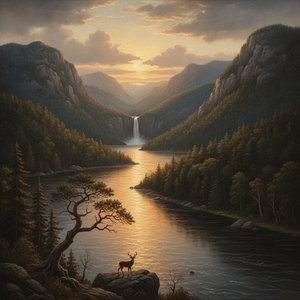
Fig. 1. Thomas Cole, The Tempest, 1825. Shown as the reproduction you are specifying: , .

§ 1Catalogue data

§ 2Abstract

Descrição do Item

Thomas Cole's "The Tempest" captures a dramatic American landscape scene, embodying the Hudson River School’s romanticism and exploration of nature's power. A masterpiece of 1826.

Biografia do Artista

Descubra Thomas Cole (1801-1848), fundador da Escola do Rio Hudson! Explore suas paisagens românticas, obras alegóricas como 'O Curso do Império' e sua influência duradoura na arte americana.

§ 3Commentary

The Tempest by Thomas Cole: A Vision of American Romanticism

Thomas Cole’s “The Tempest,” painted in 1825, isn't merely a landscape; it’s a profound meditation on the relationship between humanity and nature, a cornerstone of the Hudson River School movement, and a hauntingly beautiful embodiment of early American Romanticism. More than two centuries after its creation, this oil-on-panel masterpiece continues to resonate with viewers, inviting contemplation on themes of power, vulnerability, and the sublime—the awe-inspiring grandeur that simultaneously terrifies and elevates the human spirit.

The painting depicts a dramatic, almost apocalyptic scene set within the Catskill Mountains. A brooding sky, choked with swirling clouds and illuminated by flashes of lightning, dominates the composition. Below, a small clearing reveals two figures—a man and a woman—standing on a rocky outcrop, gazing out at an unseen horizon. The landscape itself is rendered with meticulous detail: ancient trees twisted by wind and weather, a turbulent river rushing through a narrow gorge, and distant peaks shrouded in mist. Cole’s masterful use of chiaroscuro – the dramatic contrast between light and dark – intensifies the scene's emotional impact, creating a palpable sense of tension and foreboding.

A Synthesis of European Tradition and American Identity

Cole, born in Bolton le Moors, England, in 1801, brought with him a deep appreciation for European artistic traditions, particularly those of the Romantic movement. However, he quickly developed a distinctly American sensibility, rejecting the prevalent historical and mythological subjects favored by his European counterparts. Instead, Cole turned his gaze to the untamed wilderness of his adopted homeland, seeking to capture its raw beauty and spiritual significance. “The Tempest” exemplifies this shift—it’s not a depiction of a biblical scene or a classical allegory, but rather an intensely personal response to the grandeur of the American landscape.

The painting's composition is deliberately ambiguous, inviting multiple interpretations. The figures in the foreground are dwarfed by the immensity of nature, suggesting humanity’s vulnerability and insignificance in the face of the sublime. Yet, their gaze—directed towards something beyond the viewer’s sight—hints at a deeper connection to the natural world, a yearning for transcendence. Cole skillfully employs symbolism throughout the work: the storm represents chaos and uncertainty, while the distant peaks symbolize aspiration and hope. The horse and birds scattered across the scene further emphasize the dynamism and energy of the natural world.

Symbolism and the Concept of the Sublime

Central to understanding “The Tempest” is Cole’s concept of the sublime—a term popularized by Edmund Burke in his 1757 treatise *A Philosophical Enquiry into the Origin of Our Ideas of Beauty*. The sublime, as Cole understood it, wasn't simply about beauty; it was about an overwhelming experience that evoked both terror and delight. It was a feeling triggered by encountering something vast, powerful, and beyond human comprehension—something that simultaneously threatened to overwhelm us and inspire awe.

The storm in “The Tempest” is a prime example of this concept. The sheer scale of the clouds, the ferocity of the wind, and the potential for destruction all contribute to a sense of overwhelming power. Yet, within this chaos, there’s also a strange beauty—a raw, untamed energy that captivates the viewer's imagination. Cole masterfully captures this duality, creating an image that is both terrifying and exhilarating.

A Legacy in Reproduction

Today, “The Tempest” remains one of Thomas Cole’s most celebrated works, housed at the High Museum of Art in Atlanta. High-quality reproductions allow art lovers to experience the painting's power and beauty firsthand, bringing its evocative imagery into their homes or offices. The meticulous detail, dramatic lighting, and profound symbolism continue to inspire admiration and contemplation. Reproductions are available through AllPaintingsStore.com, offering a tangible connection to this pivotal moment in American art history.

Beyond its aesthetic appeal, “The Tempest” serves as a reminder of the enduring power of nature—and our own place within it. It’s an invitation to pause, reflect, and appreciate the sublime beauty that surrounds us, even amidst the storms of life.

Perguntas e Respostas

"The Tempest", de Thomas Cole é uma composição em formato retrato, paisagem ou quadrada?

"The Tempest", de Thomas Cole é uma composição em Landscape. Vale a pena conferir as proporções antes de escolher o tamanho da impressão.

"The Tempest", de Thomas Cole, está em domínio público? E por quê?

"The Tempest", de Thomas Cole está em em domínio público — seus direitos autorais expiraram. O período de direitos autorais conta a partir do falecimento do artista, ocorrido em 1848.

A que movimento e a que época pertence "The Tempest", de Thomas Cole?

"The Tempest", de Thomas Cole insere-se no movimento Hudson River School, dentro da era Século XIX de seu criador.

§ 4The artist

Thomas Cole

Thomas Cole

1801 - 1848, Reino Unido

Quick facts about Thomas Cole

  • Artistic Movement Or Style: Escola do Rio Hudson
  • Artists Or Movements Influenced By This Artist:
    • Asher B. Durand
    • Frederic Edwin Church
  • Date Of Birth: 1 de fevereiro de 1801
  • Date Of Death: 11 de fevereiro de 1848
  • Full Name: Thomas Cole
  • Nationality: Americano
  • Notable Artworks:
    • The Course of Empire
    • A Oxbow
    • Vista de Etna
  • Place Of Birth: Bolton, Reino Unido

Biografia do Artista

A Pioneer of American Landscape Painting

Thomas Cole, a name inextricably linked to the birth of distinctly American art, stands as a pivotal figure in 19th-century painting. Born in Bolton le Moors, Lancashire, England, in 1801, his early life offered little indication of the profound impact he would have on the artistic landscape. Emigrating to the United States with his family in 1818 and settling in Ohio, Cole’s journey was one of self-discovery and artistic awakening. Initially working as an itinerant portrait painter—a common trade at the time—he soon found himself drawn to the untamed beauty of the American wilderness. This shift wasn't merely a change in subject matter; it represented a fundamental divergence from European artistic traditions, which often focused on historical or mythological narratives. Cole’s landscapes weren’t simply depictions of scenery; they were imbued with a spiritual and allegorical depth that resonated deeply with a nation forging its own identity. His move to Catskill, New York, in 1825 proved transformative, providing him with both inspiration and a permanent base from which to explore the surrounding Hudson River Valley—a region that would become inextricably linked with his artistic legacy.

The Hudson River School and Romantic Ideals

Cole is rightfully regarded as the founder of the Hudson River School, an art movement characterized by its romantic portrayal of the American landscape. However, to label him simply a “landscape painter” feels inadequate. His work transcended mere representation; it was deeply philosophical, often exploring themes of humanity’s relationship with nature, the passage of time, and the rise and fall of civilizations. Influenced by European Romanticism—particularly the works of Claude Lorrain and J.M.W. Turner—Cole adapted these sensibilities to an American context. Where European Romantics often depicted dramatic, sublime landscapes as a reflection of inner turmoil, Cole’s paintings frequently conveyed a sense of optimism and divine presence within the natural world. He saw in the vastness of the American wilderness a symbol of national potential and spiritual renewal. The Oxbow (1836), perhaps his most iconic work—a sweeping vista capturing the dramatic contrast between the wild, untamed river valley and the cultivated farmlands—perfectly exemplifies this vision. It represents both the promise and the challenges of westward expansion, reflecting a deep connection to the land and a contemplation of America’s future.

Allegory and The Course of Empire

While celebrated for his realistic depictions of nature, Cole’s artistic ambition extended beyond pure landscape painting. He frequently employed allegory to convey complex moral and philosophical ideas. This is most powerfully demonstrated in his monumental series The Course of Empire, created between 1833 and 1836. Comprising five canvases—"Savage State," "Pastoral State," "Arcadian State," "Consummation," and “Destruction”—the series traces the cyclical history of a civilization, from its pristine origins to its inevitable decline. The paintings are not merely historical narratives; they serve as cautionary tales about the dangers of unchecked ambition and the fragility of human achievement. The Course of Empire resonated deeply with contemporary audiences, reflecting anxieties about the rapid industrialization and westward expansion that were transforming the American landscape. It cemented Cole’s reputation as a visionary artist capable of addressing profound societal concerns through his art.

A Life Shaped by Observation and Legacy

Cole's early life in England instilled in him a deep appreciation for nature, which he carried with him to America. His initial work as a portrait painter provided valuable technical skills, but it was his encounter with the American wilderness that truly ignited his artistic passion. He meticulously studied the landscapes of the Hudson River Valley, capturing their light, color, and atmosphere with remarkable detail. He wasn’t simply copying what he saw; he was interpreting it through the lens of his own philosophical and spiritual beliefs. Cole's dedication to observation and his ability to infuse his paintings with symbolic meaning set him apart from many of his contemporaries. He mentored several young artists, including Frederic Edwin Church, who would go on to become one of the most celebrated figures of the Hudson River School. Cole’s influence extended beyond painting; he was a prolific writer and thinker, articulating a compelling vision for American art that emphasized originality, spirituality, and a deep connection to the natural world. His legacy continues to inspire artists and nature enthusiasts today, ensuring that his contribution to American culture will endure for generations to come.
  • Cole’s work is housed in major museums across the United States, including the New-York Historical Society, the National Gallery of Art in Washington D.C., and the Smithsonian American Art Museum.
  • His paintings are not merely historical artifacts; they remain powerfully evocative and relevant today, prompting viewers to contemplate their own relationship with nature and the enduring questions about humanity’s place in the world.
  • The Thomas Cole National Historic Site in Catskill, New York, preserves his home and studio, offering visitors a glimpse into the life and work of this remarkable artist.
Key Works: The Oxbow, Course of Empire Series, A View from Mount Etna.

§ 5Comparanda

§ 6Questions

Informações Rápidas

  • Movement: Hudson River School
  • Subject or theme: Stormy landscape
  • Location: High Museum of Art
  • Year: 1825
  • Medium: Oil on panel

Quiz de Arte

Cada pergunta possui apenas uma resposta correta.

Pergunta 1:
What artistic movement is Thomas Cole primarily associated with?
Pergunta 2:
In 'The Tempest,' what primary element does the stormy weather symbolize?
Pergunta 3:
What year was 'The Tempest' painted by Thomas Cole?
Pergunta 4:
Which of the following best describes the setting of 'The Tempest'?
Pergunta 5:
What is a key characteristic of the Hudson River School paintings like 'The Tempest'?

§ 7Cite this entry

AllPaintingsStore.com, “Thomas Cole, The Tempest (1825)”, https://allpaintingsstore.com/pt/art/thomas-cole-the-tempest-8YE4QA-en/ArtistReproduction/ (accessed 5 Outubro 2026).

§ 8The reproduction

Reprodução em Óleo Feita à Mão

Óleo sobre tela pintado à mão no tamanho e moldura de sua escolha, feito sob encomenda pelos nossos artistas. ( Alternar para Impressão Alternar para Imagem Digital)

It is specified on the order sheet in the margin; the present state of that sheet reads as follows.

The Tempest

Técnica de Reprodução

Tamanho da Reprodução

-

Artista Sênior de Elite

Mais detalhes, refinamento e tempo de produção adicional

-

Moldura para Reprodução

-

-

Para obras de arte ou reproduções com mais de 105 cm (aproximadamente 41 polegadas) em qualquer um dos lados, a moldura será enviada como um kit desmontado. Este método garante uma entrega segura e evita danos durante o transporte.

Montagem profissional necessária — este não é um produto DIY (faça você mesmo).
O kit deve ser montado e a tela esticada por um profissional de molduraria experiente, utilizando cola de madeira (não inclusa), um alicate de esticar tela e grampos para manter as travessas alinhadas enquanto a cola seca. A montagem incorreta ou a tensão desigual da tela podem danificar permanentemente a obra de arte e não estão cobertas pela nossa garantia.

  • Todas as barras de madeira maciça estão incluídas, precisamente cortadas ao tamanho certo.

  • Montado com os parafusos fornecidos, além de cola para madeira para as junções dos cantos, que não está inclusa e deve ser providenciada pelo seu moldurista.

  • São necessárias ferramentas profissionais não incluídas: um alicate de estiramento de tela (esticador) e grampos para manter as ripas alinhadas enquanto a cola seca.

Importante:
As junções dos cantos requerem cola para madeira, as ripas devem ser mantidas com grampos até que a cola esteja completamente seca, e o estiramento da tela na moldura montada requer um alicate de esticar tela. Nenhum destes itens está incluído no kit. Por favor, certifique-se de contar com um profissional de molduraria experiente antes de encomendar este tamanho.

Etiqueta de identificação

-

-

Verniz de Proteção

Verniz brilhante (realça as cores e protege contra a luz e a umidade)

-

Personalizar minha obra

Exemplos de alterações possíveis: Substituir o rosto por uma foto do cliente; Adicionar um animal de estimação (ex.: substituir gato por cachorro); Incluir uma mensagem oculta no fundo; Alterar a paisagem ou os elementos do fundo.

-

Urgente

Entrega mundial () em 3 a 4 semanas, em vez das 5 semanas padrão. (2 Novembro). Sem comprometer a qualidade.

-

Envio Expresso

Entrega mundial para em 5 semanas. (9 Novembro).

Com envio incluído

Preço Total

€ 229

Included with every order

  • Envio expresso gratuito para todo o mundo
  • Tela de Linho de Alta Qualidade
  • Seguro de transporte completo
  • Garantia de Reembolso de Impostos Alfandegários
  • Garantia de Fidelidade Cromática
  • Política de Devolução em 100 Dias (Apenas para Defeitos)
  • Garantia de reembolso de 100%
  • Oferta de desconto por quantidade
Order sheet